Kenya’s rush into a 2,000MW nuclear plant in Siaya is a historic mistake in the making – economically, environmentally, and strategically.
First, context. Kenya already gets about 85–90% of its electricity from clean sources: geothermal, hydro, wind and increasingly solar. We are a global poster child for clean power without nuclear. Our main challenge isn’t a lack of clean options. We aren’t planning and using what we have well enough. So why gamble billions on the most complex, riskiest option on the menu?
A single 2,000MW nuclear plant is one of the largest, most expensive projects in our history. These plants are notorious for cost overruns and delays in far richer, more technically advanced countries. If it runs late (very likely) or goes over budget (almost guaranteed), someone has to pay. That “someone” is Kenyan taxpayers and electricity consumers. We risk locking ourselves into decades of high tariffs or more public debt to service a mega‑project we didn’t actually need.
Meanwhile, the opportunity cost is massive. For the same money, Kenya could add thousands of megawatts of geothermal, wind and solar across multiple counties, plus storage and transmission to stabilise the grid. Geothermal alone, in the Rift Valley, can provide 24/7 baseload power without importing fuel – and we’ve already shown we know how to do it. Wind in Turkana, solar in the north and east, small hydro, battery storage: these are proven, modular, quicker to build, and spread economic benefits more widely than one giant plant in Siaya.
Then there’s the risk profile. Nuclear accidents are rare, but when they go wrong, they go very wrong and last for generations. Putting a first‑ever nuclear plant on Lake Victoria, which supports millions of people across several countries, is a huge regional gamble. Even “minor” incidents or perceived risk can devastate fisheries, tourism, and local livelihoods. Radioactive waste is a 100‑year question in a political system that struggles to manage five‑year projects without scandal. Do we really trust our current institutions to run a flawless nuclear safety culture for the next century?
Governance is the elephant in the room. Nuclear is the kind of project that attracts opaque deals, expensive foreign contractors, complex technology transfer promises, and huge procurement contracts. In a country where big infrastructure routinely raises questions about corruption and value for money, adding nuclear’s complexity is like pouring petrol on a smouldering fire. Once we sign, we are locked in – to a vendor, to a technology, to a repayment schedule – regardless of how our economy or technology options evolve.
Strategically, it also makes little sense. The world is moving towards flexible, distributed, renewables‑heavy systems supported by storage and smart grids. Nuclear is the opposite: big, centralised, inflexible units that must run almost all the time to be economical. On a grid like Kenya’s, where demand is still growing and industrialisation is uneven, dropping 2,000MW of inflexible baseload can actually complicate balancing, especially when we add more variable wind and solar. We risk building a system that is technically elegant on paper but financially and operationally brittle in reality.
Kenya’s climate and geography give us an embarrassment of renewable riches: untapped geothermal reservoirs, some of the best wind regimes on the continent, abundant solar irradiation, and room for regional power trade. Instead of doubling down on what works and scaling it smartly, we are flirting with the most capital‑intensive, politically risky, institution‑demanding technology available. It’s like bypassing a field full of ripe maize to plant a single, exotic crop we’ve never grown before, which only matures if the weather is perfect for 20 years.
If our goal is cheap, reliable, climate‑friendly power that supports jobs and industry, the answer is to go deeper on what we’re already good at:
– Aggressively expand geothermal as firm baseload.
– Add more wind and solar, especially near demand centres.
– Invest in storage, transmission, and regional interconnectors.
– Fix governance, planning, and utility finances so that Kenyans actually feel the benefit on their bills.
Nuclear might have a place someday in a much larger, richer, more industrialised Kenya with rock‑solid institutions. But right now, when we are already at 85%+ clean power and sitting on huge untapped renewable potential, a 2,000MW nuclear plant is not visionary at all. It’s a high‑risk distraction. Our focus should be on making Kenya the first truly renewables‑powered industrial economy in Africa, not a test case for big nuclear on Lake Victoria.
Degrees Measure Memory, Not Mindset 🎓
It’s time we debunk a long-standing myth: A diploma is a certificate of completion, not a boundary for your potential. While formal education is a valuable tool, it is not the only yardstick for intelligence. We often mistake "schooling" for "smartness," forgetting that some of the greatest minds to ever walk this earth didn't have a string of letters behind their names.
True intelligence is a multifaceted diamond. If you haven't had the privilege of formal schooling, remember that the "University of Life" or what I refer to as #DripUniversity offers courses you can't find in a lecture hall...
Emotional Intelligence (EQ): The ability to lead with empathy, read a room, and manage your own ego. This is often the true "secret sauce" of successful leadership. Drip University students are always dripping extraordinary sauce!
The Power of Experience: Skills built through trial, error, and "getting your hands dirty" create a level of intuition that a textbook simply cannot teach.
The Courage to Start: When you lack a formal safety net, it takes immense bravery to bet on yourself. That grit is a form of genius in its own right.
Success Doesn't Require a PhD...
History (and our modern economy) is filled with visionaries whose business acumen far exceeds those with advanced degrees. We see it every day, entrepreneurs who can navigate complex markets, negotiate masterfully, and build empires using nothing but sharp observation and relentless drive.
A mentor of mine once said, "Your lack of a degree is not a blockage; it is an invitation to prove that your capability is defined by your contribution, not your credentials."
Don't let the absence of a title make you feel small. If you have the hunger to learn, the courage to fail, and the emotional intelligence to connect with others, you are already ahead of the curve.
This doesn't suggest that you must not pursue education. It suggests that if you haven't had the privilege, don't worry. You still have a shot at success!
Keep building. Keep learning. Keep daring. #DripUniversity
My fellow Kenyans ,
To construct the Thika Superhighway, an entire mall that housed a Nakumatt supermarket was demolished. When questioned in Parliament, Chris Obure, the Infrastructure Minister at the time, stated plainly that roads are not built in the air and that even flyovers require land. His words were direct, but they captured an unavoidable truth: development demands sacrifice.
At the time, the demolition of Nakumatt along Thika Road sparked public outrage. There was a hue and cry, and many viewed it as excessive or unjustified. Yet today, Thika Highway is lined with multiple malls, residential complexes, and countless commercial developments. The corridor has transformed into one of the country’s most vibrant economic zones. Few people remember what was demolished; most benefit from what was built. That is often the nature of progress—initial discomfort followed by long-term gain.
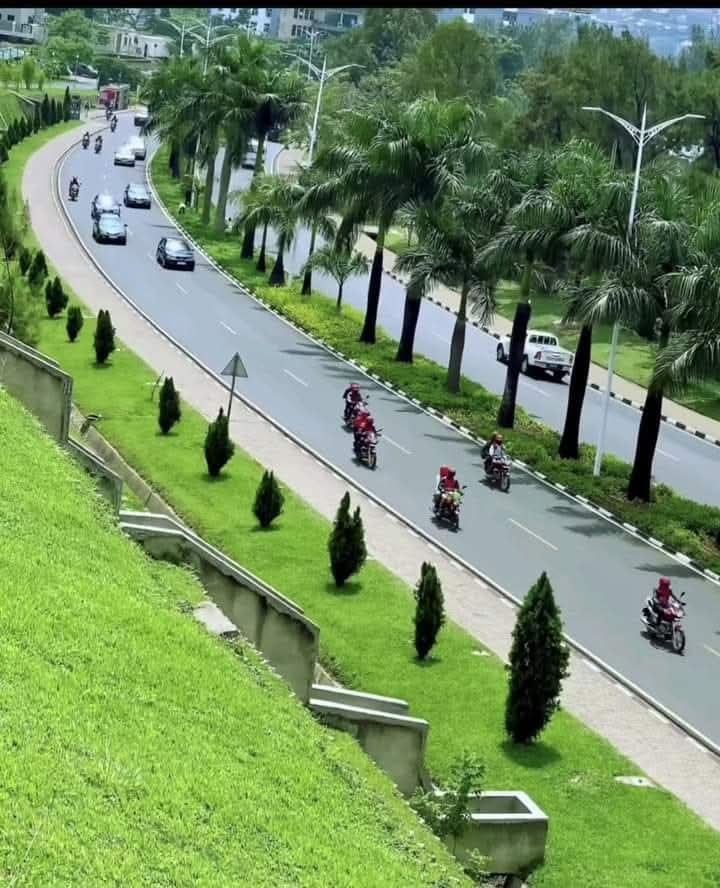
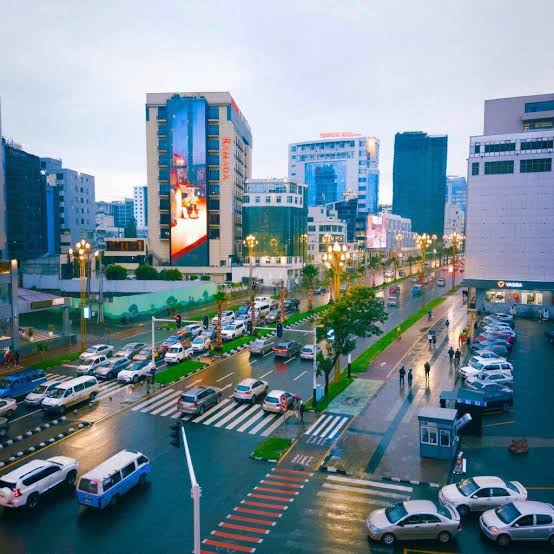
Kenyans routinely praise cities such as Dubai, Kigali, and Addis Ababa. Comparisons flood social media, often portraying Kenya as stagnant or incapable of progress. Yet the contradiction is striking. When authorities take concrete steps to restore order or reorganize public spaces, resistance quickly follows.
We cannot demand world-class cities while defending disorder at home. Pavements are for pedestrians. Highways are for transport. They are not extensions of private enterprise. The unchecked spread of kiosks onto walkways and road reserves has normalized congestion, safety hazards, and urban chaos. Order cannot coexist with selective obedience to the law.
Kigali did not become organized by accident. President Paul Kagame’s administration enforced regulations firmly and consistently, including prohibiting kiosks along major roads and pedestrian paths. The same determination has been visible in Addis Ababa under Prime Minister Abiy Ahmed and Mayor Adanech Abebe. These leaders did not ask whether enforcement would be popular; they recognized that lasting order requires resolve.
What undermines reform in Kenya is not merely resistance from affected traders but the predictable politicization that follows. Law enforcement should not be turned into campaign material. Where notice has been issued and regulations are clear, implementation should proceed without apology.
Many of the kiosks being removed were erected illegally and should never have occupied public spaces in the first place. Pretending otherwise for political convenience only entrenches impunity. A nation cannot mature if every enforcement action is framed as oppression and every demolition becomes a rallying cry.
Yes, people must earn a living. Informal trade sustains thousands of families. But economic survival does not grant permission to appropriate pavements and road reserves. Kenya has designated markets that remain underutilized because roadside visibility is seen as better which is a bad mindset. This mindset steadily erodes urban order in the long term.
The real question is simple: what kind of country do we want?
It is inconsistent to criticize leadership for failing to match Kigali or Addis Ababa while resisting the discipline required to achieve similar outcomes. Progress is rarely painless, but it is often worthwhile. The benefits of order tend to outlast the protests that precede it.
If we genuinely aspire to have organized, functional cities, then the law must be applied firmly and consistently—and both politicians and citizens must stop sabotaging that process.
As always I choose to remain an optimist
@NelsonHavi Kimani had to be made a prefect after repeated attempts to punish him through suspensions, barbed wire, and the cane failed. Rewarding him through a promotion worked in changing his behavior. One wishes this worked in Kenyan politics.
Keys To Experiencing Deliverance and Exemption in Year 2026:
1. Cultivate a vibrant, ever-growing relationship with God. (2 Timothy 1:12)
2. Commit to a life of prayer, especially the confession and the declaration of the promises of God. (Psalm 107:2, Matthew 12:37, Ecclesiastes 8:4, 2 Corinthians 10:4-5)
3. Grow in the knowledge of the Word; contend for spiritual intelligence. (2 Peter 1:2, Psalm 82:5-7)
4. Be determined to live by The Word of God. (Matthew 4:4)
5. Remain ever-thankful and ever-joyful! (1 Thessalonians 5:16-18, Philippians 4:4, Habakkuk 3:18)
6. Embrace the advantage of the prophetic - prophetic insights, instructions, declarations and coverings (especially from trusted vessels).
7. Walk in love. (John 13:34-35)
#ApostleJoshuaSelman
#MarchingOrders
#2026PropheticGuideAndInstructions
#KoinoniaAbuja
#KoinoniaZaria
#KoinoniaGlobal
Jim Carrey's heartfelt message to a room of former inmates at Homeboy Industries: "This room is filled with God... You are heroes to me."
He opens up about his own challenges: Suffering leads to salvation—it's the only path. We must feel our pain and losses fully, then choose:
- The gate of resentment → vengeance → self-harm → harm to others
- Or the gate of forgiveness → grace
Just as Christ did on the cross—suffering terribly, doubting, feeling abandoned—yet choosing compassion and forgiveness for those causing the pain.
"That's what opens the gates of heaven for all of us."
Your presence shows you've already chosen grace.
2:34 clip delivering this profound reflection on forgiveness as liberation 👇
In tough times, has choosing forgiveness over resentment brought you grace? Or what's the hardest part of that choice for you?