The oldest known mathematical artifact, The Lebombo Bone
Discovered in the Lebombo Mountains between Eswatini and South Africa, this baboon fibula dates back roughly 35,000 to 42,000 years. It contains 29 precise notches, which are theorized to have functioned as a tally system to track lunar cycles or biological rhythms, marking the first known instance of humans using a physical tool to externalize numeric data.
This shows that abstract mathematical recording emerged in Africa long before the rise of formal civilizations.
when you bring up ajami, all of a sudden its just an arabic derivitive so it doesn't count as if all other scripts aren't derivitives of others. ajami is incomprehensible to arabic speakers.
why do wignats just hate to do the tiniest bit of research? both of the "european" scripts descend from middle eastern ones. and why do you love to pretend like ge'ez and ajami dont exist? ajami is older than the mongolian script by hundreds of years as well.
why do wignats just hate to do the tiniest bit of research? both of the "european" scripts descend from middle eastern ones. and why do you love to pretend like ge'ez and ajami dont exist? ajami is older than the mongolian script by hundreds of years as well.
1/4 African harps are among the continent’s oldest and most diverse string traditions. Francis Bebey maps them across Central and West Africa.
In western Mayo-Kebbi, Chad, Massa musicians played the Dilla, a four-stringed bow-harp.Among the Pongwe of Gabon, the eight-stringed Wombi harp accompanied a woman healer whose spirit travelled into the supernatural world to discover medicines. The harp became the medium of that journey; its head was often carved as Ditsuna, Goddess of Day.
The kora is a West African harp-lute: a skin-covered half-calabash sound-box, long neck, tall bridge and normally 21 strings. Ten strings lie on one side and eleven on the other, making it effectively a double harp—yet its neck also makes it a lute.
Some says the kora originated in Mali and Guinea and spread across Guinea, Gambia, Senegal and southern Mali. Griots used it for solos, royal and historical praise—including songs of Sundiata—and in ensembles with voices, drums and balafon.
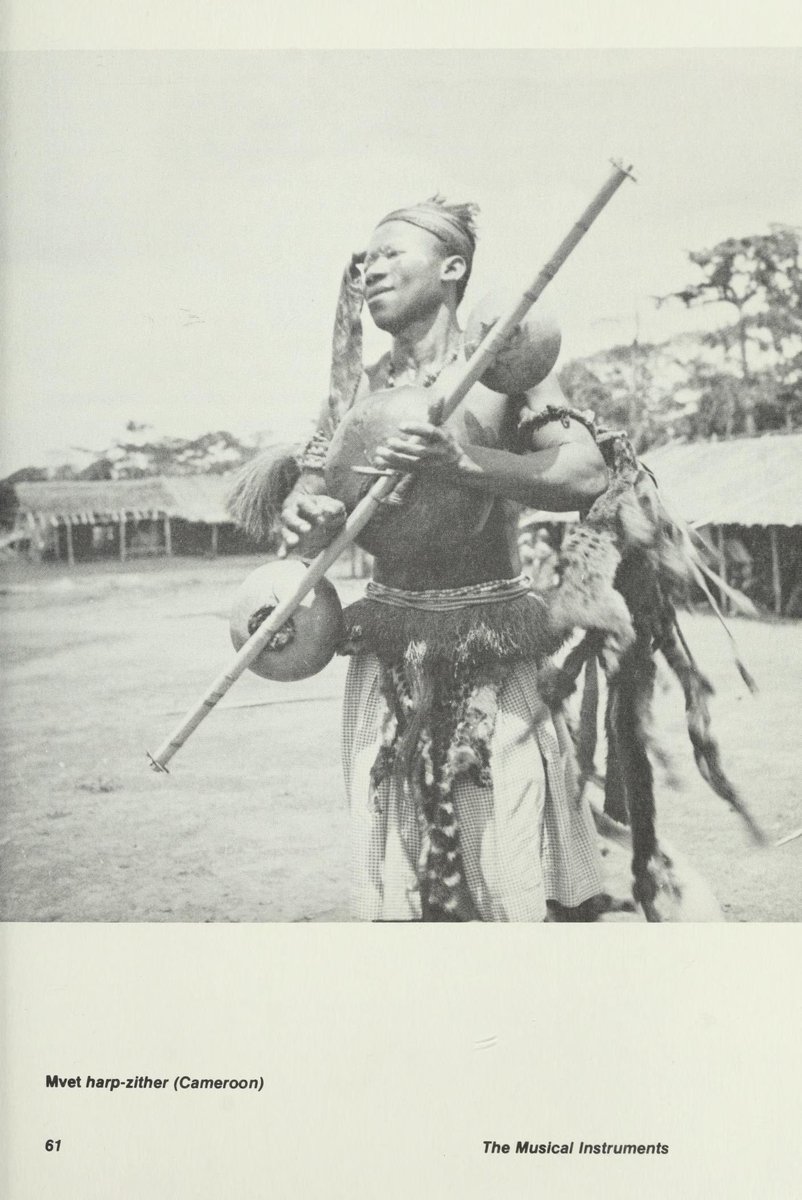
The mvet of Cameroon is a harp-zither and an instrument of epic narration. Fang versions normally have four strings raised from a palm stalk; a central bridge divides them into two playing areas. Its sound summons silence, carries the story and fills the narrator’s pauses.
The Kingdom of Kush, centered at Meroë in present-day Sudan, was one of the most important iron-producing societies of the ancient world. Archaeological evidence shows that iron technology was present in Kush by at least the sixth or early fifth century BCE, and by the first centuries CE Meroë had developed a large-scale, organized bloomery industry.
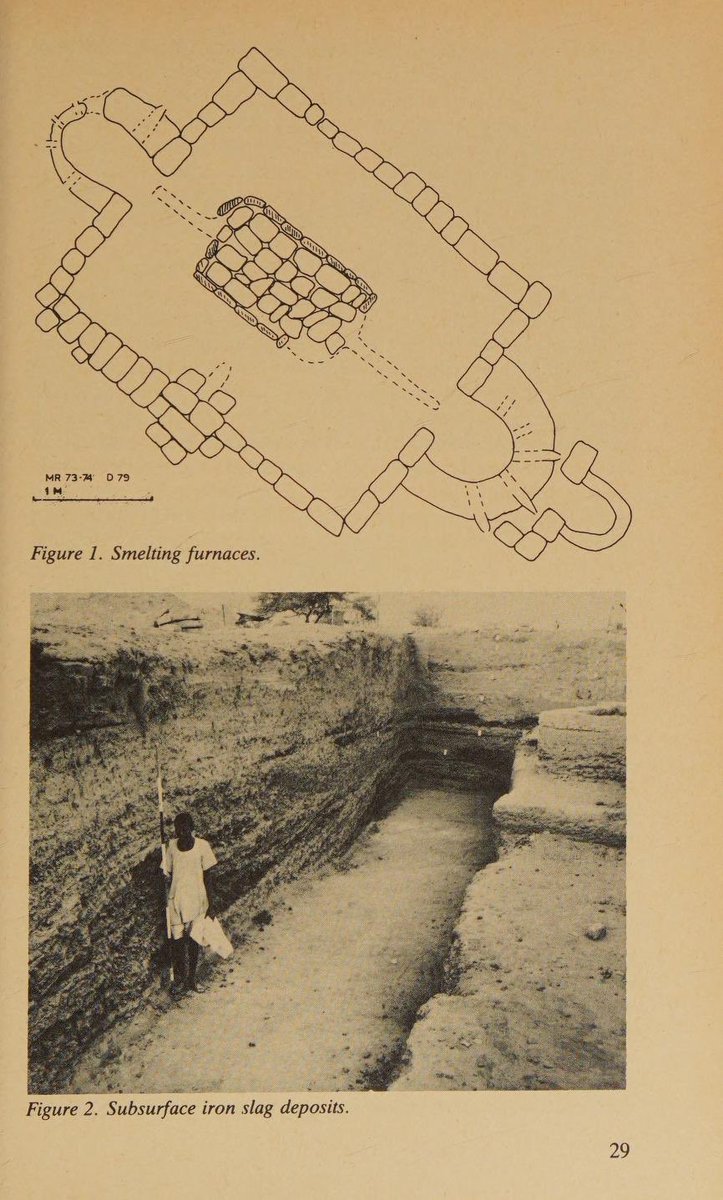
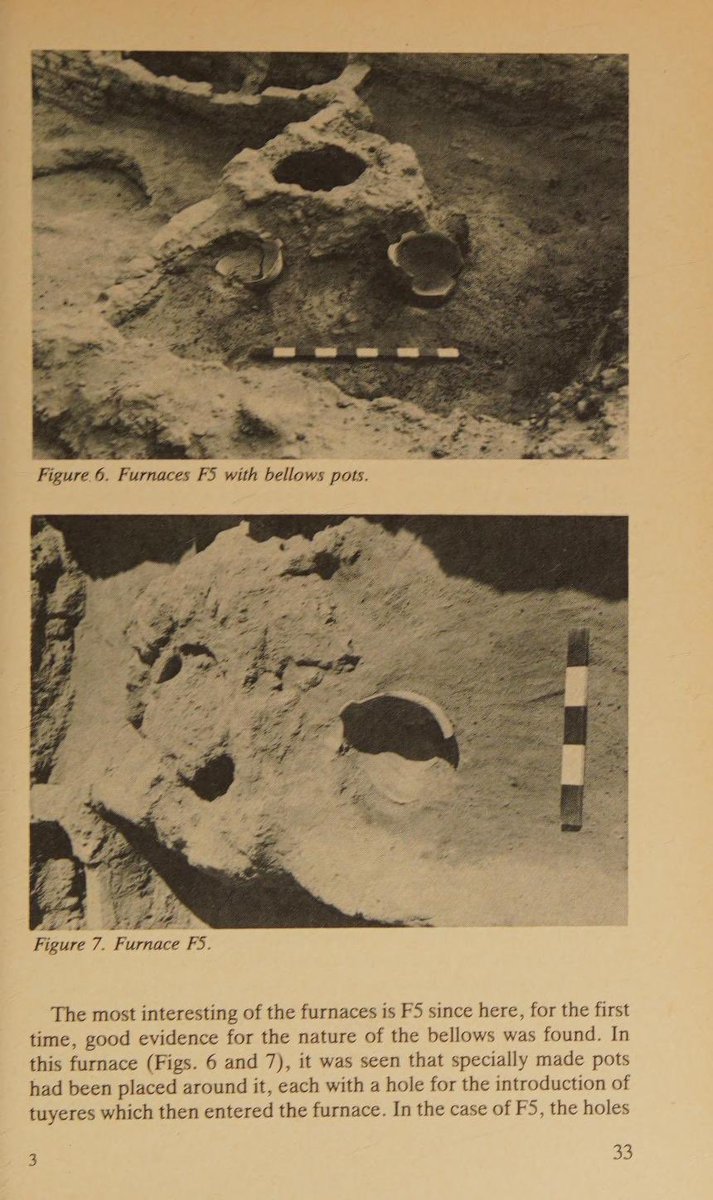
Excavated furnaces were built from fired brick, lined with refractory material, and supplied with air through multiple tuyeres connected to bellows. Kushite metallurgists carefully prepared ore, controlled furnace temperatures, tapped slag, and produced iron blooms that were later forged into tools, weapons, and other objects.
The scale of production at Meroë was extraordinary. Massive slag mounds, some containing tens of thousands of cubic metres of waste, demonstrate sustained and specialized ironworking rather than small-scale household production. The repeated reconstruction of furnaces in dedicated workshop areas suggests the existence of skilled metallurgical communities.
The decline of Meroitic metallurgy appears to have been linked to environmental, economic, and political pressures. Iron smelting required enormous quantities of charcoal, placing heavy demands on local woodlands and potentially contributing to deforestation and rising fuel costs.
Scholars argue that resource depletion may have weakened the centralized system that supported large-scale production, making the kingdom more vulnerable to broader challenges. Axum did not just conquer a thriving Meroë; the once-mighty Nubian kingdom was already in a severe state of collapse and heavily fragmented due to climate change, deforestation, and rival nomadic incursions.
Although Meroe was eventually conquered during the expansion of Aksumite power in the fourth century CE, ironworking likely continued for some time afterward, demonstrating the resilience of the technological knowledge developed at Meroë.
Source: Randi Haaland and Peter Shinnie, eds., African Iron Working: Ancient and Traditional (Oslo: Norwegian University Press, 1985).
Sowing Board Games of West and East Africa
Sowing board games serve as an intuitive, hands-on application of modular arithmetic independently developed on the continent in varied forms and is one of the oldest families of board games in the world.
In West Africa, Oware utilizes a rhythmic distribution of seeds to capture opposing resources. In East Africa, Bao employs a more complex board layout and movement set, while Omweso serves as a high level strategic pursuit.
Beyond entertainment, these games were highly valued by rulers and commoners for sharpening predictive logic and resource management. These games allowed communities to cultivate a culture of mental discipline and strategic foresight.
I’m assuming these are often left of the conversation of cool looking African blades because not enough people know about them? Because these should def be on the list of cool looking African weapons
The Lukasa Memory Boards of the Luba Empire
In the Luba Empire of Central Africa, the Lukasa emerged as a sophisticated tool for historical record-keeping and governance. They were handheld boards, carved from wood and inlaid with beads and shells and functioned as physical mnemonic devices for the Luba royal court.
The boards served as complex data maps where the position, color, and texture of each bead encoded specific events, kinship lineages, and political treaties. Trained specialists, known as the Mbudye, used these boards to recite the empire's history with accuracy during legal and political disputes.
It was a complete and independently developed system of knowledge management.
Fractal Urbanism in West and Central Africa
West and Central African societies used recursive geometry to plan their cities long before the West coined the term "fractals" in the 1970s. In the Niger Congo regions, this meant building settlements where the same pattern repeated at every scale, from the layout of a single home to the entire city grid.
This was an independent development in indigenous mathematics. Builders encoded their kinship systems and social hierarchies into their housing structures, allowing these cities to expand and scale while keeping the social and structural order intact.
We have began posting rammed earth content from what we build,on youtube.
Subscribe as more content is coming up daily, this week.
Share widely.
https://t.co/W4DeYKzLU6
Why Thousands Of Tobagonians Marched To Reclaim Beaches In 1970
During a series of interviews with Visual Art and Production on 26 July 2020, activists Embau Moheni, Opoku Ware, and Clive Nunez recounted how thousands of people in the Caribbean state of Trinidad and Tobago confronted a Swedish-owned hotel in April 1970 to demand access to public beaches.
Five decades later, the 1970 Black Power Revolution for access to land, water, and freedom from foreign control following independence from Britain remains a powerful reminder of how ordinary people can organise in the face of state crackdowns. Unfortunately, authorities arrested key figures, dissolving the movement’s momentum.
Video credit: Visual Art and Production (YouTube)
Mining, farming and construction was invented independently by Bantu Speaking Peoples in Africa.
Not through Anatolia, not through Ancient Egypt/Kemet or Arabia but independently in Central-Southern Africa whilst maintaining a libertarian culture.