💣🛢️ CUANDO LOS PERIODISTAS LLORAN
“SE CAE VACA MUERTA”,
SABÉS QUE NO ENTIENDEN PETRÓLEO
Cada vez que pasa algo en Venezuela, aparece el mismo coro:
“Ahora con Venezuela, se termina Vaca Muerta”
No es análisis geopolítico. No es análisis económico.
Es ignorancia técnica con micrófono.
Vamos por partes y sin anestesia.
❌ ERROR #1: CREER QUE TODOS LOS RECURSOS SON IGUALES
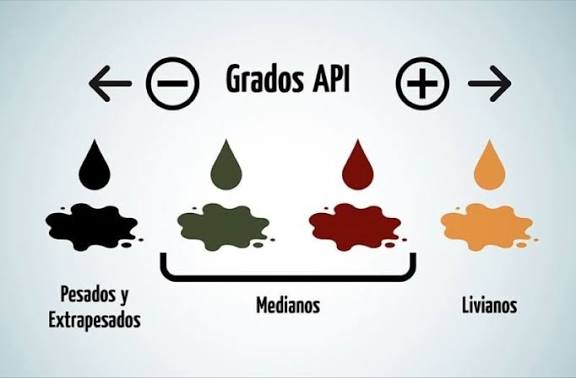
El petróleo venezolano:
•Extra pesado
•API 8–14
•Mucho azufre
•Alta viscosidad
•Necesita diluyentes, mejoradores y refinerías específicas. O sea, gasto operativo muy elevado.
El de Vaca Muerta:
•Liviano y dulce
•API 39–42
•Bajo azufre
•Fluido
•Refinable en casi cualquier parte del mundo
👉 No compiten. No se reemplazan. No se pisan.
Decir que uno “tumba” al otro es como decir que el carbón reemplaza al gas natural.
❌ ERROR #2: CONFUNDIR RESERVAS Y RECURSOS CON PRODUCCIÓN
Venezuela tiene reservas enormes, sí es posible.
Pero..
•Produce ~1 millón bpd
•Infraestructura devastada
•Necesita USD 80–100 mil millones
•8–10 años para volver a ser relevante
Eso no mueve el mercado hoy.
Ni mañana.
Ni el año que viene.
Mientras tanto, Vaca Muerta:
•Produce ~850.000 bpd
•Crece año contra año
•Tiene inversión activa
•Tiene infraestructura en expansión
📌 El mercado se mueve con producción de barriles reales, no con frases apocalípticas tiradas al vuelo en un medio.
❌ ERROR #3: NO ENTENDER CÓMO FUNCIONAN LAS REFINERÍAS
Las refinerías grandes mezclan crudos.
•El pesado aporta residuo
•El liviano aporta fluidez y rendimiento
👉 Venezuela necesita crudos livianos.
👉 Vaca Muerta sirve para eso.
O sea:
Lejos de ser una amenaza, hasta puede decirse que son complementarios.
Pero eso no entra en un tweet escrito por alguien que con suerte es Licenciado en Comunicación.
❌ ERROR #4: IMAGINAR UN “SHOCK” QUE EL MERCADO NO VE
•Venezuela = <1 % del supply global
•PIB = 0,07 % del mundo
•El precio del Brent no reaccionó.
El mercado sigue mirando:
•EE.UU.
•OPEP+
•sobreoferta estructural
📉 Capturaron a Maduro y no hubo convalidación a precios.
Fin. Si no impacta el precio, no existe el shock.
🧠 TRADUCIDO A LA GENTE NORMAL
•Vaca Muerta no depende de Venezuela.
•Los inversores de Vaca Muerta no miran Venezuela.
•Los crudos no compiten.
•Los tiempos no coinciden.
•Los riesgos no se parecen.
Los que anuncian la “debacle”:
•confunden calidad con cantidad,
•reservas con producción,
•geopolítica con PowerPoint.
🔚 CONCLUSIÓN (LA QUE NO QUIEREN LEER)
No hay derrumbe.
No hay amenaza.
No hay efecto dominó.
Hay:
•shale competitivo,
•crudo liviano demandado,
•inversión en curso,
•y analistas reciclando conceptos de los 90.
🛢️📊 Vaca Muerta no se cae.
Se caen los presagios de los que nunca entendieron cómo funciona la industria del petróleo ni la economía mundial.
Entonces ¿Seguimos hablando de datos, barriles y producción o nos sentamos a escuchar las mismas pavadas de siempre?
GOOD NEWS 🚨 TESLA HAS SOLVED THE WIRELESS CHARGING PARADOX WITH UNBALANCED DUTY CYCLES ⚡️
When Elon Musk unveiled the Cybercab without a charge port, the automotive world collectively raised an eyebrow.
The idea was audacious: a vehicle completely reliant on wireless charging, a technology historically plagued by inefficiency and safety concerns.
But with the release of patent US 20250357799 A1 on November 20, 2025, the other shoe has finally dropped. This filing isn't just paperwork; it’s the engineering answer key that explains how Tesla plans to pull off the "no-plug" revolution without frying electronics or wasting massive amounts of energy. We are finally looking at the physics that turns the Robotaxi dream into a viable reality.
⚖️ The problem: The hidden cost of wireless power
To understand why this patent matters, you have to understand the messy reality of wireless power. Sending electricity through the air relies on magnetic fields dancing between a pad on the ground and a pad on the car. Ideally, all that energy goes straight into the battery. In reality, big induction coils act like unintended capacitors, allowing "leakage current" to escape and flow into the car's chassis or the ground equipment.
It is a classic case of electrical waste, but the consequences are worse than just a slightly higher electric bill. This leakage creates electromagnetic noise that can interfere with sensitive electronics and, in high-power scenarios, pose safety risks. The culprit is usually the control strategy; traditional methods try to regulate power by briefly "shorting" the circuit, which inadvertently causes the common mode voltage—the electrical baseline of the system—to spike wildly.
🔗 Tesla's solution: Unbalanced duty cycles
Tesla’s engineers found a way to fix this, and it requires rethinking the rhythm of the charge. Instead of using the industry-standard method that frequently pauses at a "medium" or zero-voltage state to throttle power, Tesla’s new system refuses to sit in the middle. It toggles directly and sharply between a high-voltage state and a low-voltage state.
The genius lies in the timing. The system holds these states for unequal durations—an "unbalanced duty cycle." By keeping the circuit in its dominant state for roughly sixty to eighty percent of the time and the secondary state for the remainder, the system can precisely manage power flow without ever entering that problematic zero-voltage state. It’s like finding a specific drumbeat that cancels out the echoing noise in a room; the power gets through, but the leakage conditions are effectively neutralized.
🧠 Logic: Dynamic and conditional activation
What makes this system feel truly modern is that it isn't a blunt instrument. The patent describes a "switch control circuit" that acts like a smart conductor. It doesn't force this unbalanced rhythm all the time; instead, it watches the charging session like a hawk.
It activates this specific leakage-suppression mode only when necessary—perhaps when the battery voltage hits a certain threshold, the state of charge reaches a specific percentage, or even when the car parks a little crookedly, changing the inductance. The car essentially adapts its electrical heartbeat to the physical reality of the parking job, ensuring peak efficiency when things are perfect and maximizing safety when they aren't.
🛠️ Topologies: Adapting to different circuit architectures
Tesla is ensuring this logic works across its entire potential fleet, regardless of what hardware is under the hood. The patent explicitly maps this solution to the two heavyweights of power electronics: the H-bridge and the stacked half-bridge.
For the standard H-bridge, the system avoids that "zeroing" state that bridges positive and negative cycles. For the beefier stacked half-bridge—the kind needed for very high voltages—it skips the "medium" voltage step that usually sits halfway between the maximum and minimum. By forcing the voltage to swing fully from rail to rail without lingering in the middle, Tesla ensures the physics of the leakage cancellation hold true regardless of the circuit complexity.
⚡ Voltage: Supporting high-power architectures
This is where the patent signals Tesla’s long-term ambitions. The technology is designed to handle a massive voltage range, from one hundred all the way up to one thousand volts. While it mentions standard three-hundred-fifty-volt systems, the explicit support for eight-hundred to one-thousand-volt architectures is a clear nod to the Cybertruck and the Tesla Semi.
This means the "no-plug" future isn't just for small, efficient city cars. This leakage reduction technique is robust enough to handle the massive power throughput required to wirelessly charge a heavy-duty truck or a performance vehicle, future-proofing the infrastructure for the next decade of EV development.
📉 Mechanism: Reducing common mode voltage
If you could see the electrical waves described in the patent, the difference would be startling. In a standard setup, the common mode voltage—the primary driver of that nasty leakage—looks like a storm, fluctuating wildly between positive and negative two hundred volts.
Under Tesla’s new unbalanced scheme, that storm calms into a flat lake. The common mode voltage is effectively flattened, fluctuating only slightly around zero. The simulations are impressive, showing leakage voltage dropping to less than twenty microvolts. That is not just an incremental improvement; it is an orders-of-magnitude reduction that takes wireless charging from "feasible but noisy" to "silent and safe."
🔥 Efficiency: Minimizing switching losses
There is a cherry on top for efficiency nerds: this method actually wastes less heat. Every time a transistor switches states, a tiny bit of energy is lost. By transitioning directly between high and low states without stopping at an intermediate step, the system reduces the total number of switching events.
Fewer switches mean less "deadtime" loss and less heat generation, ensuring more energy actually ends up in the battery pack. Furthermore, because the electrical noise is so thoroughly dampened, the car becomes quieter in the radio frequency spectrum, making it much easier to pass strict regulatory certifications for electromagnetic interference.
🚀 The grand unification for wireless charging: Safety meets Speed
This patent is the shield, but it works in tandem with a previous breakthrough (US20250373083 A1) that acts as the sword. Together, they solve the brutal paradox of wireless engineering: Safety vs. Efficiency.
✅ The "Cruising" Mode ('083): When conditions are safe, the system uses a "partial toggling" technique to cut voltage swings in half. This drastically lowers heat, allowing the Cybercab to charge at blazing speeds (25kW+) without melting its components.
✅ The "Stealth" Mode ('799): When leakage risks rise, this new patent kicks in. It modifies the switching pattern to actively cancel out noise and voltage spikes, prioritizing safety above all else.
By combining these two innovations, Tesla has removed the final human bottleneck. The Cybercab can now refuel itself faster than a human could plug it in, safer than a standard wall outlet, and reliably enough to run 24/7 without a single robotic arm in sight. The plug is officially dead.
Claro claro claro. Democracia era cuando mataban fiscales y se la llevaban toda en bolsos al departamento de Cristina para bancarte a vos. @pagina12@VHMok
La situación fiscal de PBA es alarmante. Aun habiendo subido fuertemente los impuestos, la provincia mantiene un fuerte déficit. Kicillof quiere tomar más deuda, cuando lo que debería hacer es bajar el gasto. La deuda debería tomarse solo para rollover (pagar vencimientos viejos), no para financiar el despilfarro del Estado provincial. @Econometrica
De onda, en qué parte de la biología mundial está escrito que los impuestos reducen las flatulencias?
Cuál es la acción supuestamente remediadora de un impuesto (o de un gasto) respecto a una emisión gaseosa de un aparato digestivo?
PBA es un atentado a la producción.
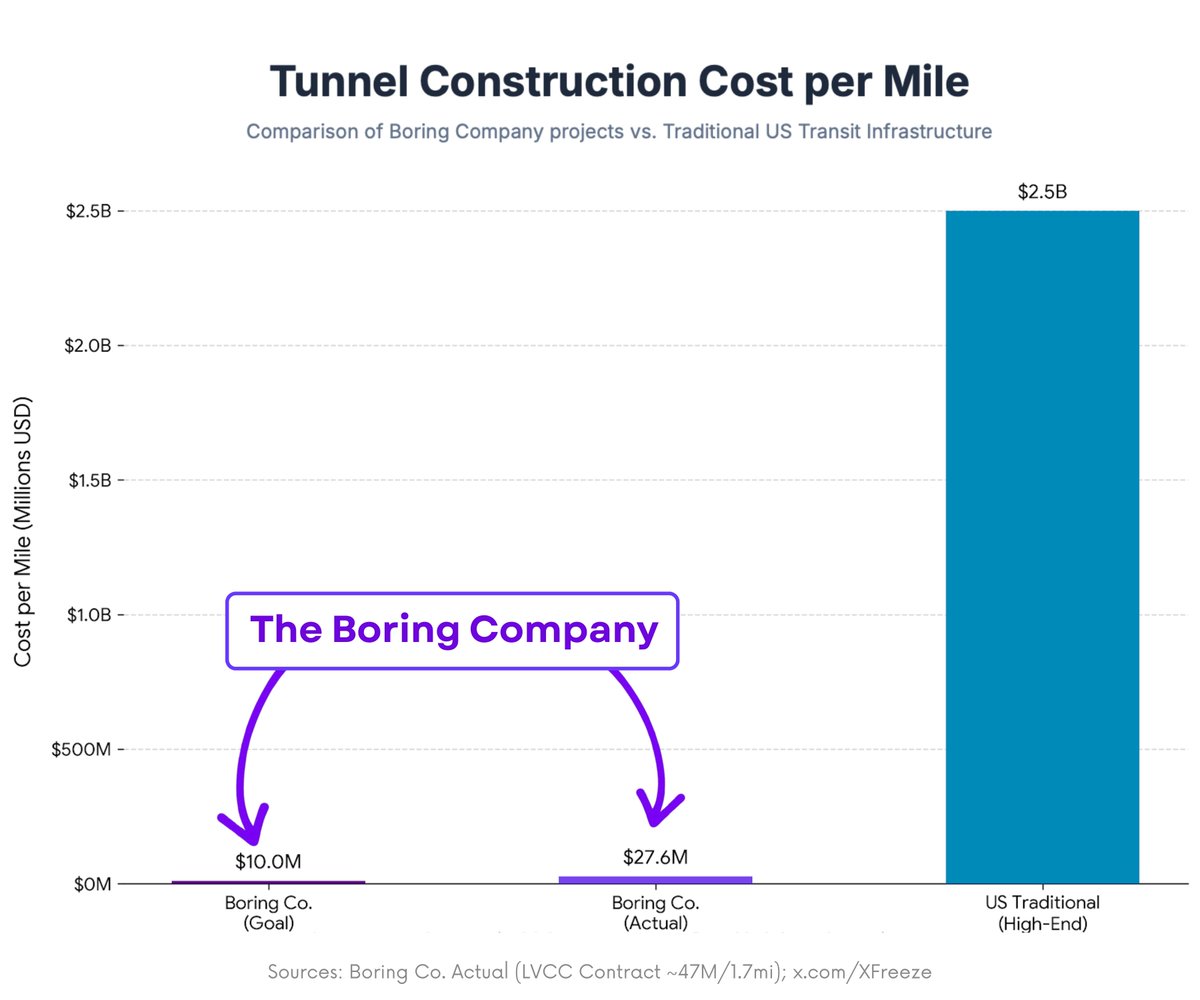
Elon is building tunnels while literally burying ~99% of the cost that takes to build it
US Traditional subway tunnels cost ~$2.5 BILLION per mile
The moment Elon saw traditional tunnel costs, he said: "These are crazy numbers"
The @BoringCompany didn’t just lower costs, they built tunnels for ~$27M per mile that are more reliable, simpler, and built for the future.....
That's not 10% or 50% cheaper
That's ~99% cheaper!
Even adjusted for size, the efficiency gap is unexplainable
With new Prufrock, they're targeting for just $10M per mile
The gap is so massive, it changes everything:
> Cities can afford 10x more transit routes Point-to-point travel (no stops)
> Less time stuck in traffic
> Taxpayers stop paying inflated costs for outdated infrastructure
The media ignores this, but Elon is quietly rewriting the infrastructure of the future
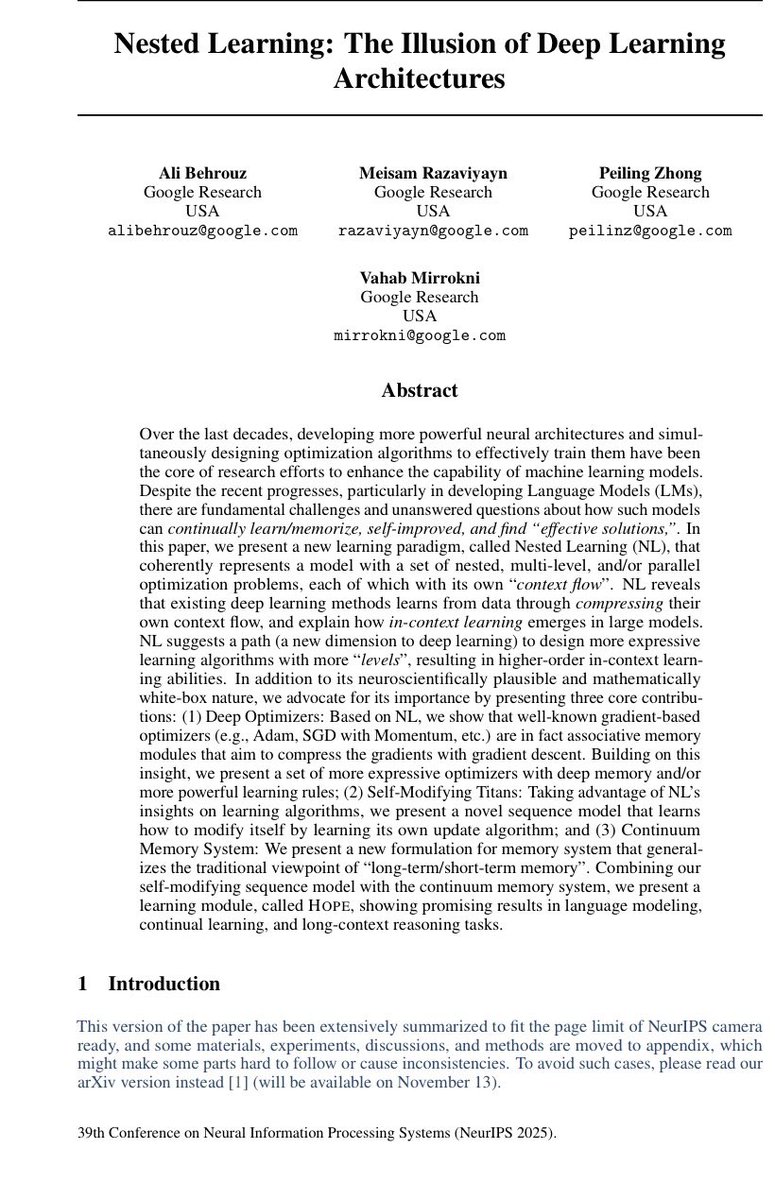
Google acaba de lanzar esta BOMBA atómica de paper, quizás comparable con el que comenzó la revolución de IA.
No exagero: explica por qué ChatGPT, Gemini,etc tienen el mismo problema: no pueden aprender después de su entrenamiento. La solución que proponen es MUY elegante: 🧵
Sorpresita de fin de año: Kicillof duplica el impuesto inmobiliario.
Hay que pagar la movilización del aparato en septiembre, las cuenta DNI, los viajes de egresados. Siempre la fiesta peronista termina en impuestazo, deuda o inflación. O todas juntas.
https://t.co/GRBr5D6Ifn
La absoluta mayoría de las supuestas concesiones que hace Argentina a los Estados Unidos en este acuerdo comercial son medidas que necesariamente debíamos tomar para superar 80 años de decadencia: dejar de ser piratas con las patentes, aceptar medicamentos avalados por una de las agencias más responsables del mundo, disminuir barreras paraarancelarias y prácticas burocráticas que traban la producción. Coherente con sí mismo, el peronismo está en contra de todo este programa y por lo tanto, en contra del acuerdo.
Esta empresa iba a la quiebra, y gracias a su privatización se conservaron los puestos de trabajo, está creciendo, gana plata y genera crecimiento para la Argentina.
El Estado no sabe de trenes, de aviones, de agua, de energía, de construcción, del negocio metalúrgico ni de ninguno de los sectores en los que ha querido ser empresario.
Cuando gestiona el privado, el que tiene conocimiento sobre el negocio, las cosas funcionan.
Streaming services are getting really shitty. The big reason Piracy died was becouse the service we got from Netflix 10 years ago was great.
Now, to watch same amount of content, I need several streaming services, some content are even geofenced if you dont use VPN. It's like the entertainment industry is begging for Piracy to come back.
Si el 40-50% de los empleados privados esta en negro, eso implica que hay toda una cadena productiva que debe generar negro para pagarles.
Pero la educación, la seguridad, la salud y otros gastos públicos, los pagan quienes están en blanco a pesar que los usan todos.
La carga fiscal sobre la mitad que esta en blanco es entonces mucho mas pesada de lo que debería ser, desalentando la inversion.
Es muy importante buscar una solución equitativa para todos.
No se puede desfinanciar los servicios básicos pero a la vez reclamar mejores prestaciones.
Y ademas es la forma de bajar los impuestos…
Buen miércoles!
Recortá el gasto, Axel. Achicá la Legislatura, cerrá ministerios, cortá el curro. Ya no hay margen para seguir subiendo impuestos. Aumentaste 20.000 empleados públicos, los servicios empeoraron y la provincia se cae a pedazos.
La Unión Soviética bonaerense se termina en 2027.