NEW WALK!! What are you doing as your staff leaves that gets them excited to come back next year?
If you don’t know what will get them excited…ASK THEM!
Admitting you don't know everything isn't weakness. Pretending you do is. #LeadFromWhoYouAre
Your PACE tells people if they are valued or in the way. I used to rush through the building as often as I could and called it being visible. It wasn’t. It was fast. It was checking a box. It wasn’t connected. BE PRESENT. As much as you can. #LeadFromWhoYouAre
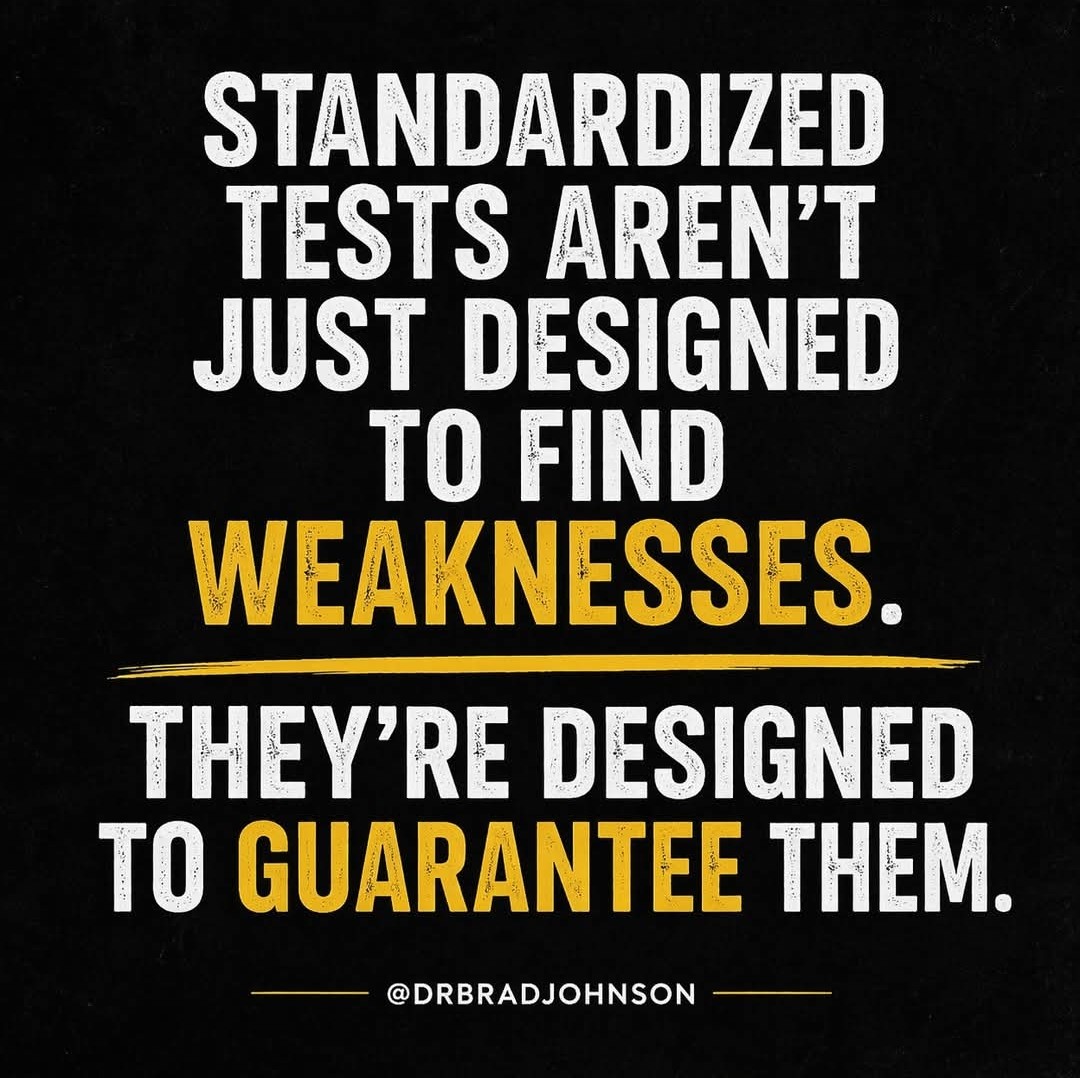
Parents, as testing season comes to an end, remember this: a test score measures a small slice of performance on one particular day. It does not measure your child’s intelligence, potential, creativity, character, work ethic, kindness, resilience, or future success.
Some kids will score high.
Some won’t.
But years from now, nobody is going to ask the mechanic fixing your brakes…
The lineman restoring power during a storm…
The construction worker building homes…
The farmer…
The welder…
The truck driver…
The firefighter…
Or the nurse…
“What did you score on your standardized test?”
Because the world has always needed more than test takers.
It needs people who can build things.
Fix things.
Lead people.
Work hard.
Care about others.
And make a difference.
A test measures a moment.
It does not measure a life, a future, or the greatness a child may one day bring to the world
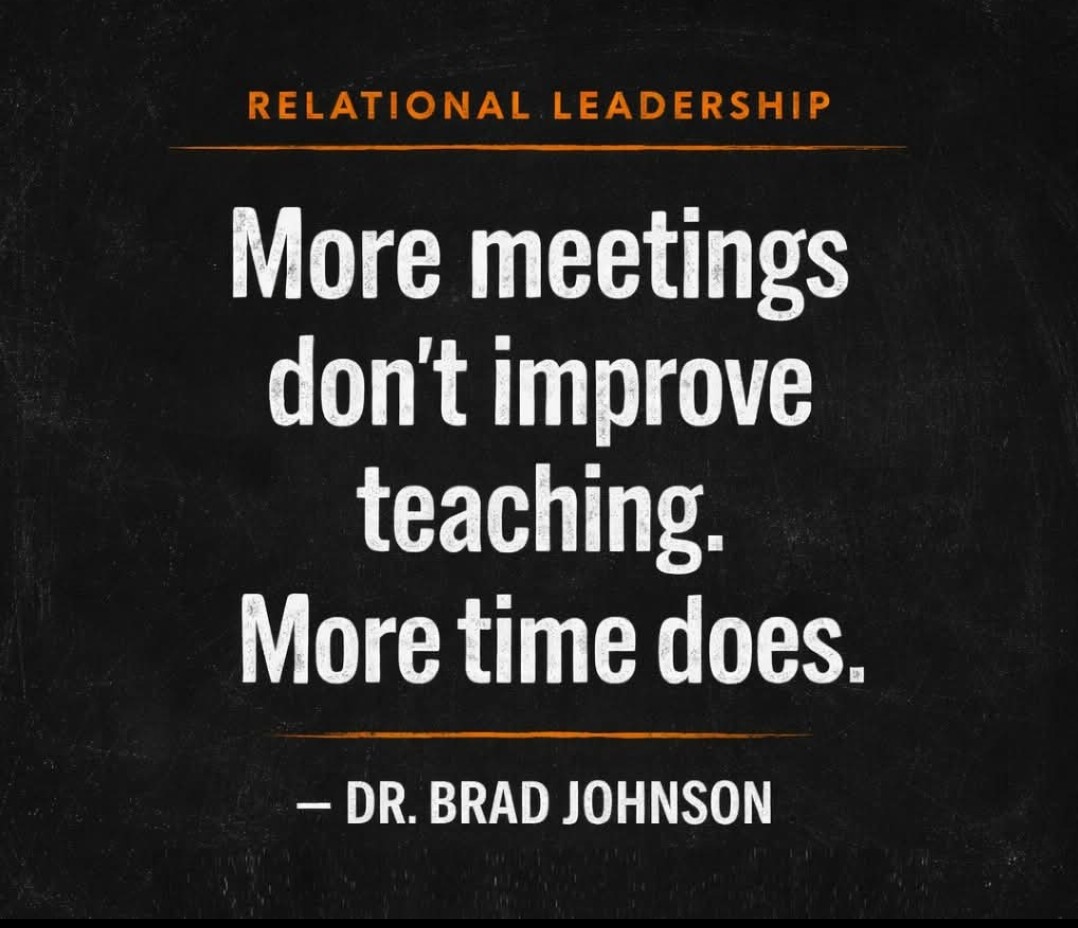
More days in school doesn’t mean more learning.
And this isn’t opinion.
The data backs it up.
The OECD has reported that simply increasing instructional time does not improve student outcomes.
Pew Research shows there’s a wide range of instructional hours across countries, with no consistent link to performance.
If time alone worked…
the countries with the most hours would dominate.
They don’t.
In fact, students in the United States already spend more time in school than many countries.
By the end of lower secondary school, students in Finland receive about 6,300 hours of instruction.
In the United States, it’s more like 9,000+ hours.
That’s a huge difference.
And yet… more time hasn’t translated into better outcomes.
So it’s not a time problem.
It’s how we use the time.
High-performing countries don’t cut arts, PE, and music to make room for more academics.
They protect them.
Because they understand these actually help improve student learning.
Movement improves focus.
Arts build creativity and thinking.
Music strengthens cognitive development.
So while we’re trying to cram more academics into more time…
They’re building better learners.
That’s why they can do less time and still get strong results.
But we keep going back to the same thinking,
if a little is good, more must be better.
That logic doesn’t hold up anywhere else.
No coach is doubling practice time thinking it will double performance.
That’s not better training… that’s overtraining.
And overtraining doesn’t build athletes, it breaks them down.
The brain works the same way.
There’s a limit to how much it can take in before more actually starts working against you.
You don’t get better learning—you get fatigue, disengagement, and burnout.
Especially with kids.
So when we add more days without changing the experience, nothing really improves.
We’re just stretching out the same problem over a longer period of time.
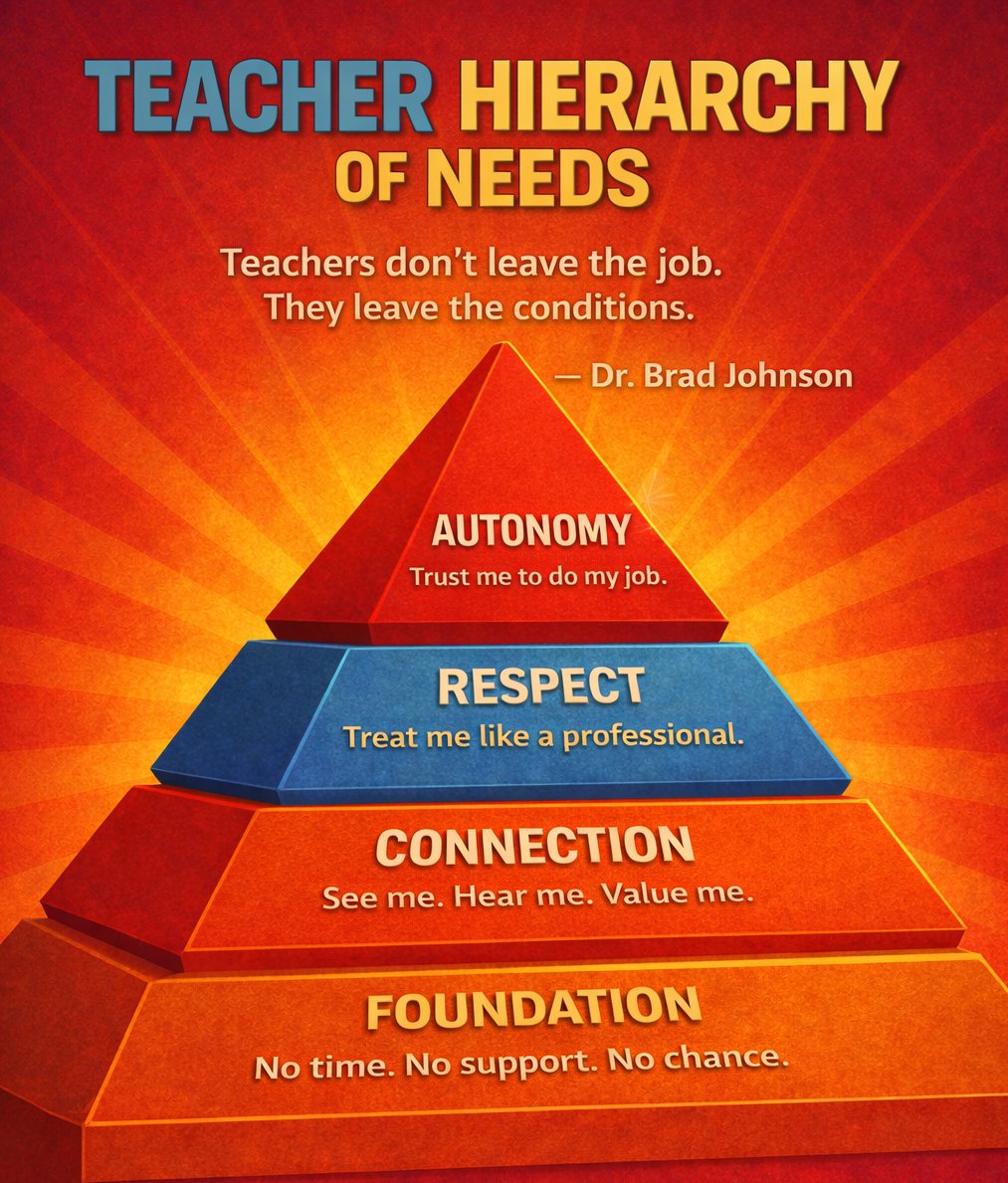
We don’t need more time.
We need to use time the way kids actually learn,
not the way it gets designed by people who aren’t in the room.
There should be a teacher on every school board…
and at every table where education decisions are made.
Because right now, we’re making policies for classrooms
without the people who actually live in them.
You wouldn’t design a hospital system without doctors.
You wouldn’t build a plane without pilots.
But in education…
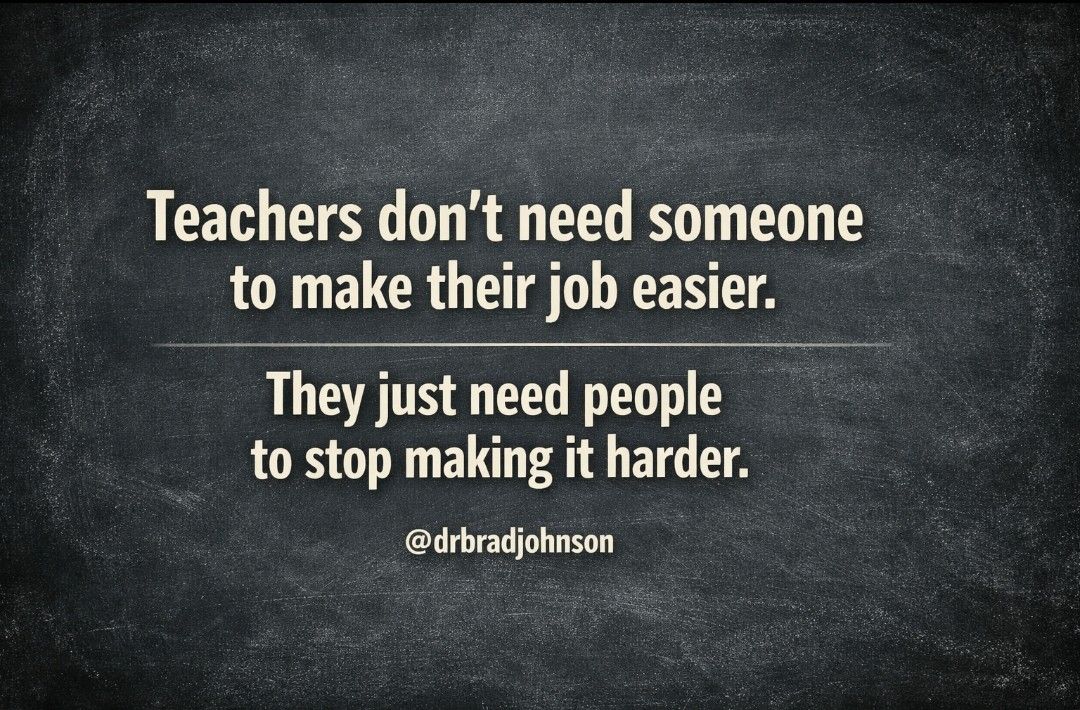
we leave teachers out of the room
“Managing” teaching and learning?
Sorry, admin, all you’re likely managing is the “look of learning.”
Authentic learning is not a matter to be managed from the outside.
It’s an inside job.
It’s our job.
#TeachersGonnaTeach
Want to change education overnight?
Get rid of standardized tests.
Get rid of standardized teacher evaluations.
Because nothing about students or teachers is standard.
Machines are standardized.
Assembly lines are standardized.
Education isn’t.
But we keep treating people like parts in a system.
And that’s how you keep getting mediocrity
We don’t have a classroom management problem.
We have an emotional regulation crisis that teachers are being asked to handle.
Somehow, “classroom management” has turned into:
• de-escalating trauma
• supporting anxiety and depression
• calming panic attacks
• breaking up fights
• being cursed at, threatened, and even assaulted
• being the counselor, social worker, and crisis team
And at the same time…
we remove the very things that actually help:
• recess
• movement
• art
• play
• connection
Teachers aren’t trained for this.
And they shouldn’t have to be.
Classroom management was never meant to do all of this.
It’s about:
relationships
rules
routines
responsibility
That’s it.
It was never designed to replace what families, communities, and systems failed to provide.
And until we stop offloading every societal failure onto schools,
teachers will keep drowning under expectations no human can meet.
Veteran teachers don’t struggle with feedback because they’re unwilling to grow.
The issue is the system treats a first-year teacher and a 20-year teacher the same. That doesn’t make sense.
A new teacher is building a foundation. They need structure, modeling, and direct feedback. A veteran teacher is in a different place. They’ve taught thousands of lessons, worked with hundreds of students, and refined their craft. They need someone who can challenge them and understand their level.
But the system applies the same rubric, checklist, and process to everyone.
And it’s not working.
Large-scale evaluation reforms haven’t shown meaningful gains in student achievement. In another study, only about one in four teachers said feedback actually improved their teaching.
That should tell us something.
The strongest research points elsewhere. Instructional coaching shows significant improvement in both teaching and student outcomes. Why? It’s ongoing, specific, and grounded in real classrooms. It meets teachers where they are.
That’s the difference.
You can standardize evaluation, but you can’t standardize growth.
We’ve tried to fix weak feedback by making it more standardized. The problem isn’t the form. It’s the fit.
This isn’t about administrators doing something wrong. Most are doing what they’ve been asked to do. The system just doesn’t match the complexity of the work.
A veteran teacher doesn’t need more boxes checked. They need someone who understands what they’re trying to do and can think with them at a high level.
Evaluation should be less about judging and more about helping.
More aspirational. More conversational.
Not “Here’s what to fix,” but:
What are you working on?
What’s been effective?
Where do you want to grow?
Because growth is voluntary. You can require evaluation, but you can’t force improvement.
That comes down to credibility and relevance.
Teachers act on feedback when they believe the person giving it understands their work, content, and students.
That’s why coaching works. It’s ongoing, specific, and built around real practice. It creates ownership, not compliance.
Veteran teachers don’t ignore feedback because they think they know everything. They ignore feedback that doesn’t match their level.
After enough years, you learn to filter what helps from what just checks a box.
Because growth isn’t one-size-fits-all.
And pretending it is doesn’t make it better. It just makes it look more organized.
References:
National Bureau of Economic Research
American Educational Research Association / American Educational Research Journal
Review of Educational Research