Partly stimulated by: Centor RM, Spellberg B, Shaneyfelt T. Annals On Call: Guidelines With Humility. Ann Intern Med. Podcast. doi:10.7326/A20-0026 @AnnalsofIM on Call
Guidelines We Trusted Before We Tested Them https://t.co/mWsjnPAjsn
New review 📃 🔥 off the press... What if trauma analgesia came in an inhaler instead of an IV?
Low-dose inhaled methoxyflurane—often called the “green whistle”—is a self-administered, non-opioid analgesic widely used outside the United States.
BLUF: Methoxyflurane appears to be a rapid, portable, and well-tolerated option for acute traumatic pain—but additional military-relevant and comparative studies would be helpful to define its role in U.S. military and civilian trauma systems.
This scoping review included 22 studies:
• 13 randomized trials
• 5 systematic reviews
• 4 observational studies
Across studies, methoxyflurane provided rapid, clinically meaningful pain relief—often beginning within 3–5 minutes, with the greatest benefit occurring during the first 10–20 minutes.
Potential advantages include:
• No IV access required
• Compact and lightweight
• Patient-controlled administration
• Minimal monitoring and logistical burden
• No controlled-substance handling
• Potential usefulness during transport, mass-casualty care, and austere operations
Most adverse effects were mild and transient, including dizziness and somnolence. The kidney and liver toxicity historically associated with methoxyflurane occurred with much larger anesthetic exposures and has not been clearly demonstrated with short-term analgesic dosing.
Important limitations: The available studies were heterogeneous, several were open label, and long-term or repeated-exposure safety remains incompletely characterized. Direct comparisons with TCCC analgesics such as ketamine and oral transmucosal fentanyl citrate are lacking. Methoxyflurane is also not currently FDA approved in the United States.
https://t.co/1bIBuGQLXq
#emergency #emergencymedicine #prehospital #medic #science
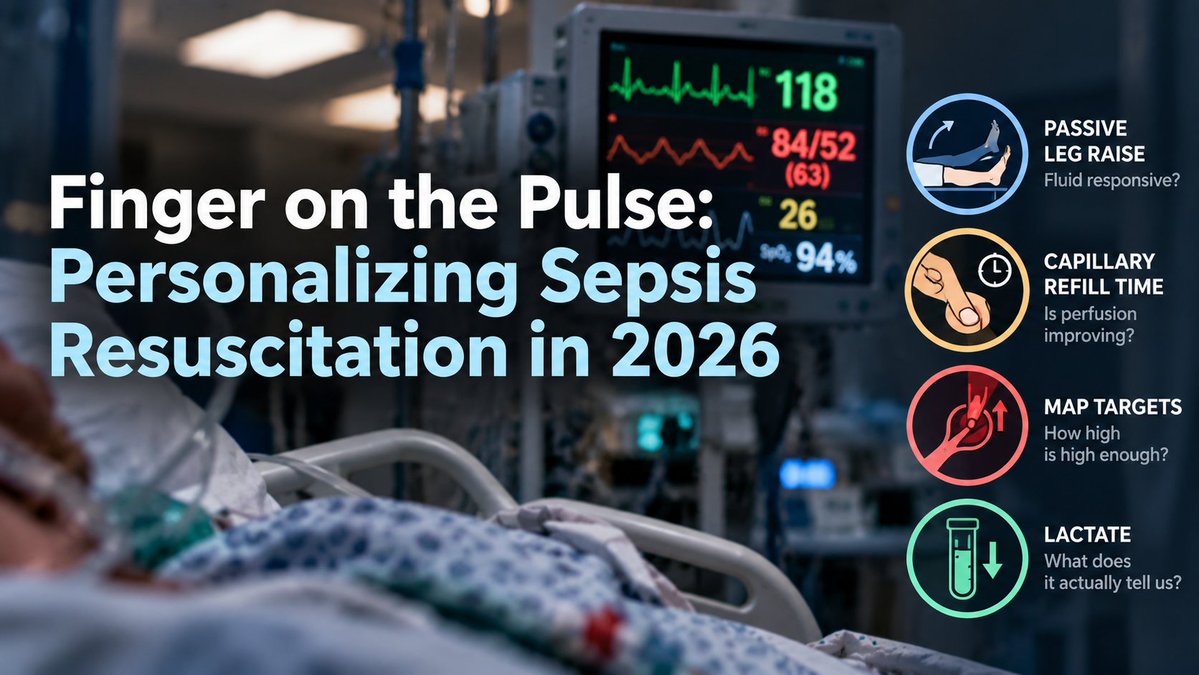
🚨 New on EMOttawa: Sepsis resuscitation in 2026
You’ve given the first litre. Antibiotics are in. Pressors are running.
Now what?
💧 Is more fluid actually helpful?
🎯 Is MAP 65 always the target?
🩸 Should we still chase lactate?
👆 What can capillary refill tell us?
Dr. Arora breaks down a more personalized approach to septic shock, including ANDROMEDA-SHOCK 2 and the 2026 Surviving Sepsis updates:
https://t.co/tqN43GiF90
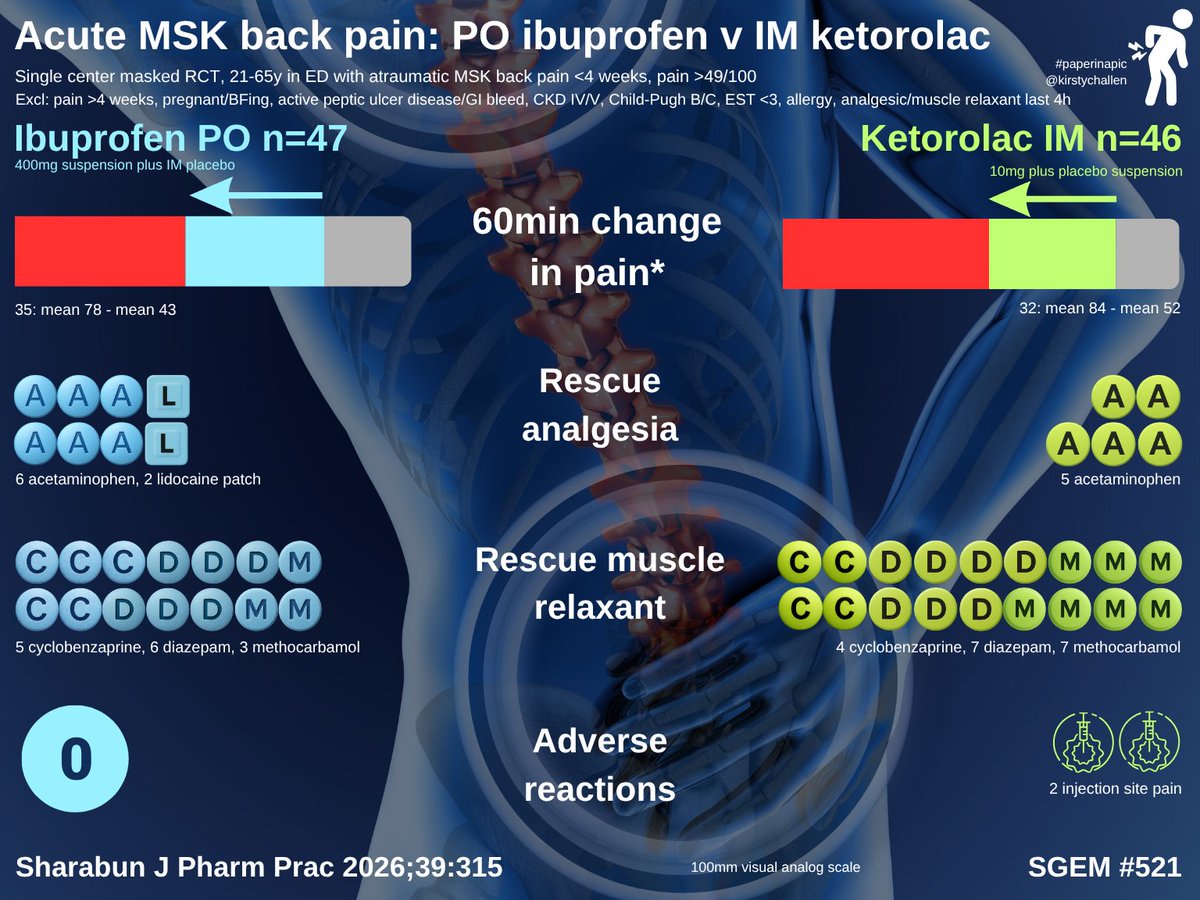
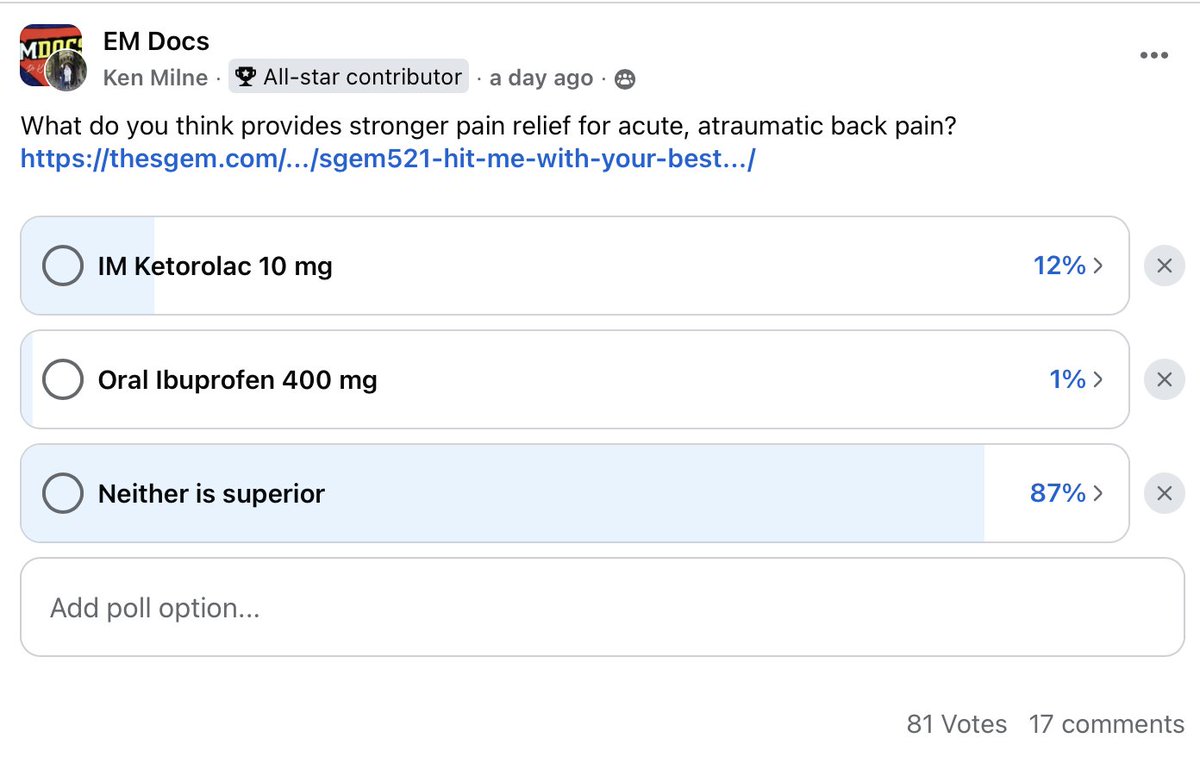
IM ketorolac was not shown to be superior to oral ibuprofen in this study of acute, atraumatic back pain.
https://t.co/q5AdNcdPyi @painfreeED@Caitlin_Jones_#EBM#FOAMed
"Personalize opioid tapering for best results". Thank you ACP for including results for our PCORI-funded national tapering study, and our Stanford Patient-Centered Opioid Tapering Toolkit -- a free online resource for clinicians, patients and families https://t.co/DP29lwn7af
ED 🤝 Neuro 🤯
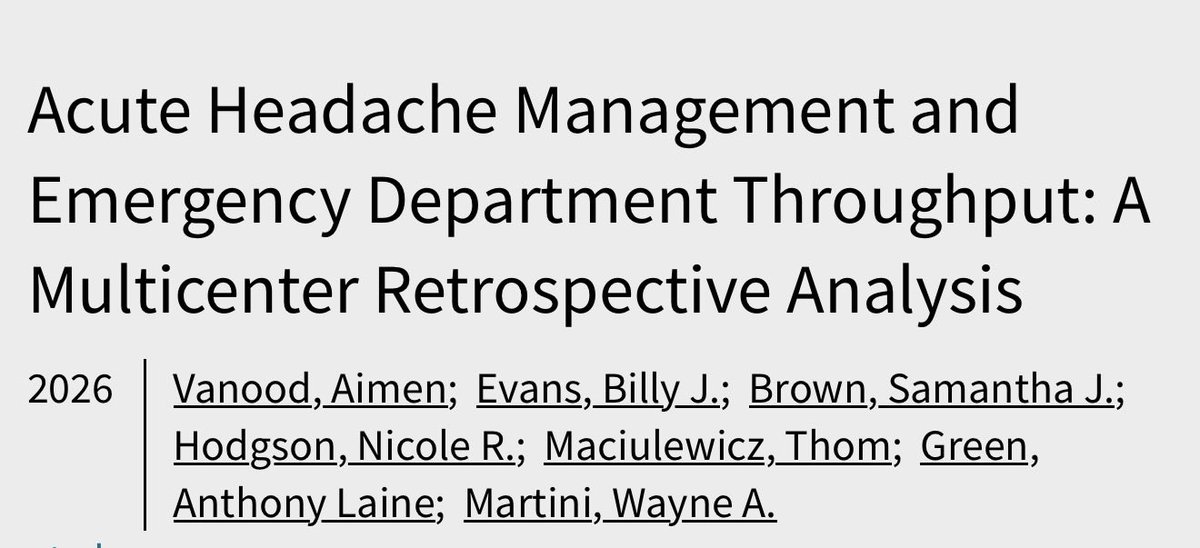
Acute Headache Management and Emergency Department Throughput: A Multicenter Retrospective Analysis
#MedTwitter#TwitteRx
https://t.co/5lAdpMLjuQ
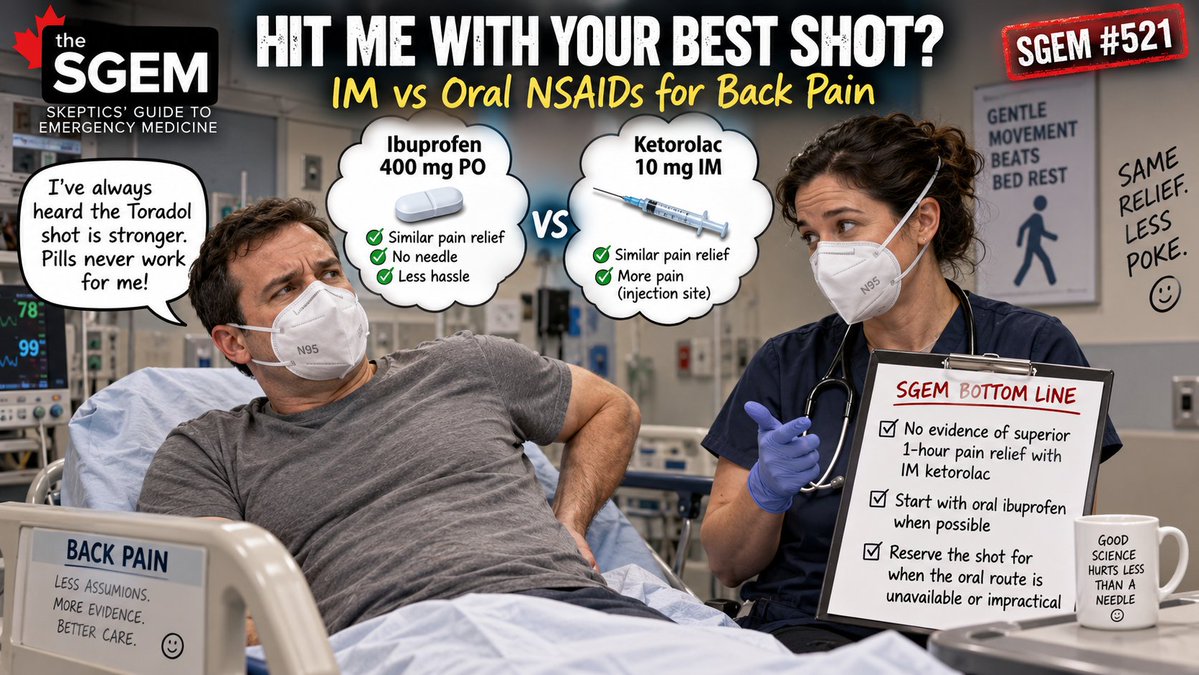
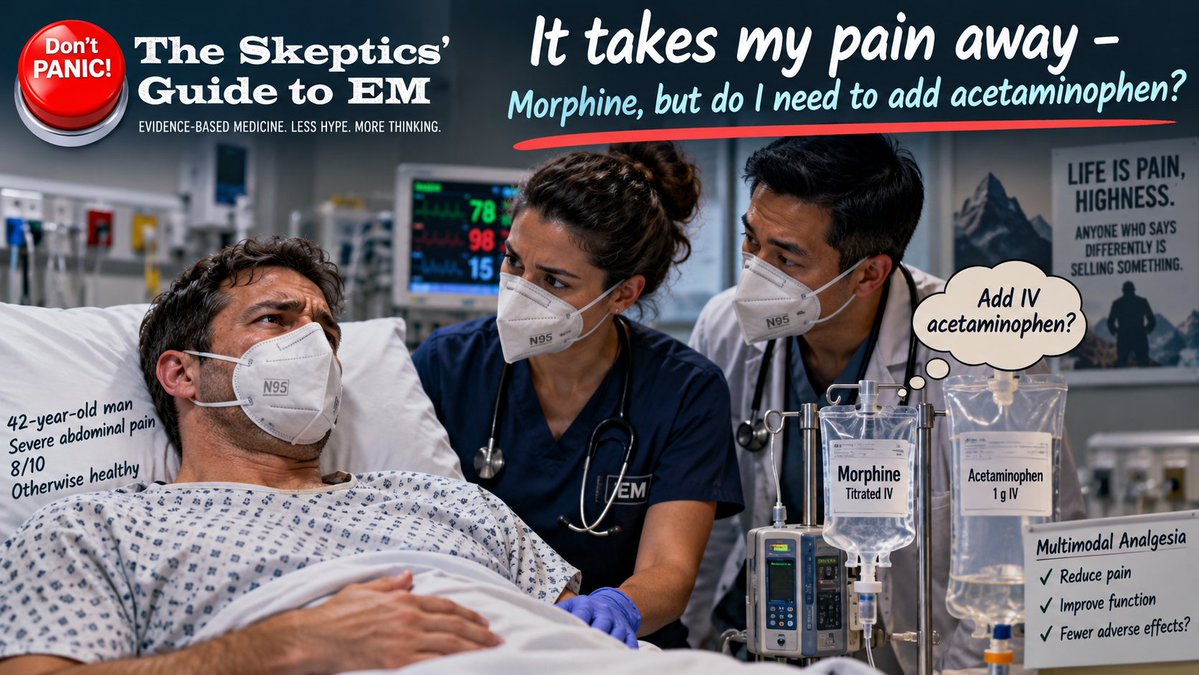
Is IM ketorolac better than oral ibuprofen for treating acute back pain in the ED?
Find out on the next episode of the Skeptics' Guide to Emergency Medicine featuring @painfreeED
https://t.co/UTotLXjW1X
@Caitlin_Jones_
Tune in to this session with @theGEDC, as @UNCEM's Dr. @clshenvi discusses the 3 most common #geriatric trauma injuries - rib fractures, hip fractures, & head injuries - and highlights how these can carry disproportionately high morbidity & mortality.
https://t.co/huycnDwZ4F