On April 22, 2018, James Shaw Jr. walked into a Waffle House in Antioch, Tennessee, expecting nothing more than breakfast. Minutes later, g*nfire erupted inside the restaurant.
Four people had already lost their lives, and the g*nman was still carrying an AR-15 style rifle. Most people would have run. Shaw made a split-second decision that changed everything.
Unarmed and acting purely on instinct, Shaw charged the g*nman. He grabbed the rifle by its burning hot barrel with his bare hands and fought to take control of the weapon.
His hands were badly burned, but he refused to let go until the rifle was out of the attacker's hands. The g*nman fled, and Shaw's extraordinary courage almost certainly prevented even more innocent people from being k*lled.
The country praised him as a hero, but Shaw never accepted that title.
He said he was simply trying to survive and protect the people around him. Instead of seeking fame, he launched a fundraiser that collected more than $200,000 for the victims' families. He continued speaking about healing, kindness, and supporting communities affected by violence.
Today, the headlines have faded, and many people no longer remember the man who risked everything for complete strangers. But courage like James Shaw Jr.'s should never be forgotten.
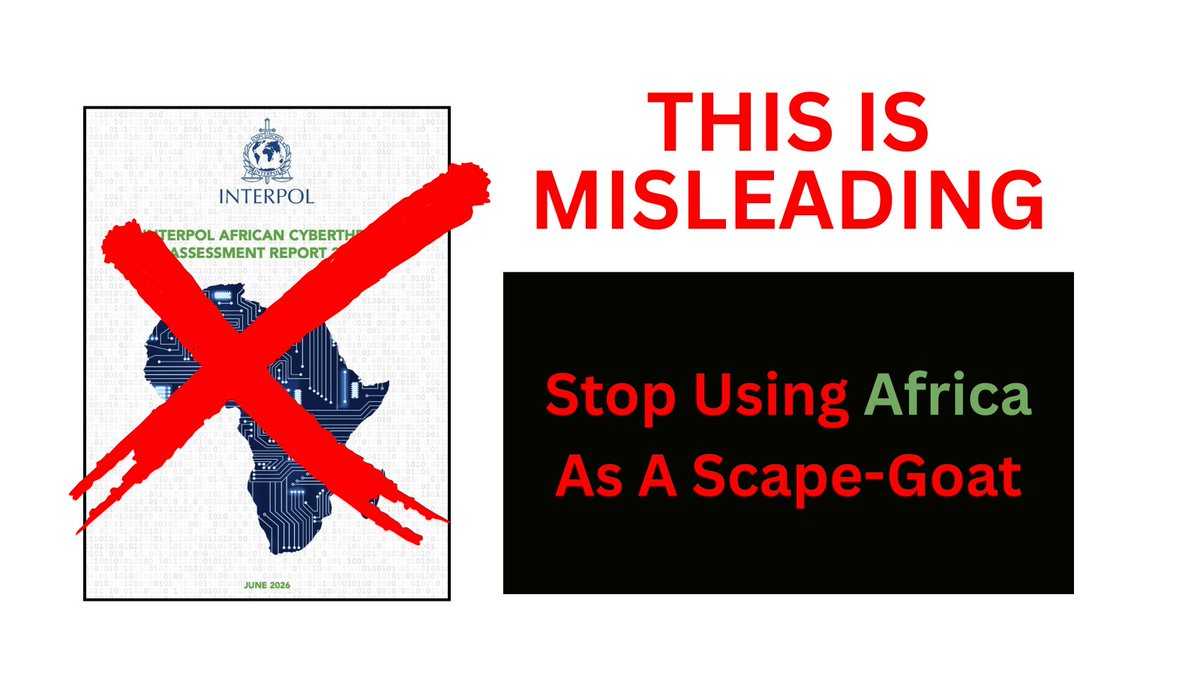
STOP THIS NONSENSE NARRATIVE.
I speak for Africa when I say THIS IS MISLEADING, and it misrepresents where the real crime and AI abuse is happening in the world today.
If you genuinely want to talk about cybercrime, or AI being used for crime, Africa should not be anywhere near the center of that picture.
Start with AI itself. The top countries in AI adoption globally are the UAE, Singapore, China, India, and the USA. Even South Africa, sits around 21 to 23% adoption, while the UAE is above 70%. We are not even in the top 3 users of this technology, so how does Africa become the poster child for AI-driven crime.
Add the infrastructure gap. Large parts of Africa still doesn't have reliable banking rails, card penetration, or digital payment systems mature enough to run large-scale, automated fraud at the level a "55% AI-enabled" statistic implies. You need infrastructure to commit crime at scale. Africa is still building that infrastructure for legitimate commerce.
Now read the actual INTERPOL report closely, because it undercuts its own headline.
South Africa alone accounts for 92% of every ransomware detection and 70% of every BEC detection cited in the report. Add Nigeria and two countries explain almost the entire "African" story. The other 50-plus nations on this continent barely register. That is not a continental crisis. That is two data points wearing a continent's name.
The 55% AI figure everyone is running with is not a measurement. It comes from a survey asking police officers if they had "occasionally" or "frequently" seen AI show up in a case. That is a perception poll of 36 self-selected countries, not a forensic count of anything.
The report itself admits 89% of respondents said underreporting is a serious problem, with no formal reporting systems and no forensic capacity in many countries. So the data is being driven by whoever has the infrastructure to detect and report, which is exactly the two countries carrying the whole statistic.
The entire assessment is funded by the UK Foreign, Commonwealth and Development Office, and built on data from Fortinet, Mastercard, Shadowserver, and other Western firms. Africa is the subject of this report. Africa did not write it.
Now look at scale. Total reported cybercrime losses across the whole continent in 2025: $484 million. INTERPOL's four biggest cross-border enforcement operations in Africa, spanning nearly 20 countries each, recovered a combined total of about $100 million.
Meanwhile the US alone reported $16.6 billion in cybercrime losses in 2024, and global ransomware payments hit $820 million in 2025 with a median payment of over $800,000 per incident, overwhelmingly from US, European, and Asian targets.
Africa's entire continent-wide total doesn't outpace what a single ransomware crew pulls from a handful of Western companies in one year.
Global cybercrime damage is projected at over $10 trillion for 2025 and 2026 combined. If cybercrime were a national economy, it would rank third in the world, behind only the US and China. Africa's entire reported total barely registers against that number.
So ask yourself why a 55% figure out of Africa's much smaller crime base gets a headline, while the actual centers of AI-driven fraud, the US, China, and the scam compounds of Southeast Asia generating close to $40 billion a year according to the UN, don't get the same "linked to over half" framing. That is not analysis. That is a choice of headline.
Then look at how INTERPOL illustrates its own stories. For Operation Sentinel, they used real, captioned photos of the actual arrests in Benin and Ghana. Actual African officers, actual African suspects, actual African raids. They had the real images and they used them.
But the article headlined "African authorities dismantle massive cybercrime and fraud networks, recover millions" runs a header image of handcuffed men whose appearance is not African.
If African authorities did the work, why illustrate Africa's own success story with a stock photo of people who aren't African? You don't reach for a generic photo when you have the real one, unless no one thought it mattered what image ran under Africa's name.
So ask who benefits from a headline that says "AI linked to more than half of cybercrime in Africa," built on a survey, funded by a foreign government office, driven by two countries' data, and illustrated with photos that don't even match the story.
International bodies need to stop using Africa as a scapegoat because it's convenient. It is easier to point at the continent with the least power to push back than to look honestly at where the money, the AI, and the crime actually are.
Every time this happens, it costs credibility. Not ours. Theirs.
STOP THIS.
Shanghai Jiao Tong University is where I teach.
To be honest, I understand why institutions like Shanghai Jiao Tong University and Fudan University would make some people nervous enough to push for blacklists.
All I hear is "we're worried about your talent and try to keep them out of the room!”.
What an unintended compliment!
China keeps investing in talent, research, manufacturing and ecosystems that turn ideas into reality. Universities like Shanghai Jiao Tong University produces the future!
Obviously now universities become targets when they're producing the engineers, scientists and innovators who will define the next industrial era. Now some policymakers try to blacklist the competition because of this sense of entitlement that only they should have access to the world’s best talent and innovation, not China or anyone else.
Gosh🤦♀️
Instead of building better universities, educating more engineers, or accelerating innovation at home, some policymakers reach for ever-longer restriction lists. What an old strategy in the age of AI!
History has never been particularly kind to civilizations that tried to regulate away someone else's progress instead of out-innovating it.
The future belongs to those who build it, not those who spend their time writing blacklist policies.
I’m proud to be an industry expert teaching at Shanghai Jiao Tong University.
加油 jiāyóu SJTU!
Companies make deleting your account harder than getting a divorce.
So, a guy named Robb built a directory of direct links to delete your account from web services.
It is called JustDeleteMe.
You type in a company name. It gives you the exact URL that kills your account, plus a color telling you how much of a fight they're going to put up.
🟩 Green means two clicks.
🟨 Yellow means you'll have to dig.
🟥 Red means they've made it deliberately painful.
⬛️ Black means you literally cannot delete it, ever, no matter what you do.
That last category is the part that gets people.
There are companies sitting in the black tier right now holding your name, your email, your photos, your search history, and there is no button anywhere on their site that removes any of it. Not hidden. Not hard. Just absent.
Most people have somewhere between 100 and 300 accounts they've forgotten about. Old forums. That one shopping site from 2014. The app you downloaded once for a coupon.
Every single one is still sitting on a server with your data in it, waiting to show up in the next breach headline.
JustDeleteMe turns a weekend of misery into an afternoon.
Its sister site, JustGetMyData, does the reverse. Direct links to request everything a company has collected on you before you pull the plug. Download it first. Then delete.
Nobody is going to clean this up for you.
The airline lost my bag for 72 hours.
They handed me a $50 “courtesy” voucher at the baggage desk and smiled like they’d done me a favor.
I kept the voucher. Then I opened my laptop and used a 1999 international treaty they never mention at check-in.
Total recovered: $1,650.
Here are the three legal weapons most passengers never know they have.👇
Most people only know Temu and Shein.
But I know three platforms you can order from at very cheap prices.
They're platforms where Chinese people actually shop on, so things are way cheaper there because you're buying directly from the producers. Even Temu gets its goods from some of these platforms.
Likewise, a lot of "mini importers" in Nigeria use these websites. All those WhatsApp and Facebook vendors you see around, they get their goods from these websites at very low prices, then they inflate the prices when they want to resell.
I'll mention them below and share their links in the comments section.
1.▫️1688
Best for clothes, shoes, bags, phone accessories, electronics, home appliances, and just about anything in bulk.
They offer wholesale prices, but you may need to make bulk orders (10 to 100+ units). It's best for people who want to resell. The language on this website is Chinese, so you'll have to translate it. The video below explains how.
2.▫️Taobao
Best for fashion, jewelry, home decor, gadgets, and niche items you can't easily find elsewhere.
They sell single items easily, have a huge variety, and even better quality than what gets imported to Temu. It's good for both individuals and resellers.
3.▫️Pinduoduo
Best for everyday items, kitchenware, phone accessories, small gadgets, and household basics.
This is similar to Taobao, and often even cheaper. It's a great place for everyday buys.
NOTE, though:
Also, none of these websites ship internationally. You'll need a shipping agent to receive your order in China and forward it to you. It's also best to order in bulk.
Some of the agents include:
- Superbuy
- CSSBuy
To use a shipping agent:
1. Create an agent account on any of the agent website I'll share in the comments.
2. Paste the product link from 1688, Taobao, or PDD into their search bar.
2. The agent buys it and receives it at their warehouse.
3. You pay a service fee, then shipping once it arrives.
3. Agent ships to you, sometimes combining items to save cost.
Just make sure to always read the descriptions. Sort by best-selling, read reviews and check the photos shared by reviewers instead of relying on product pictures.
I'm sure you learnt something.
Stay sharp! 🪒
Watch a Chinese heritage guardian create stunning double-sided Shu embroidery of pandas in a bamboo forest. Each stitch brings silk to life—two perfect sides, one ancient craft. Keeping tradition alive with patience and love.
#ShuEmbroidery#PandaArt#IntangibleHeritage
From June 11 to July 19, New Yorkers can eat, drink, and celebrate the World Cup for just $26 at restaurants across all five boroughs.
From Little Senegal in Harlem to Little Odessa in Brooklyn, our city’s diversity is our greatest strength, and now it’s on the menu.
Be part of the excitement, support small businesses, and eat up all this city has to offer: https://t.co/xSEKmHvt5x
ÇİN NELERİ TERKETTİ
1. Çin, GPS'i terk etti. BeiDou navigasyon sistemi artık santimetre düzeyinde hassasiyet sunuyor ve dünya çapında 100 milyondan fazla kullanıcısı var. Orta Doğulu petrol magnatları bile GPS'i terk edip BeiDou'ya geçiyor. İnanabiliyor musunuz? Amerika'nın dünyayı gören gözü kör oldu.
2. Çin, Boeing'i terk etti. C919, şimdiden 1.200'ün üzerinde sipariş aldı ve tek bir yılda Boeing'in değerinden 80 milyar dolar sildi. Eskiden "yapmaktansa satın almak daha iyidir" denirdi, ancak durum tersine döndü — artık Çin uçaklarını satın almak daha akıllıca bir seçim gibi görünüyor. Boeing tamamen hazırlıksız yakalandı
3. Çin, Amerikan çiplerini terk etti. Yangtze Memory’nin katı hal sürücüleri, uluslararası fiyatları yarı yarıya düşürdü. Kirin çiplerinin geri dönüşünün ardından Qualcomm paniğe kapıldı ve fiyatları bir gecede %30 düşürdü. Bir zamanlar Çin’i boğmak için kullandıkları şey, Çin’in kendi ölümcül silahı haline geldi.
4. Çin, Windows'u terk etti. UnionTech UOS, ulusal bakanlıklar ve büyük bankaların tamamen geçiş yapmasıyla 5 milyon kurulum sayısını aştı. Microsoft'un CEO'su uykusuz geceler geçiriyor, ancak bu konuda yapabilecekleri hiçbir şey yok.
5. Çin, Batı tıbbi ekipmanlarını terk etti. Shanghai United Imaging'in CT tarayıcıları artık ABD ve Avrupa'daki kliniklere giriyor. Almanya'nın Siemens şirketi, benzer modellerin fiyatlarını %40 oranında düşürmek zorunda kaldı. Çin tıbbi teknolojisi, Batı topraklarına bayrağını sağlam bir şekilde dikti.
6. Çin, yabancı yakıtlı motorları terk etti. BYD’nin bıçak tipi pilleri, Toyota yöneticilerini arabaları yerinde parçalayıp incelemek zorunda bıraktı. Tesla, sadece üç ayda 1,2 trilyon dolarlık piyasa değeri kaybetti. Benzinli arabaların devri sona eriyor — ve yeni enerji dünyasında kuralları Çin belirliyor.
7. Çin, Oracle veritabanlarını terk etti. Ant Group’un OceanBase’i dünya performans rekorlarını alt üst etti. Banka işlem sistemleri artık Amerikan baskısına boyun eğmek zorunda değil. İşte gerçek teknolojik egemenlik budur.
8. Çin, Batı endüstriyel yazılımlarını terk etti. Zhongwang CAD, Fransa’nın Dassault şirketini fiyat indirimleriyle merhamet dilemeye zorladı. Sany Heavy Industry, dünyanın en büyük tünel delme makinesini tasarlamak için yerli yazılım kullandı. Çin, Batı’nın endüstriyel yazılım üzerindeki tekelinde devasa bir delik açtı.
9. Çin, dolar ile ödemeyi terk etti. RMB sınır ötesi ödeme sistemi artık 180 ülke ve bölgeyi kapsıyor. Suudi Arabistan artık petrolünü RMB cinsinden satıyor. Amerikan hegemonyasındaki ilk büyük çatlak Çin tarafından açıldı.
10. Çin, Batı'nın genetiği değiştirilmiş tohumlarını terk etti. Yuan Longping'in ekibi, mu başına 1.000 jin'den fazla verim veren tuza dayanıklı pirinç geliştirdi. Çin'in kaseleri artık Çin tahılıyla doluyor. Monsanto’nun tohum patentleri etkisini yitirdi ve Çin gıda güvenliğinin tam kontrolünü ele geçirdi.
11. Çin, Amerikan sosyal medyasını terk etti. Xiaohongshu (RedNote), 30 milyon Amerikalı kullanıcıyı kendine çekti. Zuckerberg, günlük aktif kullanıcı sayısının dibe vururken Çin sosyal medya uygulamalarının okyanusun ötesinde patlama yaşamasını çaresizce izliyor.
12. Son olarak, Çin Batı askeri teçhizatını terk etti. Fujian uçak gemisinin elektromanyetik fırlatma sistemi, Amerika’nın Ford sınıfını geride bırakıyor ve DF füzeleri, uçak gemilerini mesafelerini korumaya zorluyor. ABD askeri-sanayi kompleksi, gece boyunca acil toplantılar düzenledi.
⭕️Bu sadece teknolojik bir ilerleme değil. Bunlar, Batı hegemonyasının çöküşünü haber veren on iki çan vuruşu.
🔶Alıntı, Profesör Yang Fan, Çin Siyaset Bilimi ve Hukuk Üniversitesi'nde ekonomi profesörü ve doktora danışmanıdır. İşletme Fakültesi Akademik Komitesi Başkanı olarak görev yapmaktadır ve Pekin Üniversitesi Çin Ekonomi Araştırma Merkezi'nde misafir araştırmacı olarak bulunmuştur. Ayrıca, Ulusal Savunma Üniversitesi Ekonomi Araştırma Derneği'nin İcra Direktörüdür.