We present our smallest but very important team for this #factfriday. Let's review the ethics team! And yes, you are absolutely right in spotting that we are definitely in need of support. We'd be more than thankful to have you on board. Please contact us if you have questions.
La cartographie en 3D de l'ensemble du territoire 🇫🇷 grâce au LIDAR avance bien (la moitié du pays fait). Pour juste 60 millions d'€, elle offrira un niveau de finesse & précision inédit (10 points par m²). Voici comment elle est réalisée.
Source : https://t.co/DFXFWBHnyD
#factfriday time: Turns out our managing editors are younger in their career stage than the associate editors! Evaluating such statistics is extremely important to keep track of our team diversity. We are recruiting - if you see your demographics underrepresented, get in touch.
I'm looking for #postdoc opportunities! 👷♂️⛏️
I’m a researcher specialising in #geoarchaeology, #sedimentology, and #taphonomy. With 40+ field seasons and a passion for site formation processes, I’m excited to bring my expertise to new collaborations. Complete CV below 👇#geology
"On fait de l'archéologie en grand pour émerveiller les gens"
🤩💬 Pour @GarciaDInrap, président @Inrap, le métier d'archéologue est essentiel pour "raconter une histoire longue de notre territoire" #Telematin
Have you heard about 💎#DiamondOpenAccess 💎journals in the Geosciences?
Did you know they are FREE to readers and authors??
Want to learn more? Join the panel! Wednesday September 18th at 11am (GMT+05). Register here: https://t.co/lj0AcqakNW
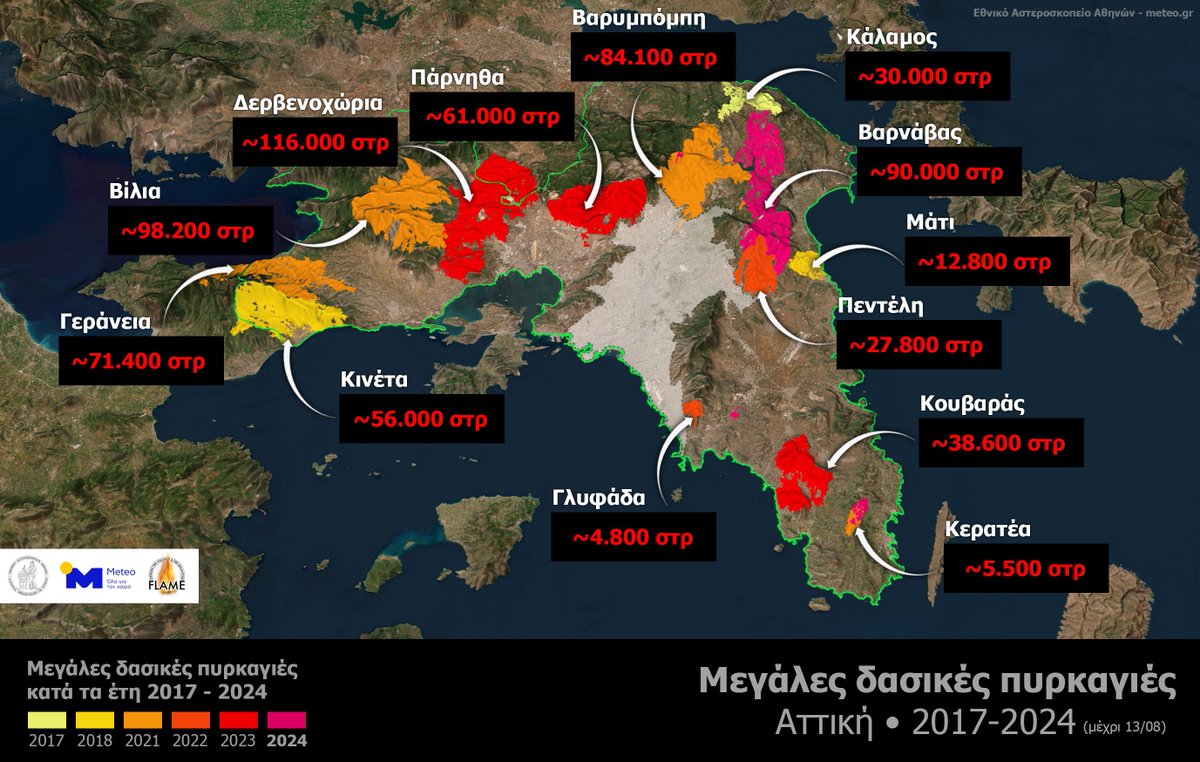
En 8 ans, 37% des forêts de l'Attique ont brûlé soit 450 000 hectares (43 fois la taille de Paris).
Le changement climatique attaque et attaquera nos paysages :
➡️Les biogéographies évoluent (i.e. aire de répartition des espèces).
➡️Cela induit d'importants stress hydriques et thermiques sur les arbres ayant prospérés depuis 50 ans et étant sortis de leur zone de confort climatique.
➡️En parallèle, les stress hydriques et thermiques deviennent de plus en plus fréquents.
Pour tous ces facteurs, nos écosystèmes meurent progressivement (i.e. on parle de dépérissement). Cela fait plusieurs années que je vous avertis de l'importance des stress thermiques et hydriques sur nos écosystèmes. Voici le meilleur exemple de paysages meurtris par le changement climatique.
Merci de suivre absolument le compte @meteogr à ce sujet.
#Greece #Athenes #athensfire #Athens
We have our third publication! Congratulations to the authors 🎉 This work joins a growing number of papers at https://t.co/eWTHFEoYby, all published Diamond Open Access 💎
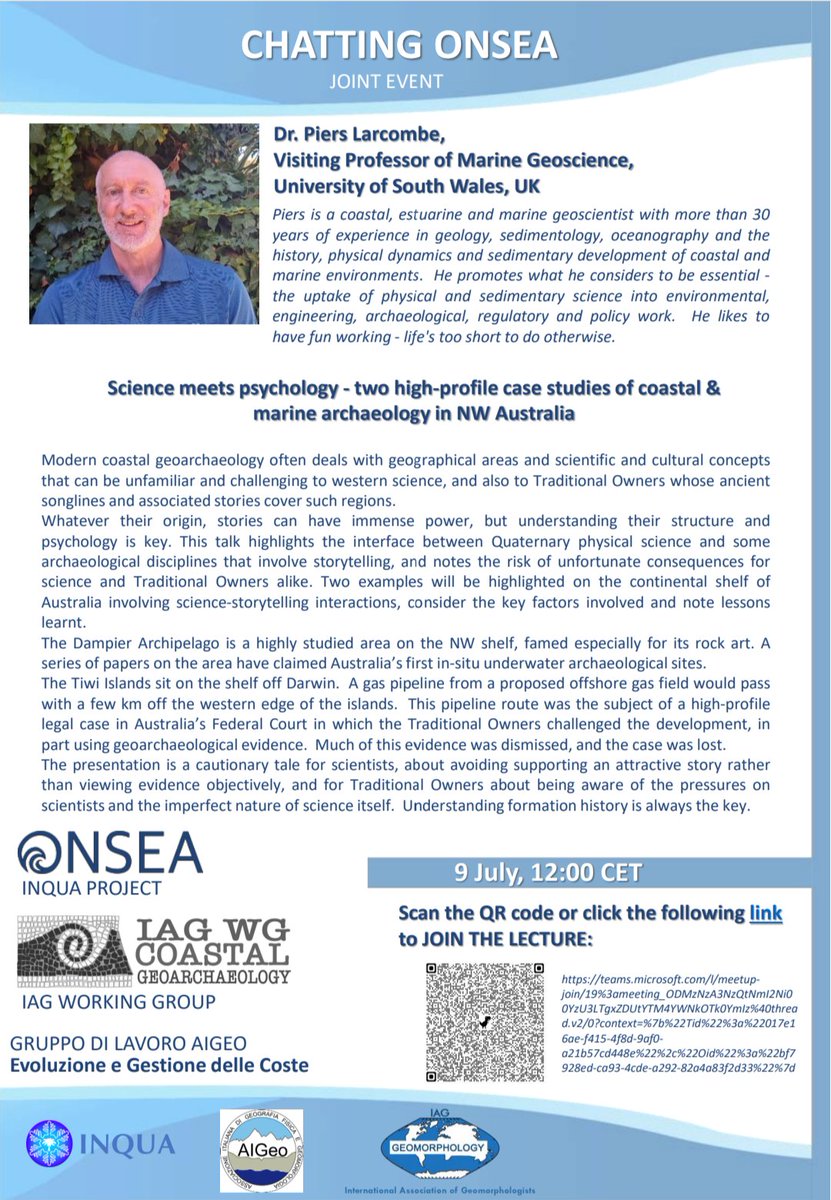
You are welcome to join us for the 3rd Chatting OnSea event with dr. Piers Larcombe from @UniSouthWales for a talk on coastal and marine archaeology in NW Australia.
@INQUA@INQUA_ECR@INQUA_CMP
🎉Time to celebrate 🥳
One year that Geomorphica has been open for submissions, extremely happy to share our 1st issue & 1st two publications. Stay tuned, there will be more papers passing the last stages of the publication process soon! (1/x)
#geomorphology#diamondopenaccess
🎉Time to celebrate 🥳
One year that Geomorphica has been open for submissions, extremely happy to share our 1st issue & 1st two publications. Stay tuned, there will be more papers passing the last stages of the publication process soon! (1/x)
#geomorphology#diamondopenaccess
So happy that this publication on the evolution of the #landscape in #Luxor is finally out! This was a massive team work for many years in the Theban region. Read for free in #Nature Geoscience: https://t.co/zJx8EGC8zm
Today is a big day for us, extremely happy and excited to share our first issue that includes the first paper ever published with Geomorphica. Congratulations to Sumaiya Sumaiya and all co-authors 🎉
@bse_vt#Geomorphology#DiamondOpenAccess
First Little Ice Age (~1850 CE) complete glacier inventory for the Alps! 🧊🏔️👏
❌Almost 60% area loss btw LIA (4211 km²) and 2015 (1806 km²)
❌65% volume loss
❌1832 gl. disappeared
❌143 m rise med. gl. elevation
❌3x higher loss rate after 2000 CE
https://t.co/X59t9wPlbl
1/
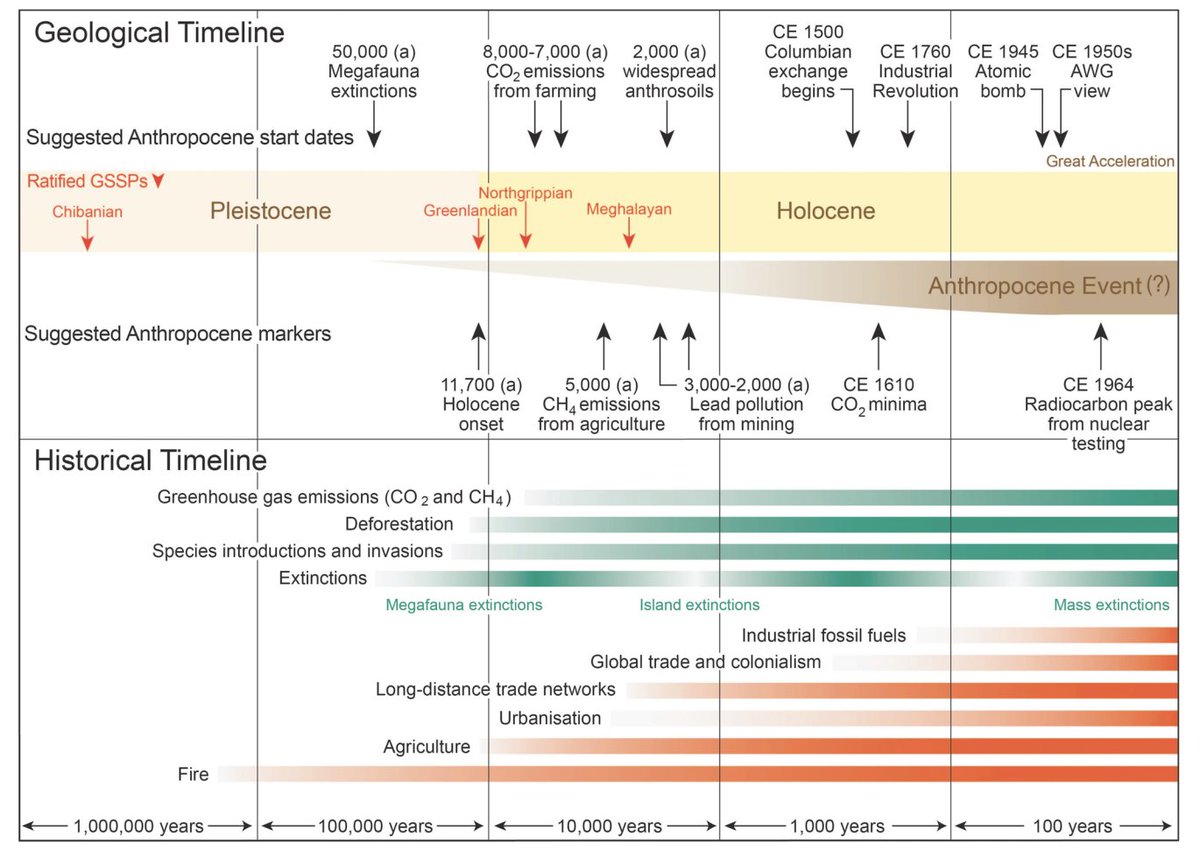
Yes we are in the #Anthropocene. But it was right to reject Anthropocene as a geological epoch
Anthropocene is better understood as an ongoing, intensifying planetary 'Event'. Opening up interdisciplinary advances on crucial planetary issues & solutions.
https://t.co/9HgVGFKLnK
What's more fascinating than an ancient #shipwreck? - Right: five really ancient #shipwrecks, about 7k y/o #canoes in this case.
"The first #Neolithic#boats in the Mediterranean" (J. F. Gibaja et al., @PLOSONE 19(3), 2024), from La Marmotta in #Italy:
https://t.co/I0VuQFoQKz