WHAT IF?
Please join us as we share our research on a number of important matters to Cloverdale. Cloverdale is gowing rapidly; we need everyones voice & support!
@surreyps@cloverdale_bia@CloverdaleNews@CityofSurrey@CloverdaleCOC
For more info visit: https://t.co/bH9tWL5QAZ
This hasn't happened for a quite a while. Fresh Snow falling on Mt. Seymour in Vancouver, BC in the month of June. Elevation of 1,200m... 🤨 #bcstorm#shareyourweather
NEW (1/2) - The UDI, BC Business Council, BCREA, ICBA, LandlordBC, HAVAN, BC Construction Assoc. and CanadianHome Builders have sent a joint letter to Minister Boyle demanding GST rebate parity with Ontario. 7 weeks of silence and they've had enough. #bcpoli#cdnpoli#vanre
I work with great teams of people in #SPS, both civilian and sworn. Don't forget this is not the platform for bullying, harassment or profanities etc., cause I'll just block you. Most importantly, we are busy responding to calls for service, and continuing outreach in communities throughout #Surrey. #ICYMI 👉🏼https://t.co/yBIjOWAJMw
So many unanswered questions in the ouster of Surrey Police Chief Norm Lipinski, including why and how much this will cost. Story from my colleague @SobiaMoman https://t.co/WtCa8B64LI via @VancouverSun
On the pickleball beat today checking out WestCoast’s boutique indoor club in Newton. Expansion soon to add third court at 2-year-old facility off 130 Street. Owner Shaida Nanji, who lives in White Rock and owns the entire complex, discovered the paddle sport during COVID.
Surrey’s newest indoor pickleball facility is IPOP, nine courts in the former Best Buy/Spirit Halloween building at Central City mall. Opened Saturday
as second site in chain of IPOP (“Inclusive Place of Pickleball”)
For the record.
Mark Carney’s address to the Economic Club of New York was a disciplined, strategically framed intervention that should resonate with business leaders on both sides of the border.
In tone and content, it was exactly the kind of message markets look for from a G7 head of government: pro‑growth, geopolitically literate, and grounded in concrete avenues for investment and partnership.
Carney’s central assertion – that a strong Canada can “help make America great again” – recasts the Canada–U.S. relationship in explicitly pragmatic terms.
Rather than positioning Canada as a counterweight to U.S. economic nationalism, he presented it as a force multiplier for the United States’ own strategic objectives in energy security, supply chains, AI infrastructure, and re‑industrialization.
That framing is shrewd. It acknowledges the realities of a more assertive U.S. trade and industrial policy while offering a collaborative model that can lower costs, reduce risk, and accelerate execution for American firms and investors.
The speech was also notable for its business‑ready specificity. By highlighting Canada’s role as a reliable provider of energy, critical minerals, food, advanced manufacturing, and clean power, Carney translated geopolitical themes into investable opportunities.
His emphasis on rule‑of‑law institutions, regulatory predictability, and a growing network of trade and investment partnerships positioned Canada as an attractive platform for capital seeking both exposure to North American growth and insulation from global volatility.
Equally important was the tone: confident but not complacent, aligned with U.S. strategic priorities without being deferential. Carney managed to speak fluently to Trump’s “America First” agenda while articulating Canada’s own interests with clarity and self‑respect. For corporate leaders, financiers, and policymakers, the result was a reassuring message: Ottawa understands the new landscape, is prepared to work within it, and is focused on building a North American framework that can support durable growth, competitiveness, and security over the coming decade.
Richard Haass just made a remarkable argument on CNN:
That America now has worse relations with Canada than China because the U.S. has spent years attacking allies with tariffs and political fights instead of building a united front against Beijing.
And honestly, that gets to the heart of one of the biggest foreign policy debates happening right now:
America’s greatest strategic advantage was never just military power.
It was the alliance network.
Dozens of countries aligned economically, militarily, and diplomatically around U.S. leadership.
The argument Haass is making is that Washington has started weakening that advantage itself.
He is correct.
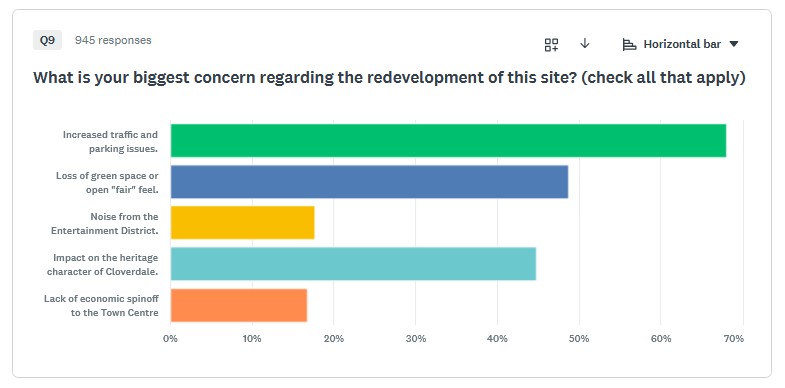
974 Cloverdale Fairground surveys completed & more time for people to vote:
https://t.co/eiXKxz9wyo
It is very clear that traffic movement is extremely important as the area grows especially with more large scale events at the Fairgrounds.
@CityofSurrey@CloverdaleNews