Official account for information regarding Paris System for Urinary Cytology version 2.0 | Supported by @cytopathology and @IACytology | curator @eva_wojcik
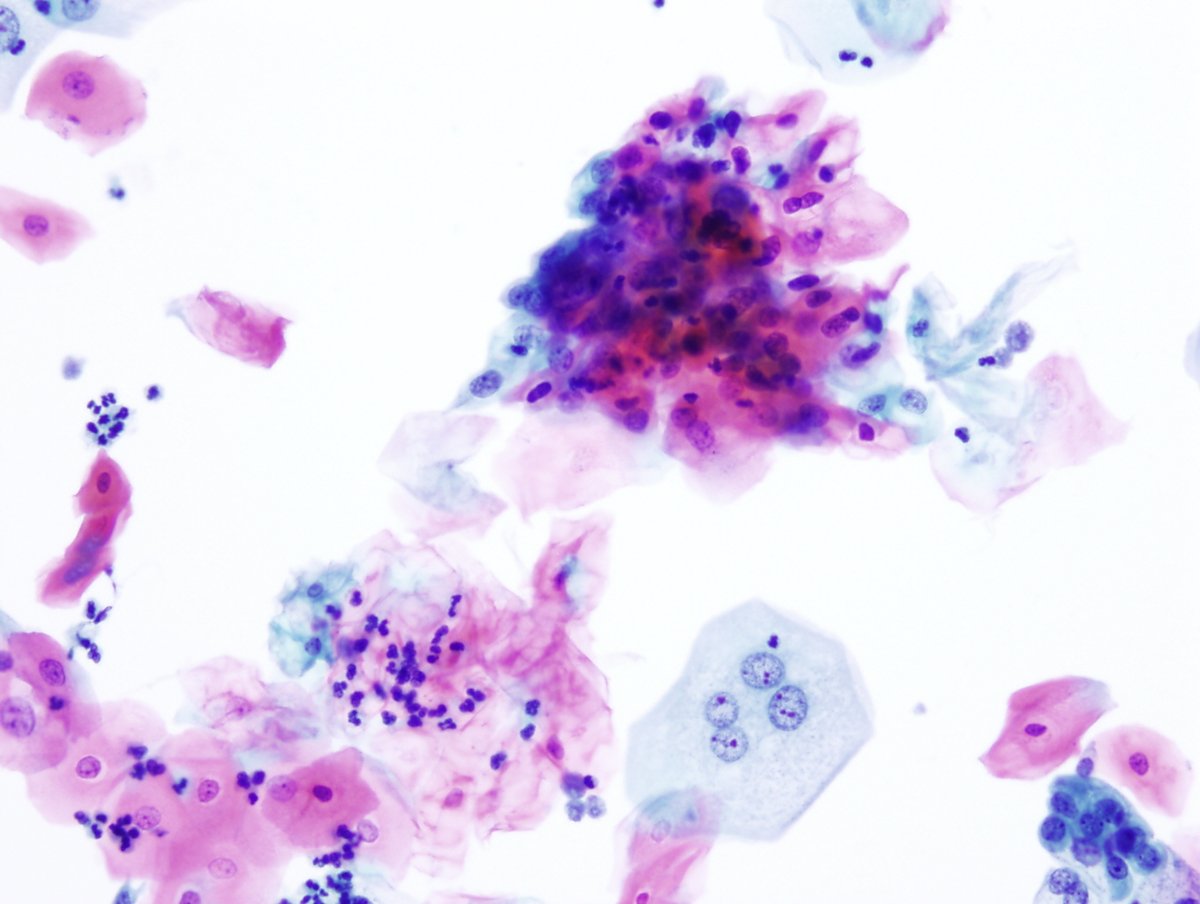
Bladder washing from a 56 year old man with intermittent dysuria and papillary lesion in the bladder shows numerous dysplastic squamous cells. Which diagnostic category of the Paris System should be applied? #ParisSystem (see below photos and poll)
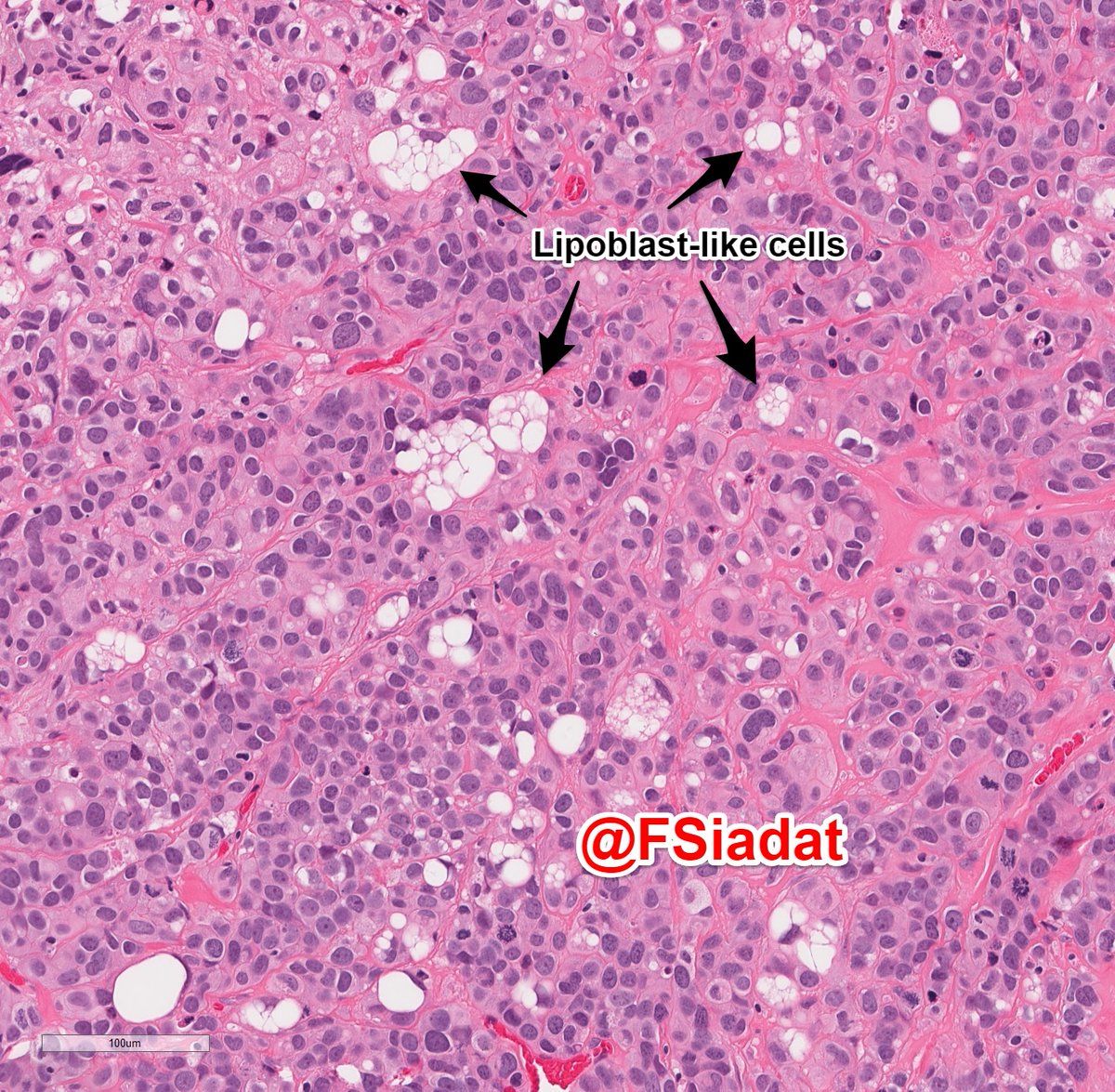
Lipid-rich urothelial carcinoma. It is a rare and high grade variant with large lipoblast-like cells with cytoplasmic vacuoles indenting the nuclei.
#gupath#pathology#Bladdercancer
About 25%of HGUC can have some degree of squamous differentiation - malignant sq cells in urine. Also, there is primary Sq cell ca of bladder - associated with Schistosomiasis and/or any chronic irritation ex stones
@dkurtycz@ParisSystem2 Can you briefly explain the image? Skin cancer in the bladder? I teach honors A&P and wish to show them this... but need help! Thank you!
1. HGUC (regardless N/C ratio (against rules of #ParisSystem)
2. SHGUC (you know is +, you can't ignore those cells but against #ParisSystem)
3. AUC (can't ignore those cells)
4. Negative for HG (degeneration not addressed in #ParisSystem )
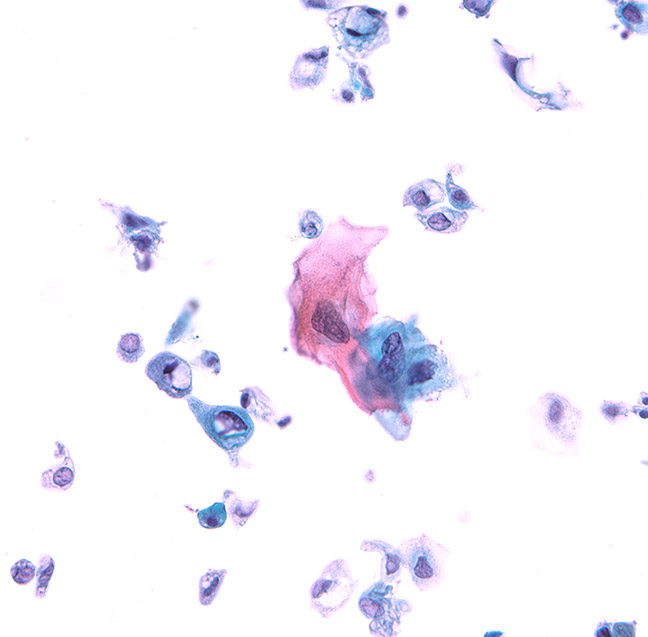
N/C > 0.7 – the paramount of #ParisSystem for dx of HGUC. What to do with case like this (see below photo)? N/C<0.7 due to degeneration. F/U biopsy positive for CIS. Should we call: (see poll)
Work for the second edition of the #ParisSystem has started! Be a part of the @ParisSystem2 process by sharing your best images/cases with us (DM or tweet)
Your image(s) may be included (with permission and recognition of contributor) in the new edition!
Work for the second edition of the #ParisSystem has started! Be a part of the @ParisSystem2 process by sharing your best images/cases with us (DM or tweet)
Your image(s) may be included (with permission and recognition of contributor) in the new edition!