@jen_keesmaat Latest Stat: The average Torontonian spends 199 hours per year in traffic, the equivalent of over eight full days. Toronto’s congestion has consistently ranked among the world’s worst. Solutions: Increase housing density along existing transit corridors, add mobility options...
This kind of small-scale retail, cafe/restaurant or service should be legal on every corner in cities/suburbs. A basic part of walkable communities. They aren’t easy financially, but at least they should be legal. In plans I’m working on, I’m calling them “corner convenience.”
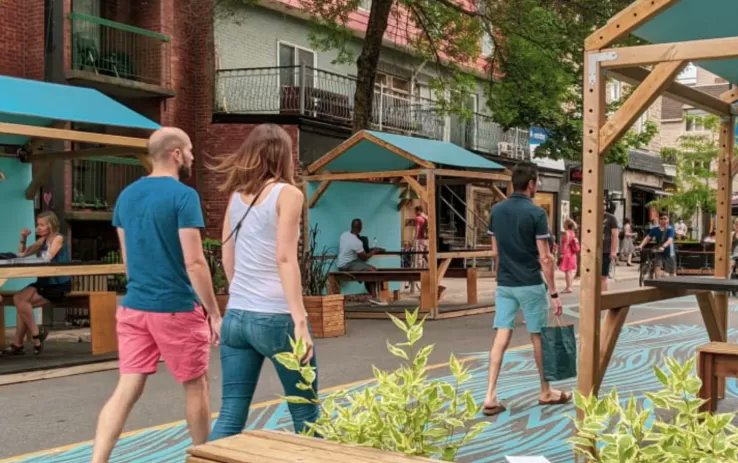
Montreal's pedestrian streets - in just three years, there are now 11 of them! - are coveted by the Buisness community and touted by the Tourism Board. No one wants to live in or visit a city that is choked with traffic, causing annoyance, air and noise pollution.
But a city rapidly transforming with spaces for walking and linger and cycling? That is a place to go, a place to be. And a much better place to live.
Density isn't our problem, Toronto. Cars are our problem. We need more places for people.
This is something: an article in the Journal of Pediatric Medicine makes the case that the rise in anxiety and depression in children and youth is linked to the severe (and relatively recent) curtailing of independence.
Roaming, making choices, getting into a little trouble, it turns out, is a necessary part of growing up. When you take this away, children become unable to navigate the ebbs and flows of the real world. I made this argument in my TED talk a decade ago about the importance of walking to school - arguing that walking to school is not frivolous, but rather critical, to childhood.
Another blow against cities designed for driving.
“Our thesis is that a primary cause of the rise in mental disorders is a decline over decades in opportunities for children and teens to play, roam, and engage in other activities independent of direct oversight and control by adults.”
https://t.co/j6gNgfplMv
@Ar1elGomez@CamGuthrie On the days it is -25C we can take a reliable public transit or yes, even a car. But on the other 300 days of the year, we could bike or walk. It's about providing safe, reliable mobility choices for people beyond the car which requires investment. Some people can't afford cars.
@TTandbreathe@CamGuthrie In the Netherlands, many seniors ride well into their 80's & 90's. Indeed, it is b/c they've always been riding that they are physically fit enough to do so. Naturally, there will always be people who cannot but it's about providing safe reliable mobility choices beyond cars.
More people would ride the slow train too if (a) it were faster and (b) cost less than flying. France outlawed flights out of Paris that can be traveled in under 2.5 hours by high-speed train. Strangely progressive for France but amazing!
The Scandinavian and Nordic countries really seem to have a better handle on how to create more liveable urban centres (quite literally "liveable" with so few traffic, pedestrian and cyclist deaths!)
How Finland Put Traffic Crashes on Ice. https://t.co/bxl5cug1LY
@LanrickBennett Hi Lanrick... thanks for sharing this activation in East York. Do you happen to know who was leading it? what organization/group/individual? Was it you? We'd like to add them to our https://t.co/Z1PhmOaO34 website as a 2023 Toronto installation.
More housing, less traffic: The best place to build homes is where people drive the least. Less driving means a lower cost of living - transportation is the second-largest household expense after housing. More density in existing neighbourhoods is best. https://t.co/s1InNelSqw
Store owners often resist bike lanes and other street changes that reduce the number of nearby parking spaces. But research shows that fewer cars are often good for business https://t.co/ICsYTWr2Pv via @citylab
Remember this picture every single time you hear someone in your city say "we're not Amsterdam."
This was #Amsterdam in the 1970s, via @fietsprofessor.
The cities we admire made better choices regarding cars, and are still making them today.
Better choices instead of excuses.
Could just be perspective but seems the parking structure is larger than the actual headquarters. given the poor public transit options the reality is "they've built it so they will come."
#parkingday#parkingday2023#parkingdayTO#peoplefirst
I see people sharing Apple's new 'Mother Nature' video, where they rave about their sustainability and claim their offices are carbon-neutral.
I'm just here to remind you that this is their GIANT private car parking garage.
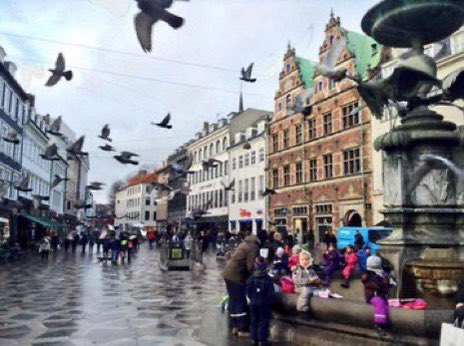
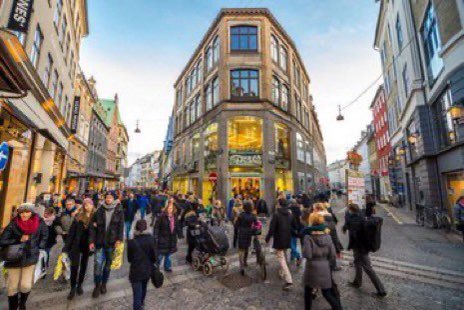
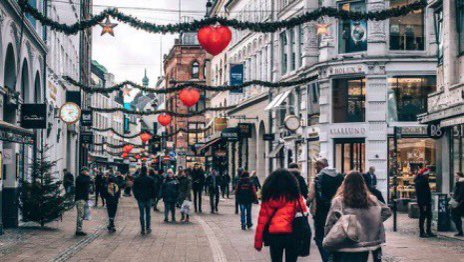
One of the most successful pedestrian streets in the world, the Strøget in Copenhagen was filled with cars until a 2 year pilot project in 1962. The opposition argued “no cars means no business” but the street has been a massive retail success, the city’s busiest shopping street.