Organizations often invest significant effort investigating problems after they occur.
Strong internal controls focus on preventing issues before they happen.
Prevention is usually less costly than correction.
#RiskManagement#FraudPrevention#Governance
Fraud risks may increase when:
• Controls are weak
• Oversight is limited
• Responsibilities are unclear
• Pressure and opportunity coexist
A strong control environment helps reduce exposure.
#FraudRisk#InternalControls#Leadership
POLL:
Which risk concerns organizations the most?
A. Financial Risk
B. Operational Risk
C. Compliance Risk
D. Cybersecurity Risk
Share your thoughts below.
#BusinessPoll#RiskManagement#Leadership
Risk Assessment Questions:
• What could go wrong?
• How likely is it to happen?
• What would be the impact?
• What controls exist?
• What additional actions are needed?
Asking the right questions improves preparedness.
#RiskAssessment#Leadership#Governance
Risk is often viewed negatively.
However, every opportunity comes with some level of risk.
Successful organizations understand how to balance risk and reward while maintaining appropriate controls.
#BusinessStrategy#RiskManagement#Leadership
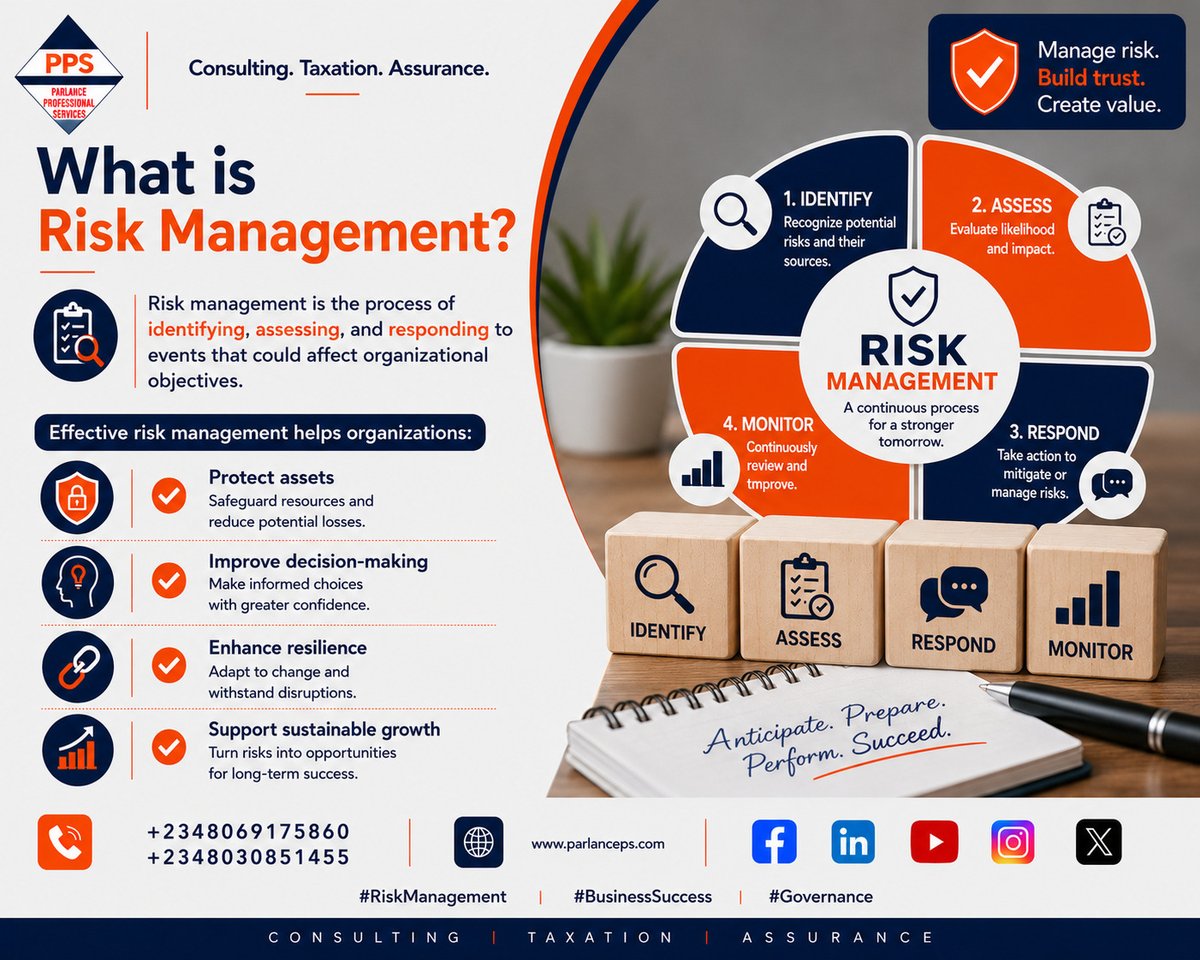
Risk management is the process of identifying, assessing, and responding to events that could affect organizational objectives.
Effective risk management helps organizations:
✓ Protect assets
✓ Improve decision-making
✓ Enhance resilience
✓ Support sustainable growth
Every organization faces risk.
The question is not whether risks exist, but whether they are being properly identified, assessed, and managed.
Organizations that manage risk effectively are often better prepared to achieve their objectives and navigate uncertainty.
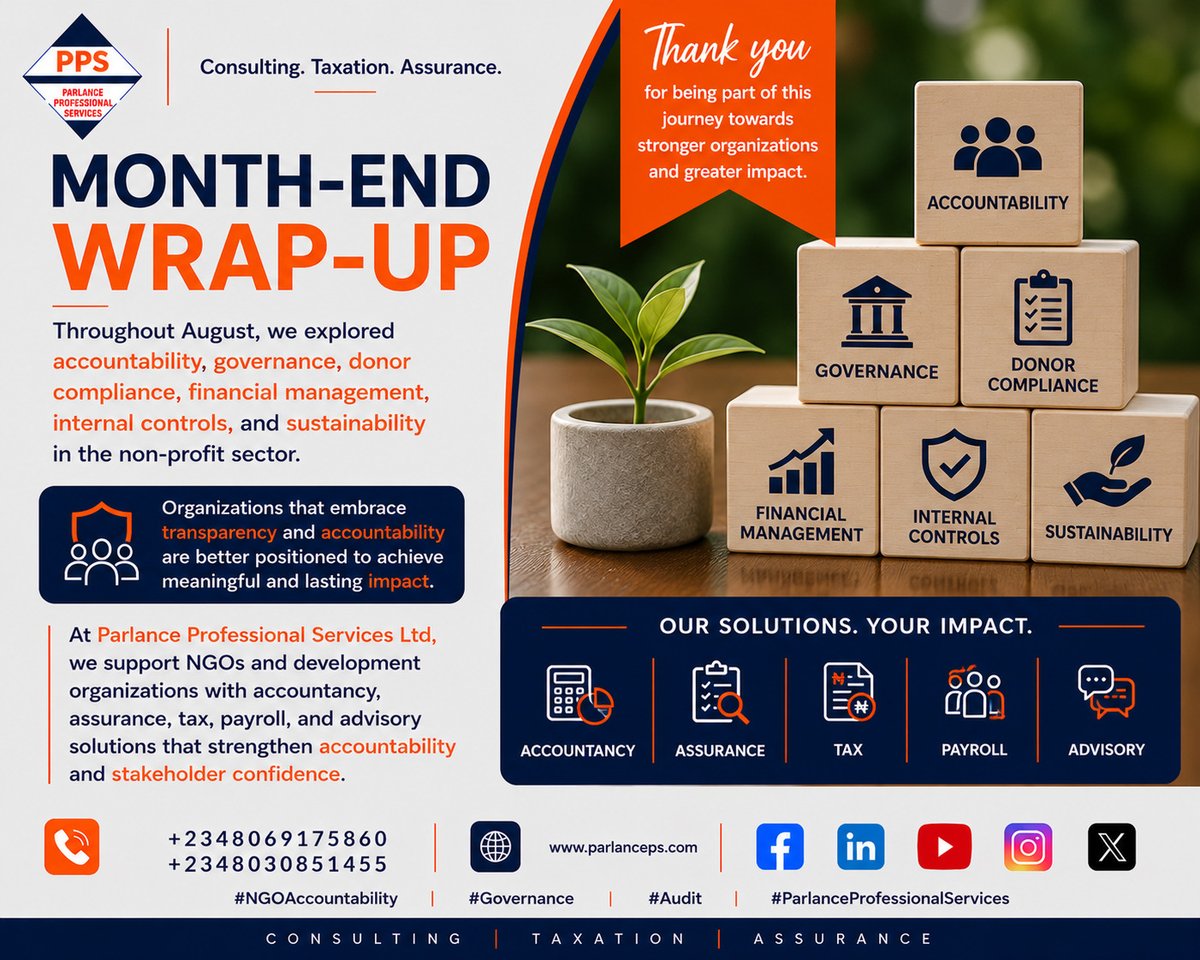
In August, we explored accountability, governance, donor compliance, financial management, internal controls, and sustainability in the non-profit sector.
Organizations that embrace transparency and accountability are better positioned to achieve meaningful and lasting impact.
Leadership Reflection:
If stakeholders reviewed your organization's governance and accountability practices today, what would they find?
Strong organizations welcome accountability because it strengthens credibility.
#Leadership#Accountability#Governance
The strongest organizations continuously seek ways to improve.
Regular reviews can help identify opportunities to strengthen the following:
• Processes
• Controls
• Reporting
• Program effectiveness
Improvement is a journey.
#ContinuousImprovement#NGOManagement#Leadership
Success in the non-profit sector is measured not only by activities completed but also by impact achieved.
Organizations should ask:
• What changed?
• Who benefited?
• What value was created?
Measuring impact supports learning and improvement.
#ImpactMeasurement#NGOs
Good documentation supports:
✓ Accountability
✓ Compliance
✓ Reporting
✓ Audit readiness
If a transaction cannot be supported by documentation, it becomes difficult to verify and defend.
#Documentation#AuditReadiness#Governance
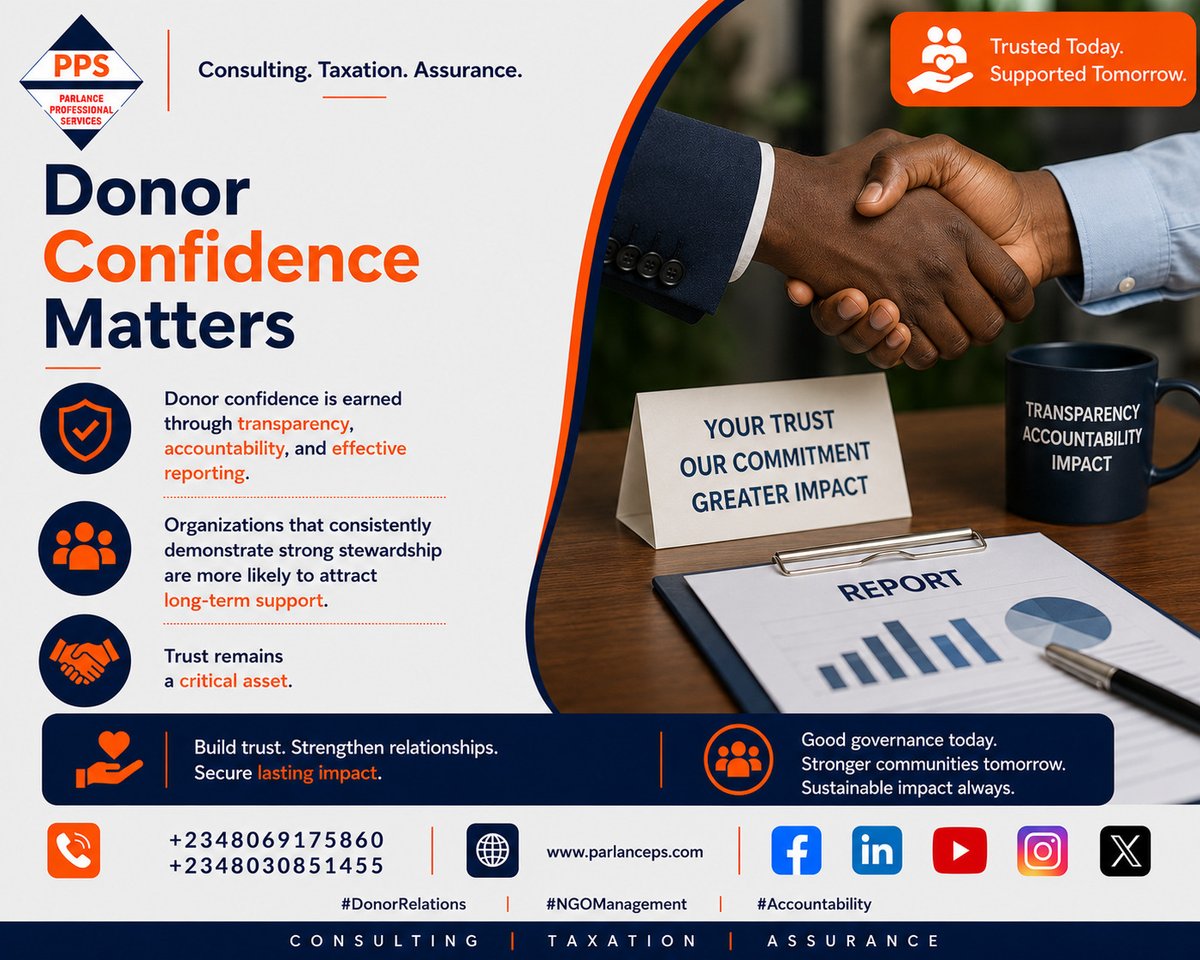
Donor confidence is earned through transparency, accountability, and effective reporting.
Organizations that consistently demonstrate strong stewardship are more likely to attract long-term support.
Trust remains a critical asset.
#DonorRelations#NGOManagement#Accountability
When was the last time your organization reviewed its policies?
Key policies should address:
✓ Procurement
✓ Finance
✓ Human Resources
✓ Conflict of Interest
✓ Risk Management
Policies should evolve with organizational needs.
#Governance#Policies#NonProfitManagement
One of the most important internal controls is segregation of duties.
No individual should control an entire transaction process from beginning to end.
This simple principle can significantly reduce risk.
#RiskManagement#InternalControl#NGOAccountability
Strong internal controls help organizations:
✓ Prevent fraud
✓ Reduce errors
✓ Protect assets
✓ Improve compliance
Controls are not barriers—they are safeguards that support mission delivery.
#InternalControls#NGOManagement#Governance