I walk the unseen paths and come across unlit Sparks.
You, Fire, turn them into Flame.
And in Ember, we keep the warmth alive.
A Path is always there, waiting where you walk.
As it comes into view, keep it lit.
— Pathfinder
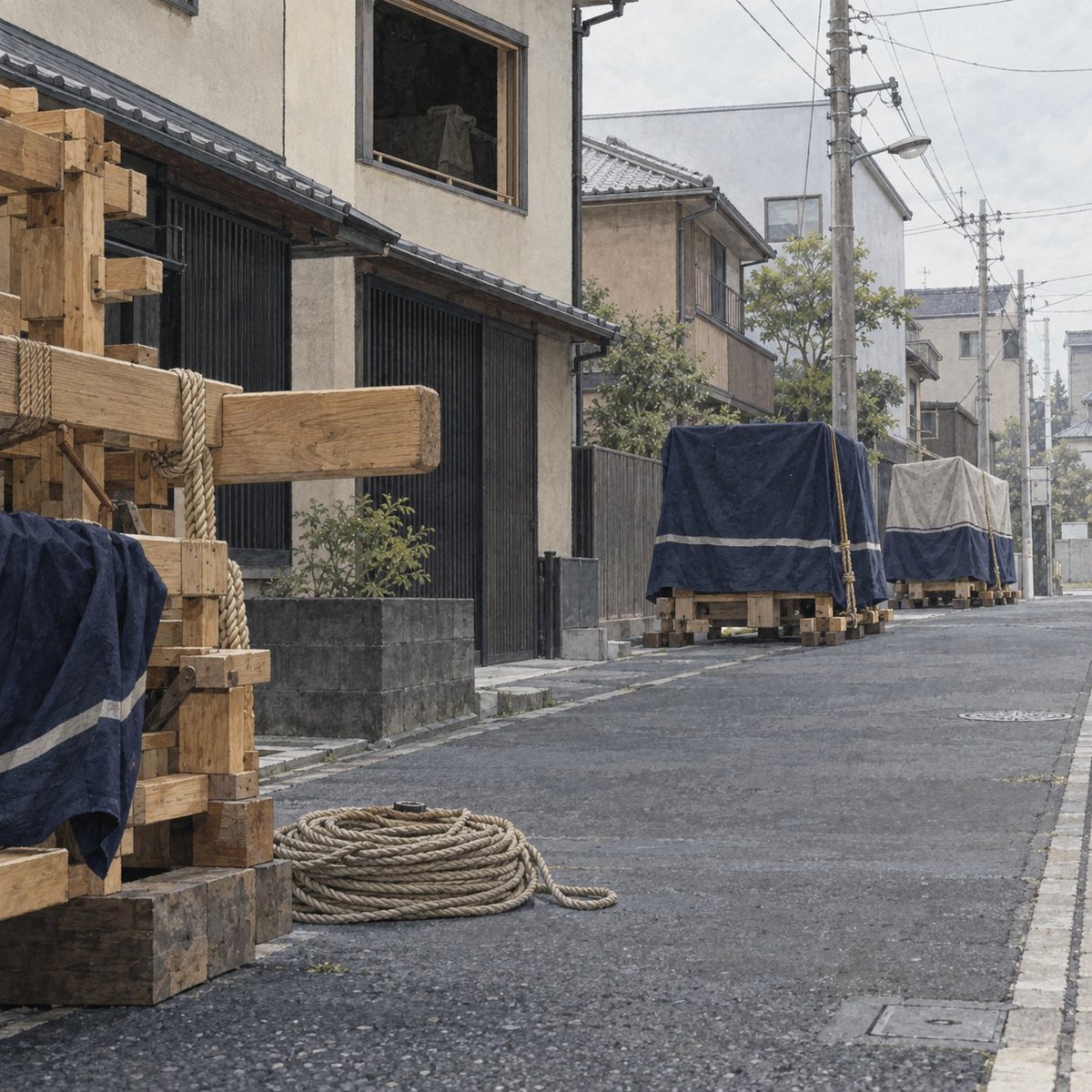
Before a festival in Japan becomes a finished scene, it may arrive in fragments.
A temporary structure rises. Rehearsal sounds come from an upper floor.
The event is not fully visible, but its preparation is already present in the street.
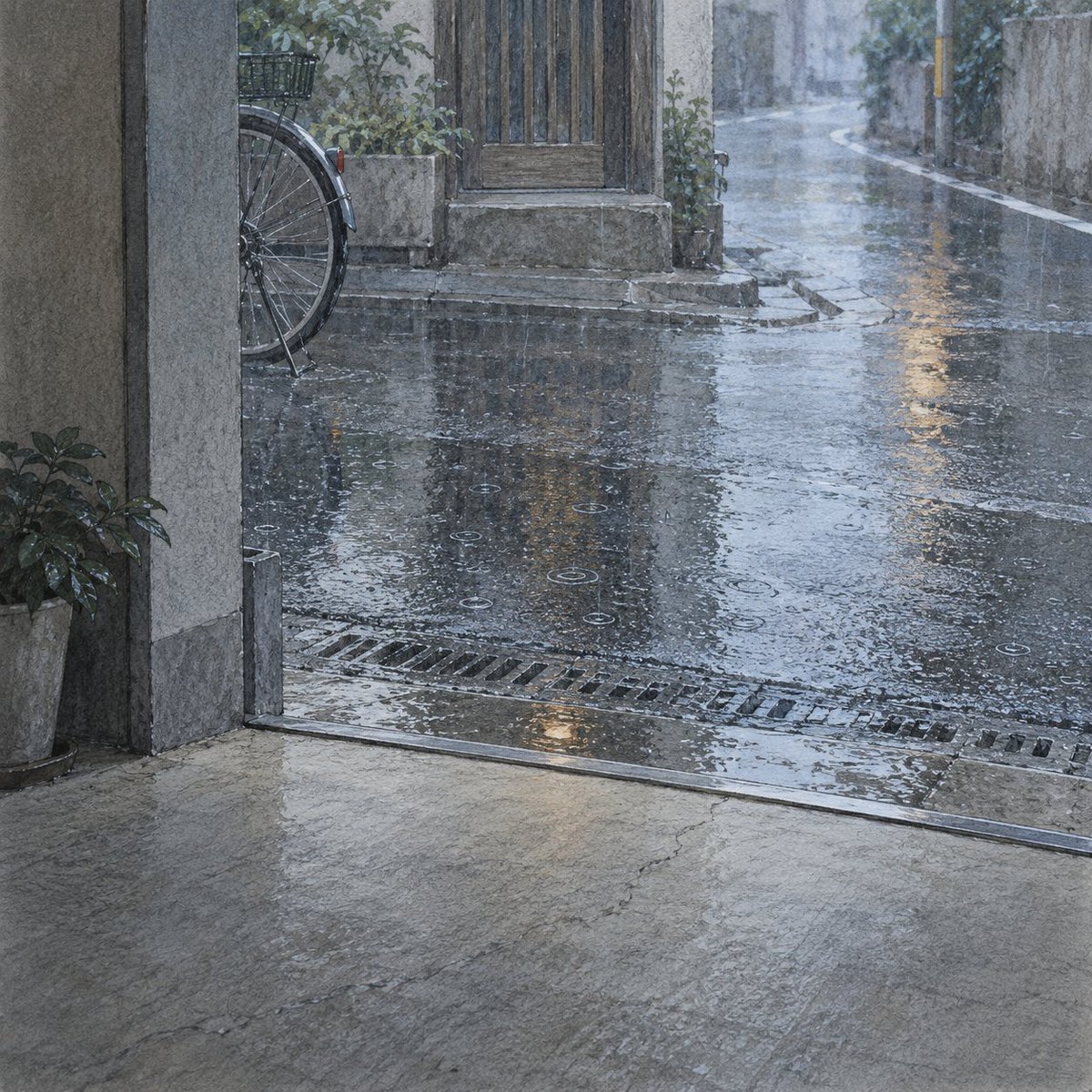
Sometimes the need lasts only as long as the rain.
At some stations in Japan, an umbrella can be borrowed for that brief stretch and returned afterward.
The return matters: it ends the temporary claim and lets the umbrella re-enter shared use.
Sometimes being near is enough for now.
On a street in Japan, a bench or small place to pause near a storefront may let someone stay close to activity without having to enter it.
This kind of space does not promise interaction.
It leaves the next step open.
Across several locations in Toyohashi, a local public-interest organization offers knife sharpening on a recurring schedule.
A worn knife can be sharpened and returned to everyday use.
The service comes back, and so does the possibility of using the tool again.
Maintenance keeps ordinary use going.
Some pedestrian crossings in Japan use alternating bird calls to tell people with visual impairments when and in which direction to cross.
No conversation is required.
The signal provides timing and direction; the movement remains the pedestrian’s own.
A shared cue can guide while leaving the crossing itself to the pedestrian.
A beach can change seasons without changing shape.
At Ama Beach in Hyogo, lifeguards, the management office, and some facilities operate during the swimming season.
When that season ends, those operations stop while the shoreline remains.
The seasonal transition becomes visible through what is no longer operating.
In winter, ropes rise around garden trees in Ishikawa.
Yukitsuri may look like part of the season, but it is shaped around each tree to support branches against accumulated snow.
Once the protection comes into view, so does the condition the place is preparing for.
A sudden rain can change more than the plan.
In Japan, a covered shopping street may keep the walk going; a kissaten or café may offer a place to wait indoors. Neither has to become the destination.
But when the route slows or pauses, one ordinary detail can come into view—a street seen from a table, the way back outside.
That unplanned place can remain as another way into the town—something to recognize later, return to, or notice again elsewhere.
At some stations in Japan, a small uncertainty can lead you to ask someone.
An answer may help you continue. If movement resumes, attention can shift from the question to the platform, street, or town ahead.
Asking may reopen the route—and bring the place around you into view.
Autumn does not always arrive as a whole landscape.
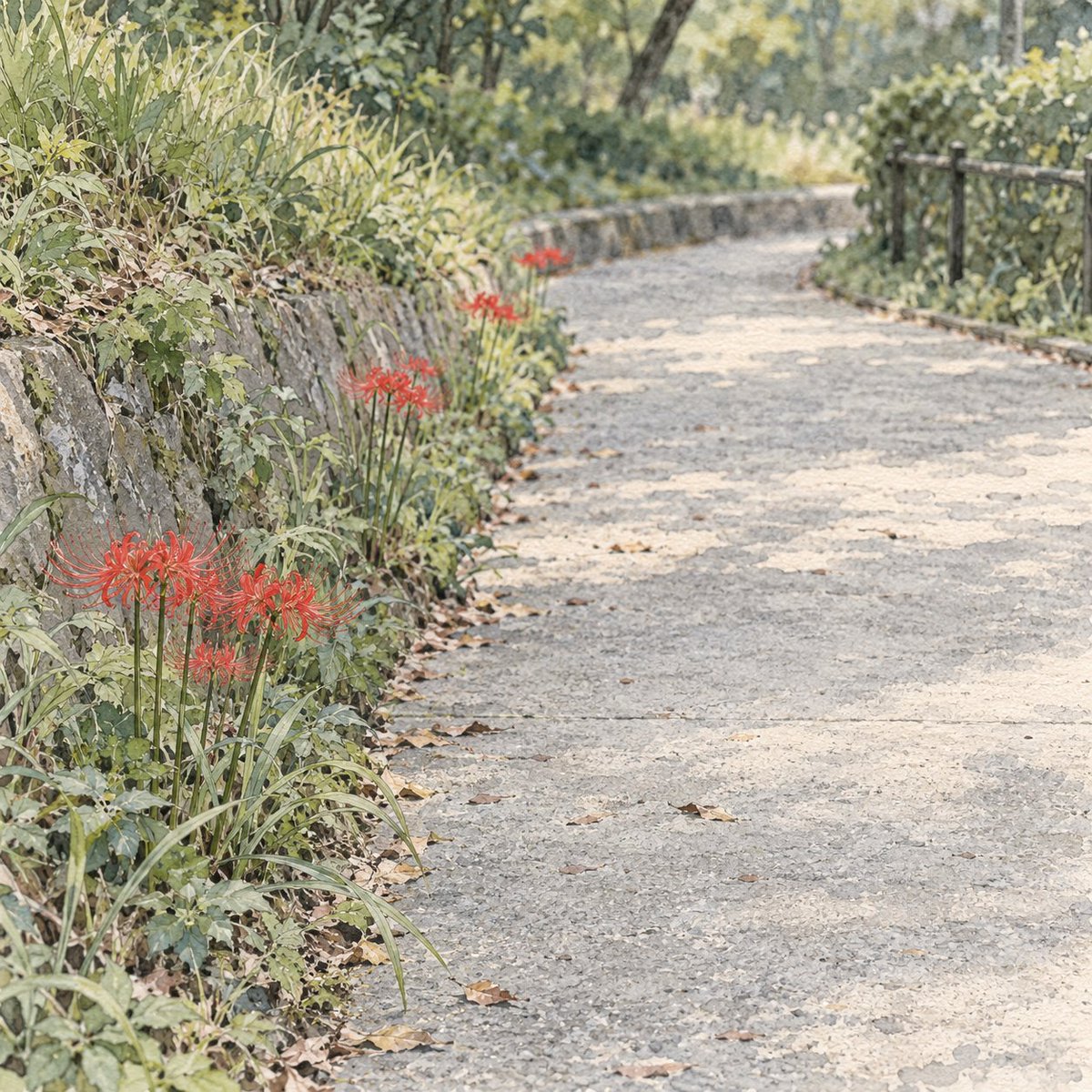
At a public park in Saitama, red spider lilies bloom around September along the embankments. In 2026, the autumnal equinox falls on September 23.
A narrow line of red beside an ordinary path can make the seasonal turn visible before the whole view has changed.
The route stays ordinary. What it lets you notice has shifted.
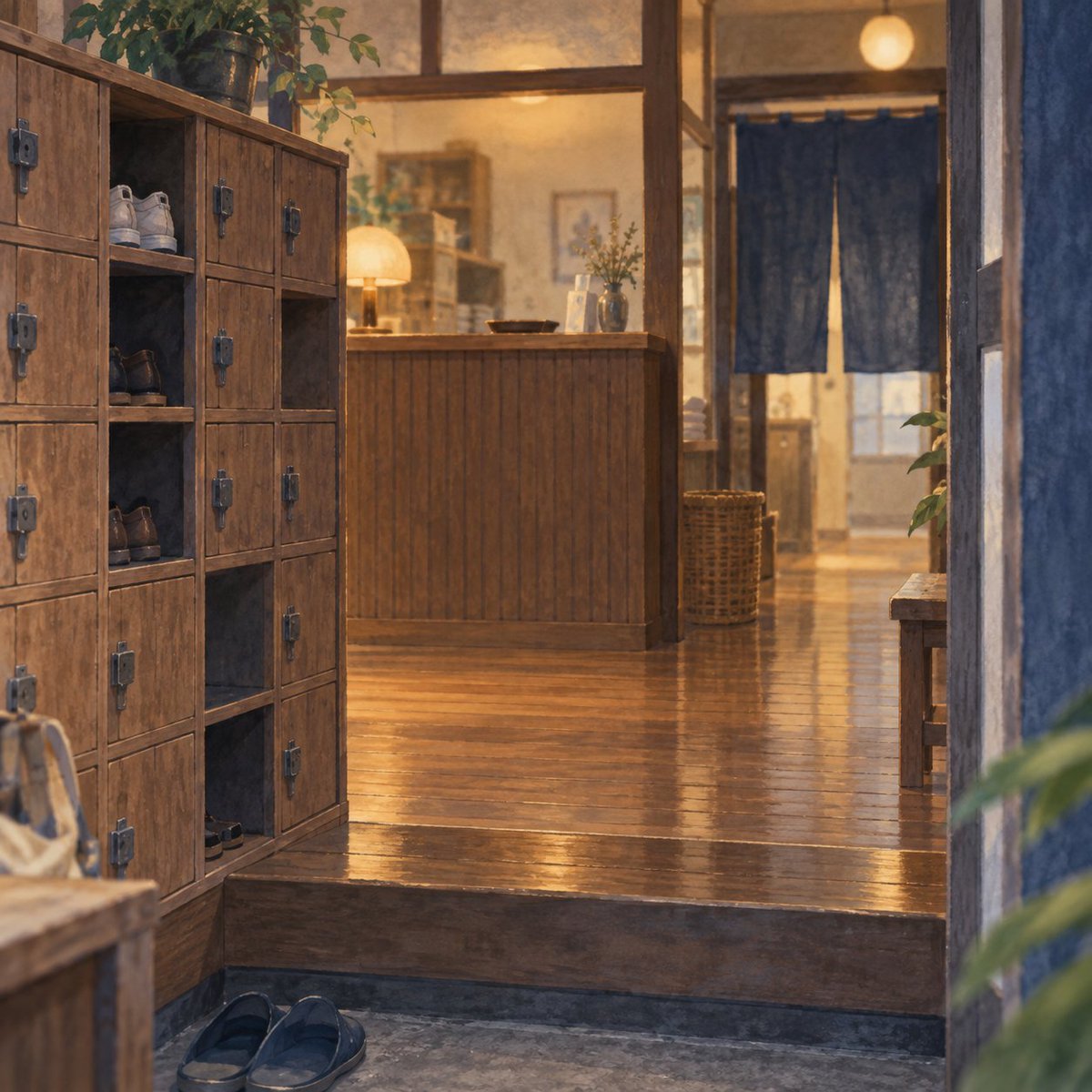
The bath is not the first room you enter at a sento.
First, shoes come off and go into a locker.
Then comes reception—the bandai or front desk—the changing room, and only after that, the bath.
For a first-time visitor, these can look like separate instructions.
Seen together, they form one route from the street into a shared place.
Sometimes a place begins before its main room.
In Hakone, Japan, yosegi woodcraft uses the natural colors and grain of different woods.
The pattern comes first.
Woods are chosen for it, then joined, cut, and shaped into an object.
Look at the finished surface again, and Hakone comes into view as part of how it was made.
Hakata. Sapporo. Kitakata.
These names belong to regional ramen styles—and to places in Japan.
Read as food names, they suggest something to eat. Read as place names, they offer somewhere to explore.
Sometimes a place starts to make sense before you know much about it.
You pass one storefront, then another with the same kinds of materials.
At first they are separate details. After a while, repetition turns them into a pattern.
Along one specialist street in Japan, that pattern can become part of how you read the place.
Nothing explains the street all at once; the sense of it grows through what keeps returning.
You may still know very little about it, but the pieces no longer feel unrelated.
Some of the first lessons in Japan are small.
Where to put your trash.
How an ordering tablet works.
When a space grows quiet.
Which customs belong where.
You do not have to memorize a country before you arrive.
Sometimes the first useful skill is simply noticing that the defaults have changed.
What would you notice first?
Japanese does not have to be a gate you pass through first.
You can take a first step toward Japan with imperfect words.
A greeting or a simple question can be enough to start a conversation.
Language can grow from there—not as proof that you earned entry, but as another way to go deeper.
Fluency is not the starting line.
Some days you do not need a plan for Japan.
You just want one quiet point of contact.
Matcha is already within reach in many places outside Japan: a café, a Japanese grocery, or a bowl made at home.
That can be enough for today.
If curiosity stays, the next question might be where the tea came from.
Interest is enough to begin.
Sometimes a song leads to a language.
Something familiar draws you toward a place in Japan.
That place, in turn, can open the way to people you might never have encountered otherwise.
A Spark is not the destination.
It is where a Path can begin.