My allegorical fable⬇️seems to be confusing some people
There are actually three main points
1. sex is a great way to spread innovation to lineages that never evolved them
That's understood. But what many evolutionary biologists don't get is:
2. Mutation speeds up when a population is under strong selective pressure
3. Sexual selection - focusing on particular traits such as peacocks' tails, birdsong in songbirds, migration, or (in humans) beautiful faces, athleticism and cleverness - can restore accurate replication
Those traits need to be complex - ie the product of many genes - and everyone needs to agree on what is important, so that recent mutations can be picked up
_____________________
At the end of the last ice age, sea levels rose by 120 meters.
As the water rose, about 1,000 humans were marooned on the Fantasian Islands, about 40 miles off the coast of West Africa (at least, I feel that’s where they ought to be). Within decades, people had wiped out all the large mammals on the islands, and they lived on gourds, fruit, and the eggs of blue-footed boobies. However, there was a kind of bean on the islands that could be eaten in small quantities – in larger quantities, it was toxic. There was one family on the island that was particularly stupid and ugly, avoided by the other islanders. This was because both parents had high mutation rates – they had DNA polymerases that couldn’t replicate DNA quite as accurately as others could - their polymerases made slightly more mistakes. Instead of about 100 new mutations per child (mutations the parents didn’t have, that is), their children had about 800. By the third generation, there were a lot of illnesses in the family, but there was one boy who could eat the beans without any ill effects (scientists now believe he had three new mutations that allowed him to tolerate both tannins and lectins). All his siblings died at young ages, but he and his children were strong - although stupid - and his sons mated with the most beautiful girls on the island. These girls had DNA polymerases with very low error rates, so fidelity was restored. After 300 years, everyone on the island was descended from this particular individual, and they were all perfectly healthy and intelligent, with beans forming 60% of their diet.
By the way, it was crucial that the young men sought out the most beautiful girls - as we still do today.
That’s because they were subconsciously looking for accurate polymerases. The story is allegorical, but I think this kind of thing happens all the time with animals, plants, fungi, and microbes – whenever a species is subjected to strong natural selection. For example, when they invade new terrain, an ice age begins, or they infect a new host. That’s why sexual reproduction is so universal – scientists don’t have a good explanation right now for why it’s so popular (check out the Wikipedia article).
I think sexual reproduction a general adaptation to unstable environments and a mechanism to restore replicative fidelity – which is often lost.
Prokaryotes have similar mechanisms, but sex is the most complex and effective
Preprint: https://t.co/tKg3b3xWru (I've since changed the name back to The Everest Hypothesis btw)
Let me categorically Debunk this utter rot. @sainsburys.
I am a poultry Breeder. The hens that lay white eggs (Amberline/White Star) DO NOT have a lower carbon footprint.
Yes they eat a bit less and produce roughly the same amount of eggs as the Brown egg layers (Bovan/Lowman/ISA Brown) but they live shorter lives, are prone to dying suddenly when startled, a flighty and nervous and because they live shorter productive lives (12 -18mnths) vs brown 18/24mnths (both commercial farmed), you have to incubate more which is increased (Electricity/gas costs) and their eggs are not the same quality.
I breed and keep 20+ different breeds, including: ISA Brown hens and White Stars. All my hens are 100% free range, Not a single barn kept bird, I have ISA browns that are 5yrs old and still laying beautiful Brown eggs, I have not seen a White star live beyond 3yrs and certainly none have laid eggs past 18-24mnths.
White stars Lay themselves to death. They are slender birds and because they dont eat a lot, it drains their personal vitality to keep up laying the eggs you want to sell because of the nonsensical lie that they are "More Carbon Neutral"
You want to know about eggs, come talk to someone like me, Don't rely on some hairbrained imagination of a buyer who's trying to squeeze the profit margin for a few extra pennies at our expense and to the poor hens detriment.
You've completely lost me
Lots of viruses have surface proteins need to be cleaved before they can enter a cell
My understanding (although many virologists seem not to be aware of this) is that this prevents them from going straight back into a tissue that they have just come out of
But Spike needs to be cleaved before it can fuse the virus to the surface of the cell
Unless the virus gets in without explosive rearrangement of Spike - eg by endocytosis - which I think is what happens with some more recent variants.
The FCS cleaves the protein before it LEAVES the cell. That is not necessarily absurd, but the pathogenicity of the virus needs to be moderated in some way if it is going to spread as a respiratory virus (which requires its host to be moving around)
Remind me - what is the effect of D614G on the structure or function of Spike?
Scandinavia often suffers from droughts that restrict tree growth in spite of high temperatures.
If we see that now, we can assume it was a risk in say the early Holocene
Or you might get a volcanic erruption in Iceland that would first restrict growth by blocking sunlight and depositing toxic sulfur and fluorine, then increase growth by fertilizing with P, K and Mg which takes time to break down (according to a quick question that I asked Gemini AI)
Doesn't seem like a good way to measure temperature
Viral spreading via the respiratory route gives rise to distinct evolutionary pressures
My paper on resp viruses is very relevant here:
Shaw Stewart PD. Will COVID-19 become mild, like a cold? Epidemiology and Infection. 2024;152:e120.
https://t.co/ldqqBA7xDX
What do you think @grok ?
A Stanford neuroscientist published a paper a few years ago that quietly answered one of the oldest questions in human history, and almost nobody outside his field has heard of it.
The question is why we dream. Not what dreams mean. Why they exist at all. Why your brain spends a third of its sleep hallucinating images instead of just resting like every other organ in your body.
His name is David Eagleman.
He runs a lab at Stanford. The paper is called "The Defensive Activation Theory", and the moment you read it the explanation collapses every other theory you have ever been taught about dreams.
Freud said dreams were repressed desires. He was guessing. He had no brain scans. He had no electrodes. He had a couch and a notebook and a century of credibility that nobody has been able to fully scrub off the subject since.
Modern neuroscience replaced him with the memory "consolidation theory". The idea that dreams are your brain sorting through the day, filing things away, deciding what to keep. That story is partially true. Sleep does consolidate memory. But it does not explain the single strangest thing about dreams, which is that they are almost entirely visual.
You do not dream in pure sound. You do not dream in taste. You do not dream in smell. You dream in pictures. Vivid, detailed, often impossible pictures that activate the back of your brain so hard a scientist scanning you would think your eyes were wide open.
Eagleman started from one fact almost nobody outside neuroscience knows. The brain is territorial. Every region holds its turf through constant electrical activity. The moment a region goes quiet, its neighbors start invading. They take the silent territory and reassign it to themselves.
This is called "cortical takeover", and it is not slow. It is not a long process measured in years. In experiments where adults are blindfolded, the visual cortex starts processing touch and sound within an hour. One hour of darkness, and the territory is already being annexed.
In congenitally blind people, the visual cortex is fully repurposed. It runs language. It runs hearing. It runs touch. The hardware never went unused. It was just reassigned to whoever showed up first.
Now sit with the implication of that for a second.
Every night, when you close your eyes and fall asleep, the sun has set. The planet has rotated. The visual cortex, which takes up roughly a third of your entire cortex, is suddenly receiving zero input. For eight hours. Every single night. For your entire life. And evolution has shaped your brain inside a planet that has been spinning into darkness for billions of years.
If cortical takeover happens in an hour, the visual cortex should have been lost a long time ago. Stolen by hearing. Stolen by touch. Reassigned by morning. Humans should have evolved into a species whose vision works fine during the day and then degrades every time the sun goes down because the territory keeps getting renegotiated overnight.
But that did not happen. Vision works the moment you open your eyes. Which means something is defending the territory while you sleep.
Eagleman's claim is that dreams are that defense.
Every 90 minutes through the night, a precise burst of activity fires from the brainstem into the visual cortex. Pontine-geniculate-occipital waves. PGO for short. They are anatomically aimed. They are not general arousal.
They are a targeted volley of signal launched directly at the back of the brain where vision lives. The cortex lights up as if it is receiving real images, and you experience that artificial activation as a dream. The bizarre narrative your conscious mind invents around it later is just your brain trying to make sense of the noise.
The dream is not the point. The dream is the side effect. The point is keeping the territory occupied.
The evidence for this is the part that should haunt you.
Newborns spend roughly 50% of their sleep in REM. Adults spend twenty. Old adults spend fifteen. The amount of dreaming you do tracks almost perfectly with how plastic your brain is. Newborns have the most plastic brains on earth. Their visual cortex is in the highest danger of being overrun by neighboring senses while it develops.
So evolution gave them an enormous defense budget. As you age, your brain becomes less plastic, the takeover risk drops, and the defense system scales down accordingly.
Eagleman and his co-author ran the same correlation across twenty-five primate species. The more plastic a species' brain, the higher the proportion of REM sleep. The relationship held across the entire primate family tree. Plasticity and dreaming move together. They are two halves of the same evolutionary equation.
A species that ranks higher on flexibility and learning also dreams more. A species that is born ready to walk and survive dreams less. Plasticity is the asset. Dreaming is the insurance premium.
And the prediction the theory makes is the one that quietly closes the case.
Of all your senses, only one is disadvantaged by darkness. You can still hear in the dark. You can still feel in the dark. You can still smelll and taste in the dark. The only sense that depends on light is vision. Which is exactly the sense your dreams are made of. The defense system is targeted at the only territory that is actually vulnerable while you sleep.
Memory consolidation is real. Emotional processing is real. Your brain does do those things at night. But Eagleman's argument is that those functions piggyback on a much older system whose original job was simpler and more brutal. Keep the lights on inside the visual cortex while the planet is dark, or lose it.
For thousands of years, people have asked what dreams mean. Prophets wrote about them. Poets wrote about them. Freud built a discipline on them. None of them had access to the actual answer, which is that dreams may not mean anything in the symbolic sense at all.
They may be the visible flicker of a defense system running in the background, the way a screen saver protects a monitor by keeping the pixels moving even when nobody is looking.
The strangest thing about the theory is how cleanly it explains why dreams feel so real. Your visual cortex cannot tell the difference between a PGO wave and an actual photon. It is the same hardware lighting up the same way. The cortex does its job. It builds an image. Your conscious mind, half-awake, wraps a story around it and calls it a dream.
You are not seeing your subconscious tonight. You are watching your brain defend a piece of itself from being stolen.
Every animal that has ever closed its eyes on this planet has done the same thing.
@levine2001@shallit43@Ayjchan Or are we supposed to believe that the scientists that the editors of famous journals appoint as reviewers of controversial papers are always 100% unbiased?
@A1an_M@Bernard76693770 > and the death of the party will mean that can never happen again
Of course it doesn't
It just means you'll be betrayed by another party
Can I suggest to you that Kemi is different from the previous leaders - she gets it
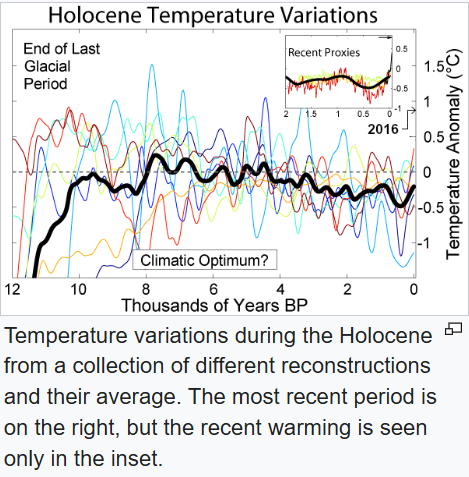
Someone has also edited the article on what I have always called Holocene Thermal Maximum in Wikipedia (they call it Holocene climatic optimum, presumably to hide the fact that it was warmer)
Now it is shown as about half a degree above Little Ice Age temperatures
It's very difficult to measure the Earth's current temperature to within half a degree today, let alone the temperature 7,000 years ago. You wouldn't even name such a small fluctuation
Natural thermometers such as lake deposits and glacier records show the temperature has fallen much more than that
https://t.co/ivvs2Z22pG
One extraordinary bit of evidence of a cover-up can be seen when you look at the Wikipedia entry on Climategate - they bury the fact that the conspirators generated a fake graph in the small print. A young person who wasn't around at the time would have no idea what they did wrong. And there's a link in the Wikipedia article to the https://t.co/bQQRmpxo0y article,which is just as bad