Last year I went from $19k in my bank account to selling my company for $200M+
Then came what I call "The Champagne Problem Cycle":
- Existential Crisis
- Cocaine energy
- 19 gas stations
- A move to Puerto Rico
Here's exactly what happens when you get rich 👇
People who say things like this are not serious people.
They're well intentioned, but they lack a firm grasp of how currency in the financial system actually works.
Let me explain 👇
Something you have to keep in mind is every country faces what's called the "impossible trinity" when setting currency policy. They get to pick two of the following:
1. Exchange Rate Stability - price control
2. Monetary Policy Autonomy - print control
3. Capital Mobility - flow control across borders
In the US we chose 2 and 3.
The reason this relates to your question is that when you abstract up to global trade and finance, we tend to favor countries that prefer 2 and 3. We also would prefer to find one one main currency.
Why?
Because it makes trade efficient and fair.
There's a ton of transactions going on between countries, businesses, etc and they're moving really, really quickly. You could just let them all work themselves out in a bilateral way, but that's kind of like going back to a barter system. It's a system that has *some* efficiency, but it'd be insanely more efficient if we just used one currency, especially as things move faster and faster.
So we want to use "mostly" one currency to make things work quicker, so how do we choose the right one?
Well the right currency needs three things:
A. Stability
B. Trust it will continue to be stable
C. Enough of it that using it won't make 2 and 3 fall apart.
This means it's gotta be the currency of a big boy economy to literally have enough currency to make stuff happen on a global level, so which big boy should we choose?
China?
Well, they chose 1 and 2 in the trinity, which means they can control the exchange rates/price. This doesn't really feel fair, because they could explicitly skew things in their favor. It also doesn't seem super trustworthy to not allow capital flows. So no.
EU?
Could work, but it's not that old and there's instability in the federation since it's made of a bunch of countries that still have too much autonomy apart from the combined entity to make sure it's stable.
Everyone else is either not big enough or not stable enough, so that leaves us with the ol' U-S-of-A and the dollar.
There are enough dollars.
Those dollars are (relatively) stable.
And they're backed by a significant amount of soft and hard power.
"But Patrick - couldn't that unravel?!"
It could, but as of right now the biggest argument against this spiraling out of control is - there's absolutely no other alternative.
China and the EU?
See above, and they're no where close to solving the trust and stability issues.
A new federation of countries like BRICS?
Taking several untrusted countries and putting them together multiplies distrust, it doesn't magically make trust.
Bitcoin?
Oh, the thing that's been around since 2009 and is based on math? Actually, bitcoin is kind of perfect, because the math solves a lot of these problems, but where's the soft/hard power backing it? Maybe it'll work, but not soon.
So again - USD.
We've been taking advantage of there being absolutely no viable alternative for quite some time by printing money and kind of not caring about how much we print.
Our status of being the reserve currency has gone down, but not by much. We currently sit with 59% of global reserves in USD. The next closest is the euro with ~20% of global reserves and the yen with ~6% and the pound with ~5%.
Even if we erode to 50% over the next decade or two, that's not a disaster or doom, because most of the world's still going to want dollars.
"Wait a second PC, what does this have to do with the USD spiraling out of control or not?"
I got you.
Being the global reserve currency gives us special privileges:
- Everyone loves your debt, because it's a way to get more of the global reserve currency.
- You can get away with printing more, because there's enough demand (people will take dollars)
So is the debt a big concern? Yes, but it's not because the USD is spiraling out of control and doomed.
It's because of intergenerational equity and the budgetary constraints it will cause in the mid and longterm. Assuming we don't have a giant gain in productivity and GDP (the likes of which we haven't seen in a while, but maybe AI?), entitlement programs will have to be cut back. That probably won't happen, because populism, so if you can't cut costs, what do you do? You raise money - ie raise or attack taxes. The result is potential brain and financial drain of the wealthiest folks since tax avoidance is possible and easiest for them, so you are left taxing the middle class. This doesn't go well to keep an economy growing, so you end up losing the funds to wield our hard and soft power; all of which results in the erosion of American hegemony.
How does the world respond? It becomes a lot more regionalized (which is already being accelerated by the next phase of capitalism) and likely still keeps using the dollar. We become a value stock, instead of a growth one. It's not a bad living. It's not catastrophic or doom. But it makes the next 100 years not as good as the last, which is sad and I'd argue not "the American way."
How we respond will make or break things, but I've still got hope.
Anyways, had some fun writing this, so hope it was helpful. It's a really good question that gets sensationalized a lot, even if there are some very, very valid things to think about and solve here.
Couple of notes:
- I'm generalizing in a number of places for brevity (ironically) and clarity. All of this has more nuance and complications. Even with those, some very smart people who know what they're talking about would disagree with me, as they'd prioritize certain aspects I think are less important.
- The unique privileges we have as the global reserve currency has sort of sparked "Modern Monetary Theory", which in general believes the government can print endless money (I'm generalizing). I think if the State continues to gain more and more control and more and more spending as a percentage as GDP this could be very true. Even if true though, I don't think that's a good world to live in. Different tradeoffs.
- People like to tweet about "oh a scary new trade agreement is going to settle trades in X currency instead of USD between Y and Z countries". These are not serious people. They don't know that trade currency != reserve currency. Also I can't think of a single announcement like that where a consequential amount of dollars was at risk.
- If you want to read very deeply on this to get a good understanding, check out Susan Strange. She invented the field of "International Political Economy" and discussed all of these issues/topics (including most of Balaji's takes, digital currencies, etc) in the 1980s. I recommend her book States and Markets for a foundation and then The Retreat of the State for topics around currency and some of the turmoil we're dealing with.
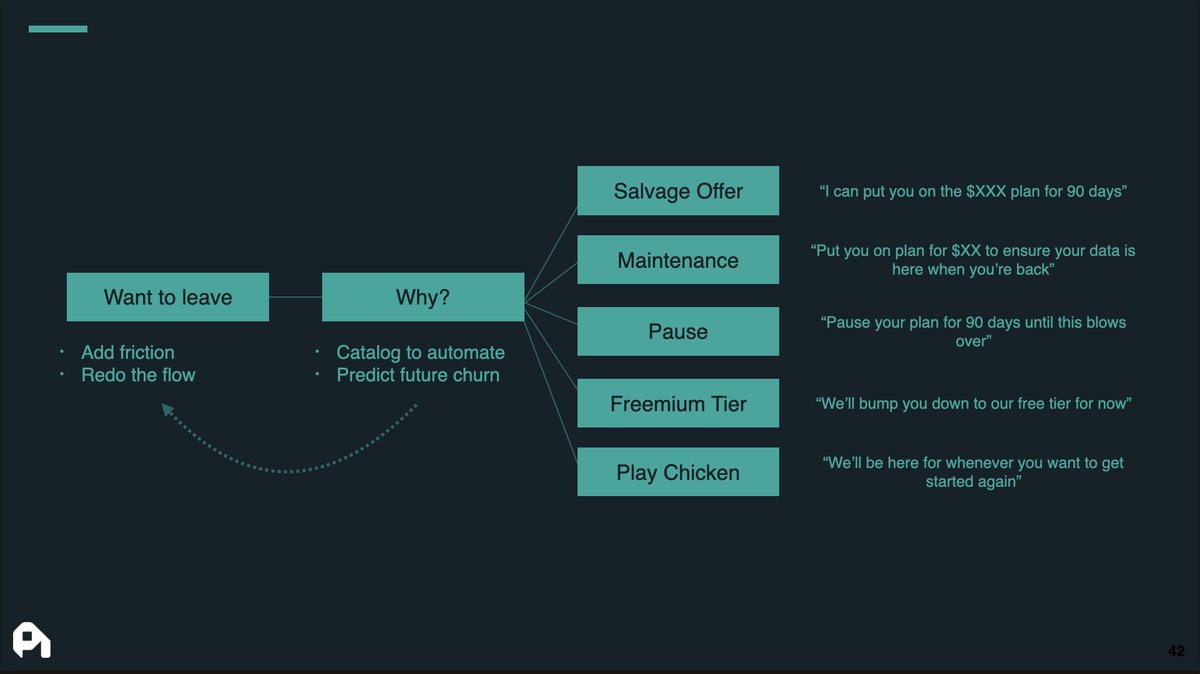
@snoopeh@gregisenberg Ha, so I've got a whole protocol for this when we finally do the pod Greg. :)
Important piece: these are shown based on customer data and interaction, but MOST importantly you need to prime them.
Oh amigos - I've lost 70 on @MyBodyTutor already. I'm doing really freaking well thanks to them. This was more for a health thing I'm working on. Trying to get more ideas of what people struggle with and what they're doing.
I messed up my joke in the original post, so that intent got lost a bit :)