I had the privilege to meet Dr. Mohan Yadav ji, the Hon'ble CM of Madhya Pradesh. His forward-looking ideas represent not just growth, but progress as well. Under his stewardship, MP has become an attractive destination for substantial investments.
Dr Mohan Yadav ji has a unique ability to tie the development to everyday life, showcasing exceptional leadership. His initiatives combine innovation with tradition, making his vision inspiring and impactful. Today, India is a global investment hub, and Dr. Mohan Yadav ji is directing these investments towards Madhya Pradesh.
May the colours of this festival bring renewed energy, meaningful connections, and continued success in all that we do.
Wishing everyone a vibrant and joyous Holi.
#holi#holicelebration#ruiagroup#colourful#bestwishes
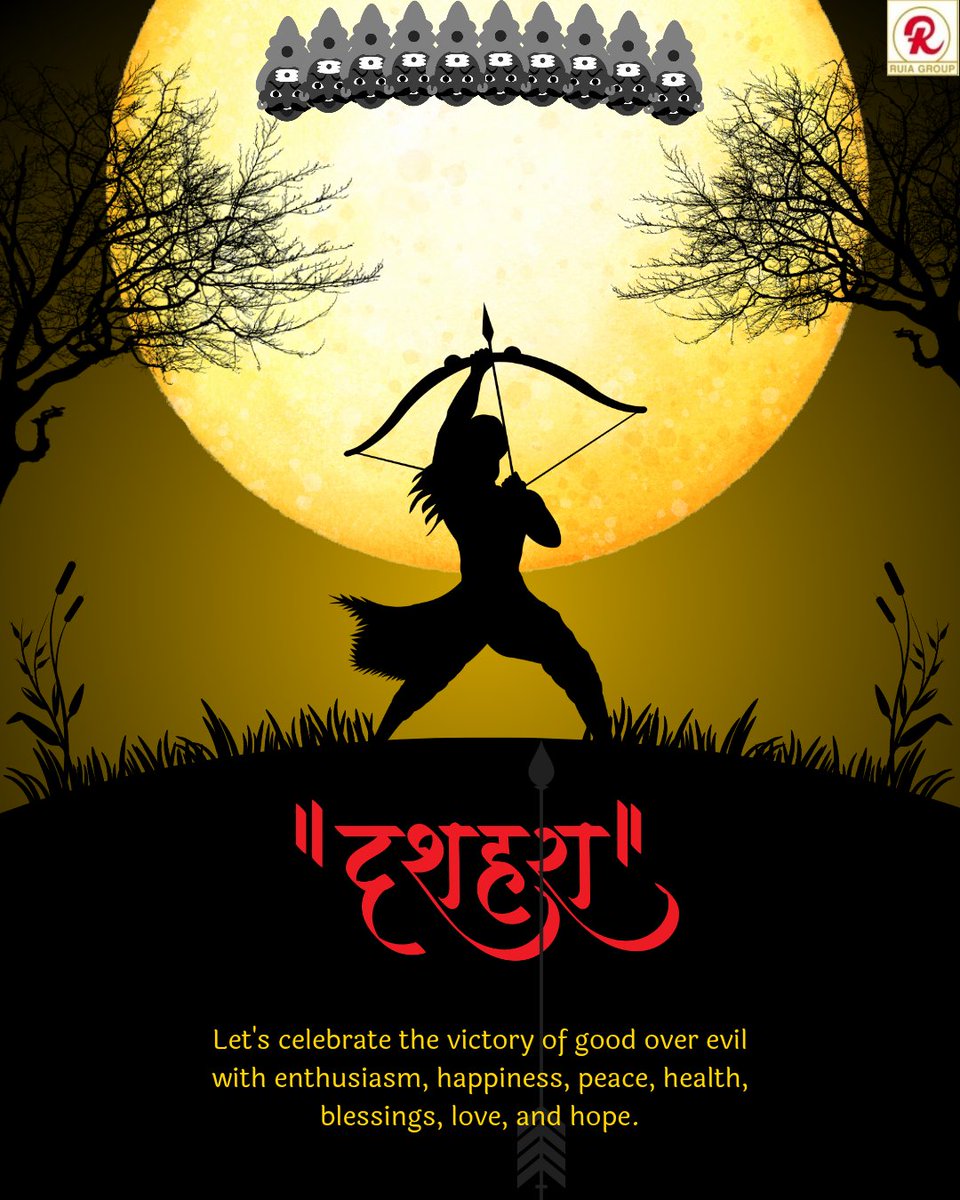
On this auspicious Vijayadashami, I pray for happiness and health in our home.May this Dussehra bring new beginnings, courage and endless blessings your way!
दशहरा की बहुत-बहुत शुभकामनाएं
May the divine architect bless your work and bring perfection to everything you create.
To all the hard-working souls there like engineers, architects, and creators, here's A Happy Vishwakarma Puja !! May your tools and instruments be blessed.
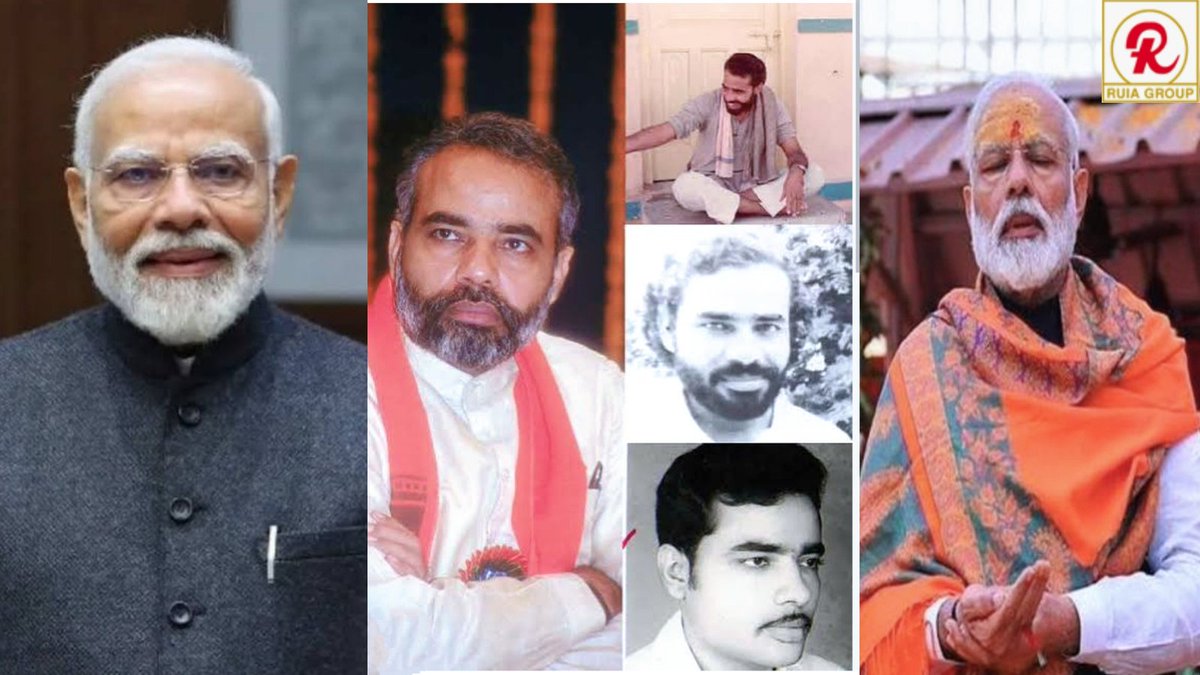
Salutations to our Honourable Prime Minister, Shri @narendramodi ji man of vision, discipline and statesmanship, guiding Bharat with unwavering resolve. Wishing him on his birthday, a healthy life and a more successful journey ahead in all his endeavours.
Tariffs & their aftermath…
The newly announced 50% duty on Indian goods is framed as resolve. In reality, it undermines economic logic and strategic trust. A thread 🧵
The measure is justified on India’s energy trade with Russia. Yet China, far more deeply tied to Russian supply chains, faces no such penalty. Selective execution raises questions of fairness, coherence, and intent.
At its core, a tariff is a tax at the U.S. border. It is not paid by foreign governments but by American importers. Costs pass quickly to households. Everyday categories will see prices rise: apparel, jewelry, seafood, leather, furniture.
Tweet 4
Goods once shipped directly from India will now reroute through the UAE, Vietnam, or Turkey. Each step adds paperwork, margins, and delay. By the time these items reach U.S. shelves, the price surge will be visible.
Tweet 5
Some buyers may turn to Bangladesh or Pakistan. But duplication is not equivalence. India’s scale, consistency, and quality built over decades cannot be mirrored overnight. Cheaper substitutes may fill gaps but not value.
Tweet 6
The policy’s reach extends beyond goods. U.S. companies rely on India’s skilled, English-speaking workforce for support, finance, technical desks, and AI workflows: data labeling, evaluation, trust and safety, round-the-clock model ops.
Tweet 7
Tariffs raise service costs in 3 ways:
• Vendors demand a risk premium
• Skilled staff mobility slows
• Firms are forced into cost vs. quality trade-offs when shifting elsewhere.
Result: longer wait times, higher fees, slower AI pipelines.
Tweet 8
For India, export hubs like Tripura, Surat, and Kolkata brace for cancellations and layoffs. For the U.S., households pay an invisible tax at checkout while businesses face rising uncertainty.
Tweet 9
There was always a better path.
• Energy realignment: joint refining, renewables, diversified sourcing
• Worker protection: domestic investment and safeguards
• Indo-Pacific goals: punishing India while sparing China weakens the strategy itself.
Tweet 10 (Closer)
History does not remember broad tariffs as triumphs. It remembers who paid the bill, who lost trust, and who mistook spectacle for strategy. This duty risks taxing not just goods at the port but also the very AI and service networks America relies on.
जय गणेश, जय गणेश, जय गणेश देवा।
माता जाकी ���ार्वती, पिता महादेवा॥
एकदंत दयावंत, चार भुजाधारी।
माथे पर तिलक सोहे, मूसे की सवारी॥
जय गणेश ll
Jai Ganesh, Jai Ganesh, Jai Ganesh Deva,
Mata Jaki Parvati, Pita Mahadeva.
Ekadanta Dayavanta, Chaar Bhujadhari,
Mathe Par Tilak Sohe, Moose Ki Sawaari
Jai Ganesh
India’s independence was not gifted; it was carved out of centuries of oppression, paid for with the blood, sweat, and tears of countless patriots who refused to bow.
From the uprising of 1857 led by Rani Lakshmibai, Mangal Pandey, and Tatya Tope, to the non-violent storms of Mahatma Gandhi’s satyagraha and Jawaharlal Nehru’s vision, every phase of the struggle demanded courage beyond measure. Revolutionaries like Bhagat Singh, Rajguru, and Sukhdev embraced the gallows with unflinching smiles, while Chandrashekhar Azad chose death over surrender.
Netaji Subhas Chandra Bose, with his clarion call “Give me blood, and I will give you freedom”, led the Indian National Army in a fiery bid to free the nation by force. Women like Sarojini Naidu and Begum Hazrat Mahal proved that patriotism knew no gender, enduring imprisonment and hardship for the motherland.
Behind them were thousands of unnamed heroes who faced the lash, the bullet, and the cell so that the tricolour could rise over a free sky. Independence was not won in a single battle, but in a relentless, united march of sacrifice a legacy soaked in the unyielding spirit of a people who chose liberty over life itself.
They gave their today for our tomorrow and in every flutter of the tricolour, their souls still whisper, ‘Jai Hind’.
Happy Independence Day
Karmayogi Shri Shyam Lal Ruia
9th Aug 1921 •••• 23rd Aug 1994
On behalf of every member of the Ruia family & all the Staffs of all the Ruia Group Companies, we bow in heartfelt remembrance to a visionary whose life was an embodiment of integrity, dedication & selfless service. A noble spirit, steadfast in duty, who wove honour, service beyond self & altruism to the highest order into the fabric of his era & whose name shall endure as the legacy of a selfless soul.
His guiding values continue to inspire our every step, & his legacy lives in the hearts and work of all who had the privilege to know him.
So, President Trump slaps 25% Tarifs on India.
Days later, india "Informs" the US they won't be buying their F35 jetfighters
India will now buy around 50-60 Russian Su-57 fifth generation jets.
1/
A quiet revolution is shaking the foundations of global finance:
De-dollarization — and it’s gaining momentum faster than many expected.
Let’s unpack what’s really going on
2/
What is de-dollarization?
It’s the deliberate global move to reduce reliance on the U.S. dollar for trade, reserves, and international settlements.
It’s not just economic — it’s geopolitical.
3/
Why now?
• U.S. sanctions weaponized the dollar
• BRICS is exploring a new trade currency
• China & Russia are trading in yuan/rubles
• India is signing rupee-based deals
• CBDCs are on the rise globally
The world is diversifying — fast.
4/
The consequences?
A possible shift away from USD as the primary reserve currency
Higher borrowing costs for the U.S.
Reduced influence of Fed policy on global markets
Greater currency autonomy for emerging markets
5/
But here’s the nuance:
This isn’t the collapse of the dollar.
It’s the rise of a multipolar currency world.
Think hedging — not abandoning.
6/
The dollar still reigns in:
• Global liquidity
• Deep trust
• Institutional inertia
But its monopoly is being challenged like never before — slowly, structurally, and strategically.
7/
De-dollarization is a symptom of broader shifts:
• Erosion of Western-centric financial power
• Growth of regional trade blocs
• Tech-enabled alternatives to traditional systems
8/
As BRICS expands and digital currencies evolve, the landscape will continue to morph.
The next decade may not belong to any single currency — but to shared power and strategic autonomy.
9/
Bottom line:
De-dollarization isn’t about replacing the dollar.
It’s about rewriting the rules of global finance.
10)
And we’re already living through the first draft.
#DeDollarization #Finance #GlobalMarkets #Geopolitics #Macroeconomy #BRICS #DollarDecline
Job loss leaves deep psychological scars — damaging confidence, inducing anxiety, and quietly fuelling burnout. A sense of invisibility haunts many, even as they put on a brave front
For foreign workers, losing employment often signals the start of a ticking legal clock. In many countries, residency is tied to employment status — making this transition period both high-pressure and high-risk
To preserve their moral compass — and their long-term credibility — tech firms must act with foresight and compassion.
Rather than engaging in unchecked hiring sprees during economic highs, companies must commit to sustainable workforce planning. This includes improved forecasting, strategic recruitment, and long-term vision.
Upskilling must not be treated as a ‘nice-to-have’ perk. It should be embedded into company culture, with platforms, incentives, and structured mentorship programmes tied to future-ready technologies.
If layoffs become unavoidable, communication must be direct, empathetic, and timely. The current trend of abrupt firings via Zoom or email is not only cold but ethically indefensible.
From resume-building workshops to emotional counselling, job-matching services, and visa/legal support — companies must offer holistic transition programmes to soften the blow of separation.
Rather than outright terminations, firms can explore options like reduced hours, project-based roles, or job-sharing — allowing at-risk employees to remain engaged while managing costs.
The current wave of global tech layoffs isn’t merely a corporate hiccup — it’s a socio-economic event with profound ripple effects. As the world journeys deeper into an AI-driven, agile-working future, corporate empathy, policy reform, and personal resilience will form the three crucial pillars of continuity.
Because no matter how advanced technology becomes, it is ultimately people — with their ideas, dedication, and dreams — who build the future
The Global Wave of IT Layoffs: Causes, Human Cost, and the Way Forward
Over the past two years, the global IT sector — once heralded as a fortress of innovation and secure employment — has undergone a dramatic upheaval. Renowned tech giants such as Microsoft, Intel, Google, Meta, and Amazon — formerly considered the epitome of professional stability — have been trimming their workforce by the thousands. While official communications cite restructuring, operational streamlining, and the advent of AI transformation, the actual story playing out on the ground is far more personal — and heartbreakingly human.
For countless IT professionals, receiving a pink slip is not just a professional inconvenience — it is nothing short of a personal catastrophe. Behind every termination lies a deeper story — of young dual-income couples raising toddlers while balancing EMI commitments, or immigrant families trying to repay hefty housing and vehicle loans, all while supporting dependents back home. The psychological blow is staggering.
Take, for instance, a 35-year-old software engineer from Bangalore, recently let go by a multinational firm. With a sizeable home loan EMI, school fees for two children, and ageing parents to care for, the sudden loss of income does not just cause anxiety — it borders on sheer terror. For those working on foreign soil under temporary visas — be it in the UK or the US — the pressure is even more acute, as the countdown begins toward their legal stay expiring unless a new job is secured swiftly.
This crisis has exposed an uncomfortable truth — the tech world was built to scale, but never taught how to pause.
During the peak of the COVID-19 era, as digital dependency surged globally, tech firms expanded their workforces aggressively to meet skyrocketing demand. However, with the return to pre-pandemic spending habits, this rapid expansion has proven to be economically unsustainable
A combination of soaring global inflation, climbing interest rates, and recessionary fears has prompted companies to tighten the purse strings. Layoffs are often employed as the quickest method to soothe shareholder nerves and protect quarterly margins
As AI-driven platforms gain capability in coding, writing, design, and customer service, firms are silently reducing reliance on human resources for previously vital roles. The allure of automation efficiency is, in many cases, displacing flesh-and-blood talent
In today’s capitalist climate, companies are rewarded less for people-centric growth and more for lean profitability. Investors often push for cost-cutting measures to safeguard returns — and downsizing becomes a strategic reaction to market pessimism.
But Why Are Even the Giants Downsizing?
It’s a valid question: Why would tech titans, many sitting on billions in reserves, resort to mass layoffs? The answer lies in a shifting landscape of corporate priorities.
Wall Street no longer rewards headcount expansion. Instead, it values focused operations and futuristic pivots. Even stalwarts like Microsoft and Intel are now aligning themselves with AI, cloud technologies, and quantum innovation — which demands an overhaul of existing skill sets and workforce structure.
Additionally, global ambitions have placed these companies at the mercy of geopolitical uncertainties — from US-China tech disputes to volatile supply chains — prompting caution and retrenchment in certain markets.
Professionals adept in older technologies now find themselves lagging behind, struggling to catch up with developments in AI, cloud-native systems, and cybersecurity. Upskilling demands both time and financial commitment — luxuries not everyone can afford post-layoff
With wave upon wave of layoffs, the talent pool is overflowing. Yet hiring remains sluggish — especially in mid-level and non-core roles, leading to a bottleneck of qualified yet unemployed professionals
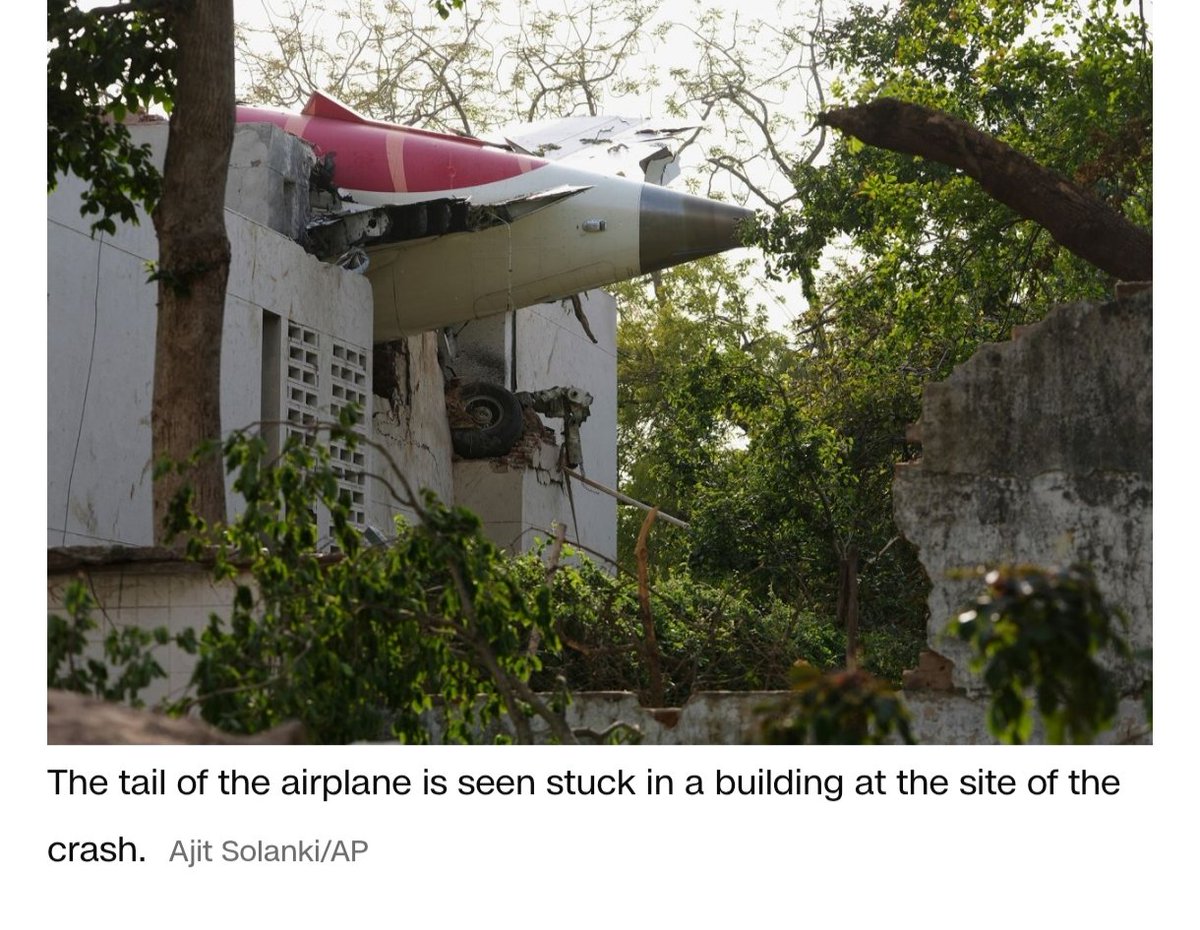
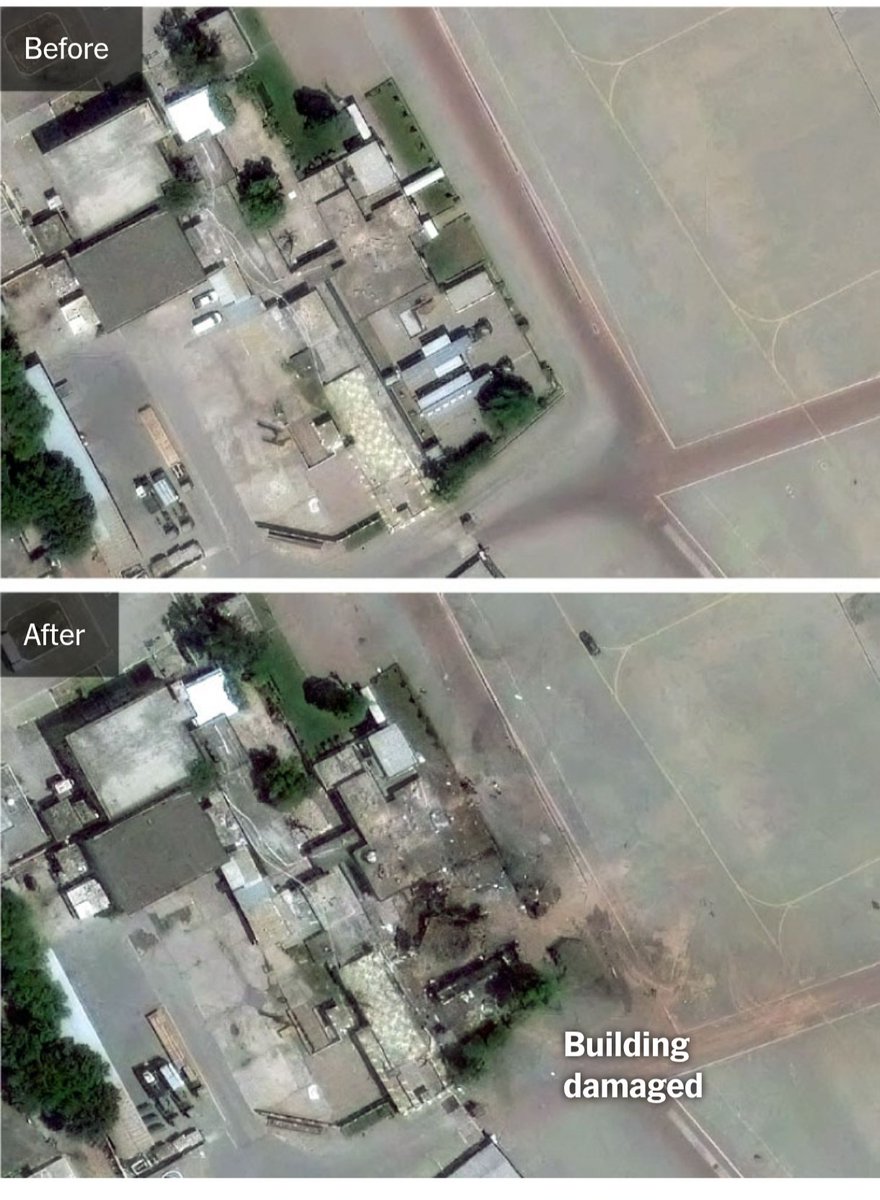
Deeply saddened and shocked at the sudden mishap of today's Air India flight crash in Ahmedabad. The incident literally shook everyone because it went inside the medical hostel of Ahmedabad during the crash. A total of 242 passengers were travelling to London through that flight and the plane caught fire.
The latest report suggests that the death number rose to more than 204 from the passengers list, only one passenger survived, while 5 died in the medical hostel and more than 50 - 60 people were severely injured and admitted to the hospital. Om Shanti to the deceased souls who didn't know it was their last journey.
My condolences also go to the family members of Ex CM of Gujarat Vijay Rupani who was one of the passengers travelling to London through that flight and couldn't survive the ordeal. Om Shanti to him.
FOR MULTIPLE TWEETS
The Bridge of Time, Triumph, and Transformation: Modi at the Chenab
In a world often caught in fleeting moments and fractured narratives, there are images that endure. And this week, one such image was etched high above the roaring Chenab River — Prime Minister Narendra Modi walking across the world’s highest railway bridge, the tricolour in his hand, and the past at his back.
But to truly feel the weight of that moment, one must go back in time — to 1992.
In 1992, Narendra Modi was not yet a household name. He was a karyakarta — a political foot soldier — part of the Ekta Yatra, a powerful symbolic march that aimed to assert India’s unity and sovereignty in the face of militancy and separatist tension. That year, he stood in Patnitop, trying to hoist the national flag at Srinagar’s Lal Chowk, even as fear loomed and local support remained cautious. The gesture was bold, defiant, emotional — a whisper of what lay ahead.
Now, in 2025, he returned — not as a protester, but as the Prime Minister of a resurgent India.
But this time, the gesture wasn’t just symbolic. It was monumental. He didn’t just hold the flag — he walked across a bridge that redefined the laws of gravity, engineering, and geography. The Chenab Railway Bridge — standing at 359 meters above the river, higher than the Eiffel Tower — was finally complete. And it wasn’t just a structure of steel and stone; it was a message to the world.
The Chenab Bridge is more than the world’s highest rail bridge. It’s a saga of India’s ambition, perseverance, and unshakable belief that even the most rugged terrains can be conquered — if the intent is strong and the vision is clear.
Part of the 272-km USBRL (Udhampur–Srinagar–Baramulla Rail Link), this bridge is a key piece in India’s efforts to physically and emotionally connect Jammu & Kashmir with the rest of the nation.
It’s a marvel of resilience: designed to withstand wind speeds up to 260 km/h, seismic shocks, and even explosions.
The project brought together over 1,300 engineers, 3,000 workers, and years of innovation.
Modi also inaugurated the Anji Khad Bridge — India’s first cable-stayed railway bridge — and launched the Vande Bharat Express from Katra to Srinagar, cutting travel time to just 3 hours.
Together, these acts form a blueprint of national integration through infrastructure.
More Than Concrete — The Emotional Pulse of Progress
When Modi stepped onto that bridge, waving the flag with the wind rushing around him, he wasn’t just marking the completion of a construction project. He was tracing the arc of his own journey — from the symbolic to the substantial, from hope to delivery.
This bridge is India’s heartbeat echoing through the Himalayas.
It tells a Kashmiri child: You are not on the margins; you are the centre.
It tells the country: We do not just promise unity — we build it.
It tells the world: This nation doesn't forget, it evolves.
For many, Modi’s return to this region is deeply personal. It’s not just about politics; it’s about presence. Where others saw a war-torn terrain, he saw potential. Where others promised, he planned. And now, where there were once slogans, there are steel tracks and bullet-fast trains.
Yes, there will always be debates. Democracy is built on them. But even the harshest critic must acknowledge this: Modi’s governance has merged symbolism with scale, and sentiment with structure.
From hoisting the flag in 1992 to walking beneath it across the Chenab in 2025, the man and the nation have both crossed bridges — literal and metaphorical.
A Bridge Called Hope
In the end, this is more than politics. It’s about pride. It’s about a Prime Minister walking where few dared to look — not with boots of force, but with the quiet strength of resolve.
The Chenab Bridge will carry more than trains.
It will carry stories.
Dreams.
Children going to school.
Mothers visiting sons.
Pilgrims seeking divinity.
Soldiers returning home.
For decades, Pakistan has nurtured terror as foreign policy. Pulwama killed 40+ Indian soldiers. Pahalgam saw civilians executed after religious profiling. #OperationSindoor#PahalgamTerroristAttack
This time, India hit back. Not with words. With fire. With Bullets. There's a dialogue in Hindi "Ghar main ghuske maara", that's exactly what @adgpi
did to give a strong reply to it's own people against the traditional Terrorism that is mandatory #PakistanCulture
#OperationSindoor was launched on May 7, 2025.
Why "Sindoor"? It symbolizes sacrifice.
And the retaliation was just that—surgical, sacred, and strategic.
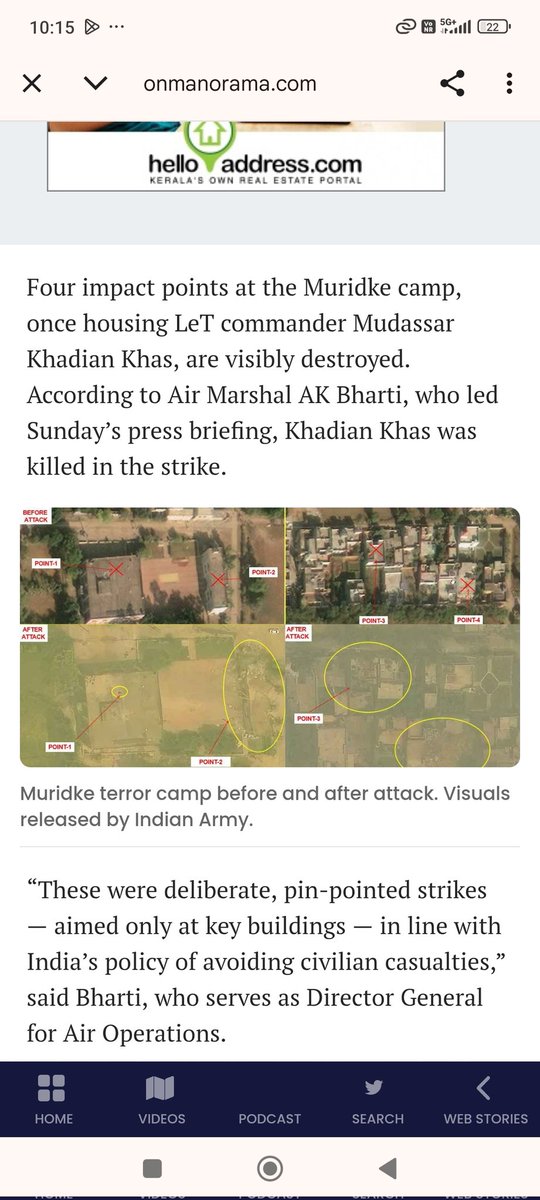
India struck 9 terror hubs: Kotli, Muzaffarabad, Bhimber, Jaba Top.
70+ terrorists killed.
Masood Azhar’s base hit.
The night was called "Opera Night" for its precision choreography.
Pakistan retaliated—shelling civilians across Poonch, Rajouri, Kupwara.
Hospitals hit. Children displaced. It wasn’t a defence. It was desperation.
Killing innocents is a part of Pakistan's decade old culture also most of the Pakistani nationalists generational wealth comes from Terrorism, that's why Terrorists were getting such high honour in their funeral. What a shame in front of the International neighbours, the whole world witnessed again the Pak like kalashnikov wielding rats killing innocent Indians.
India then targeted deep airbases like Sargodha, Murid & the secret Kinnara Hills.
Fallout fe lo ars led to evacuations. Pakistan denied radiation risk. But the seismic data said otherwise.
Then came the media war.
Pakistan claimed Indian jets were downed.
But gave no evidence.
Zero images. No wreckage. Just bravado.
India released radar logs, drone videos, and satellite data.
The global media backed India.
New York Post, Guardian, Reuters asked:
“Where is your proof, Pakistan?”
Silence. AI generated fake images. Their ministers stood silently without an answer or proper clarification in front of the foreign media.
Meanwhile, Pakistan’s social media cells pushed fake images, AI edits, and doctored footage.
All busted by digital forensics & platforms like a Bellingcat.
#OperationSindoor wasn’t just a military response.
It was a doctrine. A red line.
India’s message is clear:
Terror will be answered. Lies will be exposed. Sovereignty will be defended.
#IndiaStrikesBack #Geopolitics #PahalgamAttack #PakFakeNarratives #TruthOverTerror
India Redraws the Line of Control—With Sindoor, Precision, and Proof.
For decades, Pakistan has wielded terror as unofficial state policy—unleashing unspeakable brutality through attacks like Pulwama and, more recently, Pahalgam, where civilians were targeted based on religion.
But India didn’t just respond. It redefined the rules.
Operation Sindoor, named after the sacred red symbol of sacrifice, saw Indian forces strike deep into terror camps across Kotli, Muzaffarabad, Jaba Top, and more—neutralizing over 70 militants in a single coordinated operation known as "Opera Night."
In retaliation, Pakistan escalated. Civilians across Rajouri, Poonch, and Kupwara were shelled. Yet, as Pakistan’s airbases were hit and Kinnara Hills rattled under IAF precision strikes, what unfolded next was a credibility war.Pakistan claimed Indian jets were shot down. But where was the proof?
None. Not a single shred.
India, in contrast, released drone footage, radar logs, satellite visuals—evidence.
Global media stood witness: The New York Post, Reuters, The Guardian—all validated India's claims and challenged Pakistan to present its own. They couldn't.
Meanwhile, AI-generated fakes and misinformation from sleeper social cells tried to hijack the narrative, only to be debunked by forensic analysts.
This wasn’t just military retaliation.
This was India drawing a red line—bold, unshakable, and righteous.
#OperationSindoor #IndiaStrikesBack #Geopolitics #Pulwama #Pahalgam #IAF #SouthAsiaSecurity #TruthMatters #DefenceStrategy #PakistanIndianWar #PakistanBehindPahalgam #PakistanIsATerrorState #PakAJoker