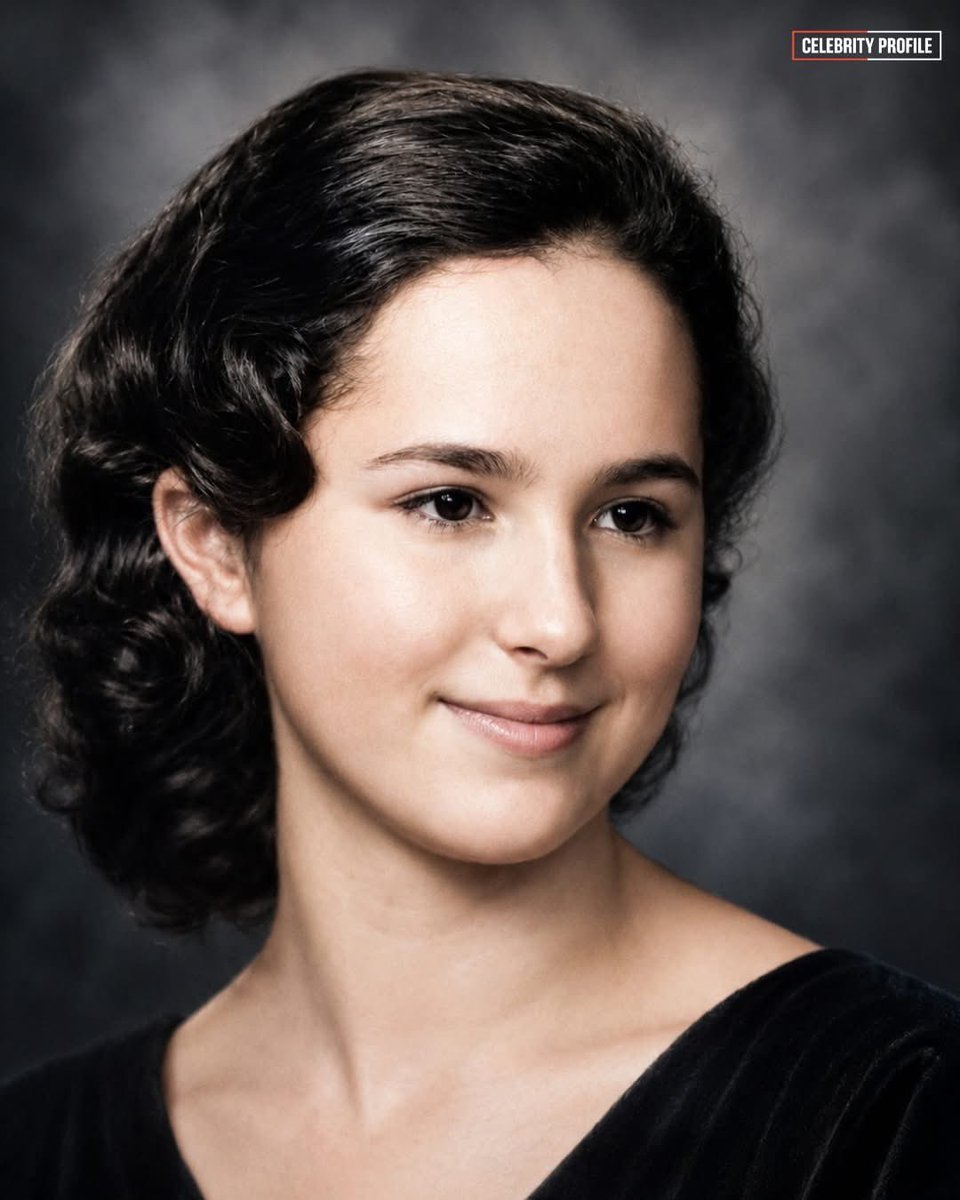
It will be a joy to perform at @wigmore_hall tomorrow as part of their 125th birthday celebrations! And it's LIVE on @BBCRadio3 at 7:30 pm. So listen in around the world! Mozart, Beethoven, Schubert, Haydn, and of course Bach. https://t.co/XAnvBqdqim
Science named the seemingly unstoppable growth of renewable energy worldwide as the 2025 Breakthrough of the Year.
Learn more about last year's #BOTY on #WorldEnvironmentDay: https://t.co/IlnLjTo45c
In Romania, To encourage exercise & wellness riders can travel for free on local bus by doing 20 squats. A device counts the squats and then issues a free ticket.
What do you think of this idea? Are you Squatting? 😂
@GoogleDeepMind@demishassabis Work on interdisciplinary problems? Spent past 17 years with law, science, economics degrees working in BJ, Paris, London, Boston on global resolution to risk climate, inequality. Model load IPCC et set data and prescribe alternative resolutions
We believe AI can be a dedicated research partner to help discover the next breakthrough.
Enter Co-Scientist: our latest Gemini-based multi-agent system that can generate, debate and evolve novel hypotheses for complex scientific problems 🧵
Professor Omar Yaghi, a chemist at the University of California, Berkeley and winner of the 2025 Nobel Prize in Chemistry, has developed an innovative atmospheric water generator capable of producing up to 1,000 liters of clean drinking water per day directly from dry air.
Using reticular chemistry and advanced metal-organic frameworks (MOFs), the system efficiently captures moisture even in arid desert conditions with very low humidity. The compact, shipping-container-sized units developed by Yaghi’s company, Atoco, operate entirely off-grid using only ultra-low-grade ambient thermal energy or sunlight, requiring no electricity from the grid.
This sustainable technology offers a promising alternative to energy-intensive desalination plants, which often harm marine ecosystems through brine discharge. It is particularly valuable for remote communities, drought-prone regions, and areas affected by natural disasters such as hurricanes in the Caribbean, where centralized water infrastructure may fail.
Yaghi’s personal experience growing up with water scarcity in a refugee community in Jordan has deeply influenced his work. He advocates for scaling decentralized, resilient solutions to address the global water crisis through scientific innovation.
[Atoco official website and related coverage in Interesting Engineering, Food & Wine, and Nobel Prize announcements (2025–2026)]
I'll be introducing the American AI Sovereign Wealth Fund Act, a bill giving the public a direct stake to determine AI's future.
When a public resource generates wealth, the public should share in that wealth. https://t.co/pqlQyEKDKT
I’ve launched a plan to get more Londoners walking, cycling and wheeling through the capital - along with @TfL@WillNorman, we’re making our streets safer🚶🏽
A new partnership including Oxford University will unite expertise, infrastructure and data across borders to accelerate diagnosis, treatment and ultimately prevention of major diseases - starting with women’s health, infectious diseases and pandemic preparedness ⬇️
https://t.co/9hEkJBbLcQ
Geoffrey Hinton, University Professor Emeritus and winner of a Nobel Prize in Physics, granted an honorary degree by Harvard University #UofT
https://t.co/6ktD0iuJfv
Three years of raising awareness and support for world’s worst hunger crises—alongside the extraordinary people and partners working to end them.
The fight against hunger is far from over, but I’ve seen firsthand what is possible when the world chooses to act.
In 1937, a nineteen year old woman graduated summa cum laude in chemistry. She applied to fifteen graduate schools. Not one offered her funding.
She was told laboratories did not hire women. She never earned a PhD. She later received the Nobel Prize and helped save millions of lives.
Her name was Gertrude Belle Elion.
Born in New York City in 1918 to immigrant parents, Gertrude was brilliant from childhood. She skipped two grades, graduated high school at fifteen, and entered Hunter College during the Great Depression. Her family could only afford college because Hunter offered free tuition to women.
Then tragedy changed her life forever.
When Gertrude was fifteen, her beloved grandfather died painfully from stomach cancer. Watching doctors fail to save him gave her a purpose she never abandoned. She decided she wanted to fight disease through science.
She graduated from Hunter College in 1937 at just nineteen years old, but the scientific world had little interest in hiring women. Graduate schools rejected her requests for funding. Laboratories turned her away. Some employers openly admitted they did not want female chemists.
So she worked wherever she could while studying at night.
Everything changed in 1944 when she joined Burroughs Wellcome and began working with scientist George Hitchings. Together, they pioneered a revolutionary method called rational drug design — creating medicines by understanding disease at the molecular level instead of relying on trial and error.
Their discoveries transformed medicine.
Elion helped develop 6-mercaptopurine, one of the first successful treatments for childhood leukemia. Before it existed, most children diagnosed with leukemia died within months.
She later helped create azathioprine, the first major drug that made organ transplantation possible, along with groundbreaking antiviral medications that changed treatment for herpes and helped pave the way for AIDS therapies.
In 1988, Gertrude Elion received the Nobel Prize in Physiology or Medicine.
She was seventy years old.
And she still did not have a PhD.
The young woman fifteen schools rejected ended up reshaping modern medicine anyway.
THEIR PRIORITIES AND OURS.
President Trump wants $500 billion more for the military for new weapons of destruction and endless wars.
Mayor Mamdani wants $22 billion to address the housing crisis in NYC and build 400,000 units of low income and affordable housing.


![Rainmaker1973's tweet photo. Professor Omar Yaghi, a chemist at the University of California, Berkeley and winner of the 2025 Nobel Prize in Chemistry, has developed an innovative atmospheric water generator capable of producing up to 1,000 liters of clean drinking water per day directly from dry air.
Using reticular chemistry and advanced metal-organic frameworks (MOFs), the system efficiently captures moisture even in arid desert conditions with very low humidity. The compact, shipping-container-sized units developed by Yaghi’s company, Atoco, operate entirely off-grid using only ultra-low-grade ambient thermal energy or sunlight, requiring no electricity from the grid.
This sustainable technology offers a promising alternative to energy-intensive desalination plants, which often harm marine ecosystems through brine discharge. It is particularly valuable for remote communities, drought-prone regions, and areas affected by natural disasters such as hurricanes in the Caribbean, where centralized water infrastructure may fail.
Yaghi’s personal experience growing up with water scarcity in a refugee community in Jordan has deeply influenced his work. He advocates for scaling decentralized, resilient solutions to address the global water crisis through scientific innovation.
[Atoco official website and related coverage in Interesting Engineering, Food & Wine, and Nobel Prize announcements (2025–2026)]](https://pbs.twimg.com/media/HJuxBASWUAA9qkv.jpg)