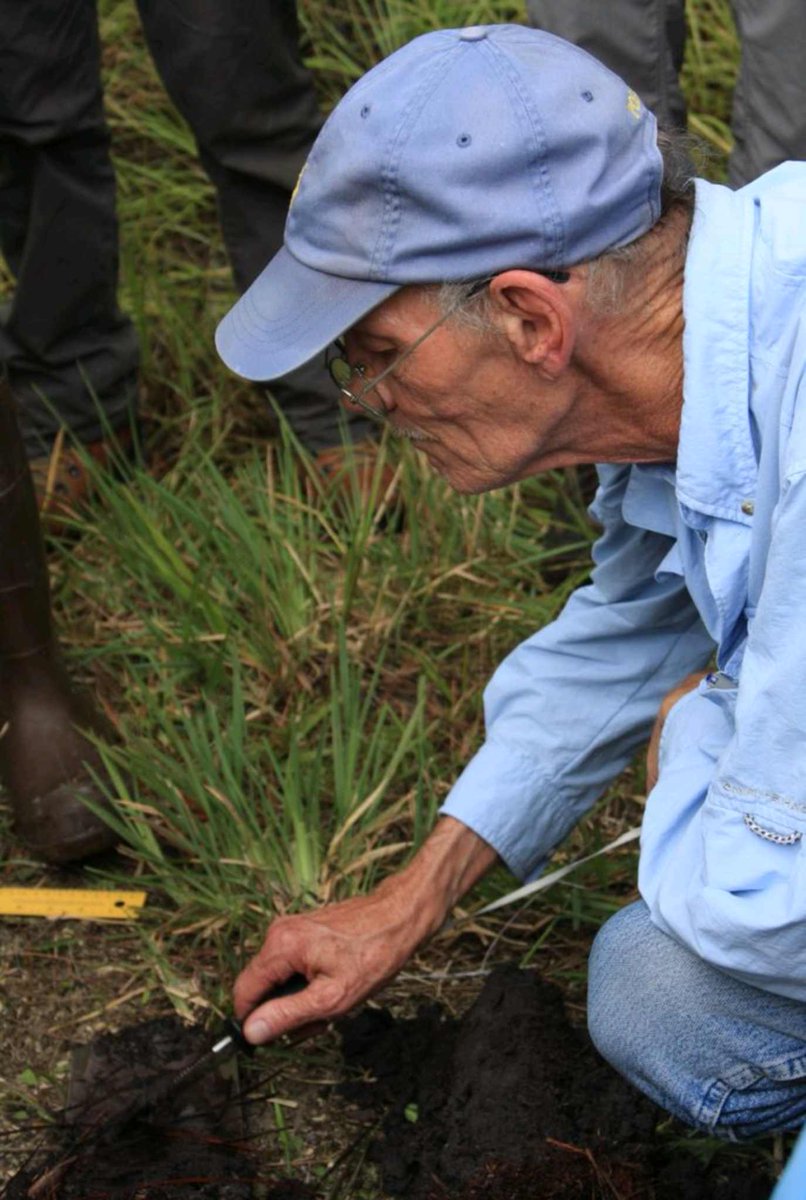
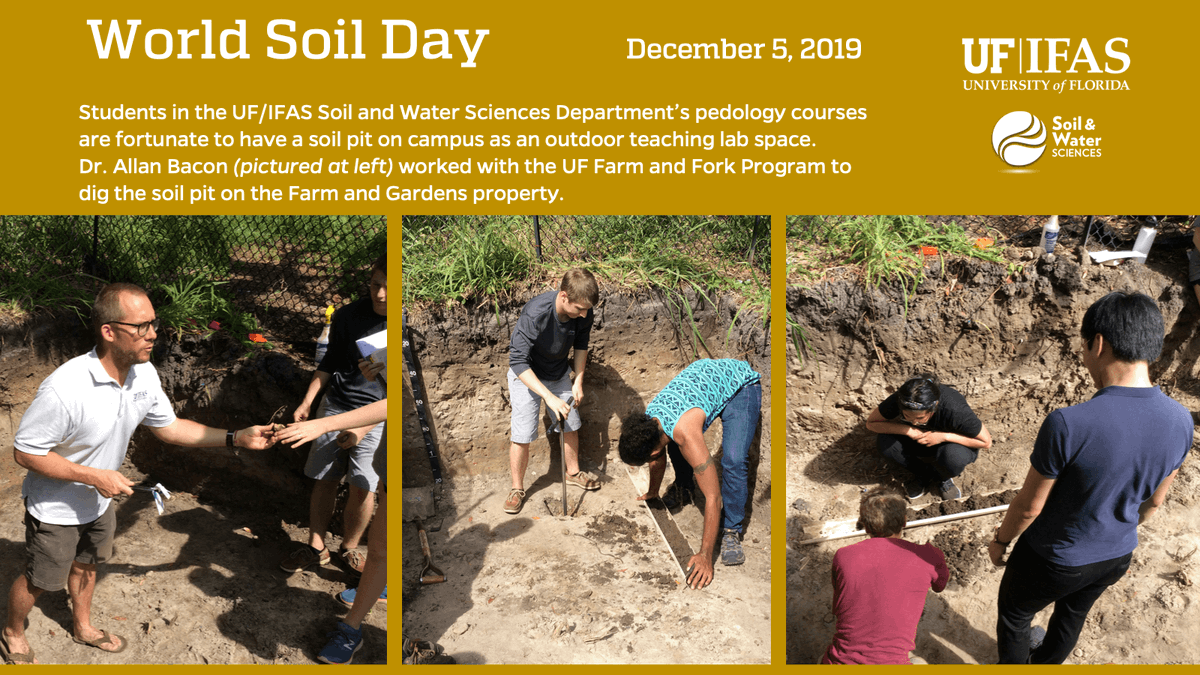
@fl_muck He taught us all a lot and he will be sorely missed. It was also a great privilege to be his TA for so many years and then teach along side him following that. Connecting with you all in classroom and field to better understand hydric soils has been a blessing in my life.
@vaughan_soil Elevation gradient was just a few inches between sites. The soil plugs are laid in a staggered arrangement roughly equal to the elevation difference between sites.
@vaughan_soil There's a chance the middle site meets S8 Poly Value Below the Surface. We would have sliced into the darkened layer to determine whether there was some depth where it met the minimum masking. These sites were from @_FAESS hydric soil workshop we put on every year.
@vaughan_soil Elevation-induced drainage gradient resulting in OM gradient. Left is from a mesic flatwoods, non-hydric landscape position. It's been a while, but the middle was likely non-hydric at the wetland edge. The right is inside the wetland and meets S7 Dark Surface.
"Clams can filter up to 25 gallons of water per day, removing excess #algae, #nitrogen, and #phosphorus."
A good article on Dr. Todd Osborne's project in the IRL.
https://t.co/axjamicLjT @Whitney_Lab
@TheMuddyTiger Was in a zoom talking about OM amendments for water retention, remembered your interest in water repellancy when we were at UF, googled and came across your soil grapes tweet. These look similar to organic bodies in wetlands (NRCS indicator A6. Organic Bodies)
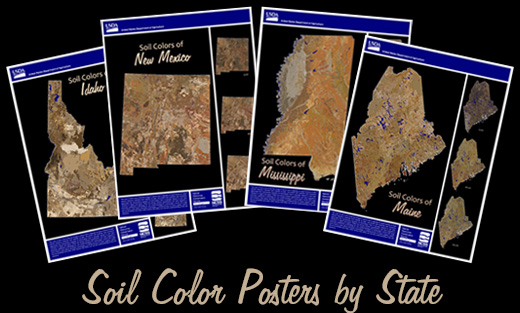
Soil Color Posters for each state in the continental U.S. are available at: https://t.co/pk1iVYphXd. Both Powerpoint (for customization) and PDF files are included.
Nice example of a block diagram of our Coastal Zone Soil Survey map units creating a seamless soil data set. This will be linked to the SoilWeb maps/data soon. @NRCS_RI@NCSS1899@uricels
#WorldSoilsDay Munsell book published in 1953. Looks like Vic had outlined colors of depleted matrix. Not sure what year he would have done that, early 90s I suppose.