ENGLISH FOOTBALL HISTORY
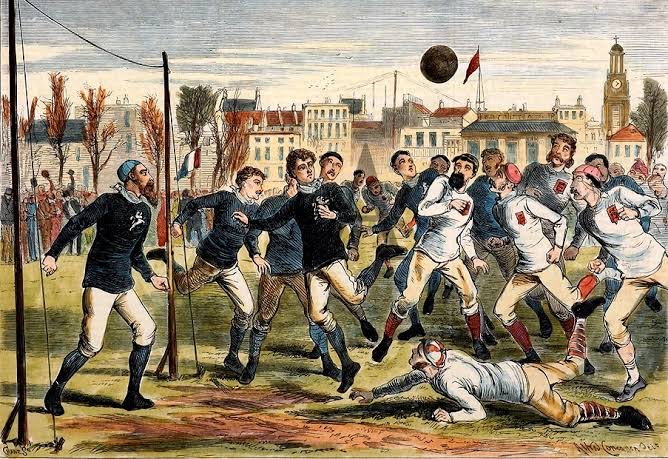
English football evolved from chaotic medieval "folk football," a violent, unstructured game played between entire villages. To tame this chaos, public schools and universities began creating their own rules.
A monumental shift occurred in 1863 when the Football Association (FA) met in London to establish the game's official rulebook, effectively separating football from rugby.
This sparked rapid growth, leading to the creation of the FA Cup in 1871 and the launch of the English Football League in 1888, the world’s first professional league competition.
The 20th century cemented football as the heartbeat of working-class culture. Despite a dark period from 1921 to 1971 when the FA banned women’s football from official grounds, the sport's global appeal kept rising.
The pinnacle of English national pride came in 1966, when England hosted and won the FIFA World Cup.
The modern era arrived in 1992 with the formation of the Premier League. Driven by lucrative television broadcasting deals and major international investments, it transformed English club football into a multi-billion-dollar global entertainment industry, boasting the most-watched domestic league on the planet.
The Glazer family and Jim Ratcliffe have turned Manchester United into a commercial corporate carcass, stripping its soul for pure profit. The Glazers spent two decades leeching off the club, saddling it with debt while letting Old Trafford literally rot. Now, Ratcliffe swoops in with his INEOS billions, promising a "new era" but delivering the same corporate rot: mass layoffs of dedicated staff, axed perks, and ticket price hikes that alienate real fans. It’s an absolute disgrace. United is run by hedge-fund vultures and billionaire suits who care only about dividends and brand equity, completely destroying the club's footballing culture.
The media describes Manchester United as being in a full-blown crisis on the pitch alongside mounting off-field scrutiny over finances and ownership.
Wayne Rooney blasted the squad’s mentality, stating that 10 to 15 players need to leave and claiming only Bruno Fernandes and Kobbie Mainoo show the required character.
Media outlets highlighted alarming Premier League data showing United ranking near the bottom in distance covered, high-intensity sprints, and pressing.
Rising losses: Reports emphasized that United’s annual net losses jumped by nearly a third to £43 million ($57m) despite record revenues of £677.6 million.
CEO Omar Berrada defended the club's financial trajectory, signaling a disciplined and prudent approach to future transfer windows
Cantona comments: Club great Eric Cantona criticized co-owner Sir Jim Ratcliffe over controversial political and immigration remarks, declaring he would not have joined the club under the current regime.
Glazer blame: Pundits continue to point to long-standing ownership issues and debt exceeding £1 billion as the root cause of the club's cultural and structural stagnation.
⚽ Signs for United
Manchester United have agreed the signing of exciting youngster Karim Cassim.
The England youth international has joined after leaving Manchester City.
The 17-year-old was part of the City side that won the FA Youth Cup last season
On the international front, the central midfielder has been capped up to England’s Under-17s.
Everyone at the club would like to welcome Karim to United and we wish him the very best of luck.
⚽ Bryan Mbeumo
Shortlisted for September award
Bryan Mbeumo's strike against Everton has been shortlisted for the Premier League Goal of the Month for September.
The Manchester United forward cut inside, moments after the break, to deliver a stunning, curling finish beyond Jordan Pickford to open the scoring.
The game at Hill Dickinson Stadium finished 2-2, with the Toffees' last-gasp equaliser, from Ainsley Maitland-Niles, also in the running for the division's prize.
Eight goals have been selected in total with voting now open on the Premier League's official website.
The announcement of the winner will take place on Friday 2 October, at 13:00 BST.
GOAL OF THE MONTH SHORTLIST
Harvey Barnes (NEWCASTLE v Bournemouth)
Bryan Mbeumo (Everton v UNITED)
Ainsley Maitland-Niles (EVERTON v United)
Bruno Guimaraes (Sunderland v ARSENAL)
Lewis Dunk (Coventry City v BRIGHTON & HOVE ALBION)
Nicolas Jackson (Tottenham Hotspur v ASTON VILLA)
Emiliano Buendia (Tottenham Hotspur v ASTON VILLA)
Jay Dasilva (Nottingham Forest v COVENTRY CITY)
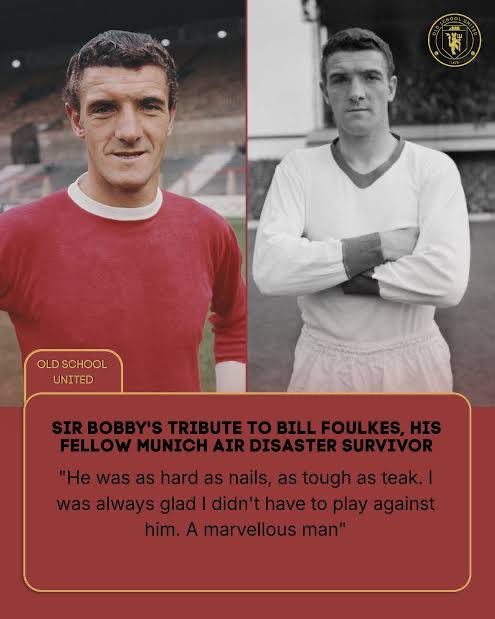
Sir Bobby Charlton described his Manchester United teammate Bill Foulkes as a "marvellous man", "as hard as nails, as tough as teak," and a "hero" who helped change the club's history.
Toughness and Character: "I was always glad I didn't have to play against him... he was a really, really good defensive player."
1958 Munich Air Disaster: Praised Foulkes as a survivor who showed true heroism by returning to the wreckage on the icy runway to help fellow passengers.
Real Madrid Semi-Final (1968): Expressed disbelief at seeing Foulkes up in the penalty area before scoring the vital clincher that sent United to their first European Cup final: "Something must have been triggered in his mind, then George Best crossed it and Bill sidefooted the ball into the back of the net."
Early Memories: Recalled Foulkes first arriving at The Cliff training ground straight from coalmining shifts with an unwashed face.
Funeral Eulogy (December 2013):
Told mourners at St Vincent de Paul Church in Altrincham that Foulkes would "stand proud" with Old Trafford greats, calling him a "good honest man" and a "giant in the air".
🏆🏆🏆🏆
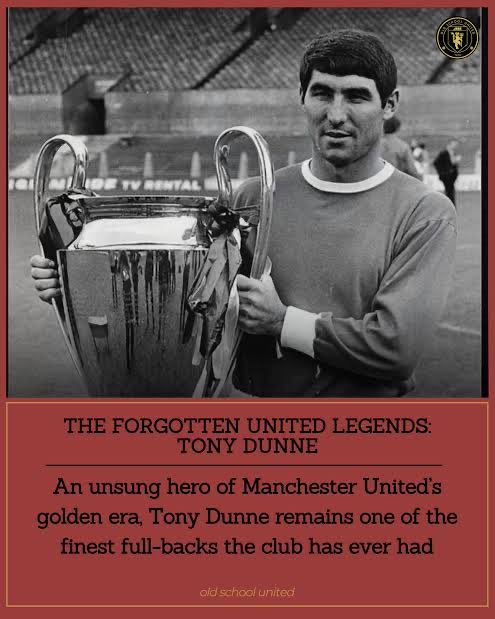
Tony Dunne made his debut for Manchester United on 15 October 1960 against Burnley in a Football League First Division match. Signed from Shelbourne for £5,000, the 19-year-old Irish defender stepped in at left-back at Turf Moor to cover for the injured Noel Cantwell. It proved to be a difficult introduction to English football, as United suffered a 5–3 defeat. Dunne found himself bested by Burnley winger John Connolly, later remarking that the closest he got to Connolly was shaking his hand afterward. Despite the rough start, this match marked the beginning of an illustrious 535-game United career.
Tony Dunne scored two goals for Manchester United during his 13-year career at the club.
Major Trophies
1 European Cup (1967–68)
2 Football League First Division Titles (1964–65, 1966–67)
1 FA Cup (1962–63)
Behold Sir Jim Ratcliffe, the Monaco-dwelling, tax-evading billionaire who has masterfully engineered the absolute demolition of Manchester United. This is the man who rode in on an INEOS high horse pretending to be a boyhood fan, only to turn the club into what Gary Lineker rightly torched as a "complete shambles run by an unpleasant human being."
Jim’s priorities are a masterclass in sociopathic management. While the team rots in 12th place after their worst start in over a decade under an inexperienced board, Jim is busy giving interviews complaining that the UK is "on the slide."
His solution to fixing a football club? Mass redundancies for low-paid office staff, spiking ticket prices for the actual match-going fans, and demanding the British public foot the bill for his stadium. Nothing screams elite sporting structure quite like taking away a secretary's lunch while paying millions for overhyped flops to draw against Fulham.
He has managed to alienate everyone from legendary pundits to entire supporter groups who are actively demanding he resign.
Congratulations, Sir Jim: you didn't save Manchester United from the Glazers; you just replaced them with a colder, louder, and infinitely more pathetic corporate vulture.
1910 - 1919
The words Old Trafford entered footballing folklore for the first time during the 1909/10 season
The land on which the Old Trafford was built was bought by the Manchester Brewery Company (through John Henry Davies) and leased to the club.
Davies himself paid for the building work, which commenced in 1908 under the supervision of architect Archibald Leitch. By 1910, the club had moved lock, stock and barrel from their old home of Bank Street. United's opening fixture at Old Trafford was played on 19 February 1910.
The new hosts lost 4-3 to their first visitors Liverpool, but the stadium was successful in accommodating an 80,000 capacity crowd. Two days previously, the old wooden stand at Bank Street had been blown down by strong winds - further evidence, perhaps, that United were suited to and needed their new home.
Indeed, United were crowned League champions for the second time at the end of their first full season at Old Trafford - 1910/1911. The Reds clinched the title at home on the final day of the season, beating Sunderland 5-1 with Harold Halse grabbing two of the goals. Halse also scored six goals as United beat Swindon Town 8-4 to clinch the Charity Shield.
Despite such feats, United could not maintain the winning run and, in 1911/12, the defending champions finished in a disappointing 13th place. Secretary-manager Ernest Mangnall bore the brunt of the criticism, and resigned to join United's neighbours and rivals Manchester City. The search for Mangnall's successor finished at the door of JJ Bentley, the president of the Football League. Under his guidance, the Reds claimed fourth place in the League at the end of the 1912/13 season.
The 1913/14 term was a period of transition, while the following campaign was notable for a change of management - in December 1914, the roles of secretary and team manager were separated for the first time. Bentley became full-time secretary and John Robson was appointed to look after and select the team. Robson's team was a shadow of the one which had performed so well in the previous decade, as only George Stacey, Billy Meredith, Sandy Turnbull and George Wall remained from the 1909 FA Cup-winning side. Not surprisingly, the club struggled, only escaping relegation by a single point.
Before United could form a plan for recovery, the outbreak of the First World War put football firmly to the back of people's minds. The Football League was suspended, and clubs resorted to playing in regional competitions. United played in the Lancashire Prinicipal and Subsidiary Tournaments for four seasons, but this was a less than successful diversion, the misery compounded by the fact that two of the club's players were found guilty of match fixing. Enoch West was banned for life, as was Sandy Turnbull, who joined the Footballers' Battalion to help Britain's war effort. Tragically, Turnbull was killed during battle in France in May 1917, and another link to the club’s earliest glory years lost.
United Women 10 Sheffield United 1
Manchester United made a winning start to our 2026/27 Subway Players Cup campaign, with a dominant 10-1 victory over Sheffield United at the Progress With Unity Stadium on Wednesday evening.
Goals:
Le Tissier 14,
Bernal 19, 55,
Griffiths 22, 60, 81, Schuller 34, 53,
Toone 42,
Simpson 58.
NEXT UP FOR THE REDS
United are back in Barclays Women's Super League action on Sunday afternoon, with West Ham United the visitors to the Progress With Unity Stadium.
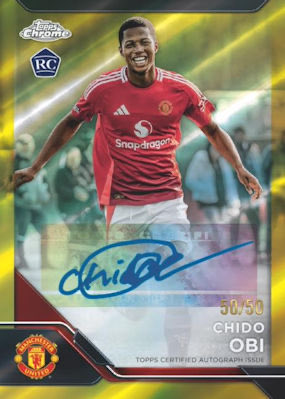
Chido Obi (born November 29, 2007) is a highly-rated Danish centre-forward renowned for his explosive goalscoring ability. Standing 6'2" (1.88m), the towering striker made waves in Arsenal's youth academy—notably scoring 10 goals in a single U16 match—before joining Manchester United in October 2024.
Obi quickly progressed through United's youth ranks and broke into the first team under manager Rúben Amorim. In May 2025, at just 17 years and 156 days old, he became the youngest player to start a Premier League match in Manchester United's history. To further his senior development, he is currently gaining valuable experience on loan at Eredivisie club Willem II.
Chido Obi is currently finding his feet in senior football during his loan spell at Eredivisie club Willem II, where he is primarily being integrated as an impact substitute.
The United Stand and its host, Mark Goldbridge, criticism of the leadership behind the recent #GlazersAndIneosOut movement is driven by concerns over anonymity, fan-on-fan toxicity, and a distrust of the specific accounts spearheading the current online campaign.The channel's specific pushback against the current online protest leadership centers on the following issues:
Goldbridge has pointed out that some of the anonymous or "faceless" social media accounts currently leading the harsh campaign to remove both the Glazers and INEOS were vocal supporters of Sir Jim Ratcliffe when he first arrived. The United Stand argues that this sudden shift raises questions about the long-term vision and credibility of these online organizers.
A major source of frustration for the channel is how the current online movement has turned on respected, local match-going fan groups like The 1958 and The Red Army (TRA). Goldbridge has strongly condemned the online hounding and harassment of these dedicated, long-term activists over minor tactical disagreements, arguing it fractures the fanbase rather than uniting it.
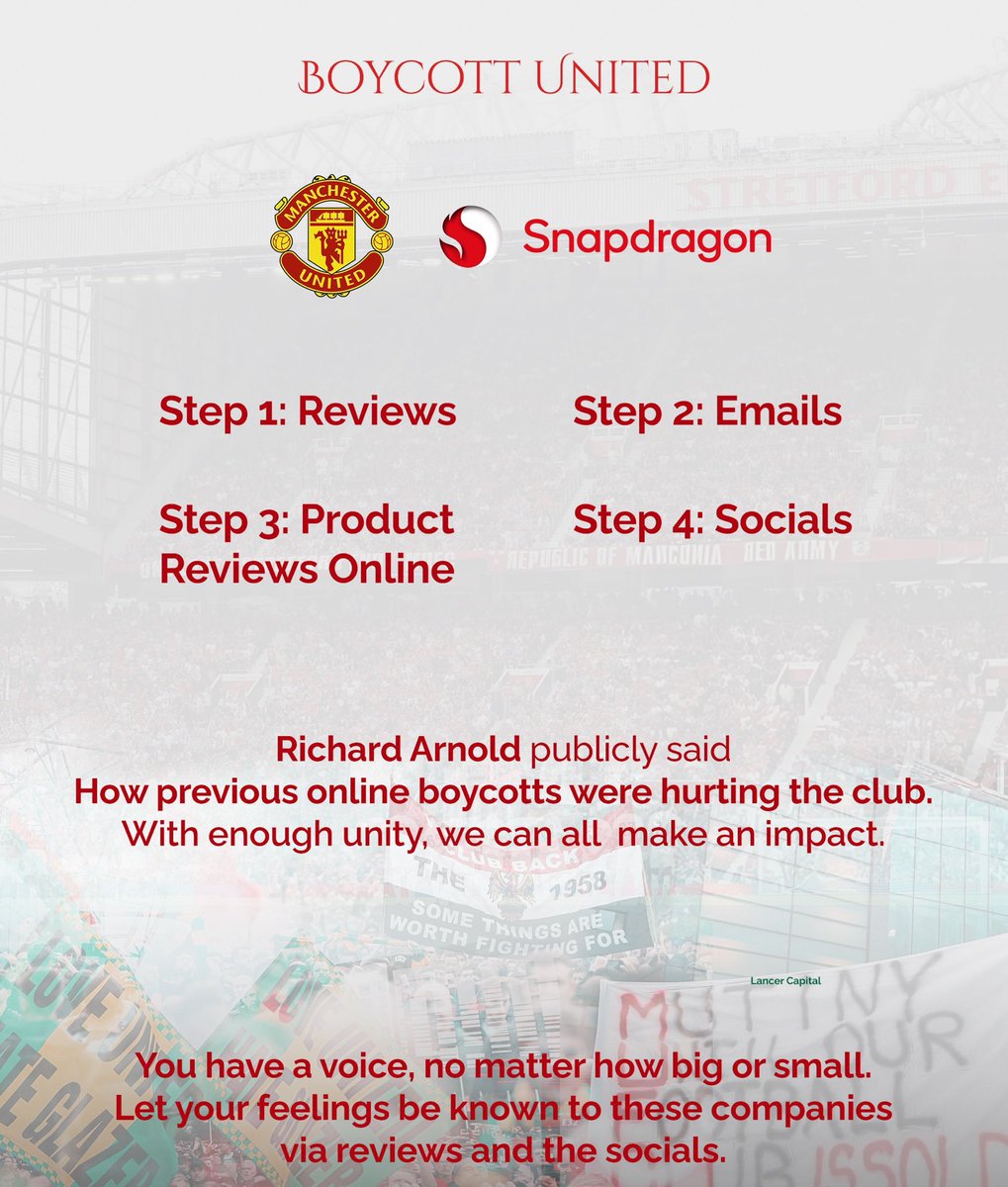
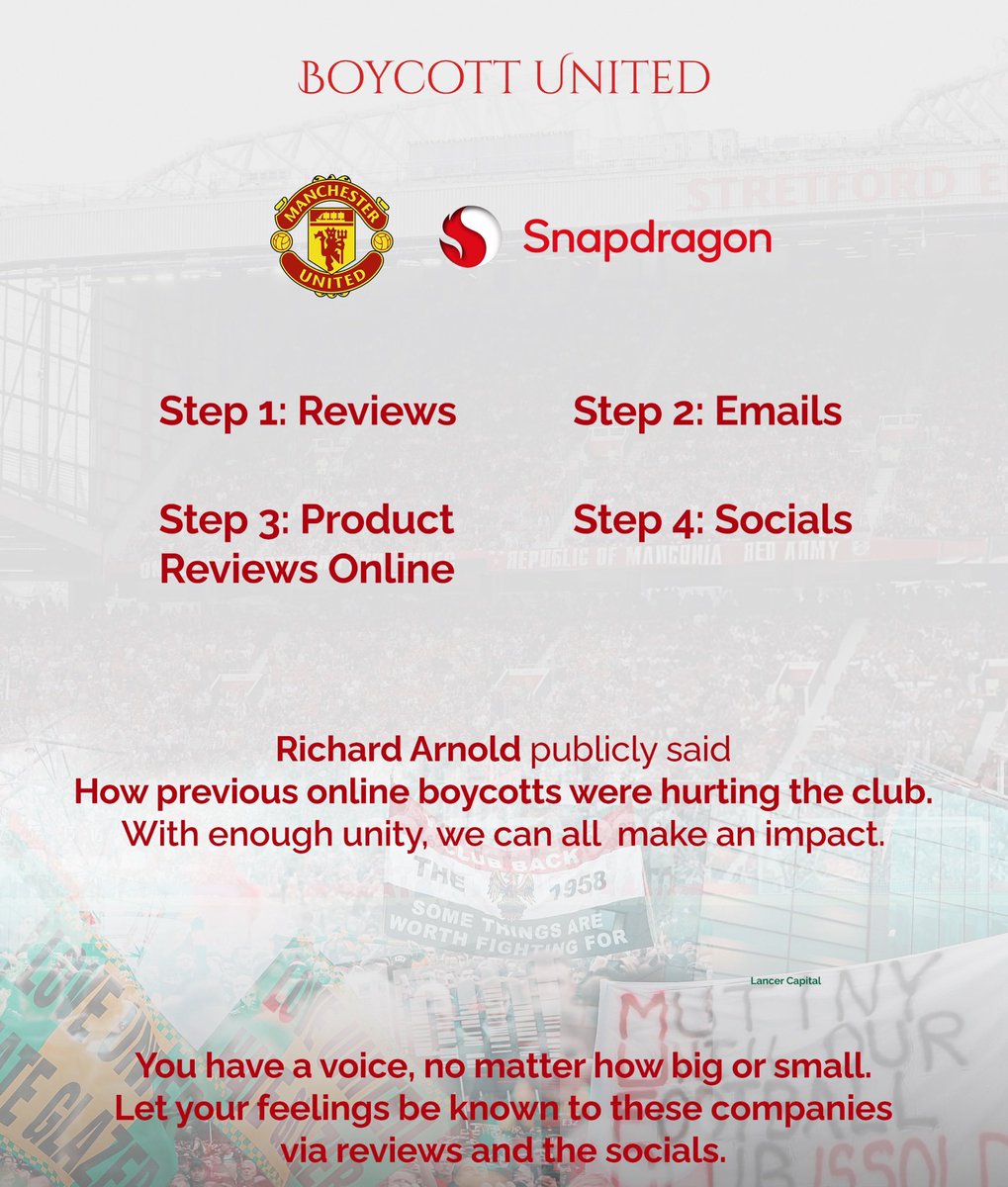
The leadership of the new wave has heavily promoted mass email campaigns and boycotts targeting club sponsors like Adidas and Coca-Cola. The United Stand is skeptical of this approach, noting it is a recycled strategy that has failed to yield substantial structural change multiple times over the last 20 years
Ultimately, the channel contends that the current protest leadership is unintentionally creating internal drama that distracts from the core systemic financial issues plaguing the club.
⚽Glazers and INEOS Toxic Brand Liability
As a Manchester United supporter, I am writing to explicitly state that your corporate sponsorship directly aligns your brand with a toxic, failed ownership structure. By continuing to fund this club, you are financing the destructive majority control of the Glazer family and the volatile, cost-cutting co-ownership of Sir Jim Ratcliffe and INEOS.
The era of quiet fan frustration is over. The global supporter base is now unified under active #BoycottUnited campaigns targeting club partners. Under the Glazers' leveraged regime, Manchester United has been saddled with over £1 billion in total debt while the stadium falls into physical decay. Meanwhile, Ratcliffe’s leadership has alienated millions by spiking ticket prices, slashing hundreds of staff jobs, and sparking massive reputational backlash with deeply divisive public commentary.
Your multimillion-dollar sponsorship is no longer an investment in sporting excellence; it is a financial subsidy for systemic corporate greed and public controversy. Every day you remain associated with the Glazers and Ratcliffe, your brand value erodes among football's largest consumer base. We demand that you withdraw your financial backing or use your corporate power to force a total divestment from these owners. Until then, we will aggressively boycott your products, services, and digital platforms.
Manchester United legend Paul Scholes has launched a scathing critique of the club's financial management under Sir Jim Ratcliffe and INEOS following the release of their recent fiscal results. Media outlets have widely covered his blunt assessments, which focus on several distinct areas:
Scholes heavily criticised the club's current public positioning regarding their proposed £2 billion, 100,000-seater stadium. He expressed embarrassment over the optics of the rebuild financing, stating, "For a long time, we've been called the richest club in the world, but I feel like we're begging a little, asking for the stadium and that we need £2billion, and selling players to buy players."
Scholes strongly condemned the decision to raise match-day ticket prices to £66, calling it a tone-deaf move given the club's current struggles on the pitch and the working-class roots of the area.
He targeted Ratcliffe directly: "Sir Jim Ratcliffe himself is from Failsworth—which is a deprived area... How can you ask Manchester United fans to pay more money with what's on the football pitch?"
He concluded that the new ownership has yet to implement a single positive change for the match-going fan.