A Texas company most people have never heard of just landed a contract worth up to $10 billion.
The job: train every new Army helicopter pilot at Fort Rucker, Alabama, between 800 and 1,500 pilots a year. Aircraft, instructors, maintenance, all run by the contractor.
It’s a ceiling that runs all the way to 2052. A company most people have never heard of now runs the pipeline that produces US Army aviators.
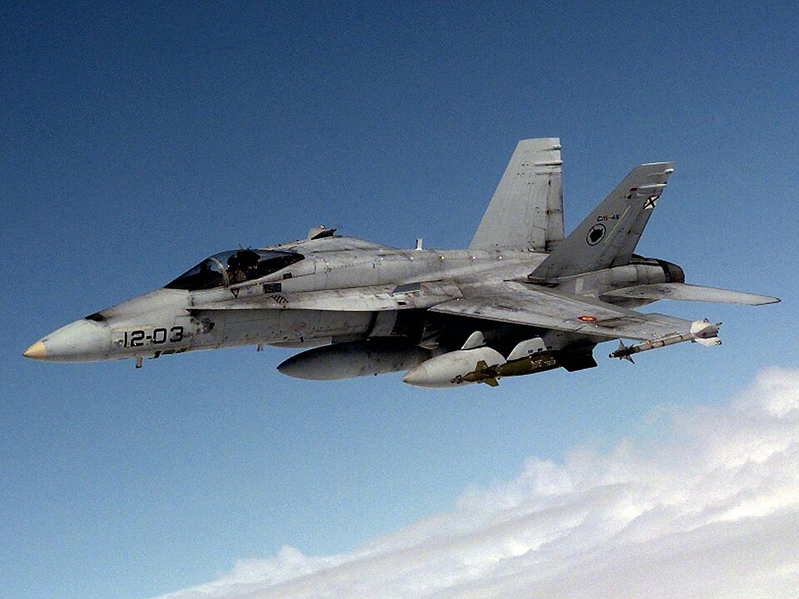
A Spanish F-18 operating under NATO air-policing authorities shot down a drone that breached Romanian airspace early Sunday, according to Romania’s Defense Ministry.
Romanian radars detected the drone entering from neighboring Moldova, about 15 miles north of Galați. The F-18 established radar contact and received authorization to engage, bringing the drone down at 05:01 local time. Debris reportedly fell in an uninhabited area.
Romania says this is the fourth drone it has shot down this year. The country has experienced repeated Russian drone incursions during the war in Ukraine, including three Russian drones shot down by Romanian F-16s in July.
A Spanish F-18 operating under NATO air-policing authorities shot down a drone that breached Romanian airspace early Sunday, according to Romania’s Defense Ministry.
Romanian radars detected the drone entering from neighboring Moldova, about 15 miles north of Galați. The F-18 established radar contact and received authorization to engage, bringing the drone down at 05:01 local time. Debris reportedly fell in an uninhabited area.
Romania says this is the fourth drone it has shot down this year. The country has experienced repeated Russian drone incursions during the war in Ukraine, including three Russian drones shot down by Romanian F-16s in July.
Context on the cost: a modern Arleigh Burke destroyer runs around $2.7B per hull. Four days dead in the water in the South China Sea is an expensive reminder that the hardest part of naval power is keeping the fleet running, not building it.
Context on the cost: a modern Arleigh Burke destroyer runs around $2.7B per hull. Four days dead in the water in the South China Sea is an expensive reminder that the hardest part of naval power is keeping the fleet running, not building it.
The Arleigh Burke class guided missile destroyer USS Benfold (DDG-65) suffered an engineering casualty affecting its power-generation system on July 24 while conducting routine operations in the South China Sea with the USS George Washington (CVN-73) Carrier Strike Group.
The casualty resulted in a complete loss of power for four days, during which the George Washington Carrier Strike Group provided essential support to the destroyer, including meals, until Benfold was able to reach Subic Bay, Philippines, for repairs. During the outage, the Benfold had limited potable water and no galley, restrooms and climate control.
Benfold subsequently returned to its homeport of Yokosuka, Japan, on August 12, as seen in imagery from @Gov_Vessel_fan.
@OSINTWarfare The word doing the heavy lifting here is ‘affordable.’ The Army wants a 1,000km strike missile cheap enough to fire often, not hoard. That’s the real shift: from a few exquisite missiles to mass. Around $246M is budgeted for AHSS through 2031.
@sentdefender Worth a number here. The Arleigh Burke is the most produced large warship the US has built since WWII, and a new one runs about $2.7B .Four days without power is a multibillion dollar asset sidelined by an engineering fault far from home.
@MilitaryTimes Beautiful footage, and a staggering price tag behind it. The F-35 is the most expensive weapons program in history, with lifetime costs now past $2 trillion. Every one of those night landings is the tip of the most expensive machine the Pentagon ever bought.
@WarMonitor3 The Ukraine testing ground is exactly why this is scaling so fast. Ground robots went from niche to a procurement priority across NATO in under two years. The money now chasing autonomous UGVs is one of the fastest growing lines in Western defense budgets.
The number that explains this whole fight: EMALS was supposed to run 4,166 launches between critical failures.
In testing it managed 181. That’s the reliability gap behind a reversal that could cost billions to redesign.
The number that explains this whole fight: EMALS was supposed to run 4,166 launches between critical failures.
In testing it managed 181. That’s the reliability gap behind a reversal that could cost billions to redesign.
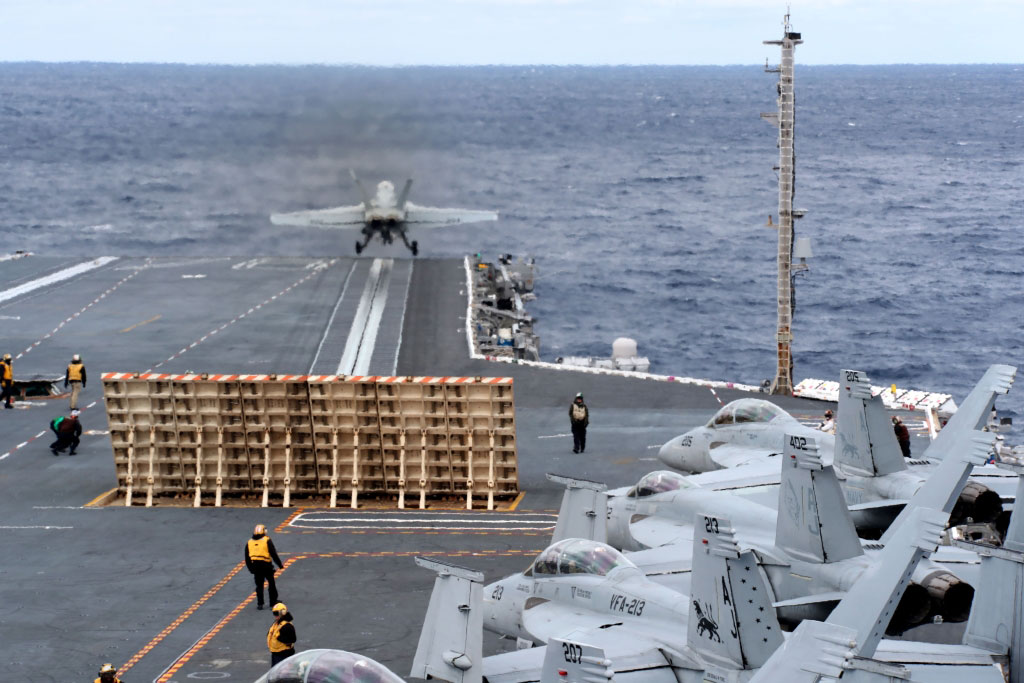
President Trump has directed the Navy to abandon the electromagnetic aircraft launch system (EMALS) being used on the Gerald R. Ford class carriers and return to traditional steam catapults, according to U.S. officials cited by the Wall Street Journal.
Trump signed a national security memorandum directing the Navy to redesign the fourth Ford class carrier, Doris Miller, and subsequent ships around steam catapults. The first three carriers, Gerald R. Ford, John F. Kennedy and Enterprise, will retain EMALS.
The decision reverses years of Navy and industry resistance to Trump's proposal, largely because replacing EMALS would require significant redesign and could cost billions of dollars.
Trump has criticized EMALS for years, arguing that it is overly complex and less reliable than steam catapults. The move effectively locks in a major technological reversal for future U.S. aircraft carriers.
Source: https://t.co/xZFAEjuvZD
@Osinttechnical The quiet problem in every clip like this: the drone getting shot down often costs a fraction of what it takes to kill it. That math is the real story of this war, and it’s reshaping what militaries buy next.
@Remnantize Wild fact about the Raptor: the US built 187 and then shut the line down in 2011. You physically cannot buy a new one at any price. Every F-22 flying today is irreplaceable, which is why sustainment contracts on them run into the billions.
@POGOwatchdog The conflict of interest angle is the one nobody’s pricing out yet. Someone with a position in a contract market plus access to procurement timelines is a real problem. Worth watching who’s trading defense related outcomes.
@CENTCOM That flight deck maintenance has a price tag. Two days ago the Navy awarded BAE Systems up to $180M to overhaul Boxer. Labor, testing, modernization, all of it. The unglamorous half of keeping a warship deployed.
Every day the Pentagon pays someone billions. This week it paid a tiny AI company $780K the 8th time this year alone.
The company (Nasdaq: SPAI) builds edge AI software that runs on the drone itself, not a server to spot threats like mines and IEDs in real time and map them.
On Aug 6 a Department of War prime contractor handed it that $780K order for the threat detection tech plus a batch of Blue UAS drones. Total AI orders this year: past $5M .
The Army and Air Force are both now buying this. A tiny company, quietly becoming plumbing for military drones.
Every day the Pentagon pays someone billions. This week it paid a tiny AI company $780K the 8th time this year alone.
The company (Nasdaq: SPAI) builds edge AI software that runs on the drone itself, not a server to spot threats like mines and IEDs in real time and map them.
On Aug 6 a Department of War prime contractor handed it that $780K order for the threat detection tech plus a batch of Blue UAS drones. Total AI orders this year: past $5M .
The Army and Air Force are both now buying this. A tiny company, quietly becoming plumbing for military drones.
Nobody's heard of Cayuse Native Hawaiian Veterans. The Pentagon just gave them $249 million.
The Navy awarded this small, veteran-owned firm a five-year deal to repair Military Sealift Command ships out in Guam — the forward hub for any Pacific fight with China. The contract is worth up to a quarter-billion dollars, but the guaranteed minimum is just $3,500. The real money flows order by order, as ships break down. A tiny company now sits at a critical node of US logistics in the Pacific.
Nobody's heard of Cayuse Native Hawaiian Veterans. The Pentagon just gave them $249 million.
The Navy awarded this small, veteran-owned firm a five-year deal to repair Military Sealift Command ships out in Guam — the forward hub for any Pacific fight with China. The contract is worth up to a quarter-billion dollars, but the guaranteed minimum is just $3,500. The real money flows order by order, as ships break down. A tiny company now sits at a critical node of US logistics in the Pacific.
Nobody’s heard of Torch Technologies. The Pentagon just gave them $992 million.
Torch is an employee-owned company out of Huntsville, Alabama — not a household name like Lockheed or Boeing. The five-year deal pays for technical and management advice on aerospace research, development, and testing at Eglin Air Force Base, running through 2031. It’s by far the largest single award of the day, and almost none of it goes to a brand you’d recognize.