🧵 Ieri l'ambasciatore russo Paramonov si è recato a Vagli Sotto (LU), su invito del sindaco Puglia ed in presenza di ex militari italiani appartenenti all'associazione "Cuore Russo". Ha colto l'occasione per fare propaganda anti-NATO.
Ma perché si è recato proprio a Vagli?
1/➡️
A seguito dell’intervento del senatore Alfieri durante l’audizione con l’ambasciatore 🇺🇦, ho deciso di approfondire un tema ricorrente nel dibattito pubblico italiano: l’idea che la pace possa essere raggiunta attraverso la cessione di territori alla Russia.
Oggi su @ilfoglio_it
Support for Netanyahu and Likud has been eroded in Israel by the 7 October attacks, his handling of the hostage crisis and inability to secure victory over Hamas — as well as by controversial judicial reforms and corruption. https://t.co/CGDj0MGpUM
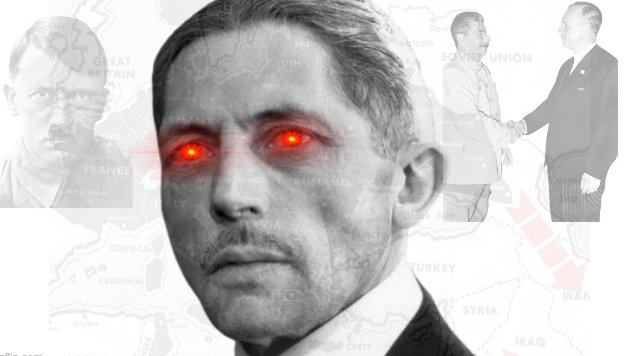
"Versailles caused Hitler" remains to this day the laziest reading of the interwar period
And if you want someone who really predicted WW2, drop Keynes immediately and read this French historian instead 👇
Perché i paesi del Sud America sono così forti a calcio? Nell’analisi di @danyscht che usa dati, storia, sociologia ed economia ci sono materiale e spunti a sufficienza per scrivere un libro.
https://t.co/JcaOnzZHPN
🇵🇱🇺🇦 The Devaluation of Heroes: A Hypocritical Shame
It is insulting for Ukrainians to hear about the devaluation of their heroes by Poland and the blackmail regarding EU accession with the demand to renounce them. It is, to say the least, hypocritical. Why?
Because Volhynia was Ukrainian land, and the Poles were the occupiers. The Volhynian tragedy began even before the main events (July 11); on June 27, 1943, in the center of Lutsk, Poles together with the Nazis killed the residents of two villages. Also, after Stalin gave Western Ukraine to Poland, the Poles massively exterminated Ukrainian villages. For example, in the village of Krasny Sad on April 19, the Poles burned the entire Ukrainian population alive. And these crimes continued right up to the main events of the Volhynian tragedy. By the way, my own family also suffered from the actions of the Poles, so for me, this is not some abstract phenomenon, but I am a victimized party despite the fact that we did nothing wrong to the Poles.
Yes, we condemn the killing of civilians. At that time, there was no concept of a "war crime," so they fought with all available methods that morality allowed. Not all people possess morality, and if a person is a Ukrainian soldier even now, it does not automatically make him an angel—there are all sorts of people there. It is the same here, but one must understand that the UPA was not the official Ukrainian army. The Ukrainian army of the UPR, the "Sich Riflemen," went into exile after their defeat by Russian-Polish forces, which led to the occupation of Ukraine. UPA means "Insurgent Army"; it is a direct translation of the word. These were ordinary people, most often from villages, who simply went into the forests to resist the Polish, Nazi, and Russian occupiers. The UPA as a structure did not participate in the events in Volhynia; there was a separate branch there that did not even follow orders, and there are documents showing that the UPA leadership criticized them for this and for the events in Volhynia as well. I have published this document. In other words, you cannot blame the entire UPA. This is the same as blaming the Armed Forces of Ukraine for the crimes of the TCK (recruitment centers) and saying that the Ukrainian army kidnaps and tortures people. That is a lie! It is the same here.
The hypocrisy lies in the fact that the Poles honor as heroes those who killed Ukrainian civilians, yet demand that Ukrainians renounce honoring the heroes who resisted Nazi, Russian, and Polish occupation, just because a small percentage of them killed Ukrainians. The Poles committed exactly the same crimes against Lithuanians and Belarusians; the Poles carried out genocides of the Lemkos and other Ukrainian ethnic groups; the Poles killed Ukrainians not only during the Volhynian tragedy but also during "Operation Vistula" in 1947, which has been recognized as genocide. And all participants in these events are honored as heroes in Poland, monuments stand in their honor, and streets are named after them. They hate Bandera, who did not kill a single Pole, not even a soldier, and who spent the entire war in a Nazi concentration camp just for the idea of Ukrainian independence and because he was involved in the creation of the UPA—though he did not command it—yet they respect Pi��sudski, who attacked Ukraine together with Russia, violated treaties, and was Hitler’s friend. For them, Bandera is a Nazi, but Piłsudski is not. They respect the kings and aristocrats who occupied Lviv back in the princely era and carried out ethnic cleansings here, tormenting Ukrainians so much that uprisings like the Koliivshchyna and Haidamaky broke out, and Ukrainian "Robin Hoods" arose, like Ustym Karmaliuk against the Russians and Oleksa Dovbush against the Poles. I don't think the Poles will stop honoring King Casimir just because Ukraine does not like that he occupied Lviv. And the main hypocrisy, which looks simply like cynical mockery, is that Polish politicians blame only Ukraine and make only Ukraine the guilty party, and they literally invent victim numbers and have even written these fake figures into international textbooks. We also know very well how propaganda books about "UPA crimes" are published in Poland, where they include everyone killed by Nazis, Russians, and Poles, murders by common maniacs unconnected to the war, and even events from other continents, all as UPA crimes. There are even historical forums where every photo is analyzed to show where the propagandists took it and what actually happened there.
But a great slap in the face to anti-Ukrainian propagandists was dealt by the UPA and the Home Army (AK) themselves, as they were the two forces accused of killing civilians. They reconciled even during the war and united in an alliance. Even then, our nations united in the fight against a common enemy. At least three times before the war, Ukraine apologized to the Poles, and Poland to Ukraine, and this topic was completely closed until it was reopened by the Russians through the hands of their puppets. It is joyful to hear that not all Poles have succumbed to provocations, and according to ratings, half of Poland still has the intelligence to fight against this. But it is outrageous when the highest ranks of Poland call our heroes Nazis and terrorists, and declare them as such in parliament contrary to historical facts, hypocritically claiming that they will block Ukraine's accession to the EU until we renounce our own heroes. I wonder, was Poland's accession to the EU blocked until it renounced its own heroes? I think those who say this need to be punched in the face...
Politicians should never blackmail; with this, they discredit their entire nation before the whole world, and not just for their own political term, but for centuries. Do you think this will be easy to fix? All Ukrainians are offended, and it will take more than one year to rectify this. Russia did what it wanted—it managed to divide us, because back in 2021, Russia stated that it would attack Ukraine in 2022, and then immediately Poland. It failed to capture Ukraine, so Poland is on pause, but the Russians have not abandoned their plans, and the troops at the borders testify to the fact that something will happen there soon. Ukraine and Poland in alliance have always defeated Russia; we have never lost to them together. That is why Russia fears us so much and does everything to pit us against each other from the first days of the war. From brothers to a conflict over historical themes instead of focusing on the present. You cannot fix the past, you cannot raise the dead, and even if they somehow managed to forbid it in all of Ukraine, they would get an enemy instead of an ally and would end up alone in front of Russia. Therefore, these topics should never have been raised. It is normal for every country to have its own heroes. We honor the UPA and Bandera not for a policy of some aggression; we honor them because it was they who held the defense of Ukraine against Nazi, Russian, and Polish occupation. If one falsifies history and throws out facts about the attack on Ukraine, calling Ukraine "the eastern regions of Poland that revolted," it is not surprising that there will be a certain dissonance, misunderstanding among the Poles, and indignation among the Ukrainians, which breeds conflicts. All countries have been enemies with each other at some point, and this is no reason to forbid them from honoring heroes who fought against this or that neighbor. There must be tolerance. Ukrainians are more educated in this regard and have never made claims against Polish heroes, even those who committed genocides against Ukrainians. And Ukraine will not allow its own heroes or its own people to be disrespected.
It is quite clear that behind all this is a mixture of Russian interests and fear of what Ukraine will become, because no one will be able to dictate terms to Ukraine, humiliate it, or pressure it anymore, and they are afraid of this in both Poland and Hungary. But friends should strive for this, because it will make them strong too. So, it is a question of honor, morality, and enlightenment—do you want to remain enemies, rotting in unjust hatred, or leave the past behind, understand each other, and walk together in love and friendship into a bright future, growing and improving ourselves and our lives?
The true test for both the Ukrainian and Polish nations lies in whether we can outgrow the scripts written for us in Moscow. We are currently witnessing a tragic failure of leadership, where temporary political points are valued higher than the structural integrity of a regional alliance that could secure Europe for a century. If we continue to let these "gatekeepers of the past" dictate our diplomatic reality, we are effectively choosing to be weak. We need to reach a level of political maturity where we can look at the historical tragedies—from the massacres to the genocides—not as weapons to use against each other, but as a shared, heavy burden that proves why we absolutely must be allies today. History is a mirror; if you keep smashing it because you don't like your reflection, you'll eventually be left with nothing but jagged glass and blood on your hands. It is time to step away from the mirror and start building a future that reflects our strength.
DW назвав розслідування в Німеччині "дивовижним", оскільки йдеться фактично про російську власність, а також тому, що на момент підриву обидва газопроводи були "промисловими руїнами", тобто не використовувалися, а німецька промисловість не постраждала. https://t.co/7eHAB2GUVX
🎙️📣💥
What is the impact of 🇺🇦 long-range strikes against 🇷🇺 refineries and oil ports? We've unpacked it with @ColumbiaUEnergy's @mitrovat in the newest episode of @CEIP_Politika podcast. Tune in!
https://t.co/uoZ3RzIsva
Russia has prepared a new edition of its official history textbook for 11th graders. Among the changes: the textbook now credits the Trump administration with playing a “positive role” in peace talks.
https://t.co/4so14yGUZ8
A central lesson of “The Peloponnesian War,” Thucydides’s “magisterial opus on Athens’ doomed decades-long conflict with Sparta in the fifth century BC,” is that “unrestrained violence is in fact counterproductive,” writes Jonathan Kirshner.
https://t.co/pRNZg8R7Vj
A really smart and granular analysis of the backgrounds of those taking their seats in Syria’s new People's Assembly.
By @GhadawiAbdullah, who shows it’s an assembly of “networks” not parties or groups. In @newlinesmag. https://t.co/iCwKM0aIat
Let's dive in Russian 🇷🇺 war propaganda machine
Recently, new videos emerged of Russian soldiers showing their flag far behind the frontline.
What is important about that is the aim of these operations : to show to the Russian command.
1/9 ⬇️
Whether the United States reduces support for NATO or withdraws entirely, Europe requires a new security architecture — starting with closer cooperation between EU member states and those outside it, especially Turkey, Britain and Norway.
Read @GalipDalay's (@CH_MENAP) latest analysis on Europe's security architecture for the summer edition of the @TheWorldToday.
Article | https://t.co/Nvwl7vrNu9 |
My latest: How Iran built one of modern warfare's most effective weapons
The Shahed-136 has its origins in a late-Cold War NATO project that made its way to Iran via an Israeli version captured in Syria. It's simple, cheap & has redefined the battlefield.
https://t.co/Vh8o7vVbzP
“Poles should be more careful about what they say regarding Ukraine and its history.” (Norman Davies)
I highly recommend reading Norman Davies’ latest interview.
Davies is not only one of the world’s foremost historians of Poland, but also the author of the monumental God’s Playground: A History of Poland. At a time when emotions are running high, he offers something that has become increasingly rare: historical nuance.
A few points that stood out to me:
“We should say this plainly: overall, the UPA was not a criminal organization.”
Davies does not deny the crimes committed in Volhynia. In fact, he says he has “no doubt” they fall within the spectrum of genocide. But he also insists on distinguishing between the crimes of specific factions and an entire national liberation movement.
He also warns that the current political escalation is a strategic mistake:
“This affair will cost Poland in the future… At precisely the moment when Ukraine is in its fifth year of war with Russia, the Polish president handed Russia a very useful pretext for propaganda.”
On President Zelenskyy’s decision to honor the “Heroes of the UPA,” Davies rejects the claim that this was about glorifying the Volhynia massacres:
“What the President of Ukraine did has nothing to do with Volhynia. Ninety percent of the UPA had nothing to do with Volhynia. Was President Zelenskyy supposed to refuse to honor ninety percent of the heroes of the UPA?”
Finally, Davies calls for perspective rather than political grandstanding:
“I believe Poles should be more careful about what they say regarding Ukraine and its history.”
Source: Onet News