Retatrutide hit 28.3% weight loss at the top dose but 19% at 4mg is the practical story.
Meaningful loss at one titration step means more people actually stay on it...
and that tells you more about what this drug looks like in real life than any headline number.
Most people don’t know why retatrutide’s results are so different from semaglutide or tirzepatide.
It comes down to receptors.
Semaglutide targets one.
Tirzepatide targets two.
Retatrutide targets three - adding glucagon to the mix, which accelerates fat burning in ways the others can’t.
Each receptor added has moved the needle significantly. The Phase 3 results reflect that.
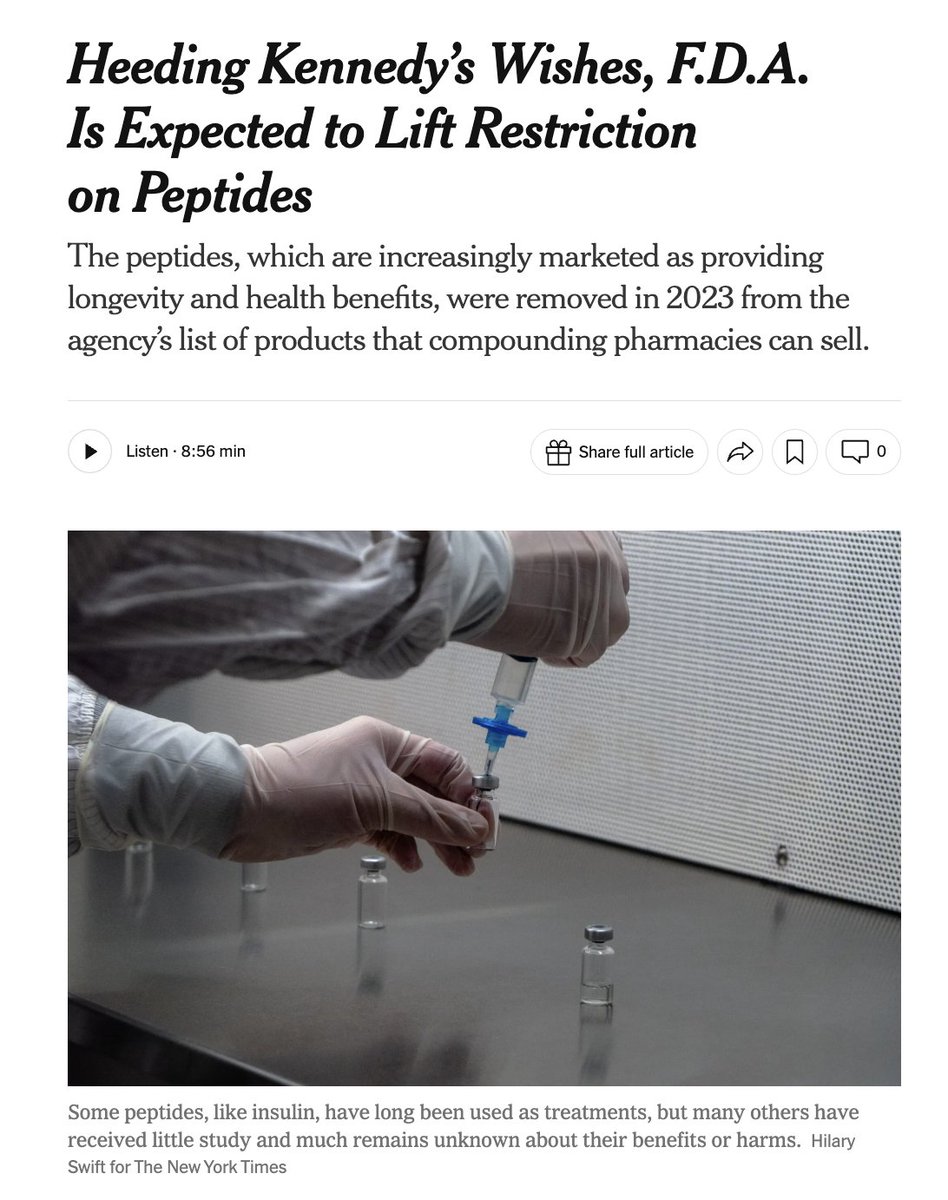
RFK has been saying this was coming for weeks. Now it’s official.
The FDA is removing 12 peptides from the restricted list. BPC-157, MOTS-c, Semax, Epitalon, Thymosin beta-4 among them. Independent scientific review begins in July.
People have been sourcing these through grey markets for years because legitimate access was cut off. That’s what created real risk for real people.
This should never have happened in the first place.
Eli Lilly's orforglipron just got approved as the first GLP-1 pill for weight loss.
A lot of people who passed on injections are about to reconsider.
The barrier to entry just got a lot lower.
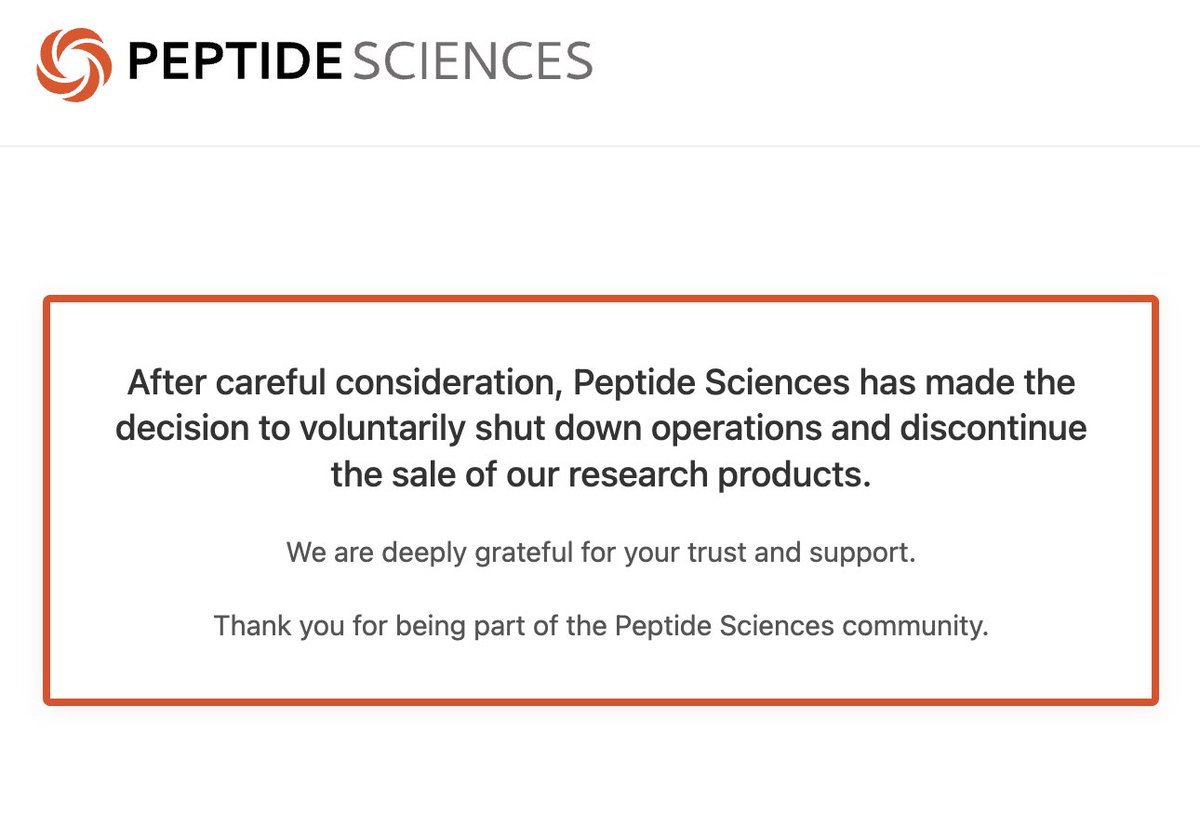
Peptide Sciences shutting down isn’t the story.
The story is the peptide market shifting underneath it.
When access moves from research vendors to compounding pharmacies, the ecosystem changes.
Some companies disappear.
New ones replace them.
Peptide Sciences, arguably one of the largest research peptide vendors, just announced they’re shutting down.
That’s a pretty big deal considering how long they’ve been around.
It also likely won’t be the last.
As compounding pharmacies gain clearer pathways to prescribe peptides, the old “research peptide” vendor model becomes harder to sustain.
A few things worth knowing:
- This doesn’t mean peptides are going away
- Some gray-market vendors will likely disappear
- New ones will also show up quickly
When a big vendor disappears, the market doesn’t disappear.
It fragments.
The peptide gray market will never go away.
There’s already so many compounding pharmacies selling crazy marked up peptides they also bought from the gray market.
If this plays out, we’re entering a more regulated phase of the peptide market…but that doesn’t necessarily make it simpler.
Gray markets don’t disappear overnight.
They evolve.
Access and enforcement often expand at the same time.
That increases fragmentation.
More vendors.
More supply channels.
More variability.
More room for protocol error.
Regulation may improve oversight.
It doesn’t remove execution complexity.
Access gets attention.
Structure determines outcomes.
RFK Jr. was just on Joe Rogan’s podcast and said ~14 peptides currently restricted under the FDA’s Category 2 list could soon be eligible for legal compounding again.
If implemented, that would materially EXPAND peptide access in the U.S.
Category 2 status currently restricts compounding due to safety concerns.
Moving substances to Category 1 would allow regulated U.S. pharmacies to compound them under oversight, potentially reducing reliance on unregulated sourcing.
Access expansion changes behavior quickly.
If more peptides become legally compoundable, we’ll likely see:
- More first-time users
- More stacking
- Faster experimentation
- More telehealth activity
But increased availability doesn’t automatically improve outcomes.
More compounds in circulation often means:
- Overlapping protocols
- Escalation mistakes
- Inconsistent cycles
- Less clarity on what’s actually working
Regulatory shifts may improve supply chain oversight.
They don’t replace execution discipline.
Whether 14 peptides move or not, one variable remains constant:
Outcomes depend on structured use.
Clear protocols.
Intentional dosing.
Consistent tracking.
If peptide access expands, structured protocol management becomes even more important.
That’s exactly why PepTracker exists.
Lilly’s oral GLP-1 (orforglipron) outperformed oral semaglutide in A1C and weight loss in a head-to-head T2D trial published in The Lancet.
This is meaningful comparative data.
But let’s add some context… 👇
Impressive trial data! As with any protocol, accurate dosing and consistency can make all the difference.
The GLP-1 space is only going to keep growing. Great time to be paying attention 🫡