Keir Starmer wants to “smash the gangs," Rishi Sunak wanted to “stop the boats".
But from what we witnessed in Dunkirk, the efforts of French police do not match the cunning of people smugglers, or the desperation of those willing to risk their lives.
Mikael Petterson, the CEO of the cruise ship Villa Vie Odyssey, which set sail on Monday after spending four months in Belfast, told ITV News' @PeterAdamSmith that the ship is "nothing" like the notorious 2017 Fyre Festival
Read more: https://t.co/GaCvtI3UoT
Passengers on an ‘endless’ world cruise have been told to leave residential ship Villa Vie Odyssey with all their belongings in Cambodia after the company said it was 'unable to secure the fuel necessary to continue operations'.
In Iraq, there is a ‘rehabilitation camp’ where families of suspected ISIL fighters are sent. We've been able to access this camp and speak to those who are now deemed ready to be reintegrated into society. Some tell us they were just children when the war began here.
Some of Iraq's most significant archaeological treasures, damaged by ISIL during its occupation of Mosul, have been restored.
Experts painstakingly pieced together thousands of fragments to bring the ancient Assyrian artefacts back to life.
Al Jazeera's Peter Smith reports.
Remember propaganda videos of ISIL smashing ancient Assyrian artefacts and vandalising the Mosul museum? Some of the most important pieces have just been restored.
An amazing recovery by archeologists here in Iraq, helped by the Louvre and the Smithsonian.
Ten years ago, Iraqi forces launched the battle to retake Mosul from ISIL. Fierce urban fighting and relentless bombardment left much of the city in ruins. Almost 1m people remain displaced after this war.
Ten years ago, Iraqi forces launched an offensive to retake Mosul from ISIL. Fierce fighting and relentless bombardment devastated the city. A decade later, Mosul continues to rebuild and restore life across its ruined neighbourhoods.
Al Jazeera’s Peter Smith reports.
Despite the EU calling these settlements illegal, and condemning the settler violence, its member states are allowed to continue trading with them. We asked if this means the EU is complicit in supporting these acts of violence.
Is the EU complicit in funding settler violence in the West Bank? We put this question to ministers meeting in Ireland.
Officially, the EU says all Israeli settlements are illegal. In practice, EU countries still trade with those settlements and block attempts to sanction them.
Last month @kajakallas and the EU said videos of settler violence in the occupied West Bank were “extremely disturbing” - Kallas told me the question is “what more can we do?”
This video captures settlers beating Heidi. They clubbed her, kicked her. Pulled her up off the ground to beat her more. Robbed her of all her equipment. If she didn’t have a helmet—and if she was Palestinian—she could be dead.
Iraq has devalued its currency by around 15%, its biggest adjustment since 2020, in response to oil exports disrupted by the Strait of Hormuz crisis.
Al Jazeera’s Peter Smith reports.
🤷♂️ In summary, it’s because Iraq’s main income is in US Dollars but the country uses Iraqi Dinar.
💵 about 90% of Iraqi gov’s revenue comes from oil exports traded in US Dollars.
👎 Oil exports are disrupted at Hormuz.
⬆️ devaluing the currency means every barrel of oil Iraq can export now generates more in Iraqi Dinar - money that can be used to pay Iraqis their pensions and salaries.
✅ it’s a calculated strategy to compensate for lost oil revenue.
📉 but critics say it puts the cost onto Iraqi people: it devalues salaries paid in Dinar, and makes imported food more expensive.
Portadown is at stalemate. Garvaghy Road is a symbol of unsettled grievances that survived the many compromises of peace in Northern Ireland.
https://t.co/uZJm6AbVTc
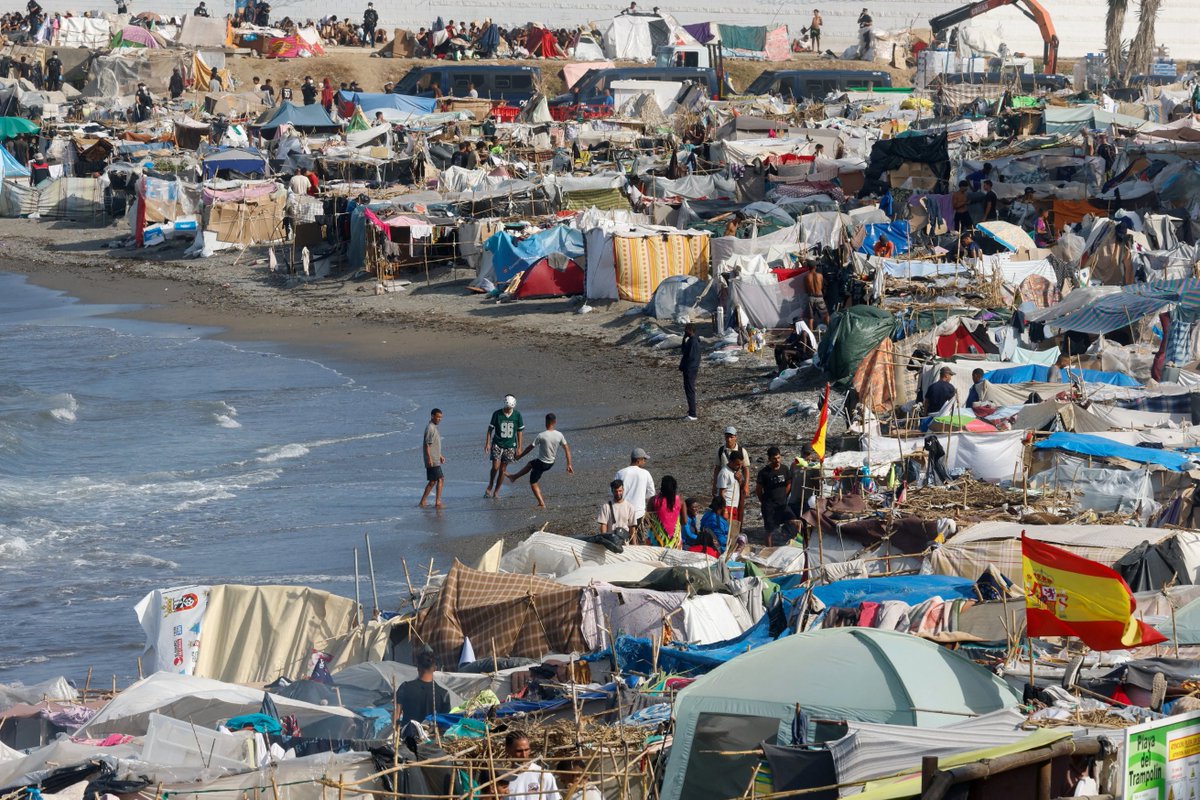
The humanitarian crisis worsens in the Spanish enclave of Ceuta as thousands remain stranded, facing harsh living conditions, limited aid, and alleged abuse while awaiting decisions about their future.
Read: https://t.co/AVuShnkJqR
Authorities estimate that at least 10,000 people remain in the enclave of Ceuta after a record surge of 72,000 migrants crossed from Morocco to Ceuta over two days in late July, overwhelming local resources and creating a humanitarian crisis.