I watched with disappointment the recent interview granted by Senator Ali Modu Sheriff to Channels Television on Monday.
After a prolonged absence from public discourse, one would have expected that time away might have sharpened Senator Sheriff’s judgment. Regrettably, that does not appear to be the case.
In the interview, the former governor claimed that Peter Obi cannot command sizeable support in Northern Nigeria. It is curious that he has appointed himself spokesperson for the Northern masses. For the record, in his first outing on the presidential ballot, Mr. Obi secured approximately 2.8 million votes in the region — a remarkable achievement that cannot be dismissed lightly.
Given the current national hardships, the widespread consensus on the failure of the APC administration, and the addition of a strong Northern figure to the ticket who previously garnered 1.45 million votes in the region, the OK ticket remains a formidable force in Northern politics.
Even more surprising was Senator Sheriff’s assertion that the people of Kano would not vote for Mr. Obi. Let me state clearly: the good people of Kano are neither bigoted nor xenophobic. They have consistently demonstrated strong trust in the Kwankwasiyya movement and will support any credible ticket presented under its banner.
I respectfully advise Senator Sheriff that, in future national television appearances, he would do better to speak to the serious insecurity and humanitarian challenges facing his home state, rather than making divisive and poorly considered remarks.
The OK ticket currently represents the best opportunity for Nigerians to reset the country and place it on a path of competence, unity, and progress. - RMK
Owning Up to Leadership Failures and Political Responsibility
This morning, I listened to the British Prime Minister’s speech announcing his planned resignation in July. As a keen observer of global politics, my primary interest lies in examining what successful nations do right and the structural factors that cause others to lag or struggle with governance and development.
The Prime Minister’s planned resignation comes amid mounting public frustration over a stagnant economy, a worsening cost-of-living crisis, and a perceived failure to honour key campaign pledges.
Looking inward in our dear country, we can recall our own situation. Before 2015, our President on several occasions championed the call for the then President Goodluck Jonathan to resign over economic hardship and insecurity affecting Nigerians. During the Chibok school kidnapping incident, he demanded the immediate resignation of President Jonathan, arguing that the government had failed in its most fundamental duty of protecting lives.
During the 2023 election campaign, President Bola Ahmed Tinubu made several promises, including improved electricity supply. He also challenged the electorate not to vote for him for a second term if he failed to deliver on those commitments—particularly in providing stable power, fighting corruption, and improving the welfare of Nigerians.
At present, however, these conditions have worsened. Electricity supply remains unreliable, insecurity has intensified in many areas, including kidnappings, and economic hardship has deepened rather than eased. Similar concerns are reflected across other critical sectors such as security, infrastructure, transportation, and anti-corruption efforts, all of which have regressed. We are in the worst possible condition.
I, therefore, join Nigerians of goodwill in calling for the resignation of the President over monumental failure in governance. Such a gesture would help enthrone a political culture rooted in accountability and responsibility, rather than further entrenching impunity. It would also send a powerful message that public office is a sacred trust, not an entitlement, and help build a society in which future leaders understand that failure carries consequences. Only by ending the culture of impunity can we secure a better future for the society our children will inherit in a New Nigeria that is possible. -PO
Dear beloved sports-loving Nigerian youths,
After watching the performances of Davido, Burna Boy, and Rema at the opening of the 2026 World Cup—at a time when Nigeria, the giant of Africa, is absent—I felt a measure of consolation. This was reinforced by the fact that many Nigerians playing for clubs worldwide are representing other countries. Felix Nmecha, for instance, set a record by scoring the fastest goal at six minutes for Germany. I write to you therefore, knowing that this country belongs to you, the youth.
You are more of stakeholders in Nigeria’s future than I am. I am 64 years old; by God’s grace, much of my journey is behind me, while yours lies ahead.
It is therefore imperative that you rise to the challenge by obtaining your PVC, your most powerful tool for driving the change you desire.
In the last three years alone, over 15 million Nigerians have turned 18—enough to decide who becomes President, Governor, Senator, Member of the House, or Local Government Chairman. Indeed, enough to shape the nation’s future.
I know many of you are sceptical about politics and political parties. I understand why, but scepticism must not become surrender.
You do not need to belong to any party or wait for anyone to organise you. Organise yourselves in your streets, campuses, communities, workplaces, churches, mosques, and social groups. Mobilise, debate, demand accountability, and take part in choosing those you wish to entrust with leadership.
If you are organised and wish to hear directly from me, invite me. I will come and share my plans for you and our nation.
Do not sit on the sidelines while others decide your future.
I appeal to you to register and vote. Your vote can shape who becomes the next President of our country.
My young friends, this is your country. Take it back.
A New Nigeria is POssible. -PO
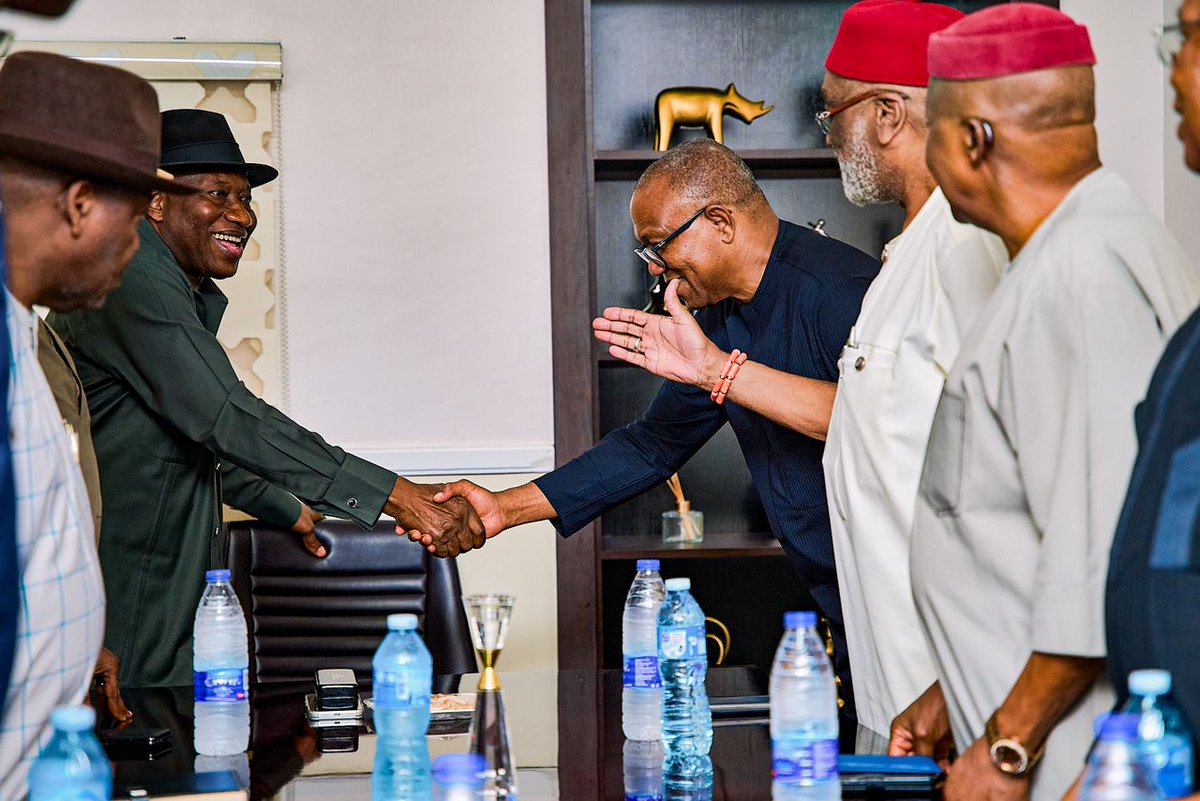
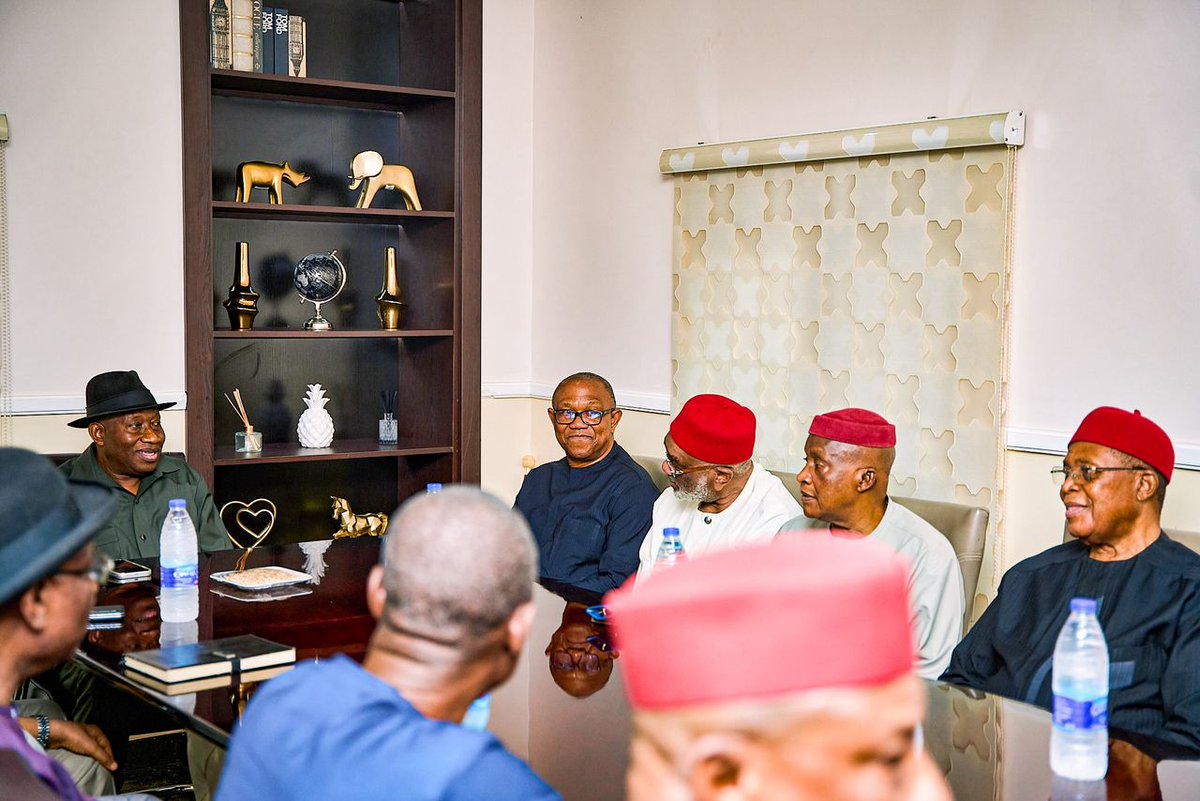
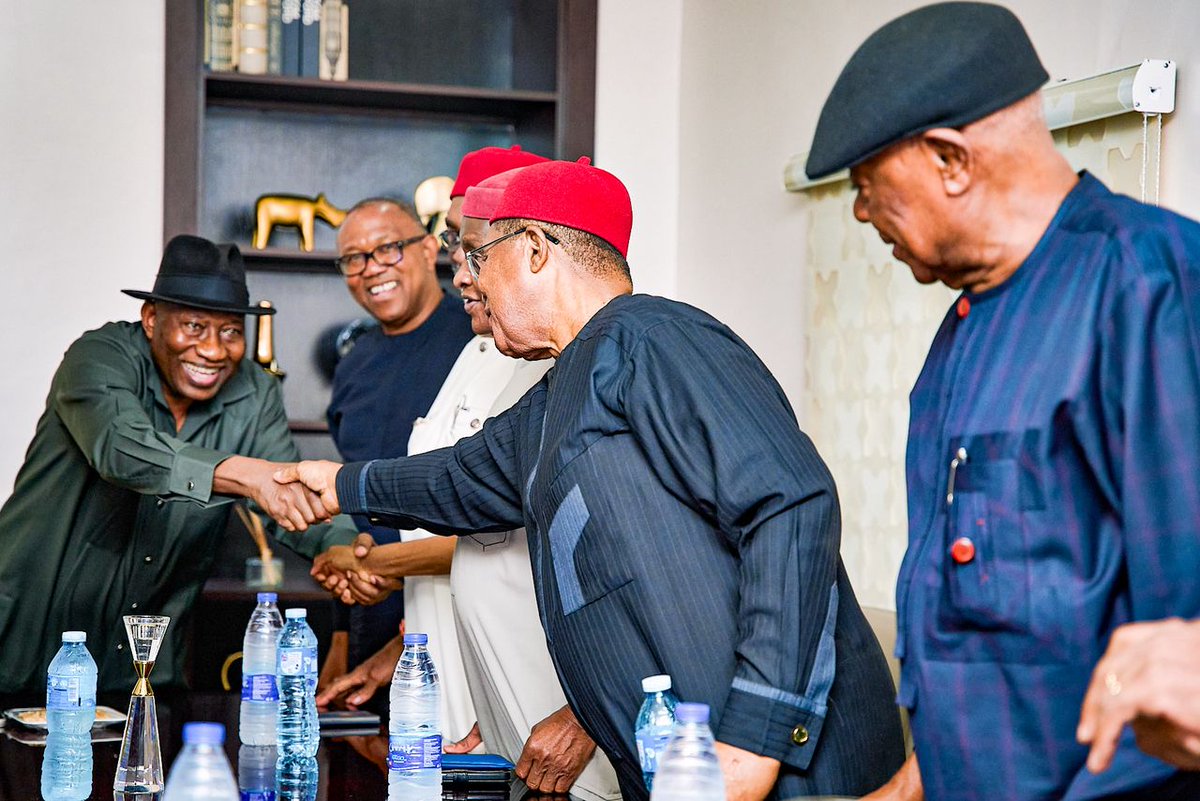
In continuation of my extensive consultations with Nigerian leaders, today, notable South East Leaders, and I visited our respected former President Goodluck Jonathan @GEJonathan on a consultation regarding the 2027 general elections and, more importantly, the future of our dear nation.
Our discussions were frank, thoughtful, and anchored on the urgent need to reposition Nigeria on the path of unity, security, stability, productivity, and inclusive governance. At a time when our nation continues to grapple with economic hardship, rising insecurity, and deepening social divisions, it has become imperative that Leaders across regions come together to reflect, consult, and act in the overall interest of the Nigerian people.
Nigeria today requires leadership that is guided not by personal ambition, but by competence, character, capacity, and compassion. The kind of leadership that understands that governance is not about sharing what is left, but about creating what is needed. We must move from a consumption-driven nation to a production-driven one, where our vast human and natural resources are effectively harnessed for the common good.
The 2027 elections must therefore not just be seen as another political exercise, but as a critical opportunity to reset the trajectory of our country. It must be about the Nigerian child who deserves quality education, the struggling entrepreneur who needs a conducive environment to thrive, and the millions of citizens who simply desire a secure and functional nation.
I remain convinced that through sincere dialogue, unity of purpose, and a firm commitment to doing what is right, Nigeria can and will rise again.
A new Nigeria is POssible. -PO
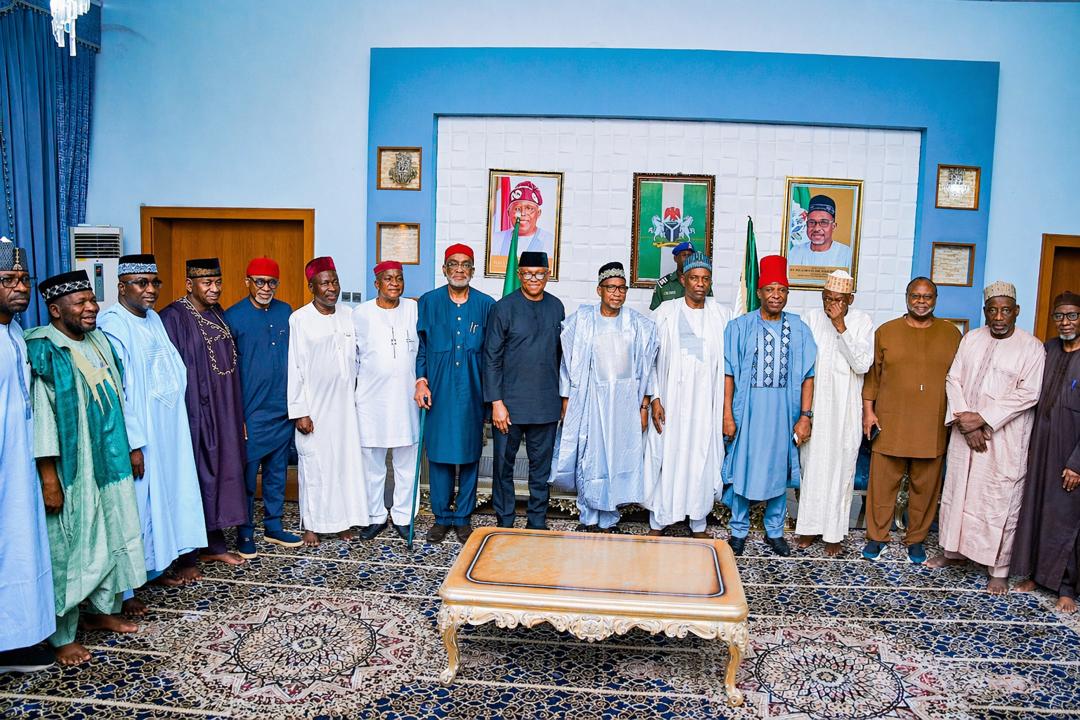
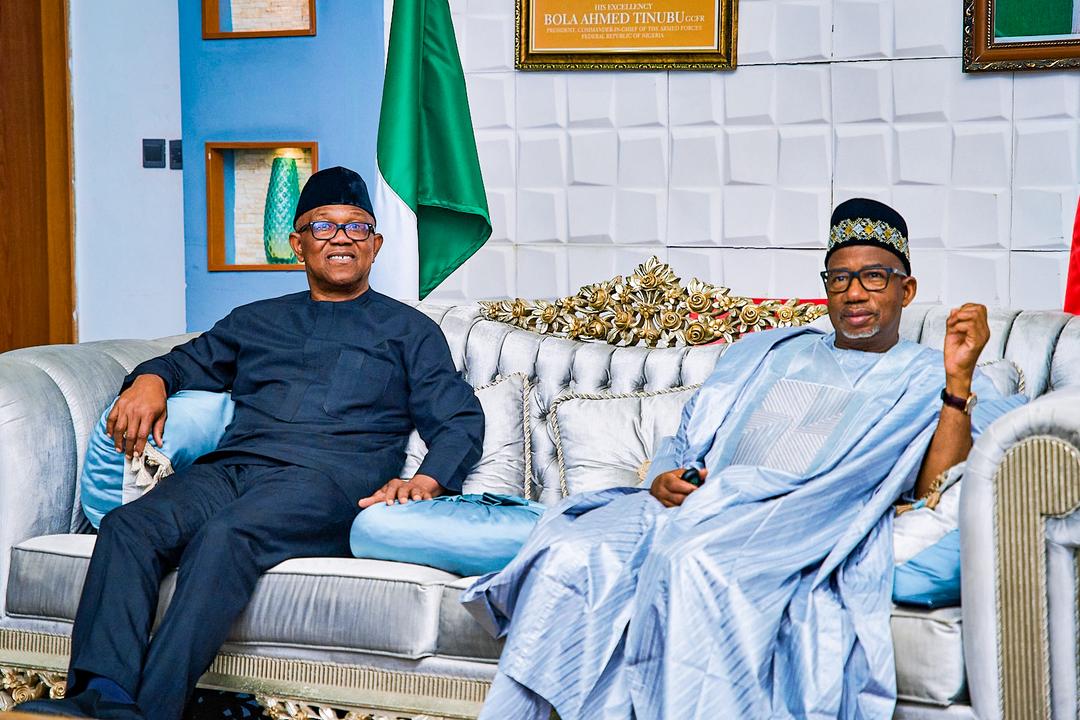
Today, in continuation of our consultations and collaboration efforts, I was in Bauchi state with some notable Igbo Leaders where we had a very insightful discussion with Governor Bala Mohammed. The mission is aimed at a United, Secured, productive and progressive Nigeria that cares for all, especially the less privileged.
A new Nigeria is POssible. -PO
Yesterday, we witnessed yet another defining moment in our democratic journey as the ADC convention was held successfully against all odds.
I must respectfully appreciate the leadership of our party, ably led by the Chairman, Distinguished Senator David Mark, whose calm and steady guidance continues to provide direction at critical moments.
My gratitude equally goes to the convention organising committee led by H.E Lyle Imoke, whose diligence, sacrifice, and attention to detail ensured that this convention was not only held, but was successful in every sense of the word.
To our delegates, party faithful, volunteers, and supporters across Nigeria and beyond, I thank you deeply. You have once again demonstrated that democracy thrives when the people refuse to give up on it.
I sincerely thank all Nigerians who, through their resilience and unwavering belief in democracy, made this possible. Your commitment is a reminder that the power of the people remains stronger than forces that seeks to undermine it.
However, now that the convention has come and gone, we must move quickly from celebration to responsibility.
Nigeria is facing very serious challenges, economic hardship, insecurity, unemployment, and a general sense of uncertainty among our people. These issues require urgent attention, clear thinking, and decisive action.
The success of this convention must therefore not end as an event; it must become a renewed commitment to building a nation that works for everyone. We must focus on offering practical solutions, strengthening our institutions, and restoring hope to millions of Nigerians.
The way forward demands unity, sacrifice, and integrity. We must put Nigeria first, above personal interests, above politics, and above all forms of division. If we remain focused and committed, I believe strongly that we can build a new Nigeria that is possible, sustainable, and beneficial to all.
A new Nigeria is POssible! -PO
From Pharisee to Tax Collector: Rethinking Tinubu’s Kenyan Comparison
In a recent remark in Yenagoa, Bola Ahmed Tinubu suggested that Nigerians should find solace in being “better off than Kenya and other African countries.” While this may have been intended to soften the impact of economic hardship and rising fuel prices, the comment risks downplaying the severity of the current crisis. It echoes the biblical parable of the Pharisee and the Tax Collector in the Gospel of Luke (18:9–14). A similar warning is found in the Qur’an (53:32), which cautions against self-righteousness.
Like the Pharisee who boasted of his superiority over others to mask his own spiritual void, such downward comparisons serve more as a refuge than a remedy. This validated an earlier dismissive remark by President Ahmed Bola Tinubu during electioneering: “Na statistics we go shop?” Yet statistics remain indispensable - they are the language through which nations understand their condition and chart progress. No country can develop in isolation from measurable realities or without comparing itself with peers. Comparisons, when properly grounded, are not instruments of escapism but tools of accountability. What is objectionable is not comparison itself, but comparison stripped of credible, verifiable data—mere tax collector comparisons that soothe rather than solve.
On key development indicators such as security, the Human Development Index, life expectancy, GDP per capita, literacy levels, and electricity access, Kenya consistently outperforms Nigeria. Nigeria is the fourth most terrorised nation in the world, while Kenya is not among the ten worst. Kenya’s HDI ranking is 143 out of 180 countries, with a coefficient of about 0.630, compared to Nigeria’s ranking of 164 out of 180, with a coefficient of about 0.530. Its GDP per capita is roughly $2,200–$2,300, compared to Nigeria’s $807–$835. Kenya’s poverty rate is about 43% of the population (approximately 23 million people), while Nigeria’s is about 63% (around 150 million people), over six times that of Kenya. Kenya’s life expectancy is about 67 years, while Nigeria’s is about 54 years. The literacy rate in Kenya is approximately 81–85%, compared to Nigeria’s 62–65%.
Kenya’s electricity access is higher, while Nigeria has one of the lowest levels of electricity access in the world. Kenya has about 3.5 million out-of-school children, while Nigeria has about 20 million. Kenya’s inflation rate has been about 4.5% or lower over the past three years, while Nigeria’s has remained above 15% within the same period. Kenya’s exchange rate has been around USD 1 to KES 130 over the past three years, whereas Nigeria’s exchange rate rose from below ₦500/$1 to above ₦1,250/$1 within the same period. Even with developments in the Middle East and rising oil prices, Kenyans have not experienced the sharp increases in petroleum product prices seen in Nigeria.
Across other key indicators, Kenya also performs better. In the end, these indices clearly show that Kenya ranks higher than Nigeria on several development metrics. The standard of living of Kenyans is better than that of Nigerians. If the President considers Kenyans to be suffering despite these stronger figures, then Nigerians are in a far more difficult situation. He should therefore refrain from self-consolation and, in honest reflection, take responsibility for the situation and make a determined effort to drive improvement. This requires a posture of humility, accountability, and commitment to addressing the factors that have slowed Nigeria’s development.
A new Nigeria is POssible. -PO
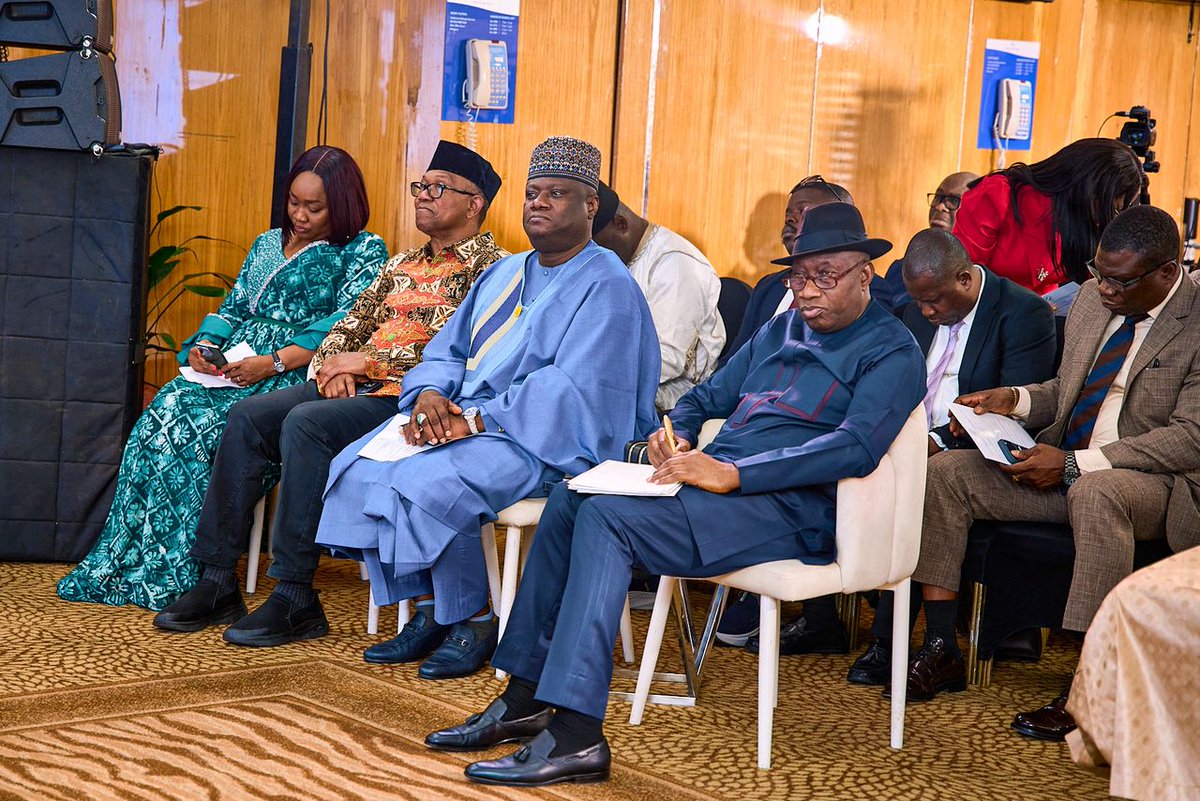
Yesterday, I honoured the invitation of the Goodluck Jonathan Foundation at the launch of its landmark report titled “Strengthening the Nexus Between Democracy and Economic Growth in Nigeria.”
The report and the robust panel discussions that followed did not just present data; they reiterated the necessary truth that we have failed in critical areas of development: health, education, and pulling our people out of poverty. Over the past decade, our democratic progress has weakened while the economic well-being of our people has continued to decline.
Consensus thinking from the event is that our leadership recruitment process must change for democracy to thrive. The recruitment must be based on competence, capacity, compassion, character, and commitment to serving the well-being of the people. And for it to thrive, our institutions must be strong, independent, and accountable to the people.
We must rebuild trust in our institutions, restore discipline in Leadership, and ensure that governance translates into measurable improvements in the lives of Nigerians.
A New Nigeria is POssible. -PO
Standing Up for Democracy
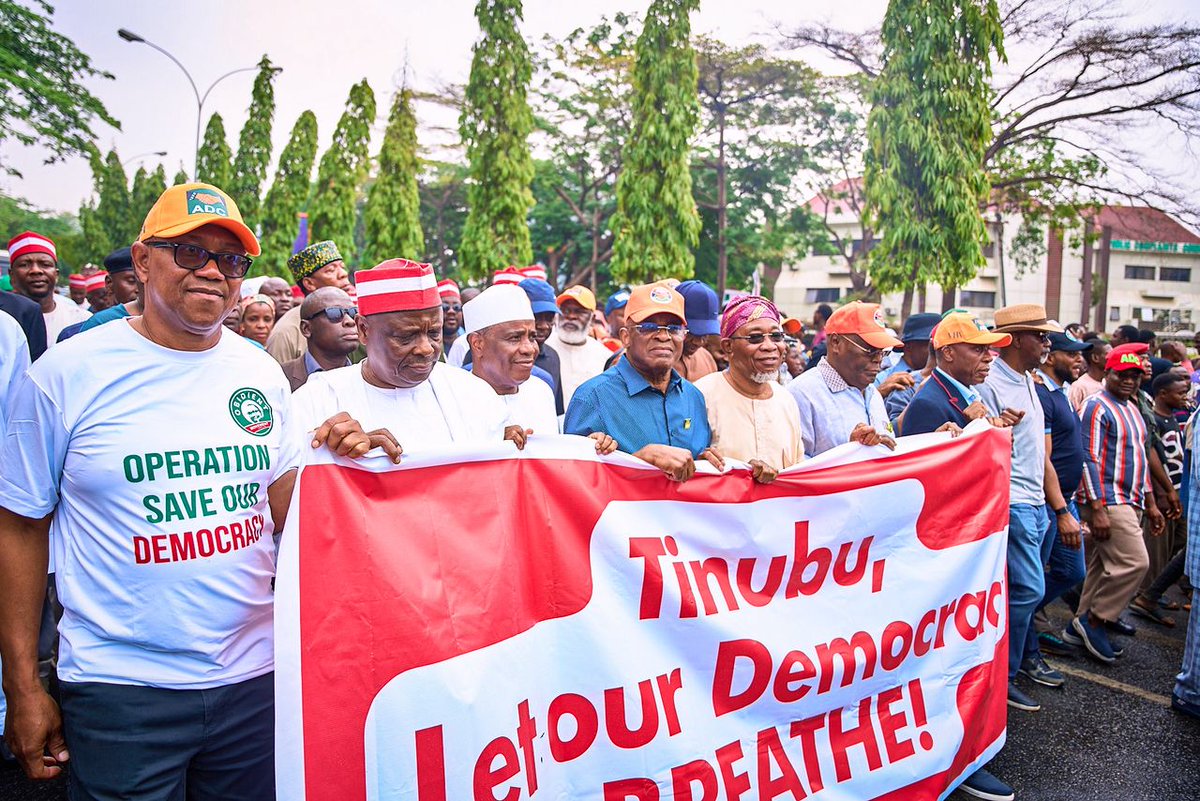
Today, I joined fellow Nigerians, leaders, and members of the African Democratic Congress (ADC) led by National Chairman Sen. David Mark to participate in a peaceful "Save Democracy" protest.
This event was not just an effort to protect our democracy; it was also a moment of reflection on how far we have fallen as a nation. We must resist the suffocation of our democracy by those who once claimed to have sacrificed to defend it, but are now doing everything possible to undermine it and silence opposition.
History will not be kind to those who traded the struggle for democracy for the comfort of power. We will not remain silent, we will not be intimidated, and we will not surrender the future of this nation. The will of the people must prevail—stronger, louder, and impossible to suppress.
A New Nigeria is POssible. -PO