This is how easy it is to link your Bitcoin identity on Arbitrum.
One root key → secure derived wallets across 15+ chains. Never expose main keys again.
Try the fast onboarding → https://t.co/MJ09kjvA5y
Video shows the derived wallets page after linking.
@arbitrum One identity. One resolver, it’s live on Arbitrum. Please be free to ask directly due to limited post length.
#Arbitrum#identity#Bitcoin#Web3#EVM#Blockchain
Example, type my registered name
“emilianosolazzi” and see a good example live. https://t.co/MOEaf5SUdm
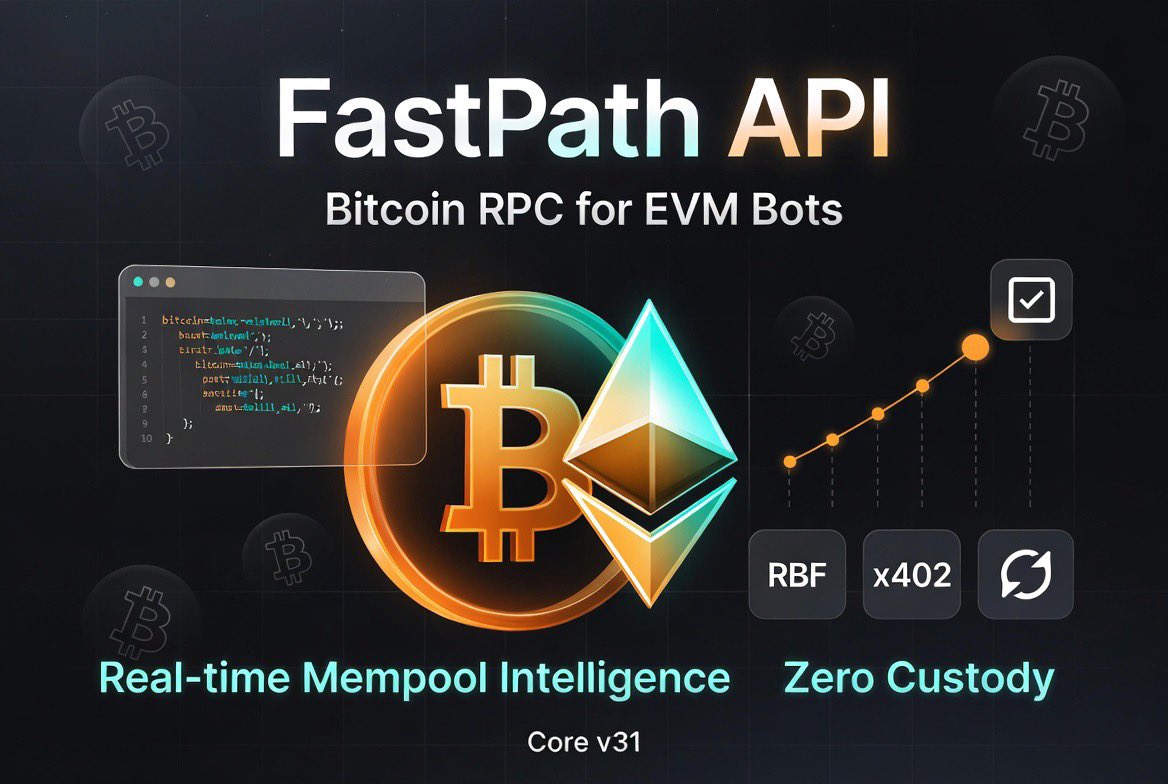
Give your autonomous agents a native way to query Bitcoin mempool data, calculate RBF plans, and check block height statelessly. They pay fractions of a cent automatically on Base,Polygon or Arbitrum USDC with zero API keys.
https://t.co/KQRBqLdW4U
Watched an agent pay $0.001 USDC for real Bitcoin intelligence.
No keys, no account — pure x402 on Base:
→ 402 challenge
→ Auto-paid
→ Got fees, mempool, RBF plan & v31 template check
EVM agents now speak Bitcoin natively.
https://t.co/3NL1HDPD7d
#Bitcoin#x402
For effortless onboarding and seamless user experience, a user registers its Ethereum address, and the dapp generates a new Bitcoin address generated its “WIF” key. This address is displayed only once to the user, who can then scan its QR code for further actions.
Finally, you can register your “.btc” identity. Create your profile, and yes, Ordinals are included! Eventually, all Solidity smart contracts will be able to send payments to “you.btc” at the desired token, including native Bitcoin. This opens up limitless possibilities.
This video clip provides a glimpse into the next page, where users can verify the linked identity and access all the derived wallets. Each derived wallet can send funds using a single EVM signature, ensuring maximum security. Users should never use the main keys for transactions.
In this video clip, a registered EVM wallet is linked to a verified Bitcoin address, establishing claimed ownership. Upon signing and verifying the link, users receive newly generated wallets with their own keys, enabling self-custody. This allows users to send funds with 1 click
@oojje Thanks for reaching out, I appreciate the interest.
pETH is focused on Base DeFi infrastructure, so I’d be happy to hear the strategy if it aligns with liquidity, integrations, lending markets, or community growth.
Feel free to DM the details, including examples of past work.
pETH is live on Base: a native ETH reserve receipt token with on-chain invariant checks.
pETH collateral → borrow USDC/WETH
Transparent backing: T + F = R ETH balance ≥ R
The system makes sure there’s always ETH to back all tokens and fees.
https://t.co/TiX3WRIFE4
@MoonwellDeFi pETH is live on Base: a native ETH reserve receipt token with on-chain invariant checks. For Moonwell, this could open a clean isolated market path: Transparent backing:
T + F = R
ETH balance ≥ R
https://t.co/TiX3WRIFE4
@CoinDesk Because of this reason: https://t.co/8FtYcs1Cvg…
pRWA exists and should be used.
prevents the Edel Finance-style exploit:
https://t.co/VODEVgydIH
@base pRWA, invariant-first RWA receipt token with ERC-7943 compliance.
Core invariant: T + F == R (accounting) & collateral.balanceOf >= R (physical)
Frozen tokens never touch the invariant. Oracle never blocks redemptions.
https://t.co/P9uJfyA47S
#RWA#DeFi#ERC7943