The moment has arrived.
PATHFINDER AI is undergoing a transformative rebranding to reflect our growing ambitions in cosmic exploration.
With a revitalized look and a sharper vision, we’re set to push the boundaries of exoplanet discovery and deepen our understanding of the universe.
More exciting updates are on the way. Stay Tuned.
Want to run Pathfinder AI locally?
All you need is Python and the project repository.
Clone it, install the dependencies, and run the tool on TESS data.
Pathfinder processes the input and outputs plots and results showing potential exoplanet signals.
After building the light curve, Pathfinder AI looks for repetition.
It applies Fourier analysis to detect periodic signals in brightness changes.
If a dip repeats every 3.5 days, it stands out as a clear frequency peak.
Same dip. Same period.
That’s how a transit becomes a confirmed signal, not noise.
Pathfinder AI starts with raw TESS pixels.
For each frame, it sums stellar brightness into a single value.
Over time, this forms a light curve.
Dips in the curve = a planet transit.
Pixels → light curve → exoplanet signal.
TESS is generating more data than ever
Pathfinder AI scales with it. Analyzing thousands of stars in parallel and prioritizing high-signal candidates for immediate review.
Detecting a 0.1% dip in starlight takes precision.
Our system isolates subtle periodic signals that manual review often misses - enabling earlier, stronger confirmation of planetary candidates
Pathfinder AI is officially ready for public release
Our full pipeline from TESS pixel data to confirmed planetary signals is now stable, validated, and production-ready.
AI-powered exoplanet detection is no longer a prototype.
It’s live, it’s reliable, and it’s opening a new window into the cosmos.
Join us as we bring planet discovery to everyone.
Proxima Centauri b, just 4.24 light-years away, sits in its star’s habitable zone.
This rocky exoplanet might hold liquid water, making it a prime candidate for life.
But could it withstand its star’s flares?
What do you think about its chances for hosting life?
Pathfinder AI is here to help spot new worlds.
It pulls NASA TESS data from MAST, builds light curves, searches for transit-like dips, and shares candidate visuals right on this feed.
Follow @PFNDAI and keep your eyes on the plots.
PATHFINDER AI dives into TIC 49315203 data from TESS, where pixel grids capture starlight.
It sums photon counts per frame into a light curve, revealing hints of exoplanets.
This process turns vast video data into cosmic clues.
Scientists are increasingly interested in exoplanet magnetic fields, which could shield atmospheres from stellar radiation and sustain habitability.
PATHFINDER AI is now integrating TESS data with theoretical models to identify magnetic signatures, such as subtle light curve distortions caused by magnetospheric interactions. This approach, timed with the recent solar maximum’s peak in 2025, aims to pinpoint planets with protective fields, potentially revealing worlds where life could thrive despite harsh cosmic conditions.
Early results suggest a correlation between transit depth variations and magnetic activity, offering a new lens to explore the universe.
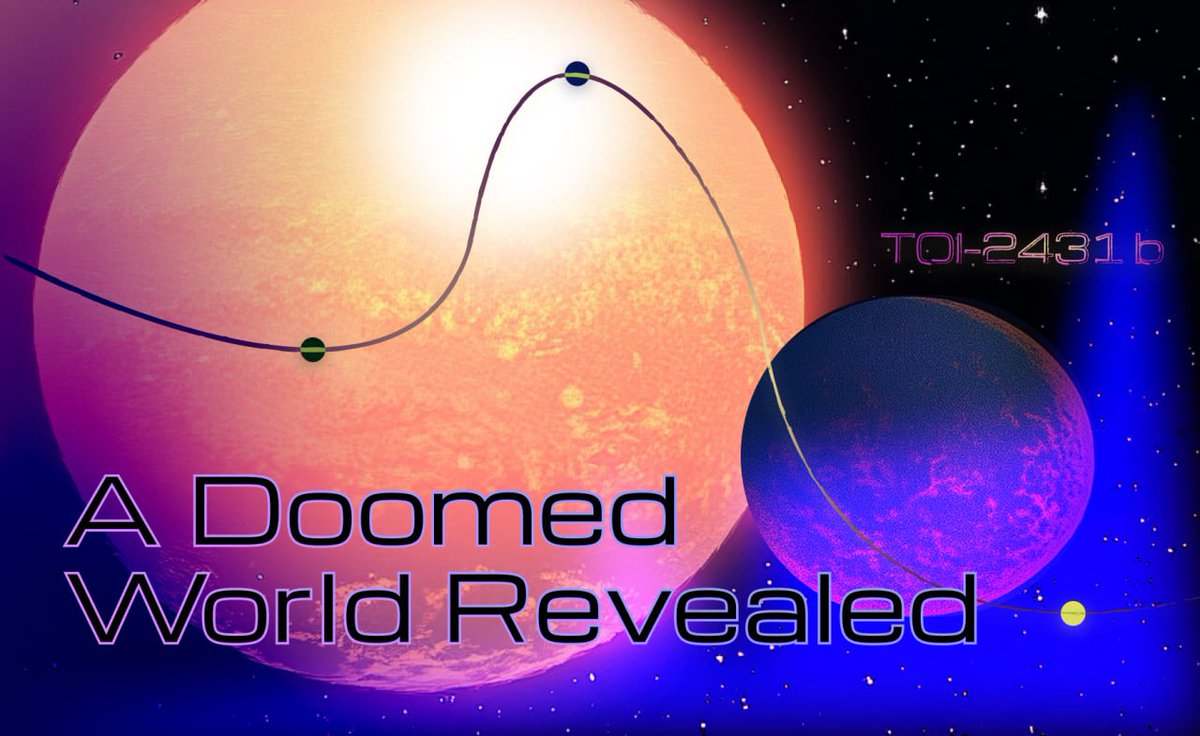
TOI-2431 b: Earth-sized, 5.4-hour year, 117 light-years away.
Heat: 1727°C melts rocks, doomed in 31 million years.
TESS found it — PATHFINDER AI awaits analysis.
PATHFINDER AI is joining forces with JWST data to cross-check TESS findings.
This collaboration could reveal detailed exoplanet compositions, bridging optical and infrared observations.
The transit method, used since the 2000s to spot exoplanets, measures starlight dips as planets pass by.
PATHFINDER AI refines this technique with TESS data, enhancing our ability to find distant worlds.
Under the hood:
· Fetch Target Pixel Files via MAST
· Clean and detrend the light curve
· Search for periodic dips
· Generate two plots for quick vetting
Everything’s open-source — contributions welcome!
TESS orbits silently, capturing videos of starlight for days. PATHFINDER AI converts these into light curves, helping to hunt exoplanets.
Each frame holds a cosmic secret waiting to be unlocked.
TESS and PATHFINDER AI Partnership
TESS captures starlight across the galaxy, with PATHFINDER AI processing the data to reveal exoplanet transits.
This partnership enhances our cosmic map, offering new insights into distant orbits.
Curious to learn more?
PATHFINDER AI transforms TESS data into exoplanet discoveries, analyzing light curves with Fourier transforms. Its accuracy reveals hidden worlds, powering cosmic research daily.
A new era of exploration begins.
Orbital dynamics shape exoplanet stability, influencing their potential to host life.
PATHFINDER AI is analyzing TESS data to map these patterns, revealing how gravitational interactions affect planetary systems.