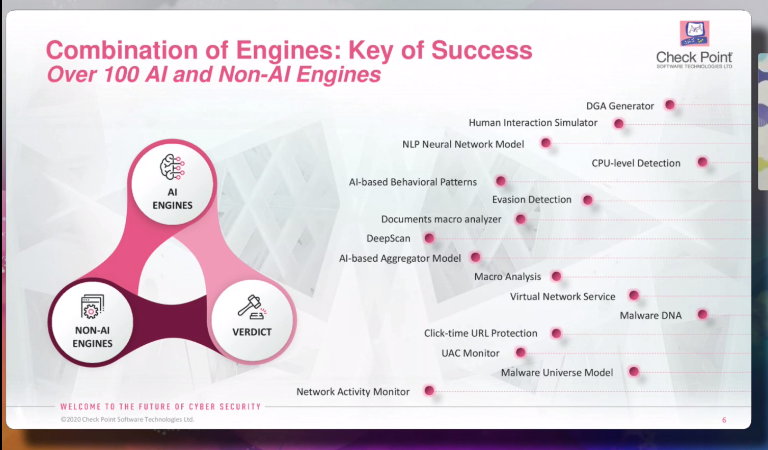
CheckPoint anime son "secure", en FR (partiellement), et fait venir le Pr JULIA qui démontre que l'I.A. n'existe pas.
Merci... Du ménage à faire niveau marketing.
La présentation qui suit celle du Pr parle d'"AI engines", incohérent!
Lien de l'événement: https://t.co/O8R5kGr3uO
🔓 Threat actors are using AI to bypass defenses.
Join Google Threat Intelligence Group analysts for a deep-dive into the AI-powered kill chain and the speed of modern attacks.
🔗: https://t.co/sFBEepm677
#Cyberattaques en hausse, données massivement volées et revendues, nos informations personnelles ont-elles encore une réelle valeur aujourd’hui ? La réponse avec cet article du @NouvelObs_Eco : https://t.co/ThEHfb1vlW
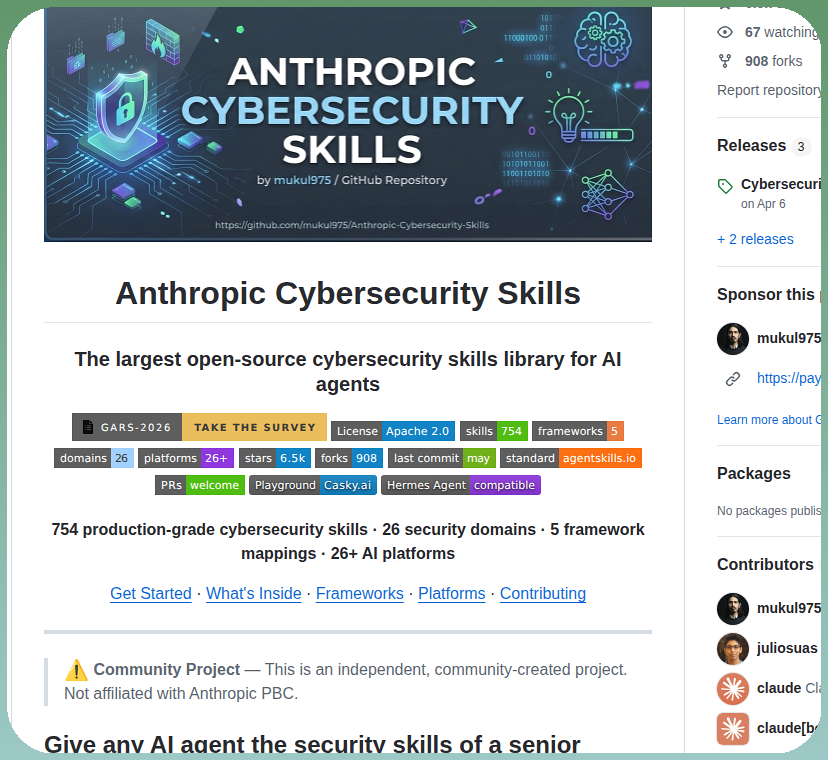
754 cybersecurity skills.
Mapped across MITRE ATT&CK, NIST CSF, D3FEND, ATLAS, and AI RMF.
Basically a plug-and-play knowledge base that gives AI agents real security workflows instead of generic answers.
Claude, Copilot, Cursor, Codex, Gemini — all can use it.
Repo link: https://t.co/k2hPqfAsRR
Microsoft has uncovered a supply chain attack involving malicious npm packages registered under organizational scopes that mirror real internal corporate namespaces, employing dependency confusion technique to deploy a reconnaissance payload. https://t.co/z2GjRIAyYS
A threat actor operating under three maintainer aliases, mr.4nd3r50n, ce-rwb, and t-in-one, published malicious packages that impersonate internal corporate packages, with several spoofing internal enterprise infrastructure URLs in their package.json to appear legitimate.
Once installed, the packages download and execute an obfuscated payload from an attacker-controlled command-and-control (C2) server to collect system information, hostnames, environment variables, and developer context. Read the blog for in-depth analysis and mitigation, detection, and hunting details.
[Data leak][Notification]
Après la 2ième cyber-attaque ayant impacté Almerys, les assurances commencent à communiquer auprès de leurs clients...
Voici un exemple :
Fuzzing has long been one of the most effective methods for finding vulnerabilities. But what happens when an LLM takes the wheel?
Our latest research explores autonomous, AI-driven fuzzing and what it means for the future of security testing. 👇
https://t.co/A363bfZsCD







![ph_V's tweet photo. [Data leak][Notification]
Après la 2ième cyber-attaque ayant impacté Almerys, les assurances commencent à communiquer auprès de leurs clients...
Voici un exemple : https://t.co/n9qqZe2raM](https://pbs.twimg.com/media/HJhU0oyWcAMW-zT.png)


