“I am four hundred. I am innumerable.”
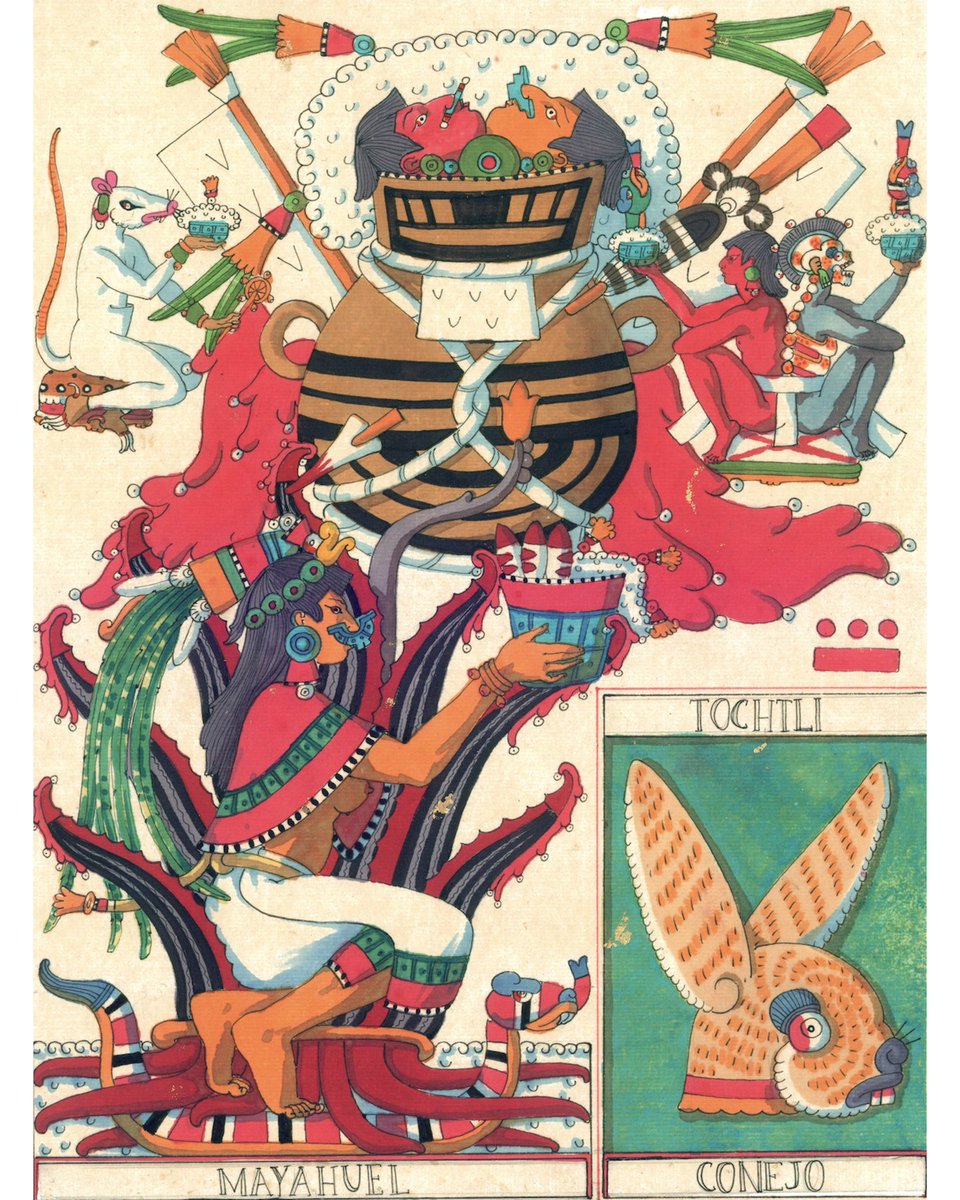
Today in the *Tonalpohualli* arrives **9 Rabbit**, the day of Mayahuel, Lady of the maguey. This page is from my painted codex *Tonalamatl Cenyollotl*, where I explore the nature of the Rabbit days through the symbolism of pulque and the Centzontotochtin, the Four Hundred Rabbits, the innumerable spirits of intoxication.
At the center sits Mayahuel enthroned upon the maguey, the sacred plant whose gifts sustain life. From it come drink, food, fiber, and shelter. Above her rises the great pulque vessel, the **octecomatl**, from whose foam emerge Xochiquetzal and Piltzintecuhtli, linking the drink to love, fertility, and desire. Nearby the tlacuache drinks pulque and makes music in the night, while a living man sits back to back with **Mictlantecuhtli**, Lord of Death, sharing a single spine.
Pulque contains both joy and ruin. The Rabbit days remind us that intoxication brings song, dance, and healing—but also the shadow of destruction if its sweetness is abused.
This image forms part of my ongoing codex painting project exploring the sacred calendar and the Teteo who govern the days.
If you’d like to explore your own **tonalli**, I offer readings here:
[https://t.co/lsZmqMpn1Q)
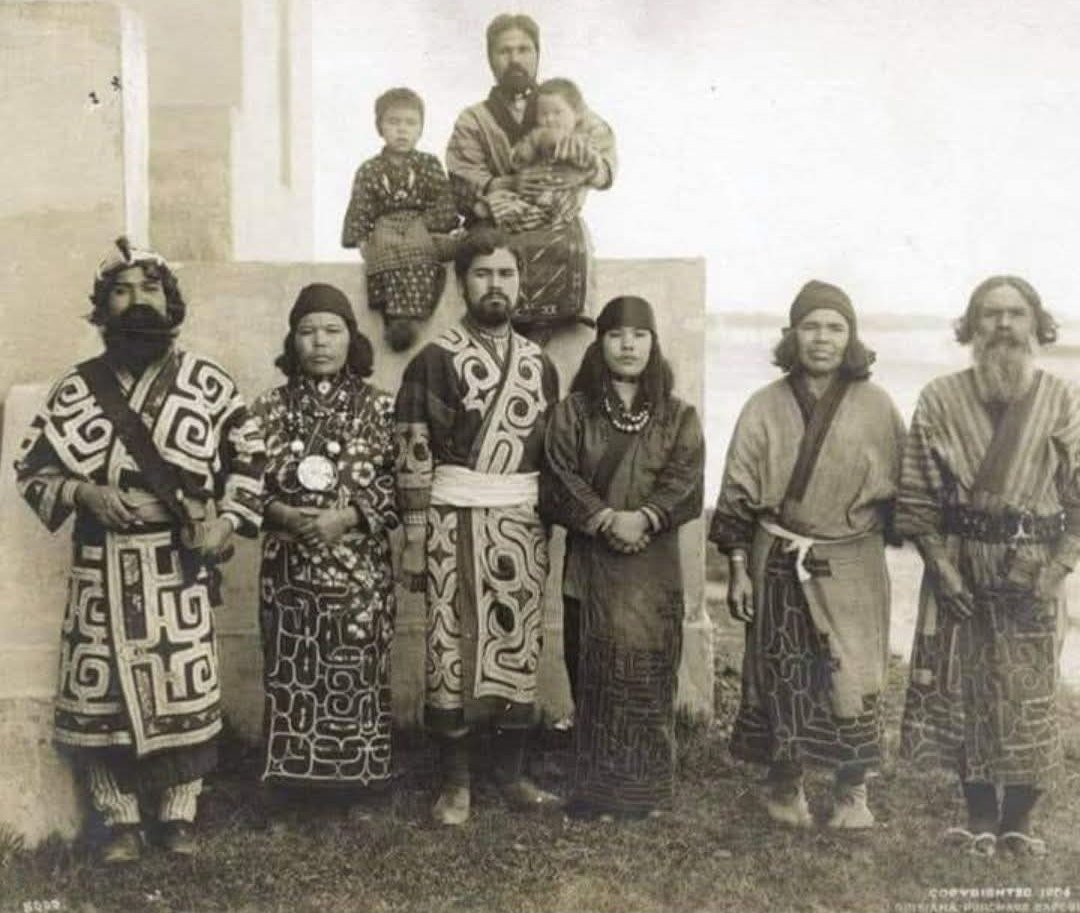
The Ainu are regarded as having descended from the indigenous Japanese hunter-gatherers who lived in Japan during the Jōmon period (14,000 to 300 BC)....
The Ainu are considered the native people of Hokkaido, southern Sakhalin and the Kurils. Early Ainu-speaking groups (mostly hunters and fishermen) were also present in northern Honshu, where their descendants are today known as the Matagi hunters, who still use a large amount of Ainu vocabulary in their dialect and also migrated to the Kamchatka Peninsula. Ainu toponyms support the historical view that the Ainu people lived in several places throughout northern Honshu, mostly along the western coast and in the Tōhoku region. There is also evidence that Ainu speakers lived in the Amur region through Ainu loanwords found in the Uilta and Ulch languages.
#archaeohistories