Follow up isn't about a script. You can't "program" this in.
It's about pattern recognition and years of experience. You know when you hear an answer that's too clean, too fast too ... rehearsed.
You follow up. Someone newer to this just writes it down and moves on.
That moment when you realize your "smart" system was missing something obvious.
We only captured feedback on users' first interactions. Everything after that? Invisible.
Sometimes the best updates aren't flashy features.
https://t.co/2xzEOJiug8
#UserFeedback
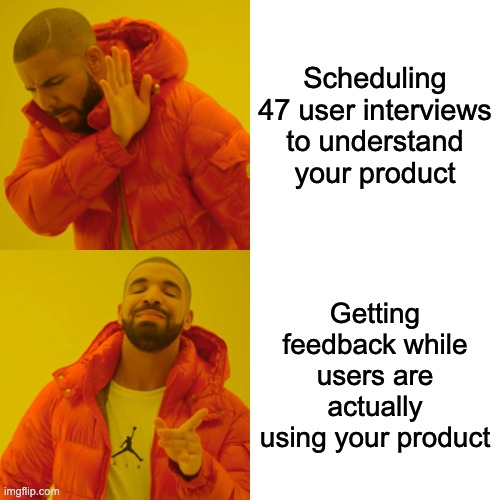
User interviews are important, but they don't scale!
Start working smarter with Pheedback and get real answers from real users!
#productmanagerproblems
Friday reminder: Your users aren't lazy for skipping surveys.
Your surveys are just asking them to stop what they're doing to remember what they were doing.
Timing > Everything
#timing#productmanager#buildinpublic
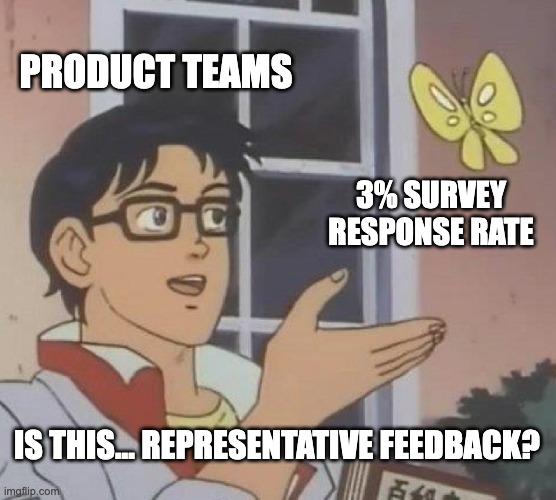
95% of users never respond to surveys. You're making product decisions based on feedback from 5% of your user base.
The silent middle holds the keys to growth, but you have no idea what they're thinking.
We wrote about why this matters: https://t.co/dpPoJylVMv
95% of users ignore your surveys.
You're building products based on feedback from 5% of your users.
We wrote about why smart teams are embedding micro surveys directly in their products instead 👇 https://t.co/oxcGfPeaOg
Product teams:
What's your biggest challenge with user feedback right now?
- Low response rates
- Generic answers
- Survey fatigue
- Something else
(We just published a guide that might help)
Quick tip for better user feedback:
Identify 2-3 "success moments" in your product where users feel value.
Time your questions to follow these moments for better insights.
More in our latest guide: https://t.co/HCth88dvWn
Want actionable tips?
Our blog covers:
- How to segment users for personalized questions
- Creating conversational experiences
- Respecting user time (especially crucial in 2025)
- Building trust through feedback loops
https://t.co/HCth88cY6P
One key insight: Timing matters more than question quality.
The best feedback comes when you ask right after users experience value, not at random intervals.
Here's a framework to transform your approach: