#geochemchat
A cool read on stable isotopes being used as a means of tracking migrating animals. This method is an upgrade from using tags, as there is less capture points.
https://t.co/tBAnBbvsuw
#geochemchat
PFAs are forever chemicals that don't breakdown in the environment or in our bodies.
Unfortunately the damage has been done but we can prevent further damage by using PFAs-free products or limiting exposure for example.
#geochemchat
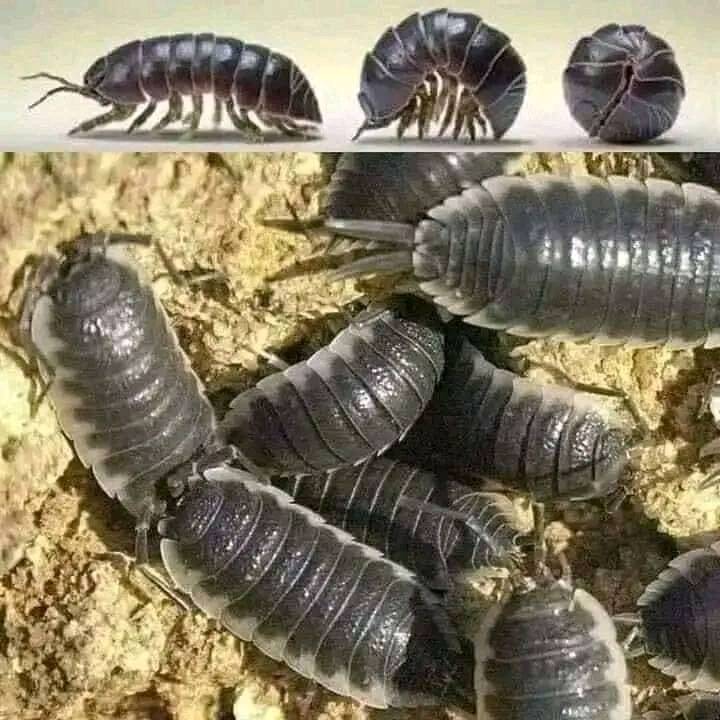
These bugs can be used as indicator species due to their nature of up taking heavy metals in soil. However, this is not a solution in getting rid of the metals, as according to the article, the metals can still find it's way up the food chain. https://t.co/q5oXxx6J5X
I used to play with these guys as a kid. They are Oniscidae or also called Cochineal. We just called them pill bugs. They're actually from a prehistoric family of isopod crustaceans whose function is to remove harmful heavy metals from the earth such as mercury, cadmium, and lead. They're good bugs. Be nice to them.
#geochemchat
Analysis of PFAS present in blood samples. This is a helpful study as PFAS are forever chemicals, so its exposure levels can be determined, along with its effects and how this can be mitigated.
https://t.co/ETMbQ2skHF Novel perfluoroalkyl substances (PFAS) discovered in whole blood using automated non-targeted analysis of dried blood spots
Publication date: 20 July 2023
Source: Science of The Total Environment, Volume 883
Author(s): Jeremy P. Koelmel, Elizabeth Z.…
https://t.co/p67aDZjCTf The application of machine learning to air pollution research: A bibliometric analysis
Publication date: 1 June 2023
Source: Ecotoxicology and Environmental Safety, Volume 257
Author(s): Yunzhe Li, Zhipeng Sha, Aohan Tang, Keith Goulding, Xuejun Liu
#geochemchat
An article assessing the risk of trace elements such as Cd, Zn, etc in agricultural soil, particularly for the production of saffron, as well as the potential risk to human health
https://t.co/9xonrwvWwk
Thermal infrared satellite images don’t just make for nice pictures. They also give us quantitative information about surface temperatures. The heat is on in this week’s #Yellowstone#CalderaChronicles!
https://t.co/Iv8sePbbfd
https://t.co/WrevbP9MYs Rapid identification of high and low cadmium (Cd) accumulating rice cultivars using machine learning models with molecular markers and soil Cd levels as input data
Publication date: 1 June 2023
Source: Environmental Pollution, Volume 326
Author(s): Zh…
https://t.co/QdK850iQnv Pesticide residues in nectar and pollen of melon crops: Risk to pollinators and effects of a specific pesticide mixture on Bombus terrestris (Hymenoptera: Apidae) micro-colonies
Publication date: 1 June 2023
Source: Environmental Pollution, Volume 326
…
An interesting read on the use of isotopic chemistry to discover the history of the region now known as the Yellowstone National Park #geochemchat
https://t.co/XW59j7Bqje