[Introduction and about "Evidence"]
Hello, I'm Ken, a member of Physio Hub, a team of doctors of physical therapy 🇺🇸
For us, "Evidence" is the cornerstone of clinical decision-making. We believe that evidence-based practice allows us to provide the best care possible by combining the latest research with our professional experience and the individual needs of each patient.
It's not just about following the evidence—it's about integrating it with real-world practice to ensure that every decision we make is well-informed and effective.
By consistently using evidence to guide our treatments, we can ensure that our athletes receive the most effective, scientifically-backed care to help them perform at their best.
[⚠️ Why Evidence? ⚠️]
In both treatment and training, the best care we can offer is based on 'Evidence-Based Practice.'
As a result, 'evidence' has become a focal point in recent years. However, before diving too deeply into this concept, it’s important to understand Evidence-Based Practice as a whole.
First of all, 'evidence' is just one of the three pillars of Evidence-Based Practice‼️
Equally important are 'professional clinical experience' and 'the patient’s values.'
When all three of these elements come together, that’s when we achieve true 'Evidence-Based Practice.'
Evidence is merely one tool‼️
If we place too much emphasis on evidence and treat it as everything, we risk misapplying it in real-world scenarios. Conversely, relying solely on personal experience and opinions without evidence is not acceptable either. To achieve the best results, we must incorporate all three elements!
With this understanding, let’s approach evidence correctly and use it to foster both personal and athlete growth! 💡
Research shows that push-ups are just as effective as the bench press for building upper body strength and muscle mass. ✅
When performed at similar intensities—using tools like weight vests 🦺 or modified positions 🔄—both exercises produce comparable gains in 1RM strength 🏆, muscle thickness 💥, and activation in the pectoralis major and triceps (Tillaar, 2019; Calatayud et al., 2015; Kikuchi & Nakazato, 2017).
Push-ups also offer the flexibility to match bench press loads 🔧 while yielding similar results in strength assessments and load-velocity metrics (Tillaar & Ball, 2020).
With minor differences observed across genders 🚻 (Amasay et al., 2016; Alizadeh et al., 2020), push-ups remain a scientifically supported and accessible alternative to the bench press for upper body training. 🧠💪
🚶♀️ Did you know that cardio alone has little or sometimes no effect on fat loss?
🧪 A meta analysis done in 2023 compared groups to see the effect on fat loss with various combinations of 🏋️♂️exercises and 🥗diets.
📉 In conclusion, the key to losing fat is 🍽️calorie control, not exercise. In fact, cardio alone, without any changes in diet, is the ❌least effective way to lose body fat according to the study.
✅ The most effective method is a combination of ⚖️calorie restriction and any form of exercise, whether it be 🏃♂️resistance exercises, 🧗♀️endurance exercises, or 🏀playing sports.
🧠 So when trying to lose fat, don't just focus on hard exercises. 🥄Consider your diet first.
Do you believe if you hear that training to failure for maximal hypertrophy may not be necessary? 🤔🏋️
Although more research is needed to strengthen evidence-based conclusions 📊📚, it would seem that stopping several repetitions short of failure when training with moderately heavy loads (6–12RM) does not seem to compromise hypertrophy 💪🔁, at least when training volume is equated ⚖️.
It depends on your personal preferences 🎯, but if you consider safety 🚨🛡️, you may want to stop a few repetitions short of failure in each set.
🩸Did you know that exercise can increase the volume of red blood cells?
📖 According to a study done by Hu in 2012, exercise training—particularly endurance training—can increase red blood cell mass and hemoglobin levels, thereby enhancing oxygen-carrying capacity 🚀.
🧪 This is due to a combination of factors, including stimulated erythropoiesis, an improved hematopoietic microenvironment, and hormone- and cytokine-accelerated erythropoiesis ⚙️🔬.
Although it requires further investigation to strengthen the evidence,🏃♂️🏊♀️🚴 if you want to increase your blood volume, it may be beneficial to consider incorporating endurance exercises into your routine, such as running, swimming, and cycling 🌟
💪 Did you know that push-ups are as effective as bench press?
📚 According to a study done by Tillaar in 2019, both push-ups and bench press exercises target similar upper body muscles—chest, shoulders, and triceps.
🧘♂️ Moreover, push-ups require additional core engagement due to the plank position, potentially offering broader benefits.
🏋️♀️ Push-ups are as effective as bench presses for strength training, providing a versatile, equipment-free alternative 💡
Image courtesy of Muscle and Motion (@muscleandmotion)
💡 Did you know that creatine is one of the most researched supplements — and it really works? 💪
🧪 Studies by Wax (2021) and Cooper (2012) confirm that creatine boosts 💪 muscle mass, 🏋️♂️ strength, and 🔄 recovery by quickly replenishing ⚡ ATP — your body’s energy source during intense exercise. ✅ It’s safe for most people when taken properly.
📌 For benefits, stick with 🧬 creatine monohydrate at recommended doses, and 🩺 check with a healthcare provider if you have 🧠 kidney concerns.
🏃♂️ Did you know cupping therapy is helping athletes recover faster and feel better naturally?
📖 According to studies done by Armstrong (2017) and Trofa (2020), cupping enhances 🩸 blood circulation, reduces 💢 muscle soreness, and may support quicker recovery without relying on 💊 medications. While more studies are needed, many athletes swear by it for recovery 🙌
✅ To try cupping safely, work with a 👨⚕️ licensed provider who can customize treatment to your needs and goals 🎯
💡 Did you know that dry needling can do more than just relieve pain, and it can actually boost performance?
🧪 Research by Dunning in 2014 and Zhou in 2015 shows that dry needling improves 🩸 blood flow, ⚡ nerve function, and 💪 muscle strength while reducing tension and pain — especially when combined with exercise 🏃 and manual therapy 🤲.
📈 To maximize results, use dry needling as part of a comprehensive rehab or performance program 🏋️, especially if you're recovering from injury 🤕 or dealing with tight, overworked muscles 😣.
🔥 Did you know combining aerobic and resistance training is the best way to lose fat and stay strong?
📚 According to a study done by Garcia in 2016, people who do both cardio and resistance exercises see greater fat loss, smaller waistlines, and increased lean muscle mass compared to those who only do cardio.
❤️ While aerobic workouts help with heart health and weight loss, resistance training preserves strength and muscle — especially when dieting.
🏋️♀️ To achieve sustainable fat loss, pair strength workouts with cardio, and focus on consistency and proper nutrition for optimal results.
🌀 Did you know your obliques play a crucial role in sports performance?
⚾ According to a study done by Eilen in 2024, in baseball pitchers, well-developed obliques correlate with faster pelvis and torso rotation, enhancing throwing velocity without increasing injury risk.
🏃♀️ Other studies also show that core strength supports shot putters with energy transfer, sprint hurdlers with trunk rotation, and athletes with better change of direction speed.
🧱 To boost your game, add side planks and medicine ball rotational throws to your training — your core stability and power will thank you.
Image courtesy of Muscle and Motion (@muscleandmotion)
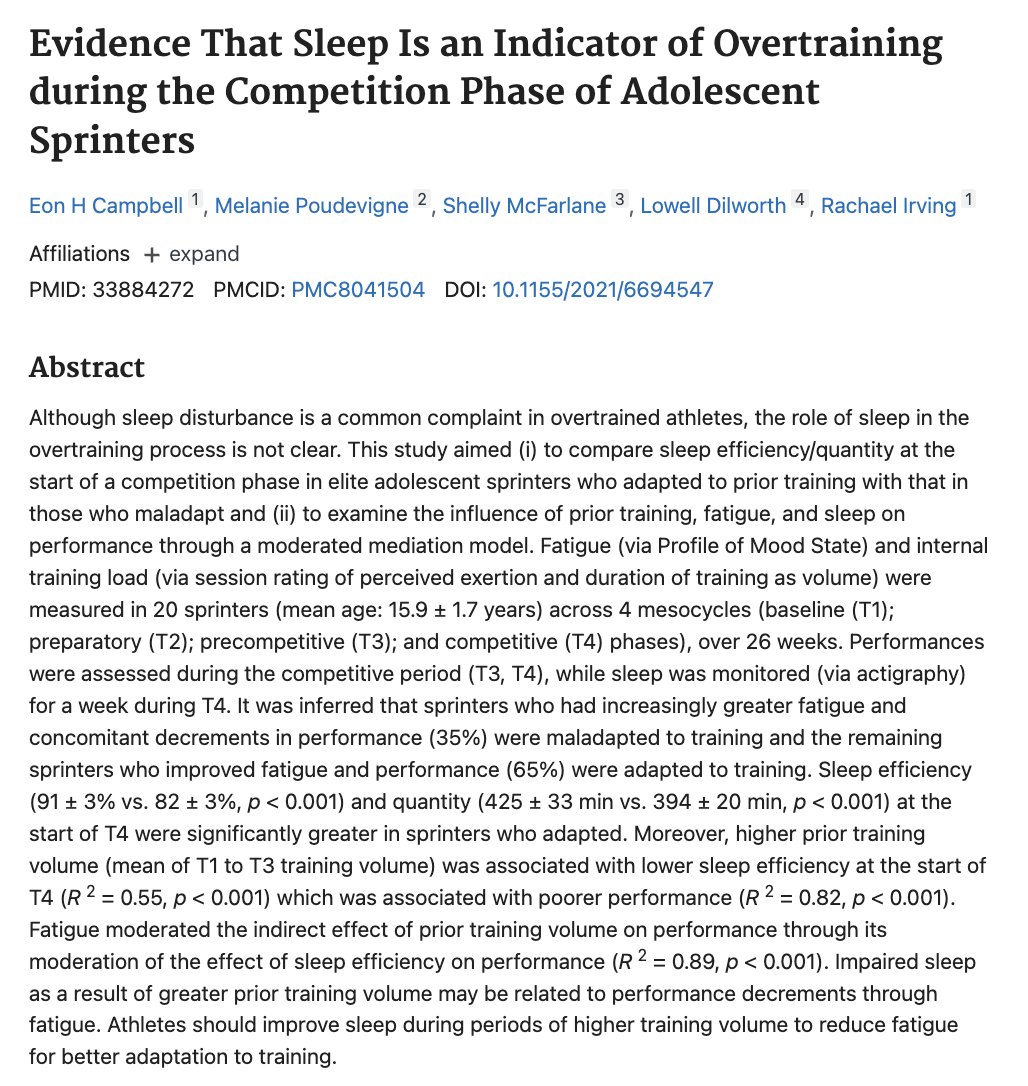
😴 Did you know overtraining can negatively affect your sleep?
📖 A study by Campbell in 2021 revealed that overtraining is linked to reduced sleep efficiency, shorter sleep duration, and lower overall sleep quality.
🧬 Poor sleep can lead to decreased glycogen stores, impaired hormone function, and weakened immunity—bad news for any athlete.
🛌 Recovery isn’t just about muscle repair; it’s also about quality rest.
🕊️ Avoid overtraining, prioritize sleep, and allow your body to recharge for optimal performance.
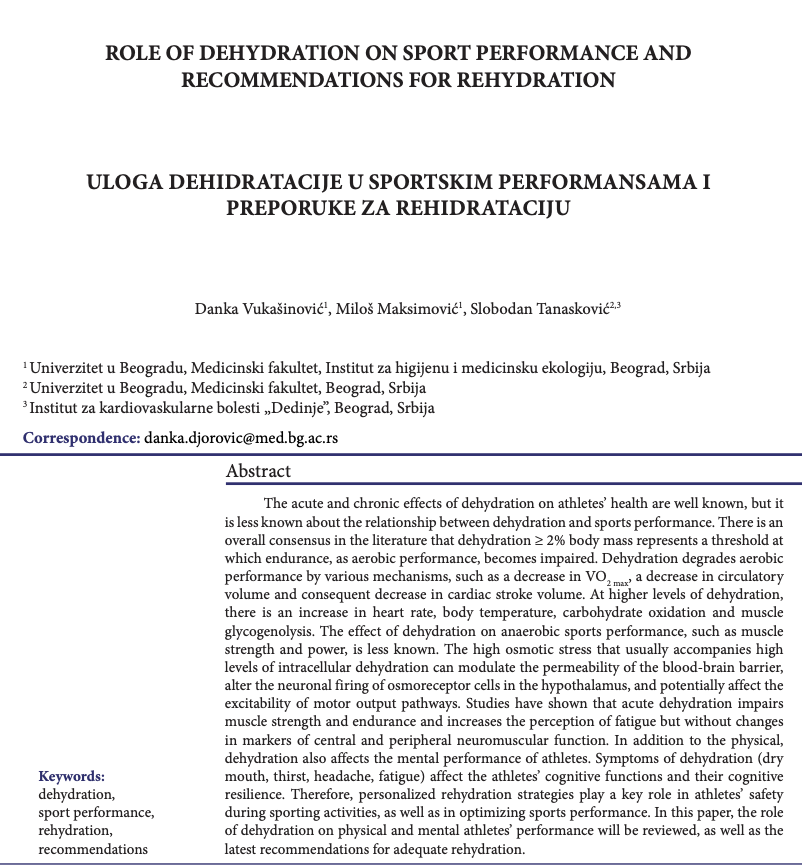
💧 Did you know poor hydration can hurt both strength and endurance performance?
📊 A 2024 study by Vukašinović found that dehydration reduces VO₂ max, circulatory volume, and cardiac stroke volume, impairing aerobic performance.
🏃♂️ Other research shows dehydration can also decrease maximal strength and sprint speed.
🥤 To optimize performance, hydrate consistently before, during, and after exercise.
🔍 Monitor your urine color and body weight for hydration status, and use electrolyte drinks during prolonged or intense workouts.
Experiencing Achilles tendon pain?
Weak calves might be the cause!
📘 While Achilles tendinitis has multiple causes, a study by Van Der Vlist in 2019 found that plantar flexion weakness is a common contributor.
✅ If your pain doesn’t worsen with calf exercises, strengthening your lower leg muscles could be beneficial.
🐾 Try eccentric heel drops and single-leg heel raises to build calf strength and support tendon health.
🚫 Addressing these weaknesses may help prevent further irritation and discomfort.
Image courtesy of Muscle and Motion (@muscleandmotion)
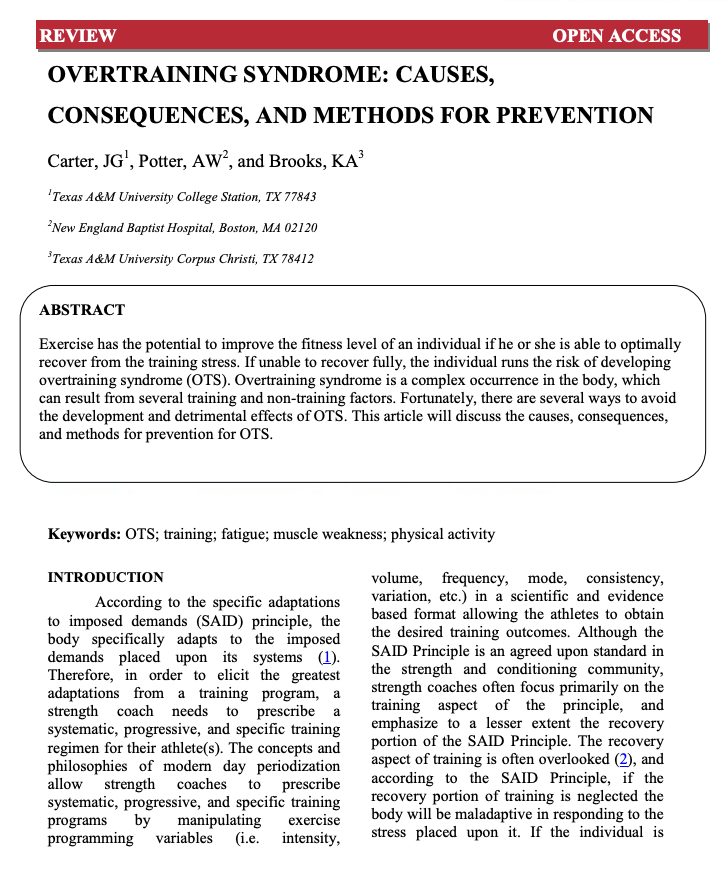
🛌 Did you know skipping rest days won’t make you stronger but can increase your injury risk?
📖 According to a study by Carter in 2014, recovery is crucial for optimizing fitness gains.
⚠️ Without proper rest, you risk developing overtraining syndrome, which can lead to burnout and injuries.
🧘♂️ Instead of pushing through fatigue, incorporate active recovery methods like yoga, mobility work, or walking.
🧠 Listen to your body—rest is just as important as training for long-term progress.
💪 Experiencing shoulder pain during pull-ups?
The issue may be poor scapular control.
📚 Certain pull-up techniques increase the risk of shoulder impingement, as shown in a study by Prinold in 2015.
😣 Weak rotator cuff muscles and poor scapular stability can also contribute to pain during overhead movements.
🛡️ To protect your shoulders, strengthen your scapular stabilizers, including the rotator cuffs, serratus anterior, and lower trapezius.
🏋️♂️ Exercises like shoulder YTWs and external rotations can help improve control and reduce the risk of impingement.
Image courtesy of Muscle and Motion (@muscleandmotion)
🏋️♂️ Do you struggle with wrist pain during weightlifting?
Your grip might be the culprit!
📄 According to a study by Usama in 2024, reduced wrist strength and improper grip type can increase pain and injury risk during lifting.
🤲 Using an extended wrist grip on the barbell places excess strain on the wrist, while a neutral grip provides better joint alignment.
🧘♂️ To prevent pain and improve strength, incorporate wrist mobility drills, grip-strengthening exercises, and, if possible, switch to a neutral grip when lifting heavy.
💡 Small adjustments can make a big difference!
🦘 Struggling to jump higher?
Your body coordination might be holding you back!
🦵 Jump performance isn’t just about leg power—it’s also about coordination.
📑 According to a study by Paolo et al. in 2021, poor lower-body coordination can lead to altered hip and knee biomechanics, reducing vertical jump height and increasing injury risk.
🧗 To improve this, focus on plyometric training, especially landing-to-jump drills, emphasizing a soft landing.
📦 Exercises like Bulgarian split squats and box jumps can enhance both power and coordination, helping you jump higher with better control.
Image courtesy of Muscle and Motion (@muscleandmotion)
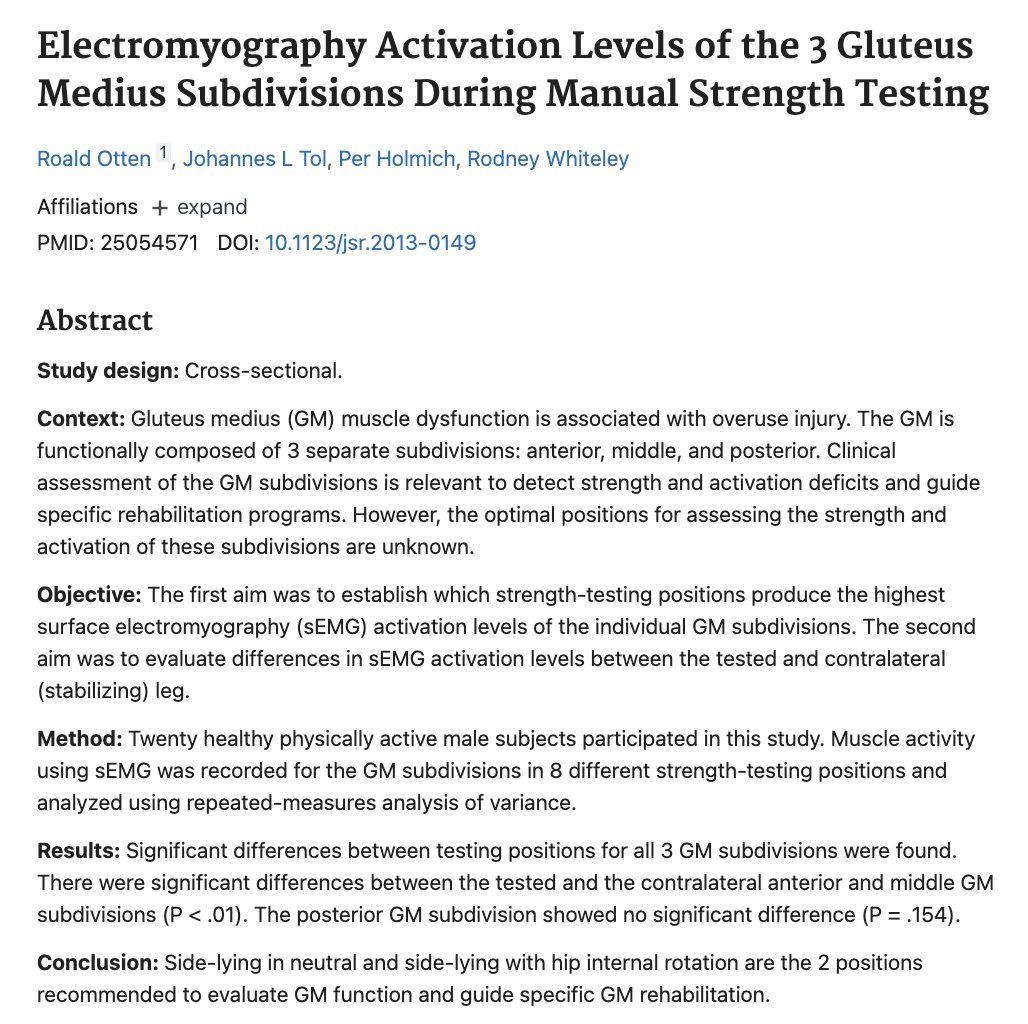
🍑 Are monster walks your go-to for gluteus medius activation?
They don’t actually target all the muscle fibers!
🧠 The gluteus medius has three distinct portions—anterior, middle, and posterior—according to a study by Otten in 2015.
🔄 To fully activate the muscle, you need more than just lateral band walks.
➡️ Try incorporating internal rotation for the anterior fibers, abduction for the middle fibers, and external rotation for the posterior fibers.
🧩 A well-rounded approach ensures complete glute engagement and better hip stability!
Image courtesy of Muscle and Motion (@muscleandmotion)
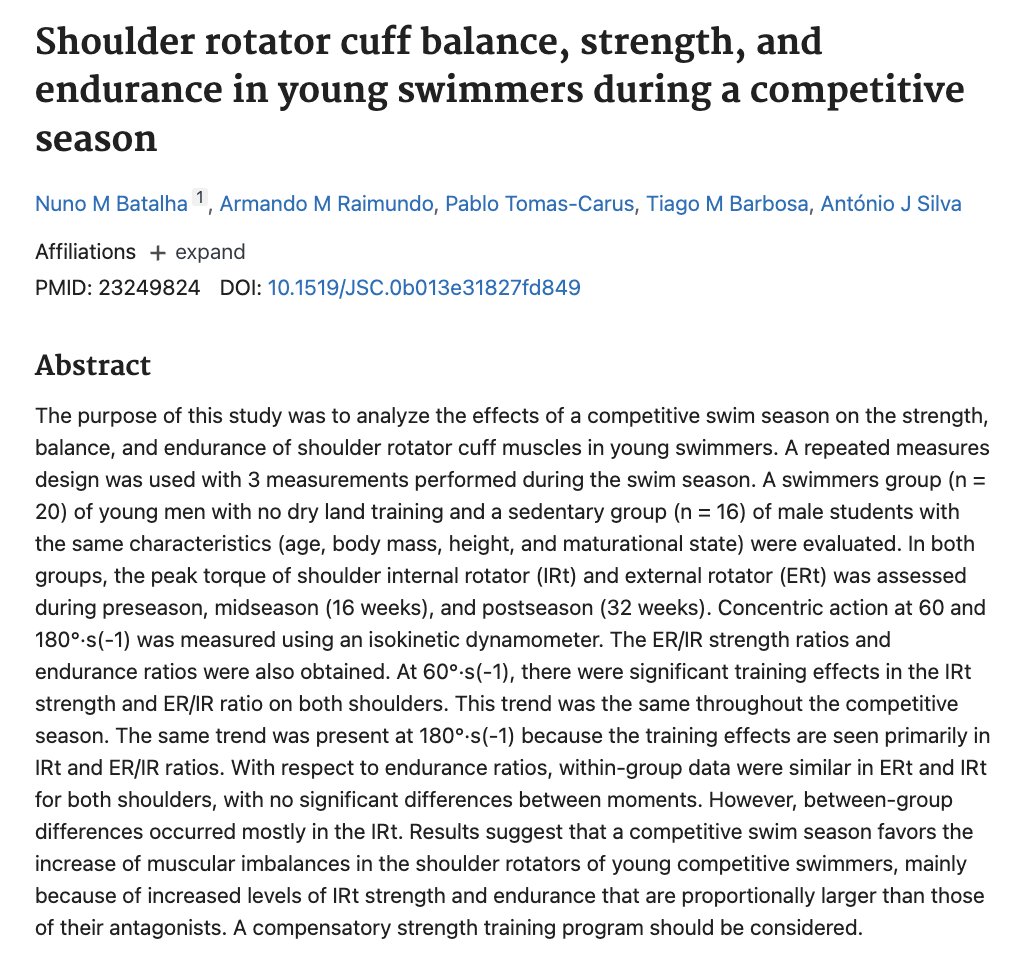
🏊♀️ Shoulder pain during swimming?
Weak rotator cuff muscles might be to blame.
📊 A study by Batalha in 2013 found that young competitive swimmers often develop rotator cuff muscle imbalances during the season.
⚠️ These imbalances can lead to shoulder pain, impingement syndrome, and even long-term dysfunction.
💪 To prevent injury, incorporate external rotation exercises and scapular strengthening drills into your routine.
🌊 Strengthening these muscles will improve shoulder stability and keep you pain-free in the water.
Image courtesy of Muscle and Motion (@muscleandmotion)







![Physiohub101's tweet photo. [Introduction and about "Evidence"]
Hello, I'm Ken, a member of Physio Hub, a team of doctors of physical therapy 🇺🇸
For us, "Evidence" is the cornerstone of clinical decision-making. We believe that evidence-based practice allows us to provide the best care possible by combining the latest research with our professional experience and the individual needs of each patient.
It's not just about following the evidence—it's about integrating it with real-world practice to ensure that every decision we make is well-informed and effective.
By consistently using evidence to guide our treatments, we can ensure that our athletes receive the most effective, scientifically-backed care to help them perform at their best.
[⚠️ Why Evidence? ⚠️]
In both treatment and training, the best care we can offer is based on 'Evidence-Based Practice.'
As a result, 'evidence' has become a focal point in recent years. However, before diving too deeply into this concept, it’s important to understand Evidence-Based Practice as a whole.
First of all, 'evidence' is just one of the three pillars of Evidence-Based Practice‼️
Equally important are 'professional clinical experience' and 'the patient’s values.'
When all three of these elements come together, that’s when we achieve true 'Evidence-Based Practice.'
Evidence is merely one tool‼️
If we place too much emphasis on evidence and treat it as everything, we risk misapplying it in real-world scenarios. Conversely, relying solely on personal experience and opinions without evidence is not acceptable either. To achieve the best results, we must incorporate all three elements!
With this understanding, let’s approach evidence correctly and use it to foster both personal and athlete growth! 💡](https://pbs.twimg.com/media/GwBBMBAXcAA_-8x.jpg)