@TDekkersPhysio The latter. Grumbling, slow onset ces can occur in this cohort and the paper by Christine Comer highlights this well and pragmatically
https://t.co/Hs2M2tGBLw
@k8purcellphysio@adamdobson123 I think you bring up a really good points Kate. My understanding however, is that the primary reason NICE withdrew the above is due to the retraction of papers such as https://t.co/3cIcbYaIIo and that the committee did not feel this would be of significant impact- dubious.
@k8purcellphysio@adamdobson123 What makes you think that identifying synovitis and/ or ruling out significant pathology (which Benoy opined upon) would not be considered 'diagnostic' or part of diagnostic reasoning? I see your point but I wonder if just a little semantic
@adamdobson123@k8purcellphysio Benoy's post was about using US to inform decision-making in the context of tendon pathology and injection + shockwave treatments. There was no mention of using it as a reassurogram. What was paternalistic about it?
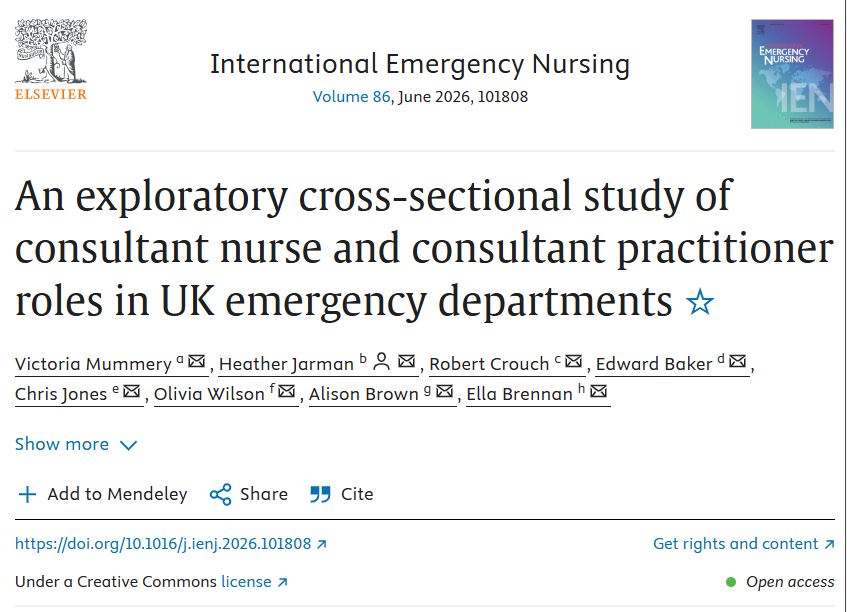
The paper on ED 'consultant' practitioners/nurses is absolutely fascinating. 🧵
The authors acknowledge 2 things:
1. That there is a national framework for 'consultant' practice.
2. That there is a nationally agreed role/function
https://t.co/VjRO031sbN
1/
@Burnt2020 Agree there are several instances of this happening, just not on this specific piece. I share concerns about ACP expansion, and the scope of practice being defined by 'professional judgement'. We desperately need more physio's doing physio
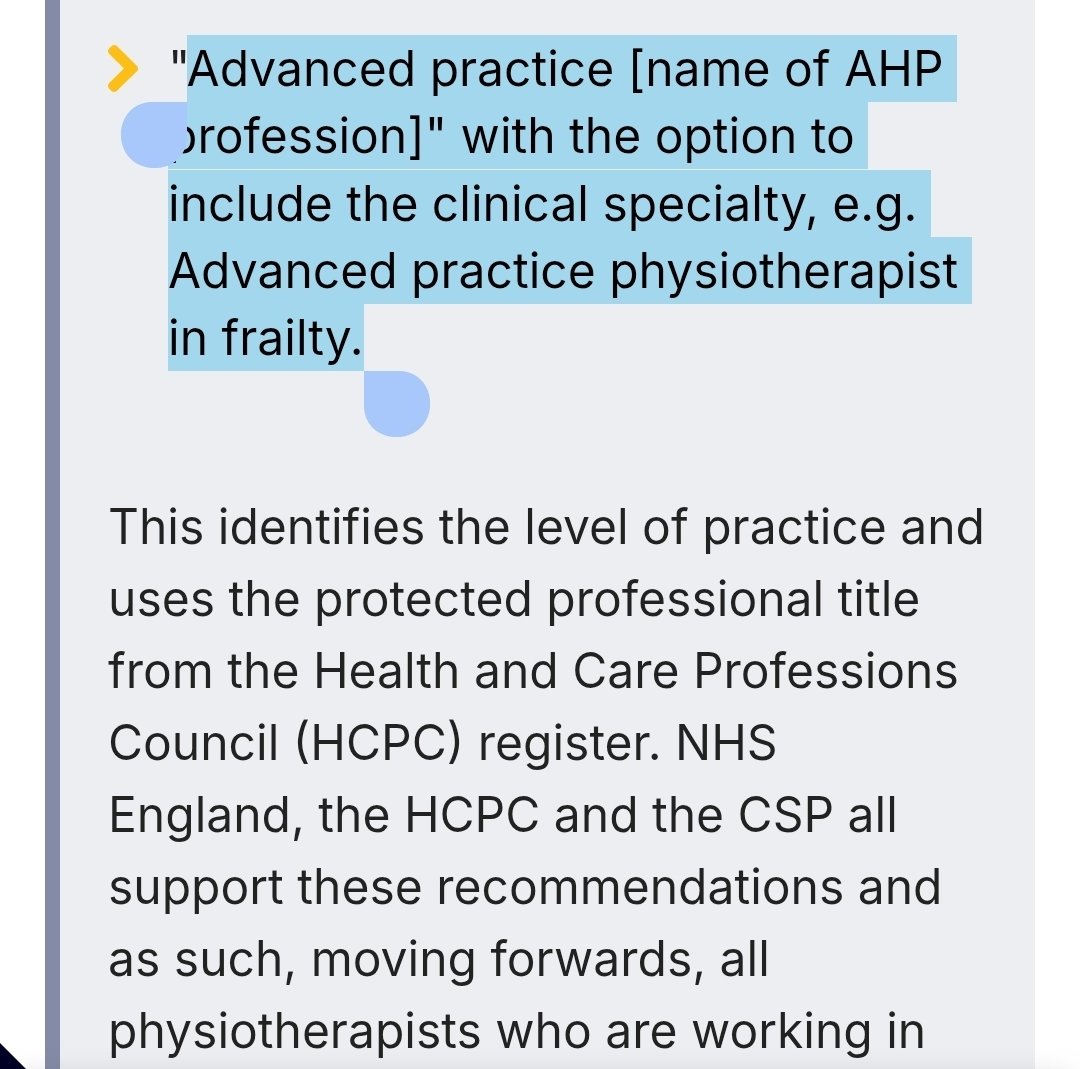
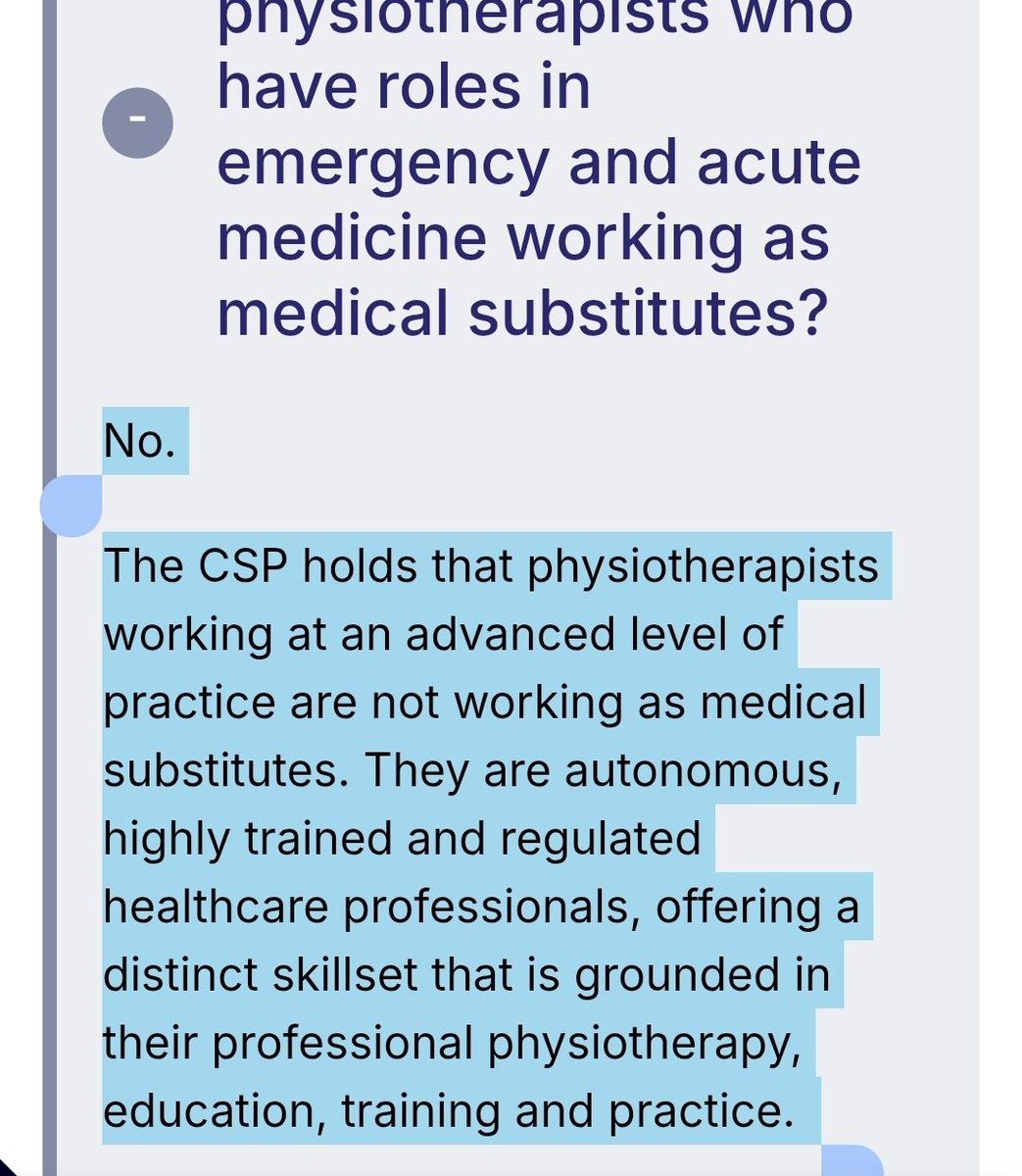
@Burnt2020 I think you're drawing a false equivalence between role participation and replacement. Claim of sophistry is invalidated by statements from the CSP advocating specifically against doctor replacement by physiotherapists. Agree that their statement on medical rota was misguided.
@Burnt2020 It's cherry-picked because you are taking a relatively small-albeit contentious- statement, inferring this as 'clear admission' of medical substitution, and disregarding statements in which the CSP explicitly states the opposite as highlighted in my screenshot examples.
@hlnewey@Cray_tweets1@DrEilidhMaria What is your impression? This is direct from the Bolam judgement of 1957, which serves as the primary legal tests for negligence today (context dependent). https://t.co/I81qqacY7l
@hlnewey@Cray_tweets1@DrEilidhMaria But essentially, an expert disagreeing with someone's practise would not constitute breach of duty per se, if that practise was in accordance with a spectrum of reasonable practice. I am a physio expert witness but the rules apply to all
@hlnewey@Cray_tweets1@DrEilidhMaria Additionally, judges are increasingly tempering analysis with the Bolitho test- i.e. is the practice logically defensible, which enables them to choose preference from one expert witness to the other. Recent judgement from LXLP vs St George's is a nice example of this