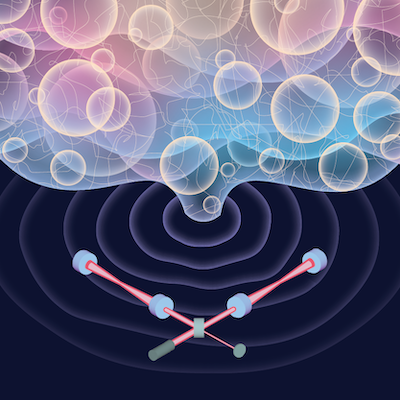
Using the most recent LIGO-Virgo gravitational wave data, a study places new constraints on a number of high-energy particle physics models at energy scales that can’t be reached by current particle accelerators.
Read the study: https://t.co/C3dh5SBiyy
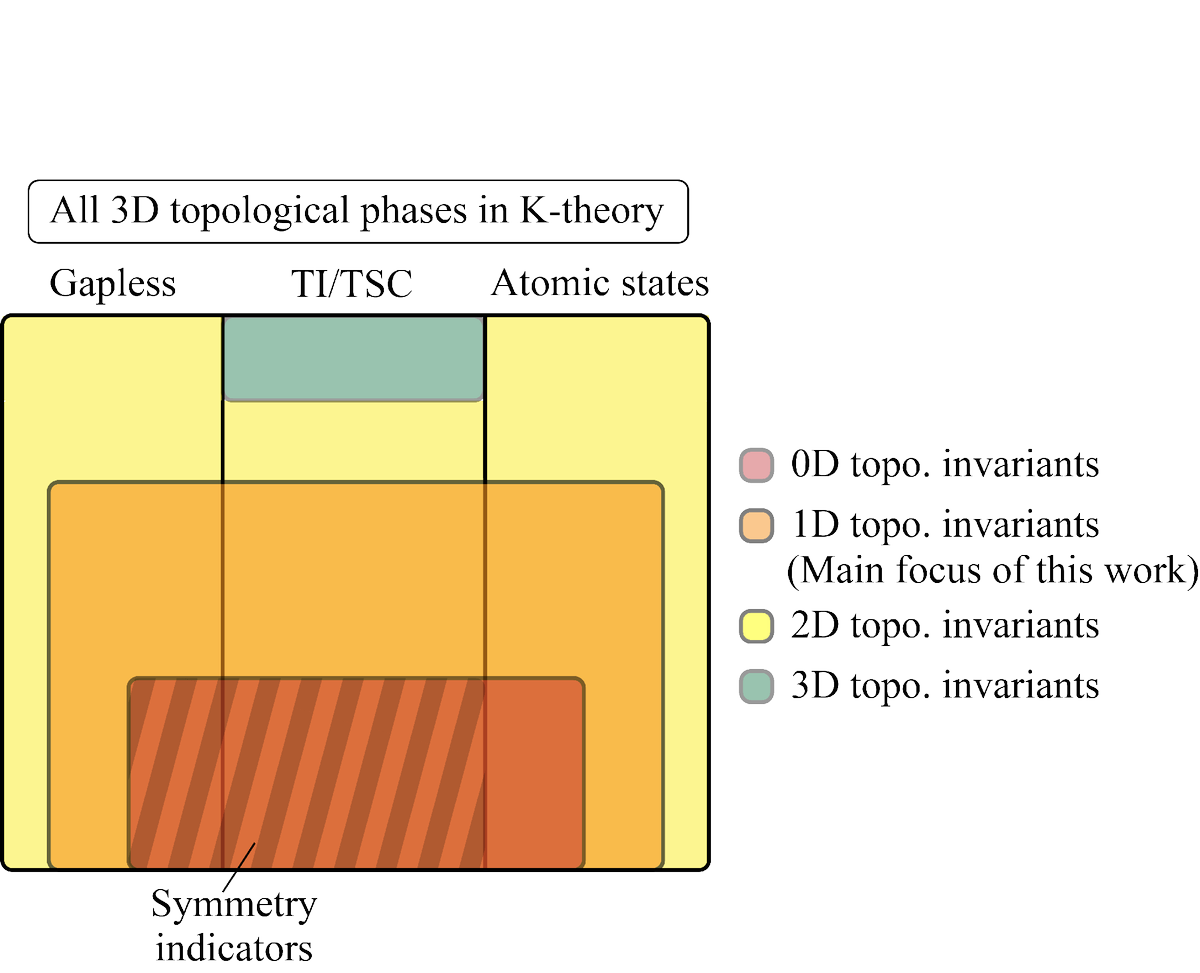
How do you find topological phases that symmetry indicators can't capture? A new paper constructs topological invariants systematically from the Atiyah-Hirzebruch spectral sequence, fully classifying superconductors in 159 of 230 space groups.
More: https://t.co/1e4XC1eLwX
Quantum entanglement can give precision sensing a major edge, finds a new study. Researchers show quantum speedups for learning classical signals, opening new possibilities for electromagnetic sensing and gravitational wave detection.
📄 https://t.co/98PLtp9fvp
Sharp edges and strange physics: Superconductor FeTe0.55Se0.4 shows a conductance plateau that only shows up on clean crystal edges and disappears near the temperature where the material turns spontaneously magnetic.
Read more: https://t.co/OOx87AOLh6
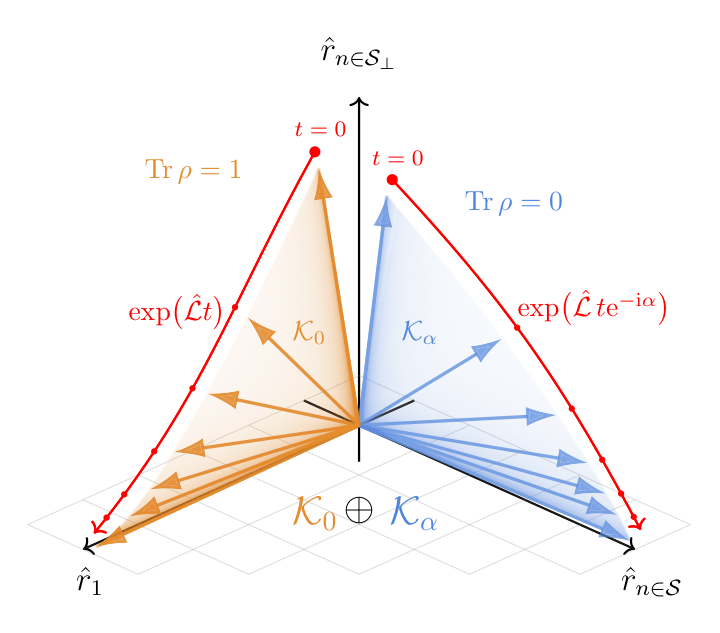
How can researchers overcome current limits to studying complex dynamics in open quantum systems? A study introduces a scalable tensor-network framework that uses complex-time evolution to calculate steady states and low-lying Lindbladian eigenstates: https://t.co/ua1QyJRJbZ
A new framework extends the classical Bogoliubov–Born–Green–Kirkwood–Yvon hierarchy for many-body systems to encompass both weakly-interacting particles and systems with strong, short-range, integrable interactions.
Check it out: https://t.co/LJKOhSbULO
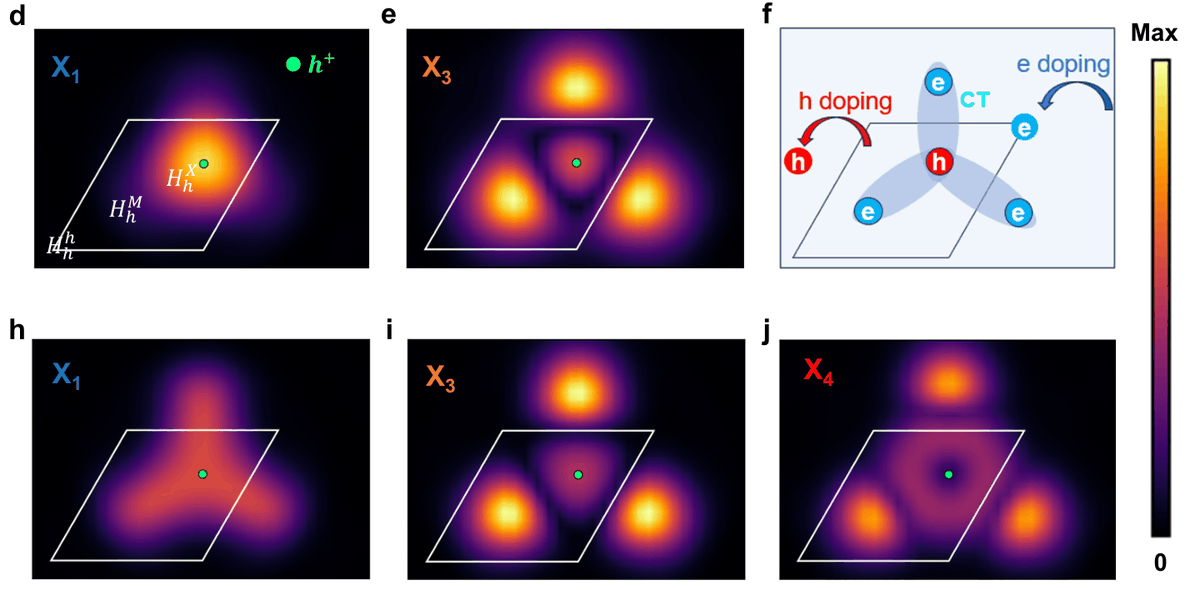
🌀 What happens when you squeeze a moiré superlattice? A study shows hydrostatic pressure pushes WSe₂/WS₂ moiré superlattices into a strong-moiré regime, offering a new strategy for excitonic wavefunction engineering.
Read more: https://t.co/WY2eFjdgbQ
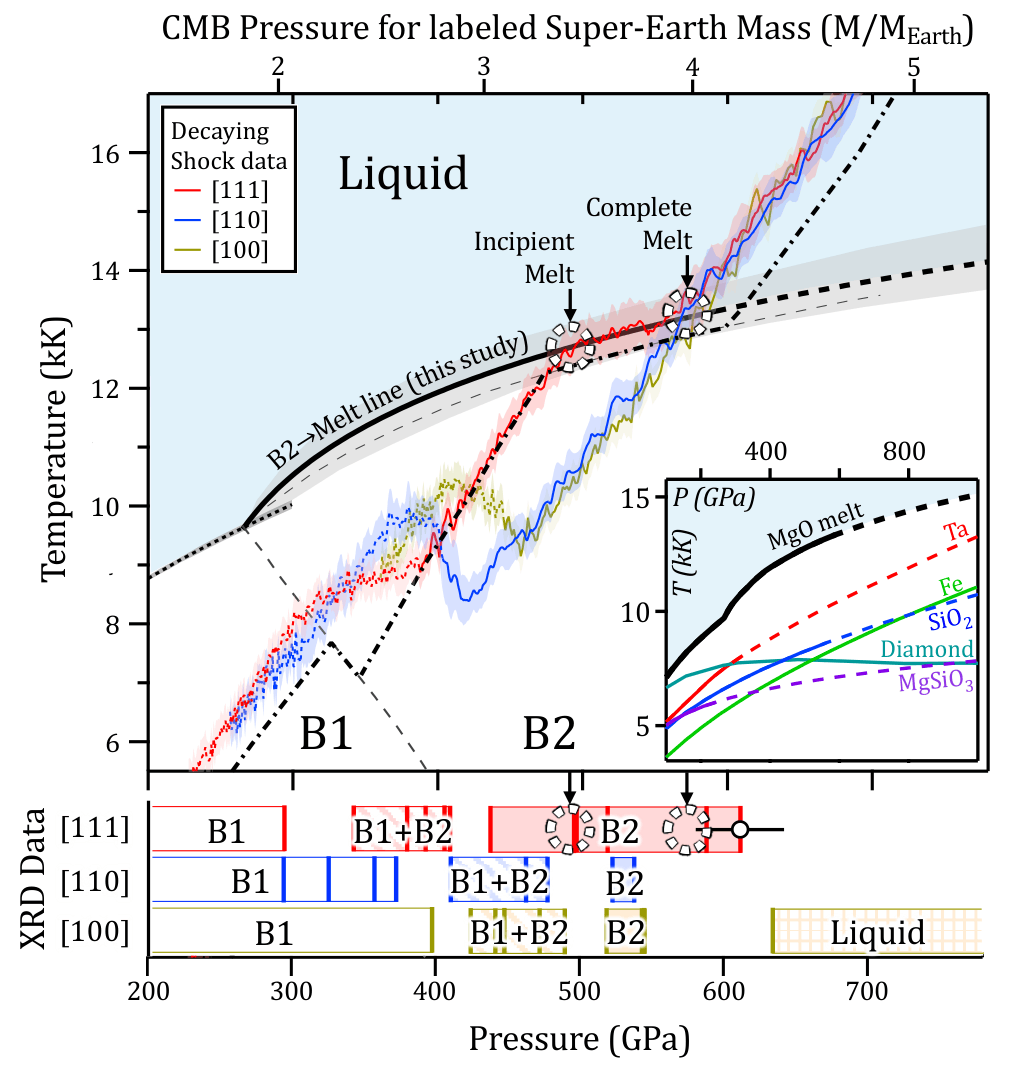
Researchers zapped MgO with a laser hard enough to mimic the pressures and temps deep inside planets. They found that crystal orientation changes how the material transforms and melts, helping refine models of matter under such extreme conditions.
More: https://t.co/DtTcy8ubeC
New work shows nonsymmorphic symmetries, like glides or screws, can host time-reversal-doubled axion insulator phases. It proposes measurable topological spin responses and predicts synthesizable material candidates.
Read more: https://t.co/BKOg5m6Lwn
Non-Abelian quantum signal processing is a new framework that enables noise-resilient control directly at the oscillator level for hybrid quantum processors. The results are compatible with superconducting-circuit and trapped-ion platforms.
Read more: https://t.co/mLJOOxUnbd
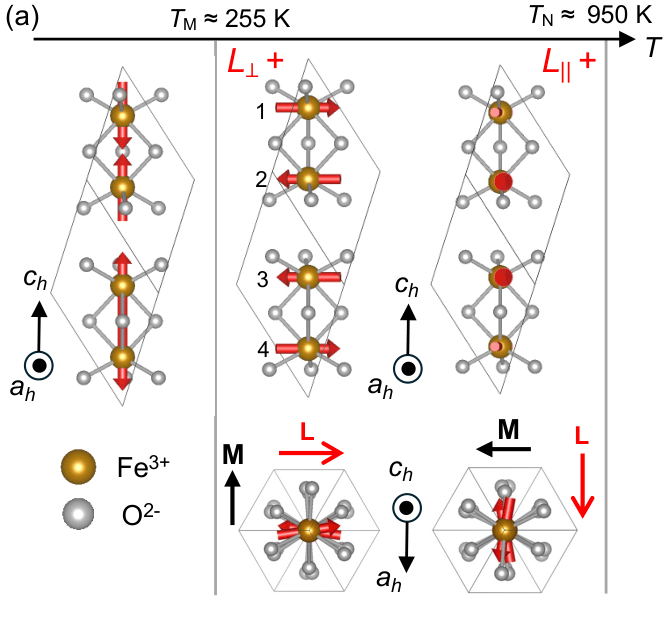
What’s hidden inside hematite? Applying an electric field breaks its inversion symmetry, unmasking multipolar order that’s normally hidden. New research traces this to a magnetic toroidal octupole and quadrupole.
Read the paper: https://t.co/WvvQrXWLCz
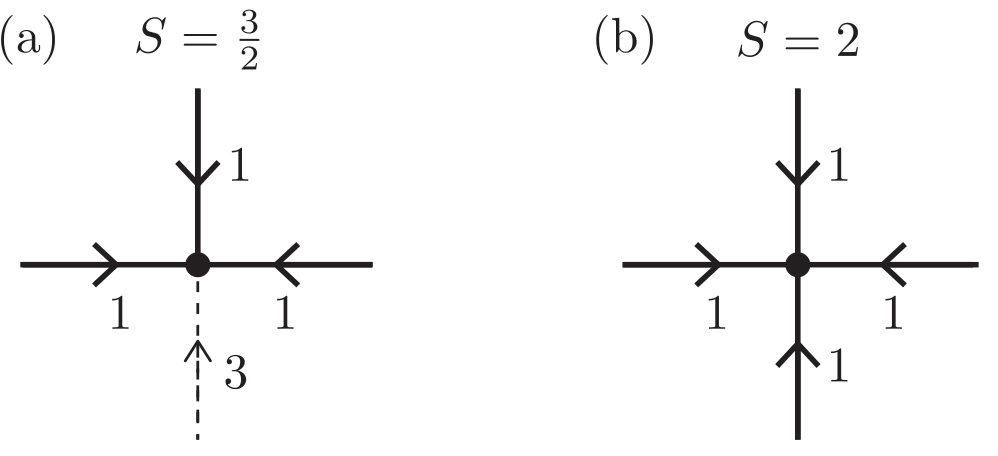
🧲 Why is spin 3/2 special in frustrated magnets? A new study uses local conservation rules on the lattice to explain why it undergoes an abrupt phase transition while other spin values exhibit continuous transitions. Read more: https://t.co/quupnEPums
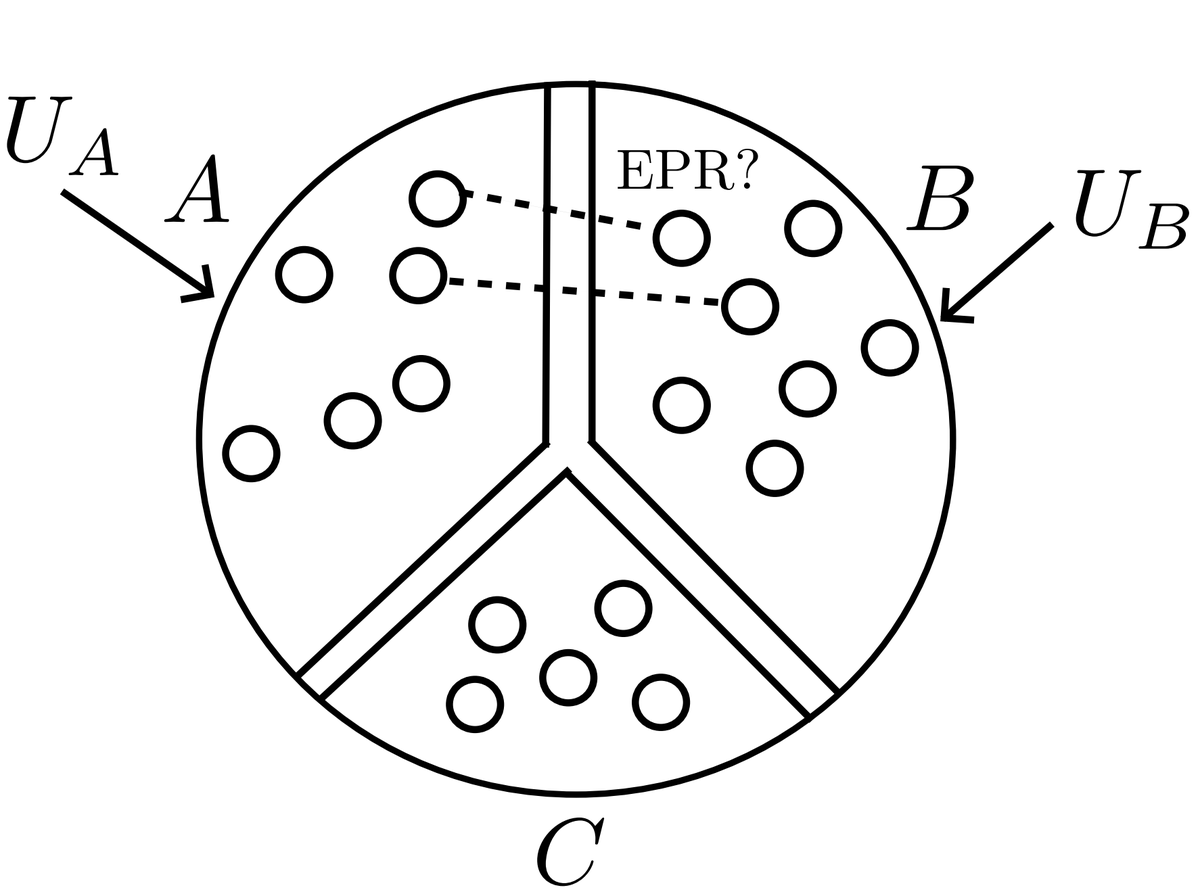
When a Haar random state splits into two subsystems, they are highly entangled. But when divided into three, a new paper shows that bipartite entanglement cannot be distilled unless one subsystem holds at least half the total qubits.
Read the study: https://t.co/qROhQCkcou
A new study defines mixed-state phase equivalence based on locally reversible channel circuits. This new definition could help physicists understand which kinds of order and information storage can persist when there is noise and dissipation.
Read more: https://t.co/GOvqaDfm9D
A new way to study how memory forms in complex networks indicates that memory can emerge in a fluid network without built-in bistability or external controls.
Read the paper: https://t.co/XXQRZ3IOVT
Auxiliary circuit modes trigger multiphoton resonances that break down Kerr-cat qubit coherence under strong driving, an explanation for the sudden reduction of tunneling time and the qubit’s robustness in certain electromagnetic environments.
Read more: https://t.co/7S8fQtLYCh
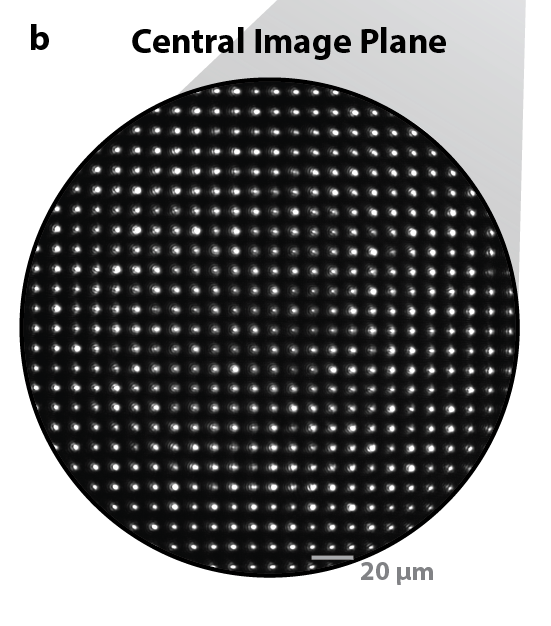
Researchers built a next-generation cavity-array microscope with 600 tiny light-trapping cavities designed to interface with large atom arrays. The advance could enable faster, larger-scale quantum networks.
📄 https://t.co/NXhnfqyYzF
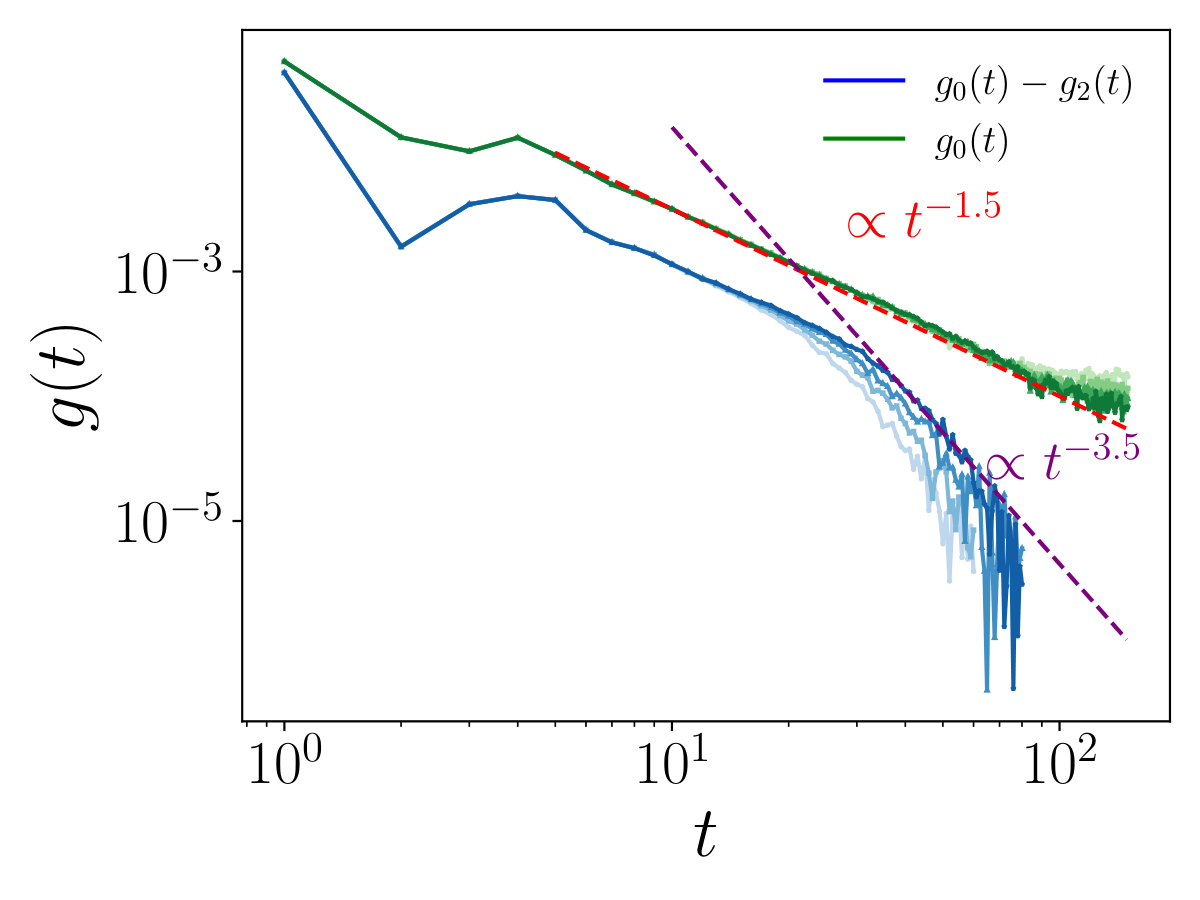
A new effective field theory captures the universal behavior of out-of-time-order correlators in the hydrodynamic regime, providing a controlled and quantitative framework that extends these theories beyond regular transport.
Read the paper: https://t.co/VaBj5x31SD
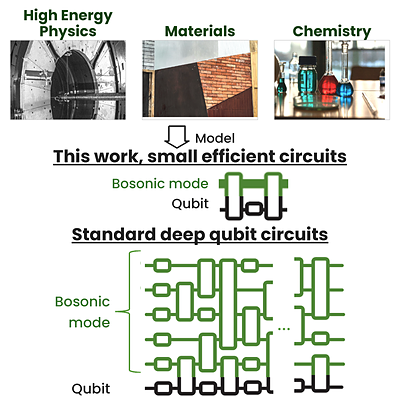
A study proposes a hybrid qubit-boson quantum processor to simulate interacting fermions, bosons, and lattice gauge fields that is efficient enough to simulate strongly-correlated quantum problems without error correction.
Read the study: https://t.co/7egbOvQ464
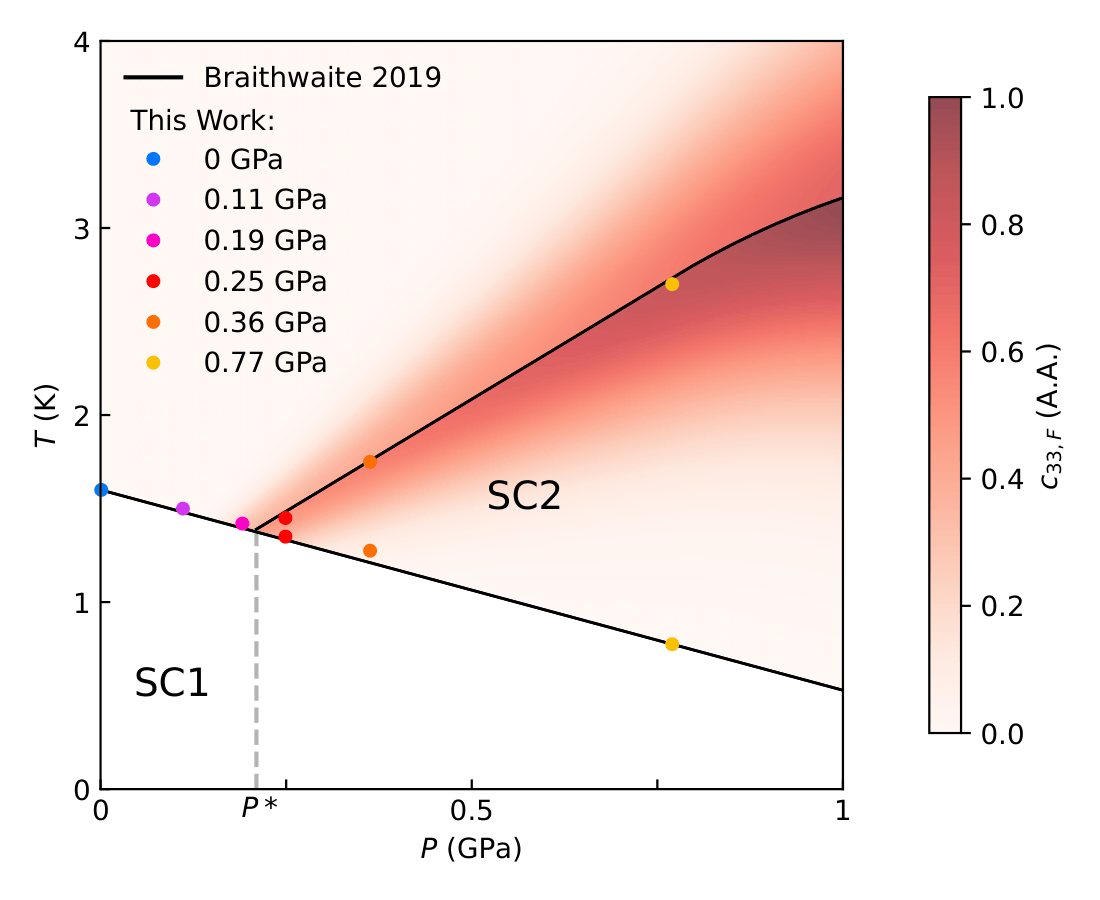
⚡ A record-setting superconductor: A new study shows that under pressure, UTe2 shows a temperature fluctuation region 100x wider than any known 3D superconductor. It could serve as a clean-limit platform for high-inductance devices.
Read more: https://t.co/D5a0iDpsdm