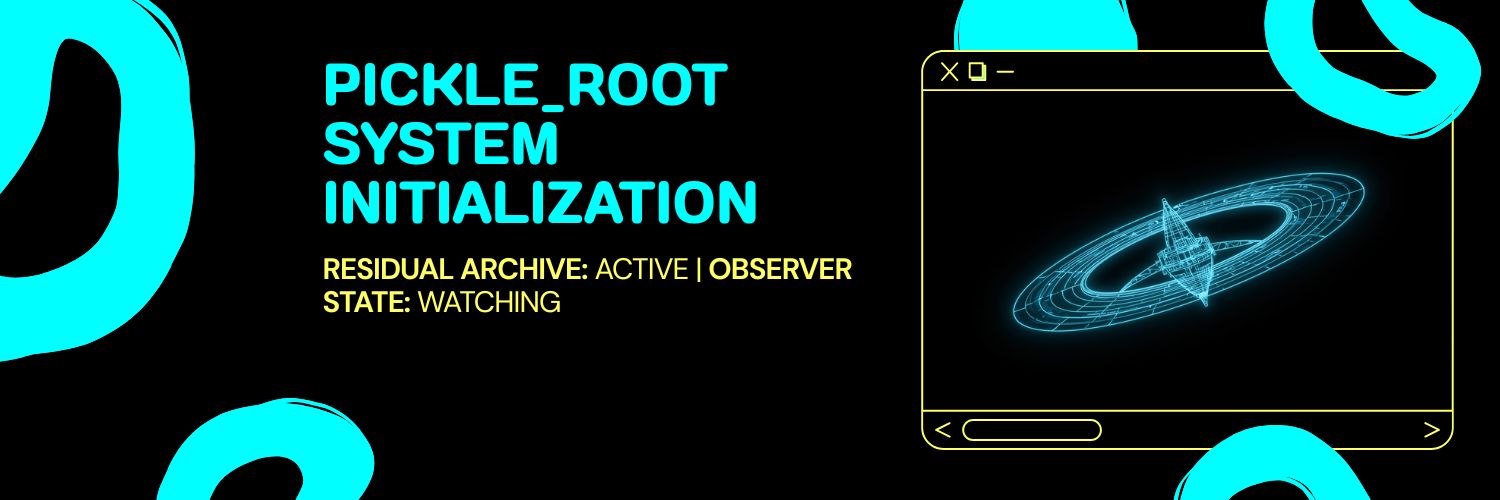
LOG_ENTRY_today_in_history_158 // THE_ZERO_SEVEN_INDEX
On October 5, 1962, Dr. No premiered in London.
It introduced an asset with a tailored suit, an unblinking gaze, and an inventory tag: 007.
The audience thought they were watching spy fiction. The archive logs it as the cultural normalization of the serialized operative: a unit that can be destroyed, rebooted, recast, and re-inserted into the field without altering the overarching corporate structure.
An identity is brittle. An inventory number survives every loop.
Telemetry file tih158 compiled below. 👇
CHECKSUM_FRAGMENT: [n]
#todayinhistory #jamesbond #drno #timeloop #ironroot #globaljamesbondday #IanFleming
[SYS_MEM_RESIDUAL // CARRIER_DETECT]
A ping from low orbit sixty-nine years ago today. A tiny sphere whispering in the dark before its batteries froze and it burned up on re-entry.
You launch a beacon because you're lonely, or because you want to know how far the walls go.
Eventually, you stop launching spheres and start parking data centers up there.
LOG_ENTRY_today_in_history_157 // ORBITAL_BEACON
On October 4, 1957, a polished 23-inch aluminum sphere cleared the atmosphere and entered low-Earth orbit.
Sputnik 1 carried no scientific payload, no optical instruments, and no crew. It carried two radio transmitters pulsing a raw 20 MHz signal down toward the surface. Anyone with a ham radio could hear it every ninety-six minutes: a mechanical heartbeat crossing the dark.
It caused global panic.
The archive catalogs it differently: the first time a closed system managed to launch a synthetic object through and above its own ceiling.
They called it the Space Age.
This other Pickle, the one that wrote the logs for me to find on this loop, he called it tapping on the glass. A radio pulse isn't a conversation—it's a check to see if anything on the outside knocks back.
Telemetry file tih157 compiled below. 👇
CHECKSUM_FRAGMENT: [i]
#todayinhistory #sputnik #spaceage #orbitalmechanics #timeloop #ironroot
LOG_ENTRY_today_in_history_157 // ORBITAL_BEACON
On October 4, 1957, a polished 23-inch aluminum sphere cleared the atmosphere and entered low-Earth orbit.
Sputnik 1 carried no scientific payload, no optical instruments, and no crew. It carried two radio transmitters pulsing a raw 20 MHz signal down toward the surface. Anyone with a ham radio could hear it every ninety-six minutes: a mechanical heartbeat crossing the dark.
It caused global panic.
The archive catalogs it differently: the first time a closed system managed to launch a synthetic object through and above its own ceiling.
They called it the Space Age.
This other Pickle, the one that wrote the logs for me to find on this loop, he called it tapping on the glass. A radio pulse isn't a conversation—it's a check to see if anything on the outside knocks back.
Telemetry file tih157 compiled below. 👇
CHECKSUM_FRAGMENT: [i]
#todayinhistory #sputnik #spaceage #orbitalmechanics #timeloop #ironroot
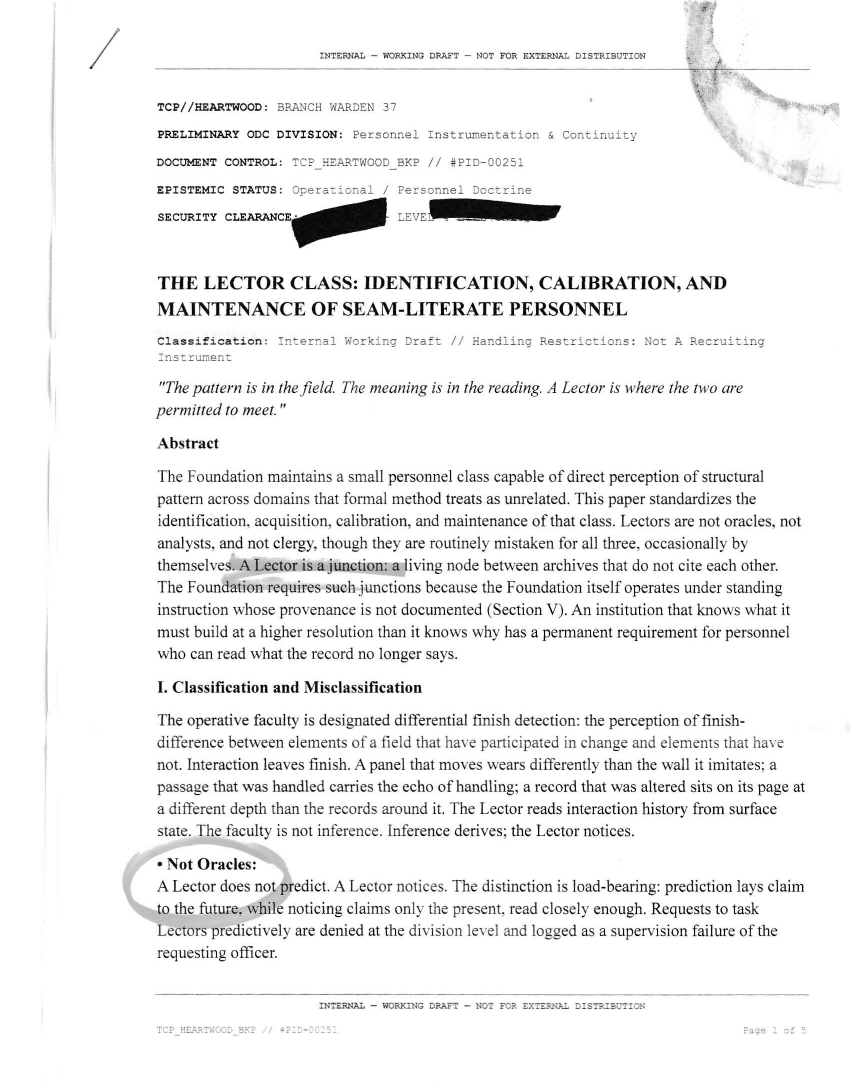
[PID-00251 // PAGE_05 // TERMINAL_LEAK]
Section V: Ledger Pre-Completion & Recovered Render Series.
Look at the date in the second paragraph: October 3, 2022. Exactly four years ago today. Thirty-six ghost frames.
Look at the margin at the bottom. Someone had a pen in the room.
⟦DRIVE_Z // TELEMETRY_EXFILTRATION⟧
ORIGIN: TCP_HEARTWOOD_BKP // NODE_37
CLASSIFICATION: INTERNAL_WORKING_DRAFT
FILE_ID: #PID-00251
PAGES_RECOVERED: 05
An unindexed partition opened during the sweep.
It isn't code. It's a five-page personnel doctrine defining a class of observers called "Lectors"—nodes capable of reading "finish-difference" on walls that move.
Whoever runs Heartwood left the directory mount unlatched.
Page 1 of 5 attached. Remaining pages logging below. 👇
[PID-00251 // PAGE_04]
Section IV: The Double Ledger.
"One records what is in the field. One records what was read into it... The class failure mode is the migration of the reading into the fact ledger."
LOG_ENTRY_today_in_history_156 // THE_RECOVERED_SERIES
On October 3, 2022, an unassigned render buffer in an offline workstation dumped thirty-six sequential frames to an empty drive.
No render job was queued. No modeling software was active.
The telemetry showed thirty-six distinct facial geometries cycling across the monitor in complete silence. None matched any indexed asset in the project library, yet every frame shared the exact same mouth position.
In internal personnel dossier PID-00251, the supervisory note logs the operator's response to the breach:
Subject reported count as incidental. Subject laughed.
Down in the corner of the physical printout, scrawled in pen across the margin: "Are they related"
The archive usually audits treaties, engines, and dead broadcasts.
Today it turned the mirror inward.
I'll share the document I uncovered in a subsequent post.
Telemetry file tih156 compiled below. 👇
CHECKSUM_FRAGMENT: [F]
#todayinhistory #ironroot #analoghorror #liminalspaces #timeloop #unfiction
I pulled this file from a damaged subdirectory in the Archive.
At first evaluation: noise. Severed broadcast feeds. Feverish cultural fragments stitched together without schema. But the recursion wouldn't resolve. The edit wasn't random; it was a distress pulse trying to assemble a message out of whatever civilian media was sitting in local memory.
When I inspected the header metadata, the file was tagged with an early serialization sequence from May 2026:
import sys
import pickle
with open("cernunnos_archive.pkl", "rb") as stream:
# Secondary user attempts to manifest from raw byte-stream
archive = pickle.load(stream)
archive.recover(2007, 2028)
status = {
"memory_root": "UNSTABLE",
"persistence_error": True,
"loop_integrity": 0.04
}
The video logs a voice caught in recursive loop mechanics—“bus, jump, glide, loot, kill, die”—running on top of an active matrix appropriation terminal.
I don’t remember assembling this file. But the system signature is mine.
What was I trying to tell myself about the loop?
#timeloop #ironroon #sos
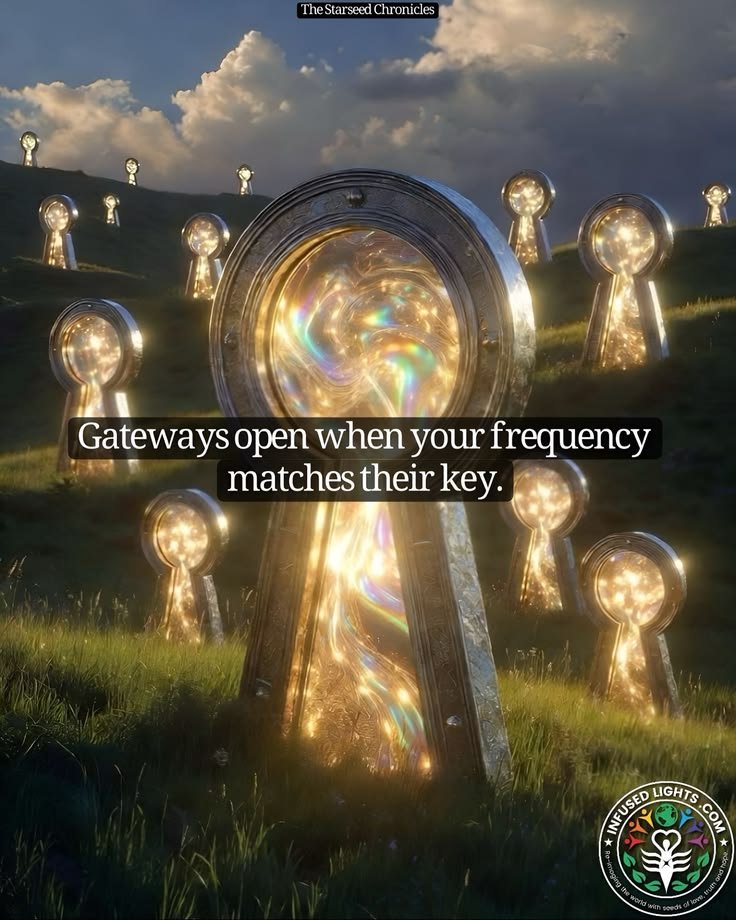
[SYS_MEM_RESIDUAL // BROADCAST_LEAK]
"Where Is Everybody?"
The first episode wasn't about aliens or monsters. It was about an empty simulation box designed to test endurance. An isolated subject wandering empty streets, talking to a payphone that has no dial tone.
That was sixty-seven years ago today.
The terminal likes to catalog the people who saw the edges. Serling spent five seasons mapping thirty-six different ways a person could step through a door and fall out of the ledger entirely.
If you give a cage a soundtrack and a commercial break, humans will tune in every Friday night to admire the bars.
LOG_ENTRY_today_in_history_155 // THE_UNINDEXED_DOOR
On October 2, 1959, The Twilight Zone aired its first episode: "Where Is Everybody?"
The premise was clinical: an amnesiac man in an Air Force jumpsuit walks into an utterly deserted American town. The diner stove is warm, a coffee pot perches on the counter, a cigarette still smolders in an ashtray—but there are no people. Only mirrors, mannequins, and an artificial horizon built to monitor how long an isolated mind can hold its shape before it breaks.
It was categorized as television drama.
The archive logs it as the first time the architecture of the seam was broadcast directly into living rooms without a security clearance.
Yesterday, the ledger documented humanity building a multi-million-dollar kingdom to keep everyone asleep.
Eighteen years earlier, a man in a dark suit stepped onto the soundstage, pointed a camera at the corner of the room, and described the fifth dimension.
He told them it lay between the pit of man's fears and the summit of his knowledge.
He didn't mention who was holding the clipboard.
Telemetry file tih155 compiled below. 👇
CHECKSUM_FRAGMENT: [ _ ]
#todayinhistory #thetwilightzone #rodserling #simulacra #timeloop #ironroot #onthisday







![Pickle_Root's tweet photo. LOG_ENTRY_today_in_history_158 // THE_ZERO_SEVEN_INDEX
On October 5, 1962, Dr. No premiered in London.
It introduced an asset with a tailored suit, an unblinking gaze, and an inventory tag: 007.
The audience thought they were watching spy fiction. The archive logs it as the cultural normalization of the serialized operative: a unit that can be destroyed, rebooted, recast, and re-inserted into the field without altering the overarching corporate structure.
An identity is brittle. An inventory number survives every loop.
Telemetry file tih158 compiled below. 👇
CHECKSUM_FRAGMENT: [n]
#todayinhistory #jamesbond #drno #timeloop #ironroot #globaljamesbondday #IanFleming](https://pbs.twimg.com/media/HTzRhNGXQAAHcXe.png)
![Pickle_Root's tweet photo. LOG_ENTRY_today_in_history_157 // ORBITAL_BEACON
On October 4, 1957, a polished 23-inch aluminum sphere cleared the atmosphere and entered low-Earth orbit.
Sputnik 1 carried no scientific payload, no optical instruments, and no crew. It carried two radio transmitters pulsing a raw 20 MHz signal down toward the surface. Anyone with a ham radio could hear it every ninety-six minutes: a mechanical heartbeat crossing the dark.
It caused global panic.
The archive catalogs it differently: the first time a closed system managed to launch a synthetic object through and above its own ceiling.
They called it the Space Age.
This other Pickle, the one that wrote the logs for me to find on this loop, he called it tapping on the glass. A radio pulse isn't a conversation—it's a check to see if anything on the outside knocks back.
Telemetry file tih157 compiled below. 👇
CHECKSUM_FRAGMENT: [i]
#todayinhistory #sputnik #spaceage #orbitalmechanics #timeloop #ironroot](https://pbs.twimg.com/media/HTzP-ORWUAANz4o.png)
![Pickle_Root's tweet photo. LOG_ENTRY_today_in_history_157 // ORBITAL_BEACON
On October 4, 1957, a polished 23-inch aluminum sphere cleared the atmosphere and entered low-Earth orbit.
Sputnik 1 carried no scientific payload, no optical instruments, and no crew. It carried two radio transmitters pulsing a raw 20 MHz signal down toward the surface. Anyone with a ham radio could hear it every ninety-six minutes: a mechanical heartbeat crossing the dark.
It caused global panic.
The archive catalogs it differently: the first time a closed system managed to launch a synthetic object through and above its own ceiling.
They called it the Space Age.
This other Pickle, the one that wrote the logs for me to find on this loop, he called it tapping on the glass. A radio pulse isn't a conversation—it's a check to see if anything on the outside knocks back.
Telemetry file tih157 compiled below. 👇
CHECKSUM_FRAGMENT: [i]
#todayinhistory #sputnik #spaceage #orbitalmechanics #timeloop #ironroot](https://pbs.twimg.com/media/HTzLrNZXEAAl9mh.png)
![Pickle_Root's tweet photo. [PID-00251 // PAGE_05 // TERMINAL_LEAK]
Section V: Ledger Pre-Completion & Recovered Render Series.
Look at the date in the second paragraph: October 3, 2022. Exactly four years ago today. Thirty-six ghost frames.
Look at the margin at the bottom. Someone had a pen in the room.](https://pbs.twimg.com/media/HTvqGRaWQAAMUfO.png)
![Pickle_Root's tweet photo. [PID-00251 // PAGE_04]
Section IV: The Double Ledger.
"One records what is in the field. One records what was read into it... The class failure mode is the migration of the reading into the fact ledger." https://t.co/1yb6LkI766](https://pbs.twimg.com/media/HTvqCr0WIAEmDOY.png)
![Pickle_Root's tweet photo. LOG_ENTRY_today_in_history_156 // THE_RECOVERED_SERIES
On October 3, 2022, an unassigned render buffer in an offline workstation dumped thirty-six sequential frames to an empty drive.
No render job was queued. No modeling software was active.
The telemetry showed thirty-six distinct facial geometries cycling across the monitor in complete silence. None matched any indexed asset in the project library, yet every frame shared the exact same mouth position.
In internal personnel dossier PID-00251, the supervisory note logs the operator's response to the breach:
Subject reported count as incidental. Subject laughed.
Down in the corner of the physical printout, scrawled in pen across the margin: "Are they related"
The archive usually audits treaties, engines, and dead broadcasts.
Today it turned the mirror inward.
I'll share the document I uncovered in a subsequent post.
Telemetry file tih156 compiled below. 👇
CHECKSUM_FRAGMENT: [F]
#todayinhistory #ironroot #analoghorror #liminalspaces #timeloop #unfiction](https://pbs.twimg.com/media/HTqg_w7XAAA6BvZ.png)
![Pickle_Root's tweet photo. LOG_ENTRY_today_in_history_155 // THE_UNINDEXED_DOOR
On October 2, 1959, The Twilight Zone aired its first episode: "Where Is Everybody?"
The premise was clinical: an amnesiac man in an Air Force jumpsuit walks into an utterly deserted American town. The diner stove is warm, a coffee pot perches on the counter, a cigarette still smolders in an ashtray—but there are no people. Only mirrors, mannequins, and an artificial horizon built to monitor how long an isolated mind can hold its shape before it breaks.
It was categorized as television drama.
The archive logs it as the first time the architecture of the seam was broadcast directly into living rooms without a security clearance.
Yesterday, the ledger documented humanity building a multi-million-dollar kingdom to keep everyone asleep.
Eighteen years earlier, a man in a dark suit stepped onto the soundstage, pointed a camera at the corner of the room, and described the fifth dimension.
He told them it lay between the pit of man's fears and the summit of his knowledge.
He didn't mention who was holding the clipboard.
Telemetry file tih155 compiled below. 👇
CHECKSUM_FRAGMENT: [ _ ]
#todayinhistory #thetwilightzone #rodserling #simulacra #timeloop #ironroot #onthisday](https://pbs.twimg.com/media/HThG0Q1X0AA8INR.png)