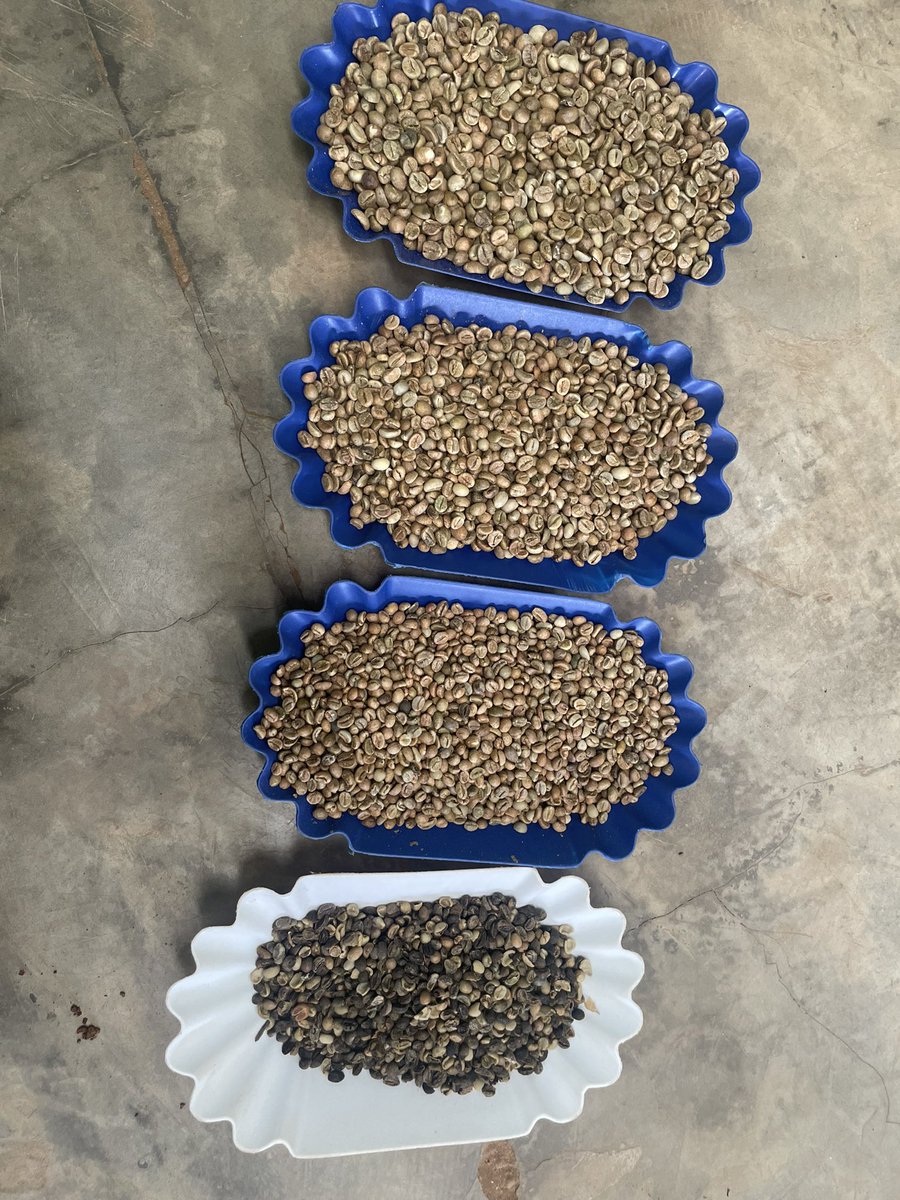
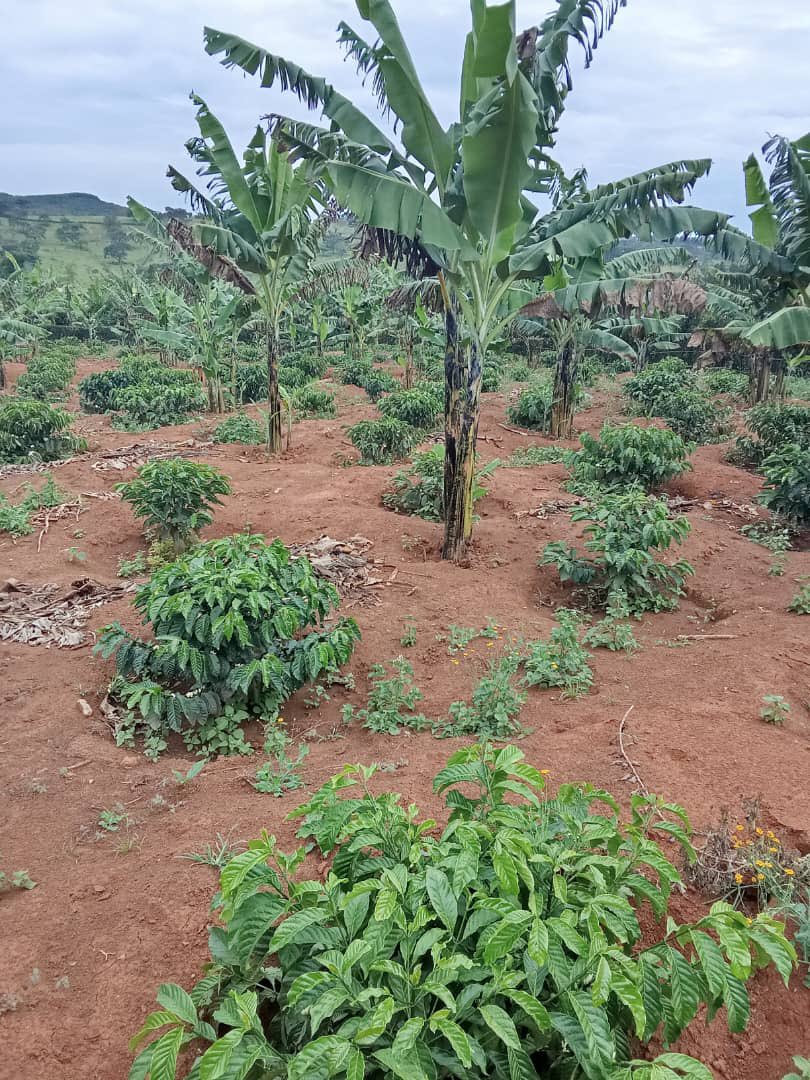
At first sight, you may mistake it for a jackfruit tree. It’s a giant tree, almost 10 meters high. It’s inter-cropped with Robusta coffee.
However, this rare tree doesn’t have jack fruits but coffee cherries. This is what I witnessed in Kigalama village, Kiganda Sub-County in Kassanda district while on duty on March 20, 2023.
According to research, this coffee variety is locally called Kisansa. Globally, it is known as Coffea liberica (Liberica). It’s also well known as Excelsa coffee variety.
This coffee variety is unique and different
Billionaire Mutaasa Kafeero... How he made his money!
Born in 1952 in Ntungamo, Hassan Mutaasa Kafeero did not wait to grow up before chasing success. While his peers played, a young Mutaasa was already riding a gifted bicycle to sell matooke to local teachers. He later ventured to Kampala with chicken and eggs, but disaster struck when his goods suffocated and perished on the bus. Instead of giving up, he pivoted to selling coffee beans, learning early that resilience is the backbone of any empire.
His knack for spotting gaps in the market only grew with time. In high school, he supplied cigarettes and medicines to students and teachers. After moving to Jinja for his advanced studies, he set up a market stall that funded his very first bank account. Mutaasa later earned a business diploma and climbed the ranks at the East African Steel Corporation, securing a top sales position that connected him with major hardware merchants.
Using his corporate savings, Mutaasa launched his own hardware shop and eventually resigned to focus on it full-time. He brilliantly balanced his trade by exporting highly demanded yellow bananas to Kenya and using the profits to import hardware products. This clever strategy shielded him from foreign exchange losses and skyrocketed his wealth, allowing him to diversify into the hospitality industry by launching Hotel Triangle in 1986.
His ultimate masterstroke came in 2003 with the opening of Mutaasa Kafeero Plaza in Kampala. Recognizing a severe lack of trading spaces, he pioneered the arcade model in Uganda. By designing a building that accommodated hundreds of small traders, he transformed the city's commercial landscape and created countless jobs, cementing his legacy as a visionary real estate mogul. 🌆🛠️
Today, Mutaasa credits his massive fortune to waking up at 4:00 AM, relentless creativity, and choosing strategic business locations. He believes that pushing past failure and investing in essentials like food and property will always yield profits. What is your biggest takeaway from Mutaasa Kafeero's incredible journey from a village boy with a bicycle to a billionaire real estate pioneer? Drop your thoughts below! 👇
I’ve been moving a lot around lately… talking to a lot of young people, visiting some of them on their farms stepping into their small processing spaces and I won’t lie the work they are doing is something else. The energy, the thinking, the way they are approaching agriculture it’s not what most people imagine. It’s quiet but it’s powerful. You can feel that something is shifting.
Most people think the youth who are winning are the loudest ones. The ones posting every “soft life” moment. But the truth is the real shift is happening quietly.
Right now, there is a different kind of young person emerging. Not the one chasing trends but the one studying systems. While timelines are full of noise there are young people deep in villages, in trading centers, in small processing spaces learning how food moves how markets behave how value is created. They are not announcing it. They are building it.
They are the ones connecting farmers instead of competing with them. The ones understanding cooperatives, aggregation and supply chains. The ones asking hard questions like: Who controls the market? Who sets the price? Where does the real margin sit? And once they see it… they position themselves there.
Some are entering coffee not just as farmers but as organizers. Others are looking at cocoa snd other products already thinking beyond selling raw beans thinking processing, branding, export. Some are not even owning land but are controlling volumes, building networks and becoming necessary in the chain. Quietly.
And that’s the part many are missing. Agriculture is no longer just about digging. It’s about strategy. It’s about information. It’s about access. The game has changed and those who understand it are not making noise… they are making moves.
So while some are waiting for jobs others are building systems that will eventually employ people.
The question is… which side are you on?
Are you on the side that says we don’t have jobs or on the side that has found gold in farming ?
Anyways let me go back to my coffee farm
For God and my country
When our hearts are steady, we develop great inner strength.
When we have strong inner strength, the outside world will naturally support us and follow us.
I am happy to see that more exchange markets are joining the Pi Network as partners.
However, this is not our destination.
This is only the beginning.
Why?
Because the technology and infrastructure of Pi Network, together with the strong GCV community and the Industry Alliance, provide a real solution to many worldwide challenges.
For any great revolution to succeed, three conditions are necessary:
The right timing
Strong infrastructure
The support of the people
Today, these three conditions are coming together.
We focus on building a strong community — this represents the support of the people.
We focus on the Industry Alliance and ecosystem development — this represents strong infrastructure.
And the current global conflicts and economic challenges represent the timing that pushes the world to seek new solutions.
When these three forces come together, transformation becomes possible.
Therefore, our mission remains clear: Continue building the community.
Continue strengthening the ecosystem.
Continue expanding the Industry Alliance.
The future is not given to us —
we must build it together.🙏🙏🙏
Doris Yin 🪷🪷🪷
March 13th 2026
Our third round of flowering. Having massive flowering doesn't mean you'll have a bountiful harvest. Your nutrition program, irrigation, weed and disease/ pest management will determine the final outcome. Note: Bookings for quality coffee plantlets is ongoing.
#CoffeeIsTheThing
From One Acre to a Future You Can Build
Due to limited access to large amounts of land ,many young people come to me quietly and say, “Secure, I want to farm but my land is too small. I don’t think I can make it work.” I hear them and I understand that doubt.
So today I have chosen to speak to such young people here;
I’ve been around farms long enough to know that starting small can feel intimidating but it’s also where most success stories begin.
I’ve seen farmers start with just one acre of coffee or cocoa. When that acre is managed well using the right seedlings, proper spacing, pruning, mulching and consistent care it can bring in about UGX 6 million per season. Two acres? That can easily reach UGX 12 million per season. These are real numbers from real farms in our communities not guesses.
The truth is most young people give up before they even start because they doubt their ability to handle small plots. That’s where I step in. I’m here to guide and support anyone who wants to take that first step. I can help you plan your farm show you what works and give practical advice so that your small acre starts producing results from day one.
I’ve seen young farmers who once doubted themselves slowly gain confidence, see income, pay school fees and even reinvest in their farms. Small land when managed well can grow into a source of independence and opportunity.
If you’re young and wondering whether you can start my message is simple: start where you are, do it right and know you are not alone. I will walk with you and support your journey until your land begins to work for you.
For God and my country
A 60kg bag of raw coffee(green bean) was sold at USD 38,500, around Ugx 130,900,000 in Dec 2025. This means 1Kg of coffee was worth Ugx 2.2M. This is all before value addition.
A New coffee auction record was set in Brazil breaking purchase for a bag of specialty coffee.
Did you know there’s auctioning in Coffee?
#CoffeeTime
#Uganda
#HappyNewYear
Rain Season Thought: An Untapped Opportunity in Ugandan Coffee
As the rains trigger coffee flowering across Uganda we should start looking at these flowers not just as a stage before cherry development but as a valuable raw material.
Coffee flowers have a natural fragrance similar to jasmine and orange blossom making them suitable for perfumes, cosmetics, scented oils and wellness products.
This is not theory other countries are already doing it:
France and Italy use coffee flower and coffee based notes in niche and luxury perfumes.
Brazil has brands producing coffee flower teas, extracts and cosmetic ingredients.
Japan explores coffee flower infusions and fragrances for wellness and lifestyle markets.
Uganda as one of Africa’s largest coffee producers has the volume, diversity and climate advantage to explore the same path.
With proper research controlled harvesting and partnerships with cosmetic and fragrance companies, coffee flowers could:
Create additional income streams for farmers, Reduce over dependence on green bean exports and Position Uganda in high value specialty markets beyond traditional coffee trade
The opportunity is clear. What’s missing is intentional investment and policy support to test, pilot and scale this idea. Coffee should no longer be viewed as just a beverage crop it’s a multi-industry resource.
This rain season should push us to ask: How many other opportunities are we letting pass because we’re not thinking beyond the bean?
As youths let’s start thinking beyond the traditional ways of doing business because we shall all not farm , trade or export the green bean we need people to think outside the box
For God and my country
Say Goodbye to Diabetes, High Blood Pressure & Stomach Pain with Banana Blossoms 🍌🌸
Yes, you read that right! This natural remedy is powerful and often overlooked.
Here’s how it works 👇
Say goodbye acne and oil skin!
Get ginger, peel and cut into small pieces, then get boiled water. Put in a container, Leave it overnight or 24 hours.
Use the water to wash it on your face every morning for one week. Do the same process. Ginger is very strong antifungal antibiotic.
Hope this will help!
PI NETWORK NEWS — ARTICLE 16
“Why PiDEX Is Still Locked: The Real Strategy Behind the Delay.”
PiDEX is visible, designed, integrated inside the Wallet — but intentionally inactive.
This is not a technical issue.
This is Pi Network’s strategic shield to protect the future economy.
Why PiDEX cannot open yet
•Early DEX = extreme volatility
•Merchants need stable pricing
•Liquidity is not mature
•Pioneers need DeFi education
•Global regulations must align
•GCV must dominate first
What the delay really means
Pi is not following the typical crypto path of hype → pump → crash.
Instead, Pi’s model is:
Stability first → Exchange later → Global economy forever
The 3-phase rollout
1.Simulation Phase (now) – Test-Pi, routing, token testing
2.Stabilization Phase – GCV growth, merchant readiness
3.Activation Phase – Real Pi liquidity + global PiDEX launch
Final Conclusion
The delay isn’t a delay — it’s protection.
Pi is preparing a safe, stable, merchant-ready global economy where millions can participate without risk.
Here is a breakdown of NPK analysis for each type of animal manure.
As a vegetable farmer, you should know these:
1. Chicken Manure:
🔸Nitrogen (N): 1.1% - 1.4%
🔸 Phosphorus (P): 0.8% - 1.1%
🔸Potassium (K): 0.5% - 0.8%
2. Goat Manure:
🔸Nitrogen (N): 0.7% - 1.1%
🔸Phosphorus (P): 0.3% - 0.5%
🔸Potassium (K): 0.5% - 0.8%
3. Pig Manure:
🔸Nitrogen (N): 0.5% - 0.8%
🔸Phosphorus (P): 0.4% - 0.7%
🔸Potassium (K): 0.3% - 0.5%
4. Rabbit Manure:
🔸Nitrogen (N): 2.4% - 3.0%
🔸Phosphorus (P): 1.4% - 2.4%
🔸 Potassium (K): 0.6% - 1.5%
5. Sheep Manure:
🔸Nitrogen (N): 0.7% - 1.2%
🔸Phosphorus (P): 0.3% - 0.5%
🔸Potassium (K): 0.5% - 0.9%
These values can vary based on factors such as diet, age of the animal, and bedding material.
Recommendations:
Chicken and rabbit manure have higher nitrogen content, this makes them great for boosting leafy growth in plants.
Goat and sheep manure have a balanced NPK ratio, suitable for overall plant health and growth.
Pig manure is milder and can be used as a general fertilizer, but may need composting to reduce odor.
When using any manure, it is very important to compost it properly to avoid burning your plants with excess nutrients.