Sanofi $SNY avoided a potential EU antitrust fine after regulators accepted commitments to stop promotional practices that allegedly disparaged CSL Seqirus’ rival flu vaccine, Fluad, in France and Germany.
The European Commission had investigated whether Sanofi used misleading comparisons to favour its own Efluelda vaccine. Under commitments lasting until 2030, Sanofi will stop making certain negative claims about Fluad and publish statements clarifying that national vaccination recommendations treat the two vaccines as equivalent in protecting older adults.
The case illustrates how pharmaceutical marketing can become a competition issue when companies seek to influence prescribing decisions by challenging rival products or public health guidance. Sanofi’s commitments address the immediate regulatory concerns, but the investigation also puts greater attention on how pharmaceutical companies oversee promotional claims and ensure commercial interests do not undermine clinical decision-making or public trust.
The FTC and seven US states have accused former pharmaceutical executive Martin Shkreli of violating a lifetime industry ban imposed in 2022 following an antitrust ruling.
Regulators allege #Shkreli breached the order by trading pharmaceutical stocks and publicly discussing companies in the sector. They have asked a federal judge to hold him in contempt and impose a financial penalty equal to his profits from pharmaceutical stock trading since February 2022.
Shkreli became notorious after his company raised the price of Daraprim from $17.50 to $750 per tablet in 2015. The latest allegations put renewed attention on the enforcement of antitrust penalties and whether lifetime industry bans can effectively prevent individuals found responsible for anticompetitive conduct from continuing to influence the sector.
In 2009, Eli Lilly paid $1.415 billion, including a then-record $515 million criminal fine, over promoting Zyprexa for unapproved uses such as treating dementia in elderly people.
https://t.co/5KhNry2sMj
Biogen was already carrying a $900 million kickback settlement when Aduhelm was approved over the FDA's own advisers' objections.
https://t.co/MxtG1sY9Rn
Some generic drug prices rose by more than 1,000%. Federal and state cases allege manufacturers coordinated increases on 100+ common medicines, with Teva as the lead defendant.
https://t.co/NvrsGJOpzk
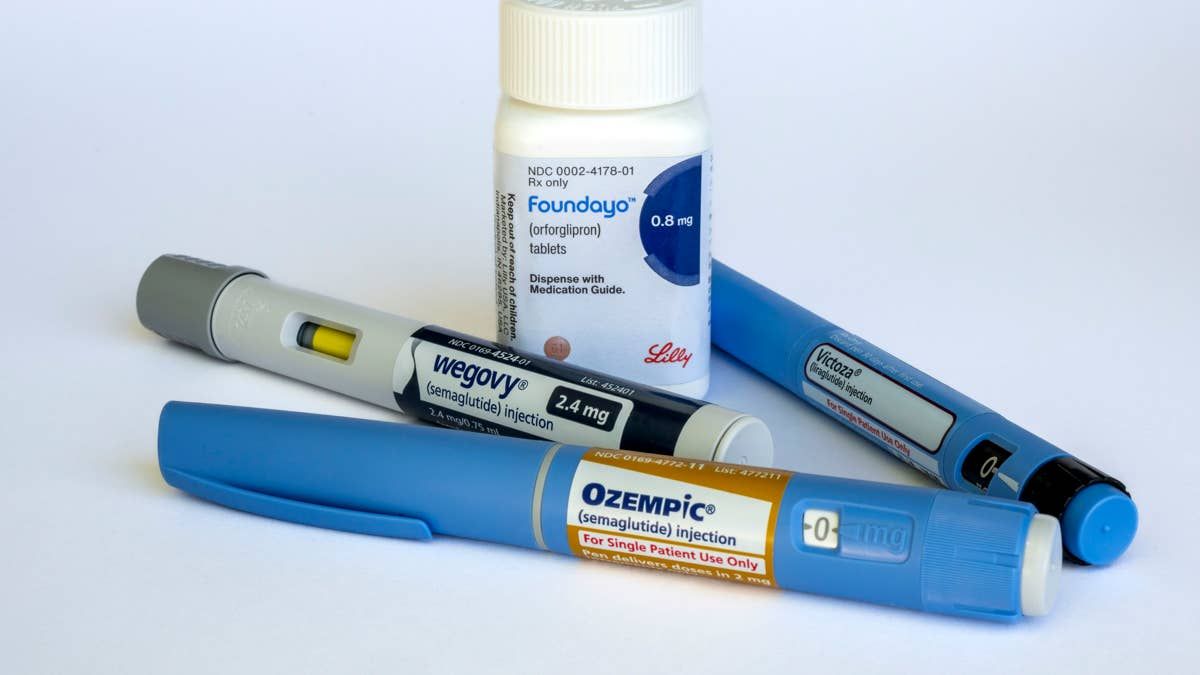
Everyone's excited about Foundayo's 21% week. Look closer: ~80% of patients are still on starter doses, most are paying cash, and Lilly cut starter pricing to $149 in September.
That's a promo funnel. Call it a franchise once people stay on maintenance doses.
Pharma maths: $100m upfront + $1.17bn in “if everything works” = a $1.27bn headline.
Today’s @Roche–Alector deal is a reminder: the most important words in biotech are “up to”.
Should deal headlines lead with the guaranteed money?
Humalog cost $21 in 1999 and $274 in 2017. Lilly cut the list price by 70% in March 2023, after years of increases and mounting legal and political pressure.
https://t.co/lrnjI5Eh1S
A House investigation concluded AbbVie raised Humira's price 27 times and engaged in shadow pricing with its closest competitor.
https://t.co/OtouXCDZaH
Chinese biotech played a larger role in global drug development.
China-originated licensing reached $115B in 2025, with companies including $BMY and $AZN signing major deals.
The trend expanded China’s role in research, clinical development and pharma supply chains.
The FDA continued to scrutinize prescription-drug promotion.
Travere $TVTX, Alnylam $ALNY and Eli Lilly $LLY faced agency objections over promotional claims or risk presentation, reflecting closer attention to whether marketing was supported by evidence.
Novartis $NVS reported that pelacarsen lowered Lp(a) substantially but did not reduce the targeted cardiovascular events.
The result showed why biomarker changes did not always translate into clinical outcomes, an important distinction in cardiovascular drug development.
As major products from $MRK, $BMY, $PFE, $NVO and $ABBV approached patent pressure, debate over pharmaceutical exclusivity intensified.
Patent thickets, secondary patents and product changes became increasingly central to discussions about innovation and competition.
Pharma investment in mental health rose again.
AbbVie $ABBV agreed to pay up to $1.2B for Gilgamesh’s bretisilocin program, while Eli Lilly $LLY struck a deal worth up to $3.8B for AtaiBeckley.
The deals reflected renewed interest in psychedelic-inspired treatments.
One claim in the peptide debate was that drugs such as BPC-157 received limited pharma attention because natural peptides could not be patented.
The picture was more nuanced: $NVO and $LLY built medicines from peptide biology, while evidence and commercial protection also mattered.
August brought several notable drug-industry lawsuits.
Eli Lilly $LLY sued companies over alleged sales of retatrutide, Florida brought a case involving Express Scripts and Prime Therapeutics, and $ABBV and $NVS challenged Illinois over its 340B law.
The FDA challenged an efficacy claim used by Alnylam $ALNY for Amvuttra, saying it could create a misleading impression because later follow-up data lacked a concurrent placebo group.
The dispute highlighted the importance of context when communicating trial results.
Pipeline Briefing covers the business of medicine in three parts.
Intelligence tracks deals, approvals and enforcement actions as they land.
Investigations follows the money and relationships behind them.
The Drug Pipeline tracks which assets are moving and who is buying.
AstraZeneca $AZN received FDA approval for Etcamah after an advisory committee previously raised concerns about the evidence.
Separately, the FDA challenged promotional claims by $ALNY and stepped up oversight of compounded GLP-1 products.