Salut twitter, on recrute un ou une chargé(e) de communication chez Babbar. Plutôt junior avec une première xp quand même (une alternance ça compte). Familiarité avec le SEO, envie de communiquer sur du SaaS, il faut parler et écrire l'anglais, aimer venir aux confs.
Une annonce avec profil détaillé à venir.
BREAKING: scientists say the most recent research on rapid sea level rise is truly terrifying as the global climate system enters a catastrophic phase 🧵
So, Google Chrome gives all *.google.com sites full access to system / tab CPU usage, GPU usage, and memory usage. It also gives access to detailed processor information, and provides a logging backchannel.
This API is not exposed to other sites - only to *.google.com.
Hé ! Mais ça change un peu sur @yourtextguru, non ?
Tout à fait petit padawan, laisse moi t'expliquer ce qu'il y a de neuf :
1. La refonte des menus :
Histoire de regrouper ce qui peut se regrouper de façon un peu plus naturelle.
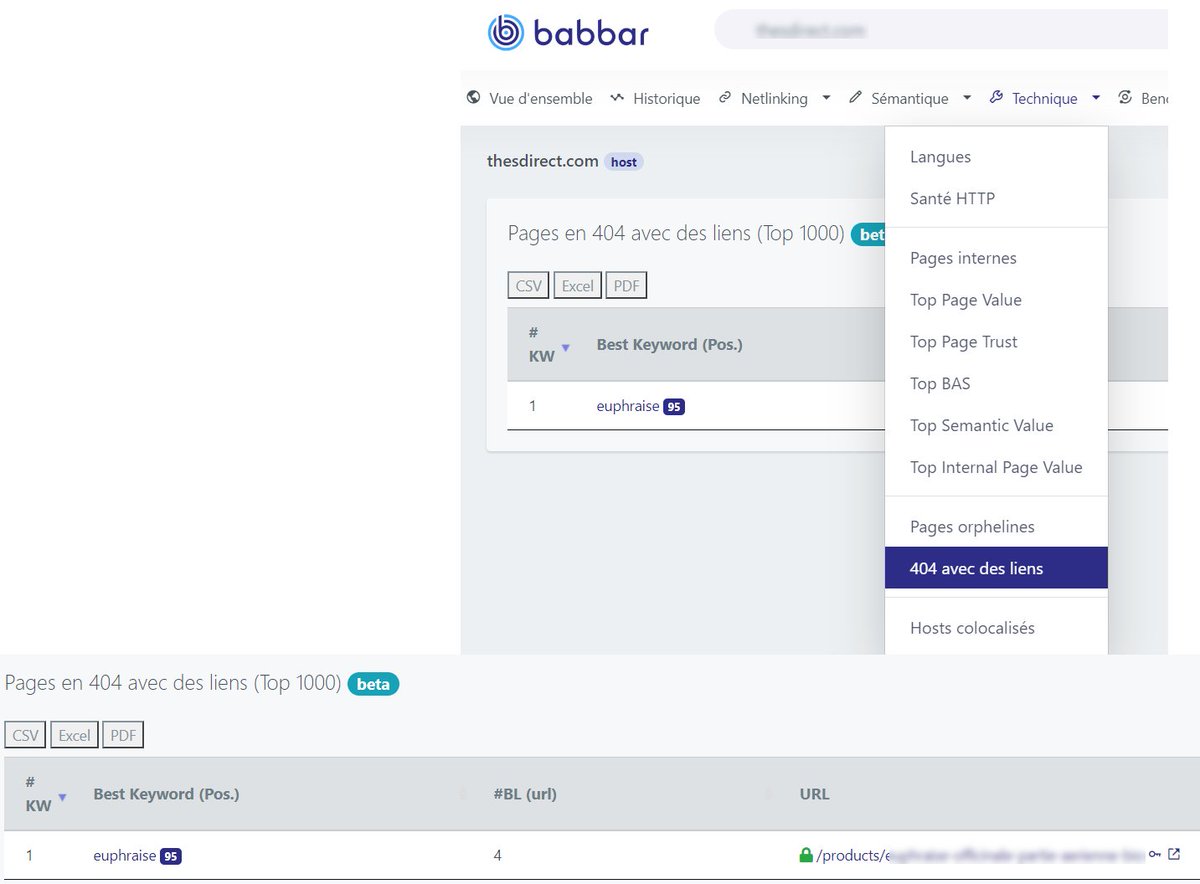
💥 BOOM : @BabbarTech liste enfin les backlinks cassés avec une donnée très intéressante en plus, le meilleur mot clé positionné et sa position !
MERCI 😍
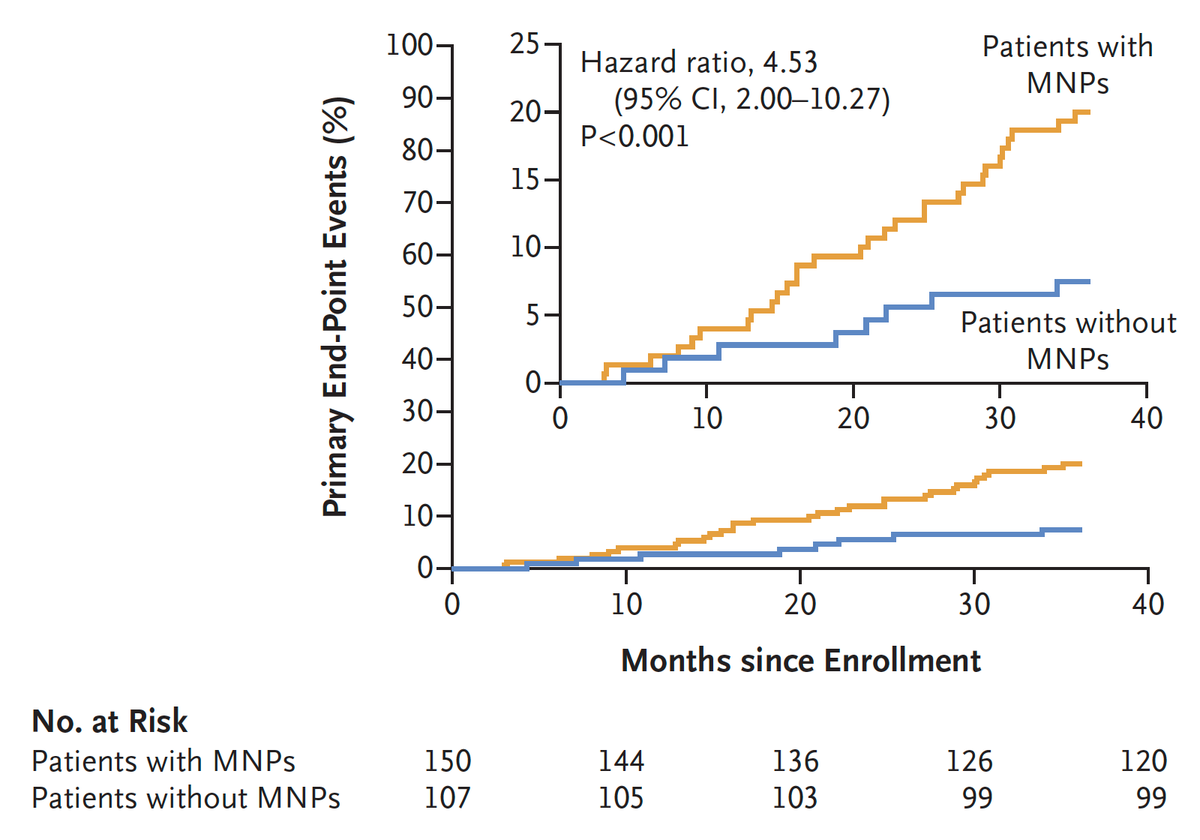
Plastics are everywhere, including your arteries.
Patients with micro/nano-plastics in their atherosclerotic plaque had 4.5x more negative outcomes (stroke etc)
One more example that our environment determines our health.
For the first time, we show that the Llama 7B LLM can be trained on a single consumer-grade GPU (RTX 4090) with only 24GB memory. This represents more than 82.5% reduction in memory for storing optimizer states during training.
Training LLMs from scratch currently requires huge computational resources with large memory GPUs. While there has been significant progress in reducing memory requirements during fine-tuning (e.g., LORA), they do not apply for pre-training LLMs. We design methods that overcome this obstacle and provide significant memory reduction throughout training LLMs.
Training LLMs often requires the use of preconditioned optimization algorithms such as Adam to achieve rapid convergence. These algorithms accumulate extensive gradient statistics, proportional to the model's parameter size, making the storage of these optimizer states the primary memory constraint during training. Instead of focusing just on engineering and system efforts to reduce memory consumption, we went back to fundamentals.
We looked at the slow-changing low-rank structure of the gradient matrix during training. We introduce a novel approach that leverages the low-rank nature of gradients via Gradient Low-Rank Projection (GaLore). So instead of expressing the weight matrix as low rank, which leads to a big performance degradation during pretraining, we instead express the gradient weight matrix as low rank without performance degradation, while significantly reducing memory requirements.
@jiawzhao@BeidiChen@tydsh
Chez Babbar on recrute un postdoc en collaboration avec le GREYC de l'UNICAEN.
C'est dans le cadre des programmes d'investissements d'avenir de France 2030.
Le lien vers le post Linkedin plus complet qu'un tweet : https://t.co/1t3wwVo0mp