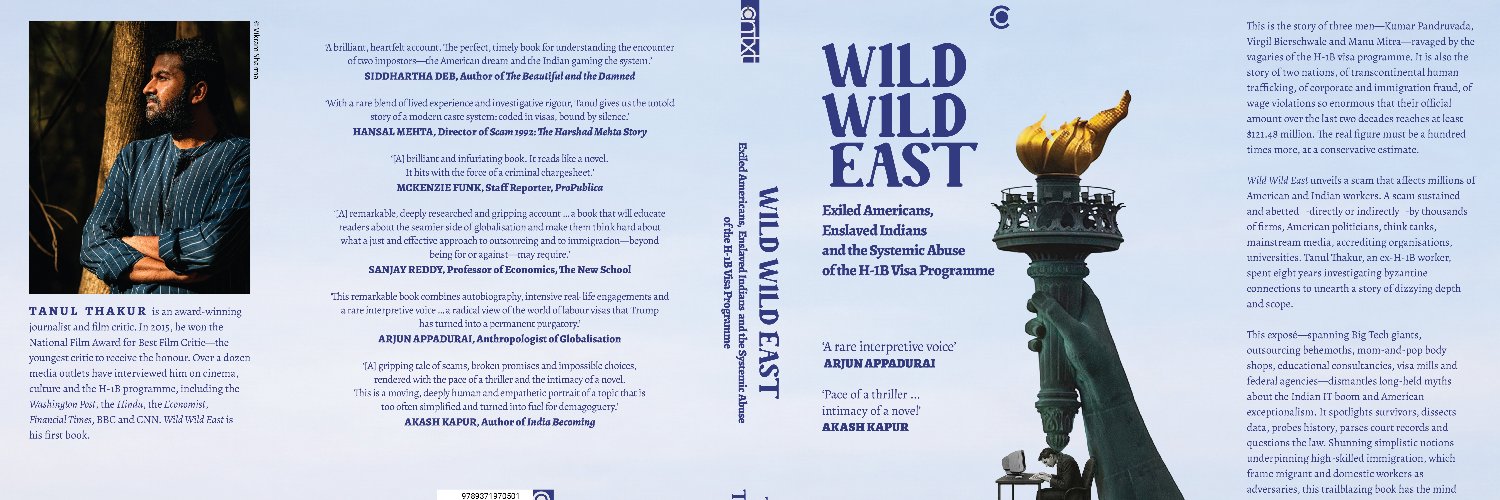
It’s here, it’s here, it’s here! My dream, my obsession, my madness. My first book :) Wild Wild East, a work of narrative nonfiction, exposes how the systemic abuse of the H-1B visa programme ‘enslaves’ Indian IT workers and exiles American techies. It unfolds through the stories of two H-1B workers and an American professional, covering their lives from the late ’90s to 2025.
Based on eight years of reporting and research, it unearths a story too bad to be true, where the villains are many, the heroes are few. Most corporate crimes hinge on a few perpetrators (an individual, a group, a company), but the H-1B scam makes an entire society—nay, societies—complicit. If your perceptions of high-skilled immigration are shaped by the American and Indian mainstream media, then Wild Wild East will stir you awake: about our ignorance, apathy, indoctrination. Because, besides unveiling mind-bending scams, it also spotlights how they’ve been suppressed by fabled institutions and individuals for … decades.
I hope you’ll give my book—and me—a chance. Because the right time to squash this scam, which has ravaged millions of lives, was yesterday. You can pre-order it on Amazon here: https://t.co/W6DDThyWzy
@VBierschwale Been meaning to email you about stuff like this for quite some time. Honestly, it's getting tiring to keep explaining what they keep getting wrong about H-1B!
@VBierschwale Mostly two different people. Also, "Narayana" is usually the first name, while "Narayanan" the surname. But as we know, crazier things have happened -- and keep happening -- in the H-1B world.
Email if you want me to dig something specific?
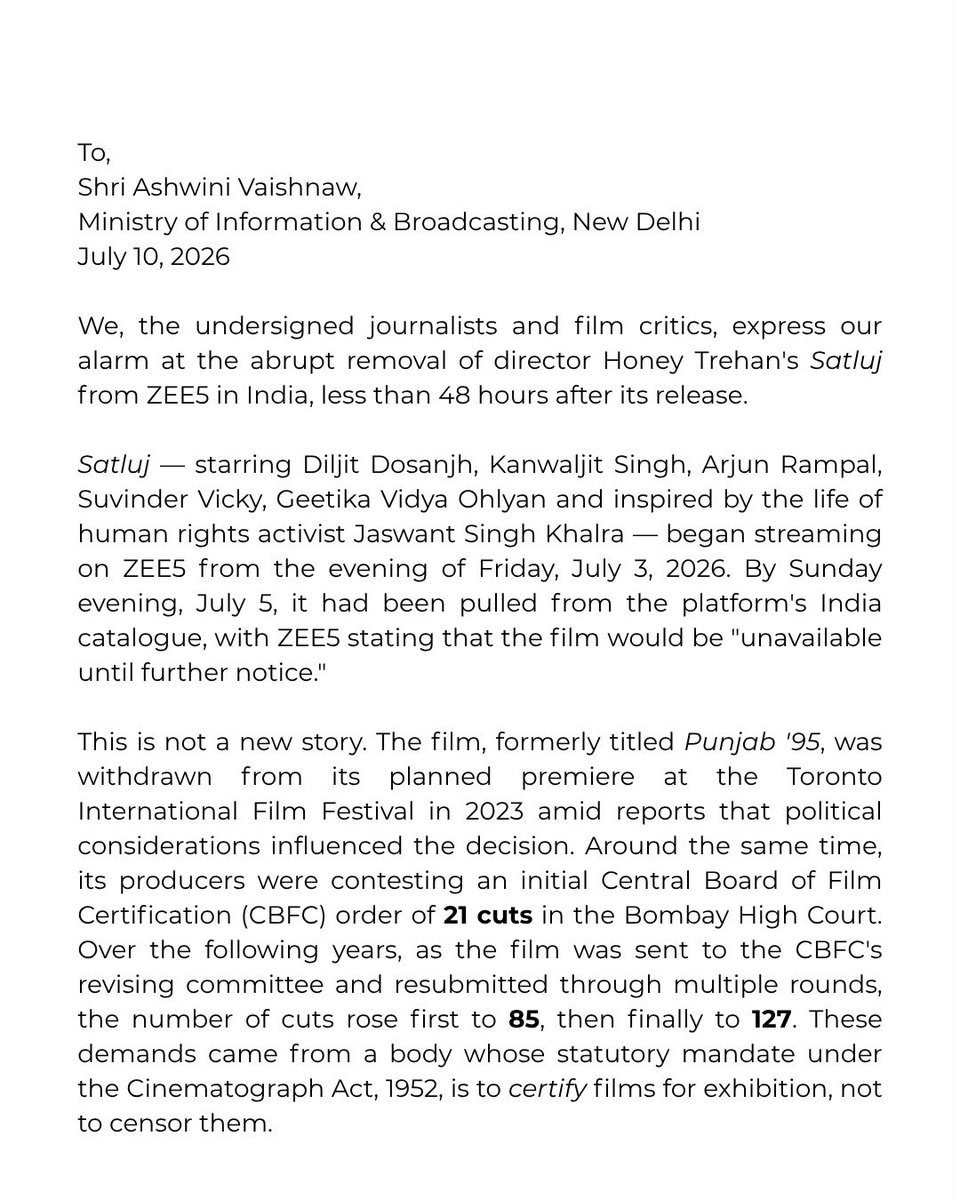
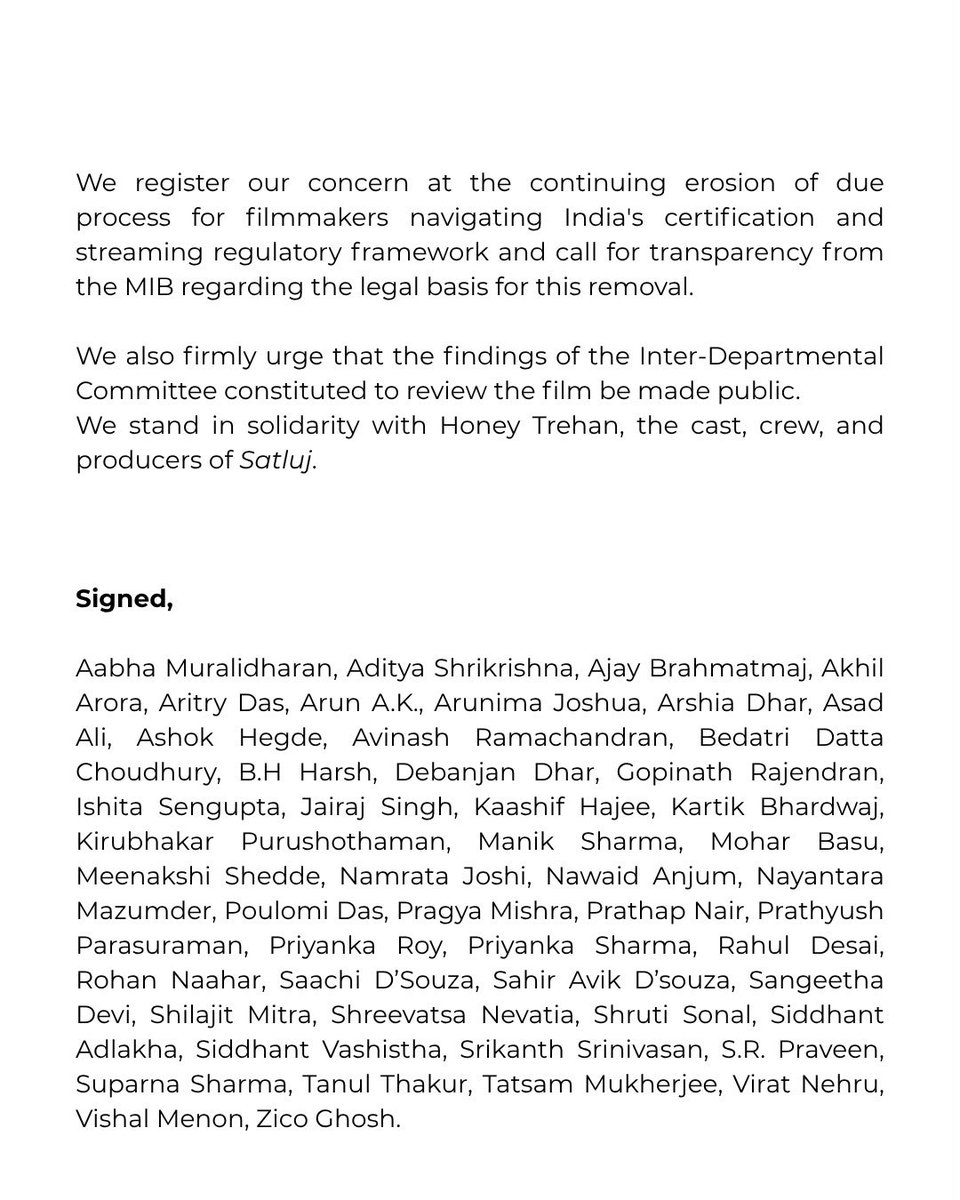
STATEMENT from 50 journalists and film critics condemning the censorship of SATLUJ and its removal from ZEE5 less than 48 hours after release.
We call for transparency, due process, and stand in solidarity with the makers.
@AshwiniVaishnaw@MIB_India
The bookstore displays of @Plebeian42's investigative Wild Wild East are so spot on as #USA and #visa woes are all over the news for the #fifaworldcup.
Get your copy from your favourite bookstore!
A Hindi film that did an excellent job of blending (brutalist) architecture with its own world was Atul Sabharwal's Berlin. It made the movie more intriguing, enigmatic, and cold. Frames so frigid (at times forbidding) that you wanted to touch them with a thermometer. Should make a video essay on it someday.
A theory about why so many people in Delhi like this building: They actually don't like this building (brutalist architecture seldom works -- cold, opaque, insipid -- embodying the worst Soviet ethos). What they do like about it but can't/don't articulate is that, unlike 99% of Indian buildings, which are concrete hodgepodges, this one at least has some style and thought. It has what Indian cities and lives lack: motivation.
A theory about why so many people in Delhi like this building: They actually don't like this building (brutalist architecture seldom works -- cold, opaque, insipid -- embodying the worst Soviet ethos). What they do like about it but can't/don't articulate is that, unlike 99% of Indian buildings, which are concrete hodgepodges, this one at least has some style and thought. It has what Indian cities and lives lack: motivation.
@DOLOIG@USLaborIG@POTUS@WHFraudTF@VP Hey @Plebeian42
Good place to introduce yourself and your book in America featuring yours truly, @KumarExclusive and manu
https://t.co/MUEBMYkABr
What do you know
We already have a team actively involved in exposing this crap for decades now
Satluj: Of Mice and Men
At what point do we think a movie is brilliant? When it becomes a compulsion, even more than pleasure? When scenes become themes? When the movie mutates into a multi-headed hydra, a polyphonic beast, which can’t be about just one thing, even if it tries?
Satluj, or Punjab 95, is all of this—and more.
This drama is also about masculinity. A movie about ‘magic’. Very Haider-and-Hamlet-like. Where people disappear like rabbits from hats. The magicians profit; the merchants applaud. Where men turn into mice. Where men exchange glances. Where men remain silent. And who are these men? Colleagues, friends, cremators—cops, of course, cops. A town of dead bodies; a town of dead men. Throughout its runtime, Satluj keeps asking us this: Does silence predate death or does death predate silence?
This is not just a movie about the past—the Punjab of the ’90s—but the pasts: I was reminded of COVID-19, when the protagonist Jaswant (Diljit Dosanjh) tries to catalogue deaths via dead bodies. The irony won’t let you breathe: The biggest indictment of a society is when its people become numbers, but what do you call a society that denies even basic mathematical solace?
Like most assured films, you can watch Satluj on mute. Because its frames are tomes. At one point, the antagonist DGP Bitta (Kanwaljeet Singh) stands in front of the mirror, and eight identical faces glare at us, just two short of Raavan. The water metaphor runs throughout the movie. If Haider has Jhelum, then Satluj has Satluj. Conversations and confessions unfold near a pond; its reflected ripples mark the characters’ visages, as if telling us, “At least now show us your true face.” Some states have water bodies; Punjab has water in bodies. Look at that scene when, right after Jaswant’s abduction, the camera pinches in on a water pipe. The water keeps flowing— with abandon, without evidence. Punjab: the land of five rivers, where water is mute and a pipe squeaks. Punjab: where a lot of water has flown under the bridge.
Finally, Diljit Dosanjh. We all know that a Hindi film hero, above all, needs to be sincere. But just how much sincerity is too much sincerity, where performance risks parody? Ask Dosanjh; he’ll tell you. Most actors know how to be a hero (actually, that may be the only thing they know). Dosanjh knows heroism. His heroism embodies sincerity but undercuts self-pity, exudes morality but shuns sanctimony, shows fearlessness but hides madness. His heroism also sucks at math. Because it doesn’t whisper 25,001 >> 1; it simply screams 25,001 = 1.
Satluj: Of Mice and Men
At what point do we think a movie is brilliant? When it becomes a compulsion, even more than pleasure? When scenes become themes? When the movie mutates into a multi-headed hydra, a polyphonic beast, which can’t be about just one thing, even if it tries?
Satluj, or Punjab 95, is all of this—and more.
This drama is also about masculinity. A movie about ‘magic’. Very Haider-and-Hamlet-like. Where people disappear like rabbits from hats. The magicians profit; the merchants applaud. Where men turn into mice. Where men exchange glances. Where men remain silent. And who are these men? Colleagues, friends, cremators—cops, of course, cops. A town of dead bodies; a town of dead men. Throughout its runtime, Satluj keeps asking us this: Does silence predate death or does death predate silence?
This is not just a movie about the past—the Punjab of the ’90s—but the pasts: I was reminded of COVID-19, when the protagonist Jaswant (Diljit Dosanjh) tries to catalogue deaths via dead bodies. The irony won’t let you breathe: The biggest indictment of a society is when its people become numbers, but what do you call a society that denies even basic mathematical solace?
Like most assured films, you can watch Satluj on mute. Because its frames are tomes. At one point, the antagonist DGP Bitta (Kanwaljeet Singh) stands in front of the mirror, and eight identical faces glare at us, just two short of Raavan. The water metaphor runs throughout the movie. If Haider has Jhelum, then Satluj has Satluj. Conversations and confessions unfold near a pond; its reflected ripples mark the characters’ visages, as if telling us, “At least now show us your true face.” Some states have water bodies; Punjab has water in bodies. Look at that scene when, right after Jaswant’s abduction, the camera pinches in on a water pipe. The water keeps flowing— with abandon, without evidence. Punjab: the land of five rivers, where water is mute and a pipe squeaks. Punjab: where a lot of water has flown under the bridge.
Finally, Diljit Dosanjh. We all know that a Hindi film hero, above all, needs to be sincere. But just how much sincerity is too much sincerity, where performance risks parody? Ask Dosanjh; he’ll tell you. Most actors know how to be a hero (actually, that may be the only thing they know). Dosanjh knows heroism. His heroism embodies sincerity but undercuts self-pity, exudes morality but shuns sanctimony, shows fearlessness but hides madness. His heroism also sucks at math. Because it doesn’t whisper 25,001 >> 1; it simply screams 25,001 = 1.
“Abhishek Sharma was swinging like a rusty gate,” says Naseer Hussain on air. Not the most original phrase but still such a refreshing change from the cliched commentary these days. It made me remind how commentary made cricket poetic.
There is really no beauty to be found in chaos. What foreigners end up liking is the feeling of Novelty and surprise that this all still works despite the level of apparent dysfunction. The key here is that they leave after a few days before this chaos becomes overwhelming.
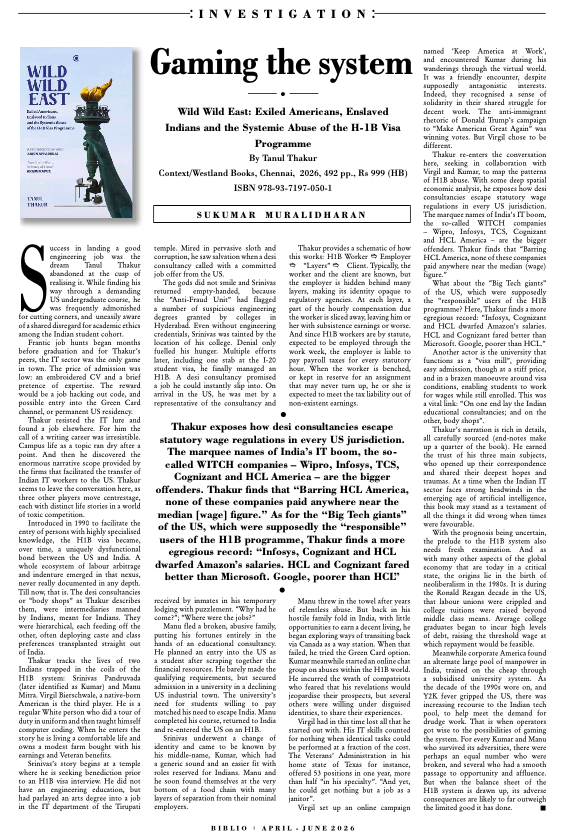
Glad to see Wild Wild East reviewed in Biblio. I’m particularly pleased that the review engages with the book’s central argument: that the H-1B program created an ecosystem of labour arbitrage and exploitation that has never been documented in this depth before.
“The H1B visa became, over time, a uniquely dysfunctional bond between the US and India. A whole ecosystem of labour arbitrage and indenture emerged in that nexus, never really documented in any depth. Till now, that is.”
“Thakur’s narration is rich in details, all carefully sourced (end-notes make up a quarter of the book).”
“At a time when the Indian IT sector faces strong headwinds in the emerging age of artificial intelligence, this book may stand as a testament of all the things it did wrong when times were favourable.”
https://t.co/mljeQzsQLT