June is #StrokeAwarenessMonth. As such, check out this recent publication in @atvbahajournals from @kat_howe and team exploring endothelial cell communication with cells in atherosclerotic plaques (and AI had an adjunctive role in this work!).
👇🧵
https://t.co/7OMj1cjLyl
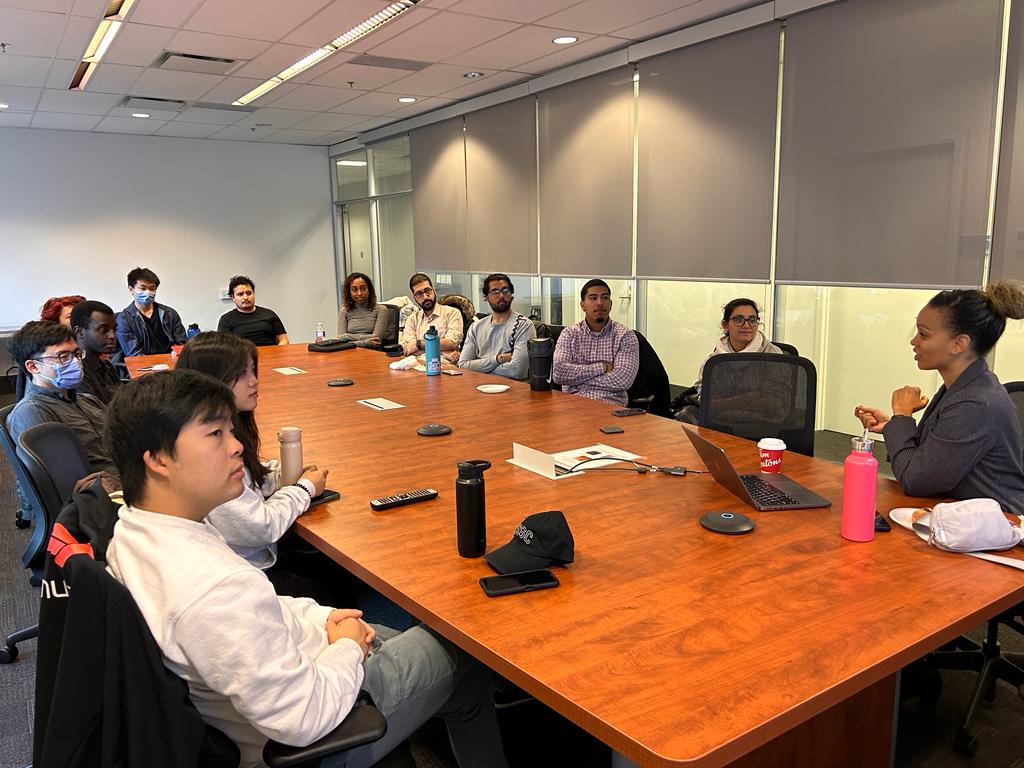
This #NationalNursingWeek, we’re spotlighting Briana, the Clinical Lead for Research and AI @pmcc_ai . From bedside nursing in Acute Medicine to clinical research and a Master’s of Health Science in Health Administration, her path blends clinical care, research, and leadership.
A thoughtful perspective on the potential consequences of AI disruption in healthcare delivery from a few of our teammates at the AI Hub, co-authored with @ADetsky
A key takeaway: healthcare providers must help shape the change.
Read it here👉https://t.co/QvfXkO3Lmz
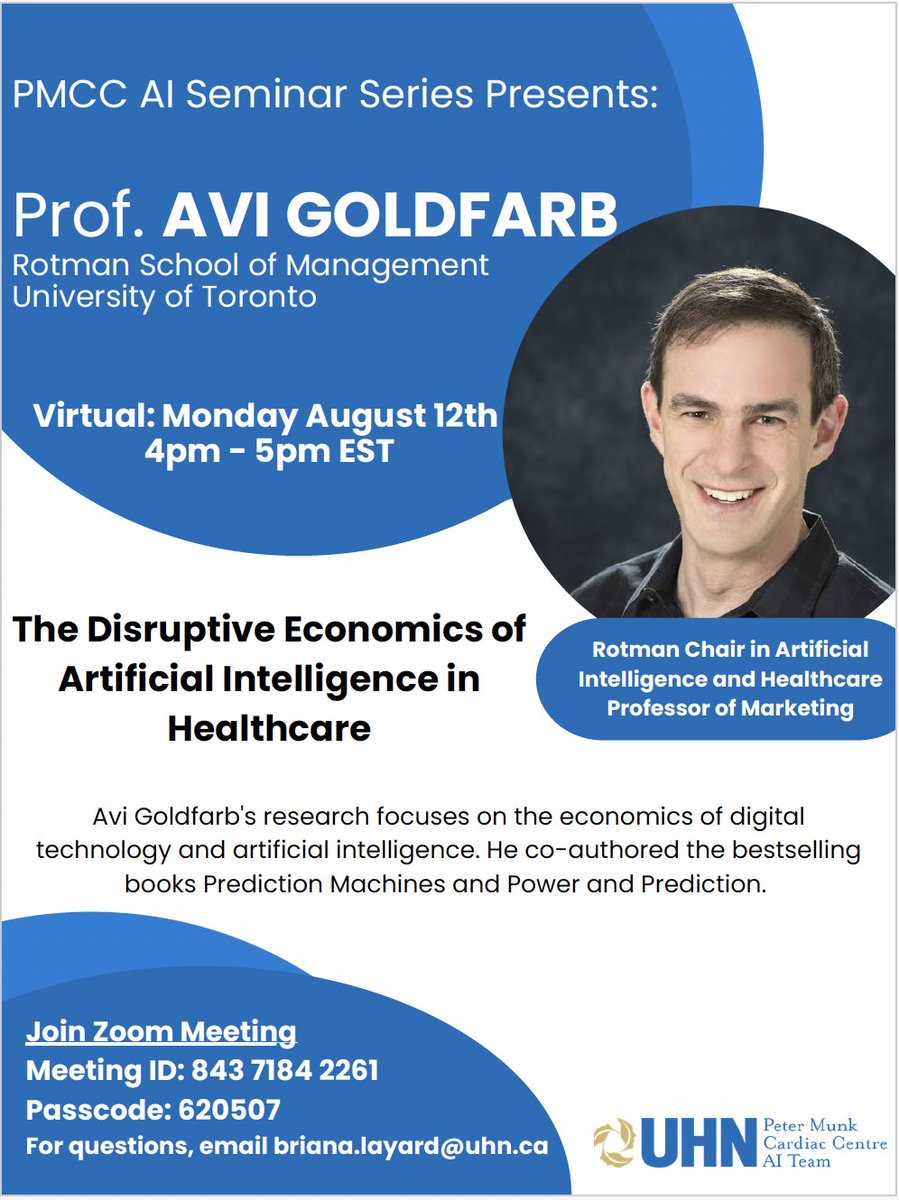
Join us for our next PMCC AI seminars where Professor Avi Goldfarb @avicgoldfarb will give a talk on the Disruptive Economics of AI in Healthcare. Tune in next week using the details below! @PMunkCardiacCtr@drbarryrubin@BoWang87 @SenthujanSenka
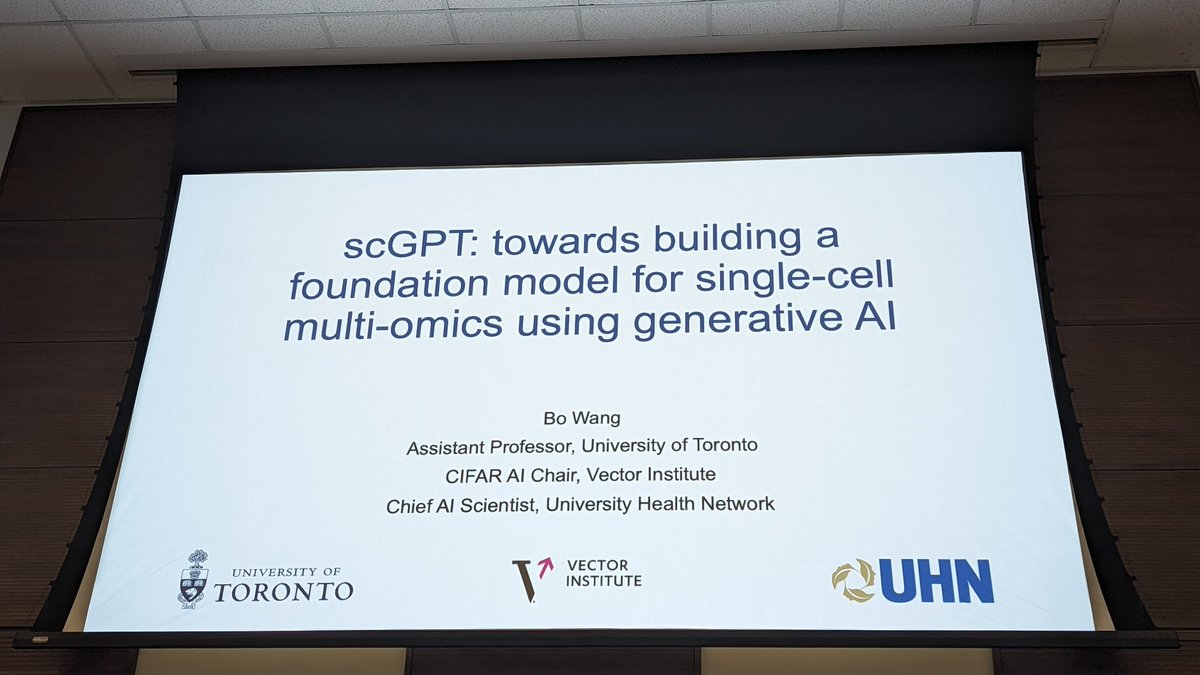
🔬 Exciting News! Our manuscript, "scGPT: toward building a foundation model for single-cell multi-omics using generative AI" is now finally published in Nature Methods (@NatureMethods) 🎉 !!!
(Re-)Introducing scGPT: A transformative foundation model engineered for single-cell omics analysis. Developed through the analysis of over 33 million human cells, scGPT sets a new benchmark for application versatility, offering both fine-tuning and zero-shot capabilities.
Since its preprint in May 2023, scGPT has significantly impacted the field, evidenced by 13K+ installations, 600+ GitHub stars 🌟, and 40+ citations before its official publication!
scGPT has been validated by numerous benchmark studies as a leading foundation model in single-cell analysis. Its pre-trained embeddings extend its utility beyond single-cell studies, enhancing a variety of downstream tasks including protein enrichment and genetic perturbation predictions.
Some key updates lately:
---Expanded zero-shot applications for efficient reference mapping and integration, now with CellXGene census integration.
---Advanced perturbation analysis capabilities, including genome-scale perturb-seq data analysis and bulk sequencing data generalization.
---Upgraded scGPT package, offering versatile model loading compatible with PyTorch and flash-attn, for both GPU and CPU.
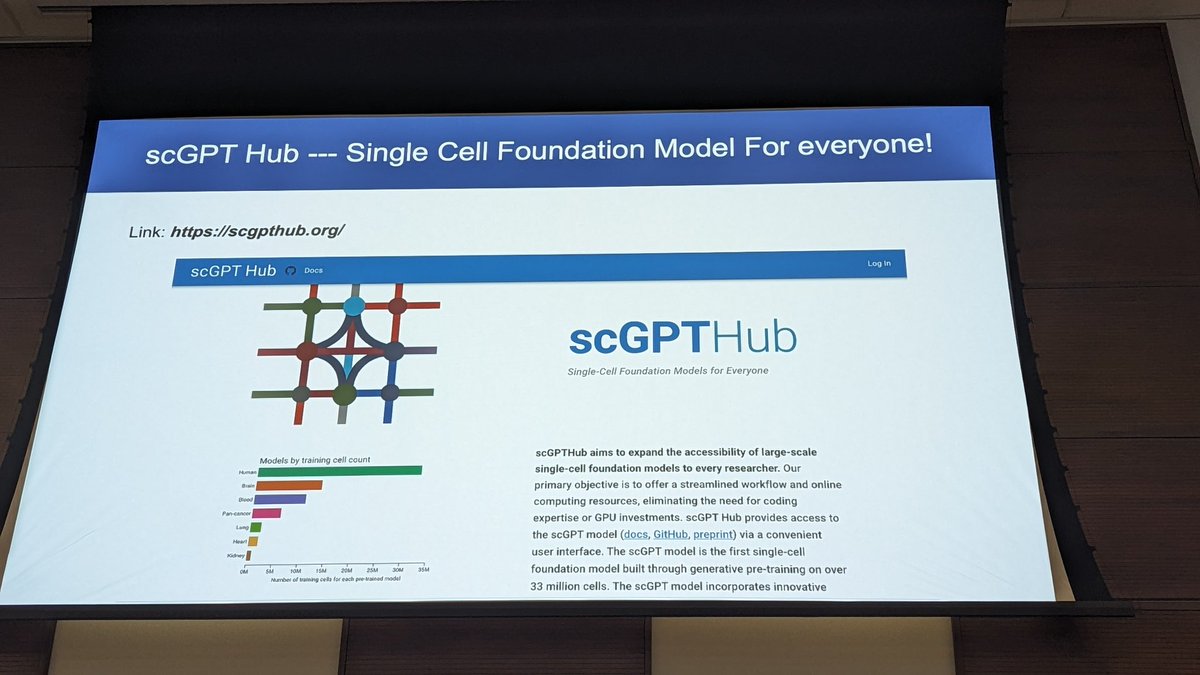
---Cloud-based scGPT applications for reference mapping, cell annotation, and gene regulatory network inference are available on https://t.co/IaaPv7EaTB.
---Integration with Hugging Face for easier model training.
Limitations:
scGPT is an early foray into foundation models for single-cell omics, facing challenges like limited zero-shot learning in some tasks, pretraining constraints, data quality issues, and evaluation limitations. See our Supplementary Notes for details.
🚀 Future Work?
Short-Term Goals:
1. Releasing a Mouse Model for broader analysis.
2. Developing a comprehensive evaluation suite for foundation models in single-cell analysis.
3. Creating a foundation model for single-cell spatial omics.
4. Enhancing zero-shot capacity by integrating scGPT with RAG (e.g., knowledge graphs).
Long-Term Goals:
1. Expanding scGPT for comprehensive single-cell multi-omics analysis.
2. Developing an in-silico perturbation model for predicting genetic perturbation effects.
3. Merging scGPT with multi-modal genomic sequence models for a deeper understanding of cell biology.
📚 Access the paper on Nature Methods: https://t.co/4YCTQymxiA
🔬Preprint in Bioarixv: https://t.co/qyxVGkypaC
💻 All our codes/data/weights are open source: https://t.co/13n0bJvgT2
Wholehearted congratulations to all the authors, especially the two co-first authors, Haotian (@HAOTIANCUI1 ) and Chloe (@chloexwang1), who are really the emerging superstars in AI and biology!
@VectorInst@pmcc_ai@UofTCompSci@UofT_LMP@UHN@UofT
#scGPT #GenerativeAI #AI4Science #Combio #opensource
Thrilled to share that our MedSAM has been featured in the Nature Communications Editors’ Highlights. This recognition places MedSAM among the top 50 recently published papers in the field of AI and machine learning—a true honor! 🌟 https://t.co/hmtC6ZWUka
MedSAM is the first foundation model for promptable medical image segmentation, which can handle a broad spectrum of image modalities and cancer types. This represents a significant step forward in our journey towards clinically adoptable AI models. 🏥💻
(Some shameless plugins 😅) :
In line with our commitment to innovation and accessibility, we're excited to host a competition at #CVPR2024: "Segment Anything in Medical Images on Laptop." Our goal? To enhance the accessibility and deployment of segmentation foundation models for medical professionals, thereby advancing personalized healthcare solutions. We warmly invite you to join us in this endeavor! 🌍
Competition homepage: https://t.co/xDsp7zwoa1
Discover more about MedSAM:
Read the paper: https://t.co/3LJIZcxyk1
Explore the code: https://t.co/7PFupAxo1K
Try our 3D Slicer plugin: https://t.co/WP09JqOkjW
AI researchers and clinicians @pmcc_ai and @UHNAIHUB say generative #AI can revolutionize healthcare – but for the sake of patient privacy, medical professionals should be the ones to lead.
🔗 https://t.co/SFtlMQhiiw
@ugustintoma @SenthujanSenka @drbarryrubin@BoWang87
We’re excited to get the inaugural cohort of our @NSERC_CRSNG CaRDM Eq training program together in-person for the 1st time today!
THANK YOU to the amazing @dr_kaniki for leading an educational & dynamic Anti-Bias in Research workshop series for us. #HealthEquity#DesignForEquity
We're back after the summer break! Our AI Rounds at @UHNAIHUB are resuming (OCT 4th, 5-6PM EST) and I am thrilled to host Dr. Muhammad Mamdani of @UofT_TCAIREM & @UnityHealthTO. Recognized as a top AI-for-health researcher, he's really the go-to expert for insights on integrating AI in hospitals. Don't miss out! 🏥🤖
Congratulations @drbarryrubin and thank you for your continued leadership and advocacy for not only excellence in patient care but clinician well being as well! 💪🏽
Congratulations @drbarryrubin, recipient of the M. Andrew Padmos International Collaboration Award from @Royal_College and Royal College International, for his "dedication, leadership and unwavering commitment to decreasing clinician #burnout globally."
@theNAMedicine@UHN
@DavidRMurdock at #CLEaorta shares his fascinating work using facial gestalts and #AI to identify patients that experience adverse aortic events. #computervision intersects with #PrecisionMedicine beautifully.
Our #WorldHeartDay event is just one week away! Join us on September 28th from 5-6pm ET for our first STEM Talks of the year - featuring 3 inspiring @PMunkCardiacCtr professionals. #UseHeart 🫀
Register here: https://t.co/ie37ClbXF4
Congratulations to Dr. @bowang87 UHN's Chief Artificial Intelligence (AI) Scientist. @camillebains1 of Canadian Press outlines how the pioneering role builds on the @UHNAIHUB and its potential to use machine learning to improve health care.
Read more → https://t.co/2qzYueCgm9
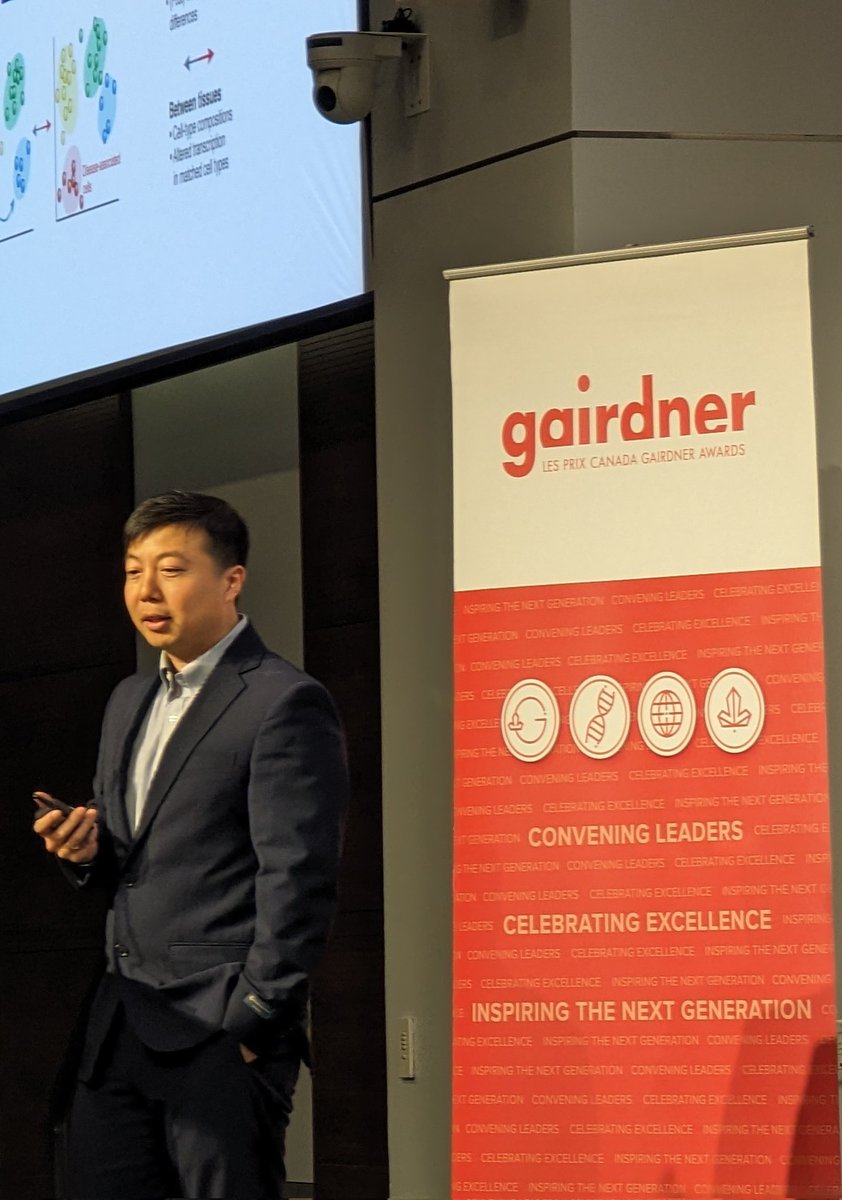
This will be a lot of fun! Always excited to be in the same panel with so many world leaders in #AI for #Science, including @demishassabis ! Look forward to all the great talks and discussions at #GairdnerScienceWeek in Toronto!