This week, we’ll be at the @GFNicotine in Warsaw for #GFN26.
In this short teaser, our VP External Scientific Affairs, @GizelleBaker, and our Chief Medical Officer, Tryggve Ljung, preview one of the conversations we’ll be continuing at the conference: how evidence from longer-established product categories can inform discussions around newer ones 👇
Behind every study, every breakthrough, there are people driven by curiosity and purpose.
Get to know our scientific community in our new series, My Life in Science.
In this first episode, meet Tanja as she shares her journey from postdoc researcher to Senior Lab Scientist, and the key lessons she’s learned along the way.
As new tobacco and nicotine alternatives continue to be introduced, regulatory frameworks need to evolve just as quickly to reflect the latest scientific evidence.
Around the world, some governments are beginning to recognize that science-based, differentiated regulations can better support adults who smoke by giving them access to scientifically substantiated alternatives.
For more on the regulatory overview on smoke-free products 👉 https://t.co/ckyvKBdbIw
Valuable research, like PMI Science’s, can’t make a difference if it’s shut out.
We need to evaluate the science, not suppress it—every scientific voice matters.
Better decisions are only possible when people have clear and scientifically accurate facts that cut through confusion.
Because misconceptions about smoke-free products persist, we’re committed to strengthening transparency by openly sharing key scientific facts and figures behind our progress.
Behind our smoke-free vision is a diverse team of over 1,400 specialists dedicated to
improving the way science serves society.
At PMI Science, our community brings together a broad range of disciplines and
collective expertise to advance our scientific research and drive meaningful innovation 👇
Misinformation can obscure scientific truth, creating false narratives that confuse the public and hinder the innovation needed for a better future.
That’s why we continue to share our research findings and studies openly through resources like our PMI Science Booklet and Leaflet, reinforcing our commitment to transparency and integrity.
Through sharing our research openly, publishing peer-reviewed research, and continuously investing in innovation, we’re committed to turning data into dialogue and evidence into trust.
This is what measurable progress looks like 👉 https://t.co/K0kZnunFSR
We’re proud of our extensive portfolio of patents, which reflects our ongoing investment in creating, scientifically substantiating, and commercializing smoke‑free products that offer adult smokers better alternatives to cigarettes.
#SmokeFreeFuture#ResearchAndDevelopment
@_Othman_Najib Our smoke‑free portfolio includes a range of product types offered at different price points, so adult smokers who don’t quit have options that better fit their preferences and needs.
Behavioral science helps us understand what motivates change.
PMI’s studies on perception and behavior show that our smoke-free products are perceived to have a lower risk of harm compared with cigarettes and can support tobacco harm reduction efforts.
Read more about our perception and behavior research in Issue 21 of our Scientific Update Magazine ➡️ https://t.co/fGdCFby71l
#PerceptionBehavior #HarmReduction #ScienceCommunication
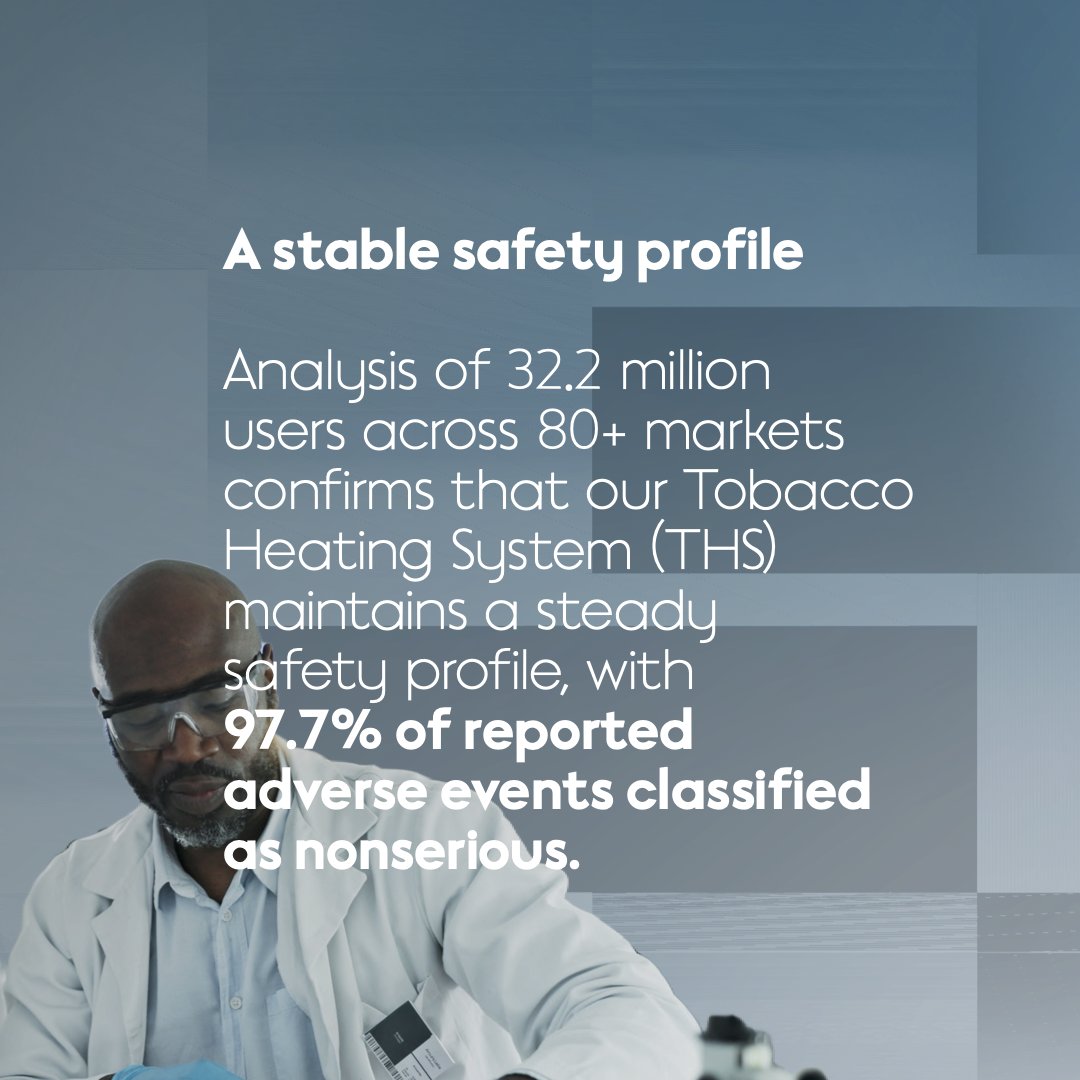
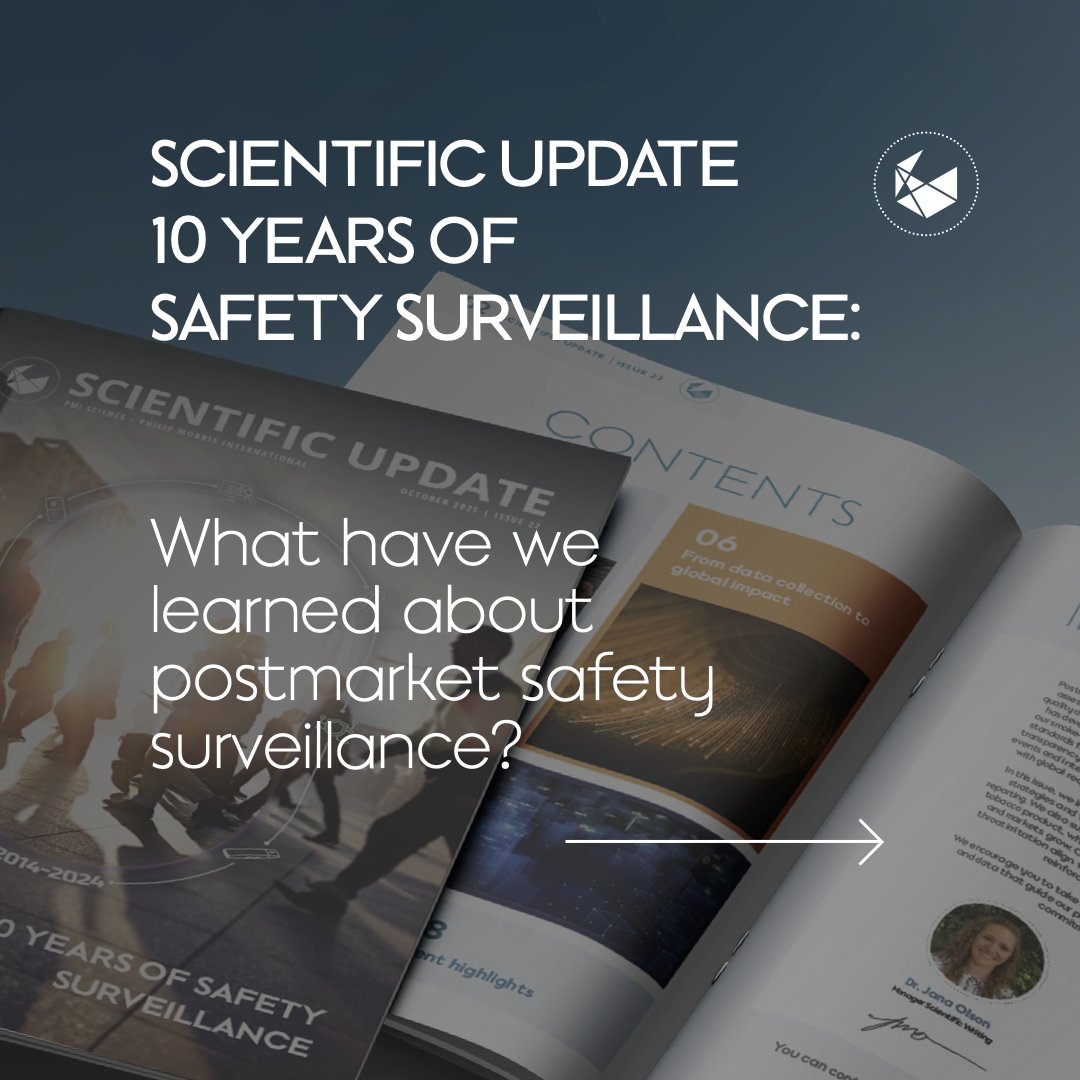
10 years of postmarket safety surveillance data. What have we learned?
The 22nd issue of the Scientific Update showcases PMI’s commitment to monitor product safety after market release, highlighting the work of our safety surveillance team and sharing findings from the robust postmarket safety surveillance system established at PMI.
Swipe to explore 👇
Sweden’s long-standing use of oral smokeless alternatives, like snus and more recently nicotine pouches, has contributed to the lowest smoking rate in Europe.
This shift offers valuable insights for other countries exploring ways to reduce cigarette use.
Discover the science and technology behind nicotine pouches here 👉 https://t.co/r891q3NimT
#SwedishExperience #NicotinePouches #SmokeFreeFuture
Raising cigarette prices can help reduce tobacco harm. Data shows that higher prices can help cut smoking rates and, when paired with progressive, risk-proportionate taxation of smoke-free products, can encourage adult smokers who don’t quit to switch to better alternatives. Effective pricing works best alongside strong enforcement to prevent illicit trade.
What drives adult smokers to consider switching to smoke-free alternatives?
We are using science to find the answers.
Explore the full findings in our PMI Science Booklet: https://t.co/peD3g5g21p
#PerceptionBehavior#RiskPerception#SmokeFreeAlternatives
Our goal is simple: to accelerate the end of smoking through science‑based innovation and transparent scientific communication.
When science is open, progress is faster.
Here’s more on some of the ways we make our research accessible, and encourage dialogue across the global scientific community👇
Majority of the toxicants in cigarette smoke originate from burning tobacco at high temperatures.
By heating tobacco at low temperatures instead of burning it, our leading heated tobacco product emits an aerosol that contains significantly fewer and lower levels of toxicants compared with cigarette smoke.
Find out more about the difference between smoke and aerosol 👉 https://t.co/EDIJGjGAjt
#HeatedTobacco #SmokeVsAerosol
Dr. Fischer, Manager of Regulatory Consumer Research at PMI, leads postmarket studies on the role of heated tobacco products (HTPs) in harm reduction. Her research, including a 6-year study in Japan, explores how millions of adult smokers have transitioned from cigarettes to HTPs—contributing to a continued decline in smoking prevalence.
For her interview in full to explore her research on tobacco harm reduction 👉 https://t.co/izKM1lrZtz
At PMI, proactive monitoring of the safety profile of our smoke-free products and strict regulatory compliance is paramount.
Our robust postmarket safety surveillance framework ensures that this is upheld throughout the entire product lifecycle.
More on our approach 👉 https://t.co/OYNJZEU8Xn
Harm reduction focuses on reducing risks rather than eliminating behaviors entirely.
In the case of smoking, harm reduction involves complementing traditional tobacco control measures with approaches that could help accelerate the decline in smoking prevalence and, as a result, deliver potential benefits for public health.
In what other ways can harm reduction be applied? Test yourself👇