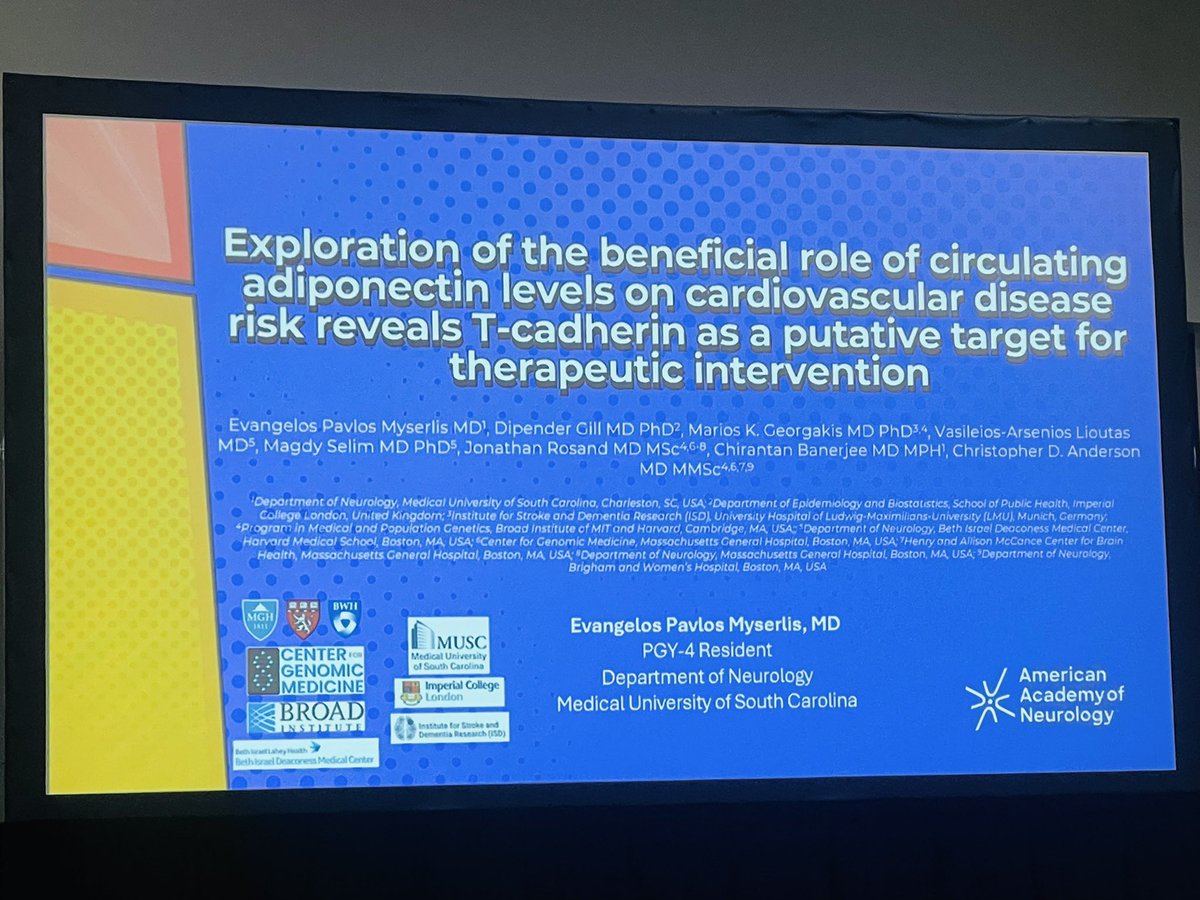
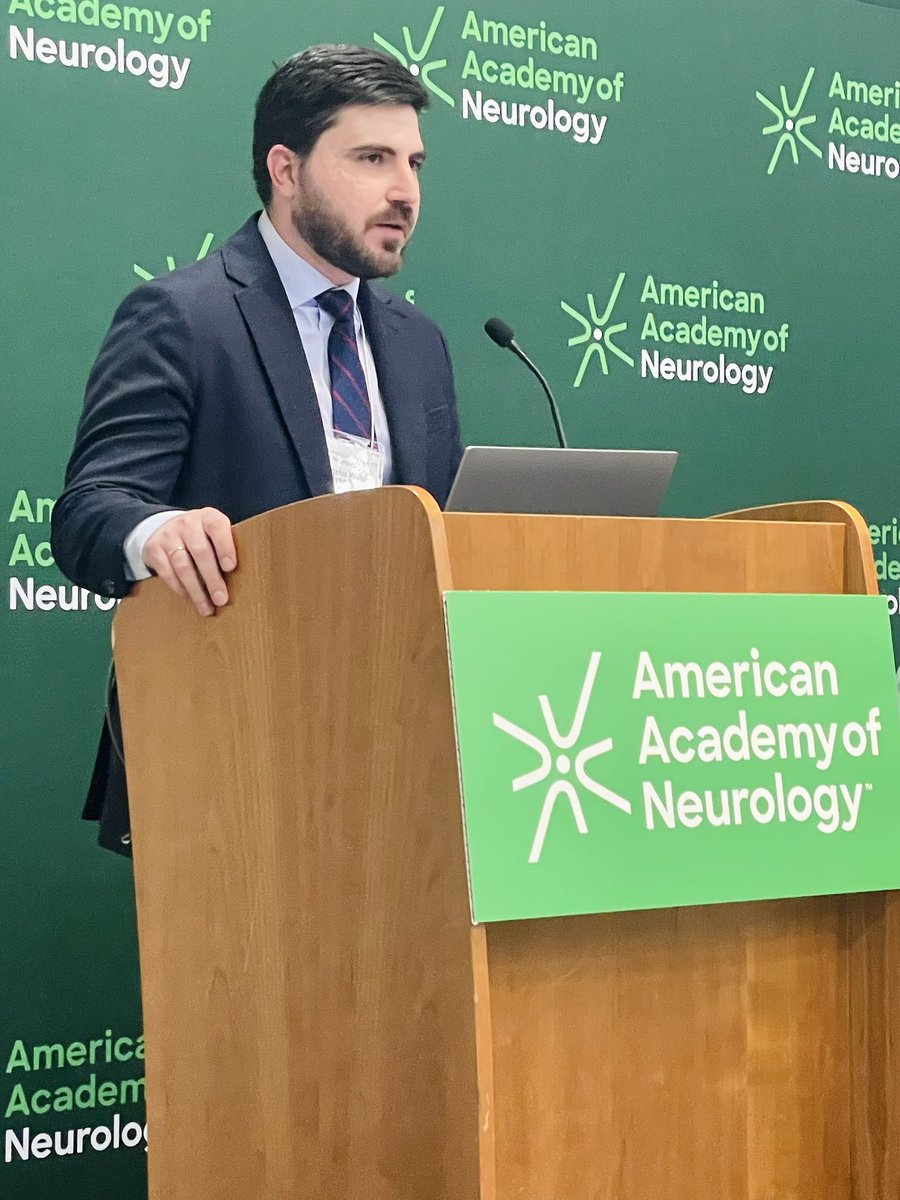
Truly honored to receive the 2025 S. Weir Mitchell Resident-Fellow Research Award by @AANmember for our work on adiposity and CVD risk.
Grateful to my mentors, collaborators and residency program for their support and contributions, and to AAN for recognizing our work.
Although common vascular risk factors were the predominant mediators in the GFAT-CVD axis, adiponectin and leptin mediated a proportion of IS and CAD risk.
Our result support a protective role of GFAT in CVD risk. While this is predominantly mediated by common vascular risk factor modification, adipose tissue-specific factors may exert a mediatory effect, suggesting a possible novel target for attenuating adiposity-related CVD risk.
Using Mendelian randomization (MR), we found that genetic predisposition to higher gluteofemoral adipose tissue (GFAT) volume was associated with lower risk of ischemic stroke, LAS, and SVS (A), consistent in multivariable MR analyses (B).
Our paper exploring the association between BMI-independent adipose tissue burden and CVD risk is now out in @GreenJournal !
A few highlights:
https://t.co/xE5Vefa4PZ
Truly honored to receive the 2025 S. Weir Mitchell Resident-Fellow Research Award by @AANmember for our work on adiposity and CVD risk.
Grateful to my mentors, collaborators and residency program for their support and contributions, and to AAN for recognizing our work.
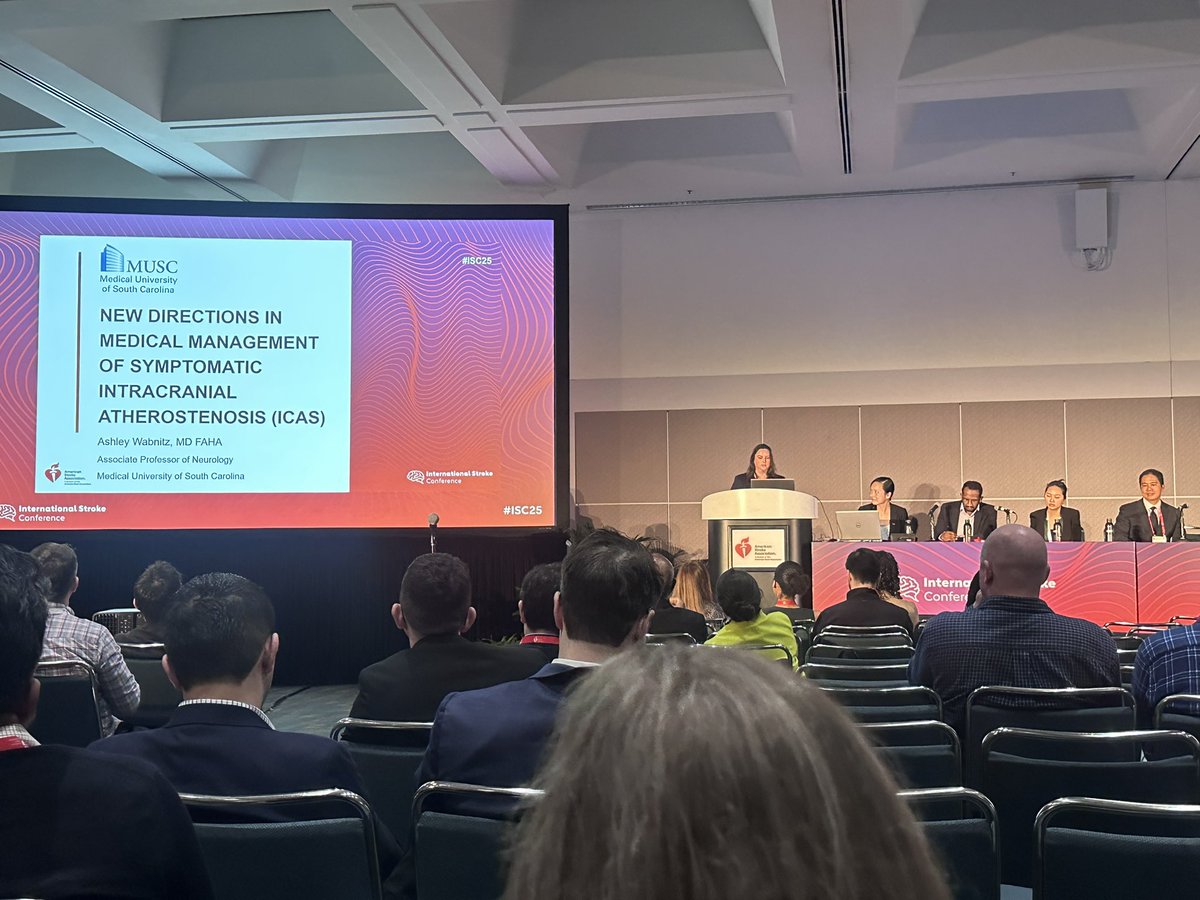
Glad to present Grand Rounds this past week to my Residency Program @MuscNeurology, followed by great discussion afterwards! Glad to see people getting engaged in this rapidly developing area.
Grateful to all my mentors, PD, and APDs, and excited for the next steps coming ahead!
Hot Off Press: AF patients with stroke due to symptomatic atherosclerosis have high stroke recurrence, hemorrhagic events, and mortality rates. Combination sAC+sAP may reduce short-term stroke recurrence but increase the hemorrhagic risk in the long term.https://t.co/y93Yn3Eyai
The HERMES 24 score, published in @StrokeAHA_ASA, could be useful for counseling patients and families on the chances for favorable or unfavorable outcome. Although it may overemphasize clinical status at 24 hrs; delayed recovery is important @ESOstroke@WorldStrokeOrg
Is IL-6 signaling always bad❓
Our recent study with @PMyserlis@AnushreeRay4@CDAndersonMD tests if 🧬genetic proxies for IL-6 signaling downregulation are linked to
1⃣Alzheimer's disease
2⃣lobar intracerebral hemorrhage (cerebral amyloid angiopathy)🧠
https://t.co/XmCbP8ppbw
Glad to share our pre-print investigating the role of BMI-independent adipose tissue distribution profiles on cerebrovascular disease (CVD) risk, using large-scale genomics data!
https://t.co/6Hlrr4TnTy
A summary of our key results:
- While the protective role of GFAT on CVD risk is mediated predominantly by common vascular risk factor modification (SBP, T2DM, LDL), residual mediatory effect may be exerted by adipose-specific factors, suggesting that targeting those may provide additional vascular benefit