@RuthSlatter@CathAMClarke@VCH_London 🙏 While you’re both there, can I try one more? We’ve finished annotating PO & of all the 15k lines there’s one that bugs me more than any other. It’s in the ‘clownish blazons’ of counties: ‘And Berkshire hath for hers, Let’s to’t and toss the ball’ (23.245) 🤷♂️
@poppyseedpasta So it feels like there’s something in the descriptions that aligns with the ‘witch’ myth, but that’s not exactly what they’re saying. So not enough evidence for a footnote, without a clearer source. (That said, talking witches were a more delicate subject in the early 17C.)
@poppyseedpasta That’s interesting. Do you have any references on the history of that myth? In the poem, she’s definitely an anthropomorphised figure of the cave. Camden (Drayton’s main source) also stops short of mentioning a witch, but compares Wookey Hole to the Italians’ ‘Sibyls Cave’. 1/2
Not many poets could have written these opening lines to a pastoral eclogue: Drayton’s ‘Sixth Nymphal’, from Muses Elizium (1630). He’s a (relatively) rare example of a poet who, in many respects, got better with age.
Full disclosure: it will be up to Philip to draft the ‘British history’ sections of the edition introduction, so I’m free here to speculate. Kind of wondering what he’ll say …
A new year’s Poly-Olbion provocation: to what extent did Drayton really - I mean, really - believe all that stuff he read in Geoffrey of Monmouth about the Britons, Brutus, Arthur, etc? 1/?
So did he really believe it, or did he just like the way it lent shape & purpose to his poem? Or, at least, its first half; he pretty much buries the British history in the songs published in 1622.
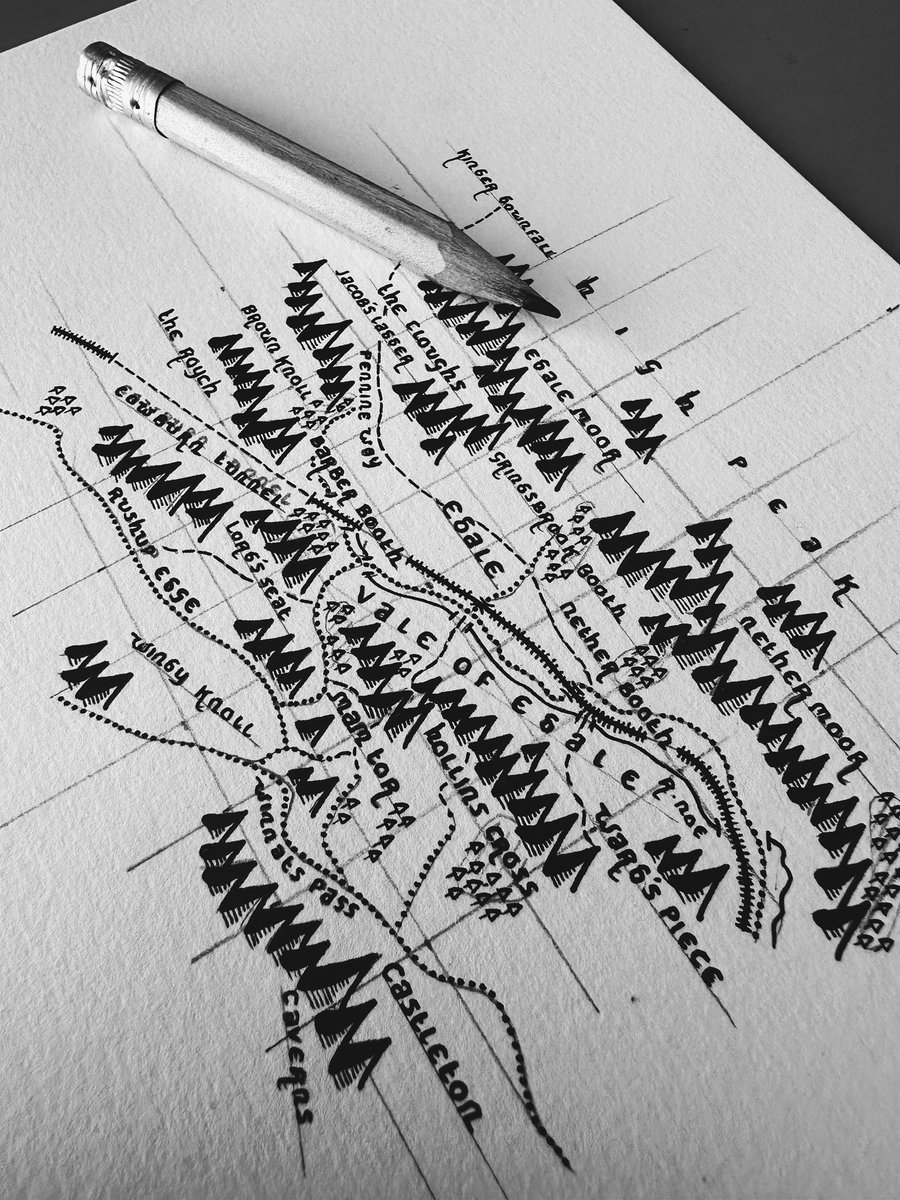
Thank you to everyone who has supported my map illustrations this year. As a small thanks I'd like to give one person a map print of their choice from the selection available on my website. Simply RT if you'd like to take part, and I'll pick a winner at random on New Years Day 🗺️
Just finished, a few hours ahead of schedule, the latest (last-ish?) review of the Poly-Olbion commentary. The focus this time was rivers: we had them all(ish) identified, but we hadn’t accounted for the connections, or geographical narratives they tell. 1/3ish
Arguably the key (and overlooked) word on this title-page is the verb ‘digested’. He’s telling us how he worked: he’s not creating new knowledge, but gathering together knowledge that exists, usually (albeit with notable exceptions) from impeccable, recent sources.
On the creation of ‘citied’ as a verb.
Drayton’s hermit lives: ‘a sweet retired life, / From … from the loathsome airs of smoky citied towns’ (13.164-6)
So much insight here about the environmental change that defines the urban experience. He’s writing in early 17C London.