Self-Control, Not Impulsivity, Paves the Way to Power
A new study highlights the critical role of self-control in ascending to positions of power, overturning the common belief that impulsivity may lead to leadership.
Through seven experiments involving over 3,500 participants, the study found that individuals demonstrating self-control were consistently viewed as more powerful and better suited for leadership roles than their less disciplined counterparts.
This series of studies also revealed that failing to meet one's ambitious goals could undermine perceived power, offering a cautionary note on the importance of realistic goal-setting.
The research underscores self-control as a key attribute in the perception and attainment of power, suggesting a reevaluation of strategies for leadership development and goal management within organizations.
1/3
Unlocking the Brain’s Fear Circuitry: A Pathway to Survival Responses
Scientists have made a groundbreaking discovery in understanding the brain's mechanisms for handling fear, revealing a new neural pathway that could significantly impact the treatment of psychiatric conditions like PTSD and anxiety disorders.
The study highlights a connection between the prefrontal cortex and the amygdala, demonstrating how the brain transitions between various high-intensity fear responses necessary for survival.
Utilizing mouse models, the team employed advanced imaging and manipulation techniques to trace and influence this newly identified circuit.
Their findings not only deepen our comprehension of fear processing in the mammalian brain but also offer promising directions for developing targeted therapies for fear-related psychiatric illnesses, marking a significant step forward in neuroscience and mental health treatment.
1/3
‘Wrinkles’ in Time Experience Are Linked to Heartbeat
Momentary perceptions of time may stretch or shrink with each heartbeat and are not continuous, as previously thought.
#neuroscience#science
https://t.co/keLHZDyulp
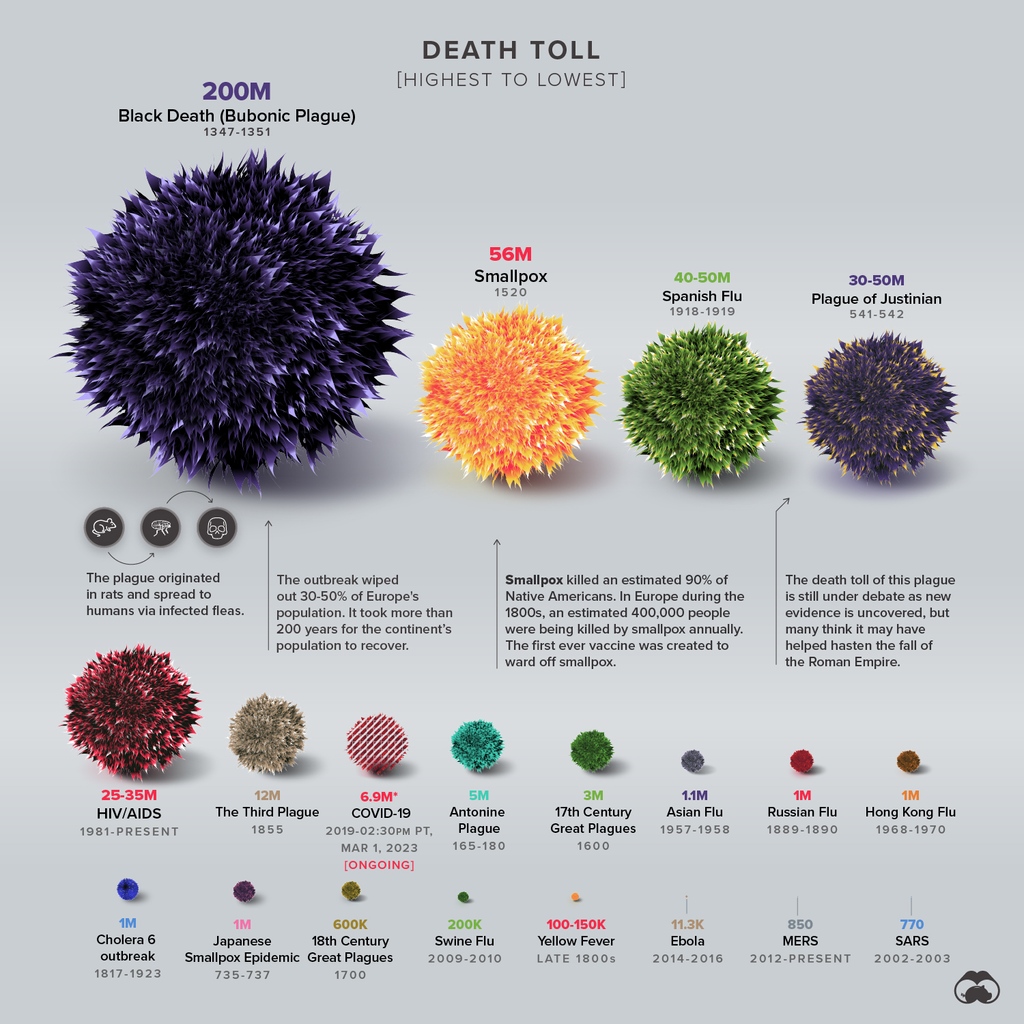
Today, March 11th, marks the 3 year anniversary since the @WHO declared COVID-19 a global pandemic 🦠
We've updated our History of Pandemics graphic to reflect recent data along with visualizing some of the most deadly pandemics: https://t.co/LNJxfA1T8o
Today’s most valuable companies are product-led platforms — with sales, marketing, and support processes built right into the product. https://t.co/cbbS871ZJv
“The recent advances in artificial intelligence, with novel chatbots like ChatGPT, brings radical changes and opportunities to the way organizations and people work in teams,” writes BI’s @mojuha. Read more: https://t.co/pLeOsB07jT
Growing a business based on serving digital customers requires rethinking the customer’s role, the company’s value proposition and how that’s delivered, and the business model ��️ https://t.co/5FSrRH2eGh
Study reports that implanted brain-computer interfaces are similar in safety to more conventional brain implants used to manage neurodegenerative disorders.
#neuroscience#neurotech#science
https://t.co/bCu8KW6l5f
How Your Mood Affects the Way You Process Language
Those in negative moods may be better able to spot inconsistencies in the things they read. The findings shed light on how mood affects language processing.
#mood#language#neuroscience#science
https://t.co/ZAlUP2HQVm
12 ways of getting smarter:
1 learning how to learn
2 goal setting
3 problem solving
4 prioritization
5 compound interest
6 cause and effect
7 network building
8 opportunity
9 meta tool usage and creation
10 behavior change
11 scientific method
12 cognitive biases