I am excited to announce Solea Press, a new imprint of Symbolic World Press. We will be publishing more specifically religious books with the level of attention and love of beauty we have put in all our other projects. Our first volume will be an illuminated Gospel that will hopefully be the Bible we all wish existed.
The schizophrenic guy in the mental hospital knows beyond a doubt that he is Napoleon. That doesn't make him Napoleon.
True story, a Calvinist friend of mine once told me she no longer went to church. When I asked her why, she told me that she did not have "assurance of her salvation", which according to her beliefs meant that she was not saved, not one of God's "elect", and therefore there was no reason to go to church. Her logic was implacable, she was a Calvinist without being a Christian.
🕵️♀️Overcoming the Lie: Icons Are Not Idols✨️
For years, I believed the common claim: "Icons are idols. Catholics are breaking the Second Commandment." It sounded biblical. It felt safe. But it was built on a misunderstanding—one that ignores Scripture, history, and the heart of Christian faith.
What the Bible Actually Shows
God Himself commanded sacred images. In Exodus 25, He instructs Moses to make two golden cherubim on the Ark of the Covenant—right where His presence would dwell. In the Temple (1 Kings 6-7), walls were carved with cherubim, palm trees, and flowers. The bronze serpent in Numbers 21 was an image God told the people to look upon for healing. These weren't idols. They pointed to God's reality and power.
The Commandment forbids "worshiping" images as gods (Exodus 20:4-5). It doesn't ban all religious art. If it did, we'd have to throw out every Bible with illustrations, every stained-glass window, and every nativity scene.
Veneration vs. Worship
Here's the key distinction many miss:
- Worship (latria) belongs to God alone.
- Veneration (dulia) is honor given to saints as heroes of the faith—images of what God's grace can do in a human life. When we bow before an icon of Christ or kiss the image of the Virgin Mary, we're not adoring wood and paint. We're honoring the "person" depicted, just as you'd kiss a photo of your spouse or stand in respect before a war memorial.
Icons aren't "magic." They lift our eyes beyond the material to the incarnate Christ—the Word made flesh (John 1:14). Because God became visible in Jesus, we can depict Him and those transformed by Him.
The Historical Shift
Early Christians used symbols and images in the catacombs. The Seventh Ecumenical Council (Nicaea II, 787 AD) defended icons after a period of iconoclasm. The Church has consistently taught this for 1,500+ years. The rejection of icons is largely a later Protestant development—not the ancient consensus.
How I Overcame It
I had to confront my own fear. What if honoring the saints actually deepened my love for Christ? What if beauty in worship wasn't pagan, but a reflection of the Creator who made beauty itself?
Praying with icons didn't pull me away from Jesus—it drew me closer. The faces of the saints reminded me I'm part of a great cloud of witnesses (Hebrews 12:1). Christ's icon stares back with eyes full of mercy, grounding the Incarnation in my daily life.
If you've been taught icons equal idolatry, I challenge you gently:
Read the Church Fathers.
Visit an Orthodox church and observe.
Ask the Holy Spirit to show you the truth. Don't let a half-understood commandment rob you of the rich visual language God has given His Church.
Icons don't compete with God. They proclaim that the invisible God became visible—and that His people can be depicted in glory.
"Christ is risen!" isn't an abstract idea. It's a reality we can see, honor, and celebrate with all our senses.
Orthodox take: Pearl clutching is back—and it's a problem.
The term gets thrown at anyone showing basic moral shock at vulgarity, explicit sin, or cultural rot.
But real "pearl clutching" is performative, self-righteous outrage: clutching your pearls for show, gossiping others' sins while ignoring your own, or hypocritical virtue-signaling without repentance. That's condemned in Scripture (Matt 7:1-5) and the Fathers—it's pride, not piety.
True Christian response isn't theatrical horror or bourgeois respectability. It's sober grief over sin as soul-disease blocking theosis, starting with your log in the eye. Flee actual immorality (1 Cor 6:18).
Guard the heart. Repent, fast, pray the Jesus Prayer.
Society's degeneracy has normalized vice so much that fake shock distracts from real spiritual battle. Don't clutch pearls—cultivate noetic vigilance and meek witness. The world calls light darkness (Isa 5:20).
Stand in humility, not performance.
Women should not be serving in the military, law enforcement, or combat-adjacent spaces. Utterly deplorable.
The fact that this will offend 99% of Americans only reveals how longhoused society really is.
@DavidWolfe The war of 1812 was actually a world war and the majority of great nations on this earth fell between 1812-1913.
The 1900s wars were nothing more than a clean up project to erase as much proof of the old world as possible.
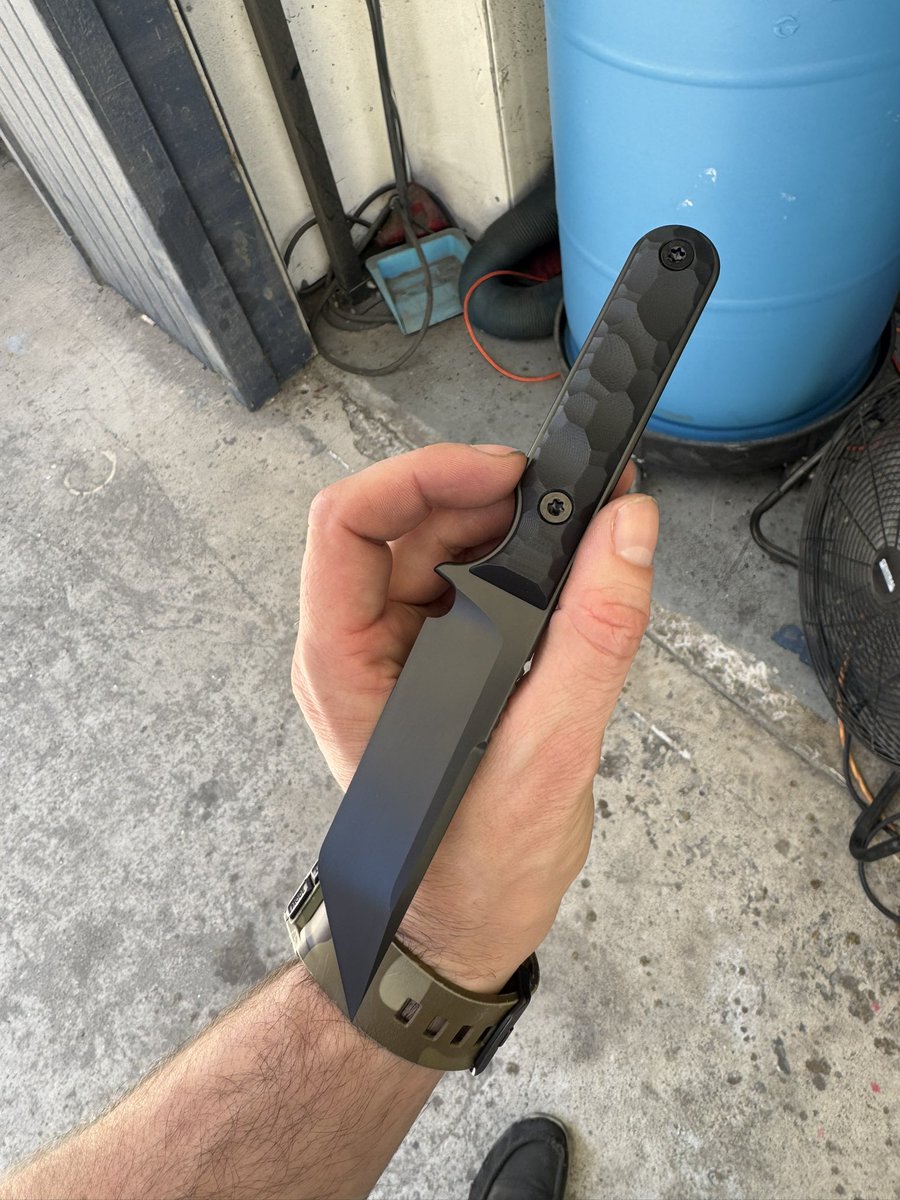
The people have spoken! Thank you for your responses on my last post. I am switching from Cerakote to DLC. There will be no price increase. I’ll have DLC blades available in the next drop 🤙🏻. I tried 4 different DLC applicators and multiple different recipes over the last year, and I’m very happy with how they turned out!
Penal Substitutionary Atonement (PSA) is not Orthodox teaching. The idea that the Father poured His wrath on the Son as a legal substitute is a later Western innovation, not the Faith of the Apostles and Fathers.
Christ didn’t die so the Father could punish Him instead of us. The Cross is victory over death, sin, and the devil — not cosmic child abuse.
The early Church taught Christus Victor: Christ became what we are so we might become what He is. Atonement is healing, not forensic punishment.
The Trinity has no internal conflict. God is Love, and Love went to the Cross to rescue us.
Orthodoxy preserves the ancient Gospel: the Cross is glorious triumph, not penal transaction. ☦️
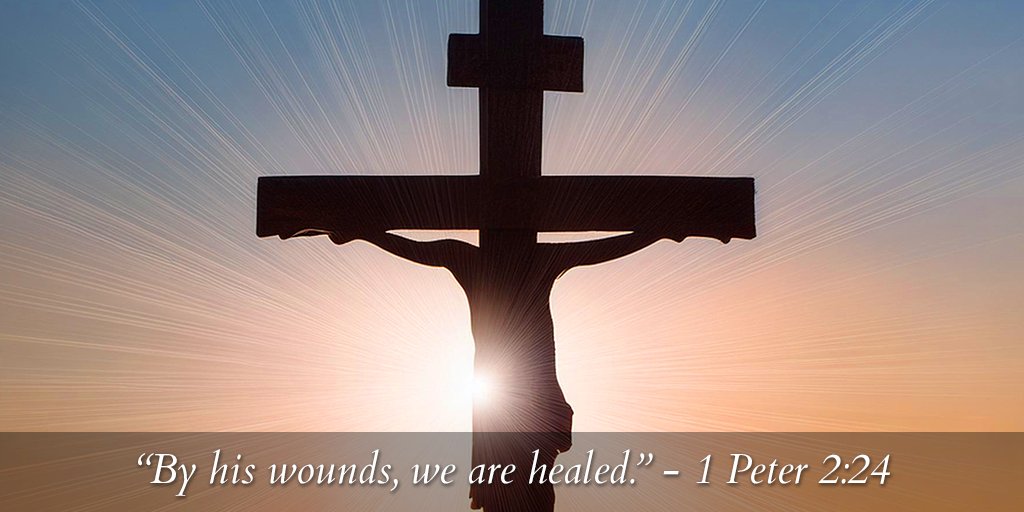
1 Peter 2:24 “He himself bore our sins” in his body on the cross, so that we might die to sins and live for righteousness; “by his wounds you have been healed.”
Some people judge their success by follower counts and impressions.
We judge ours by how many ten thousandths closer to perfect we can be.
To them, you're a product.
To us, you're someone who might rely on our product to save your life.
We are the Militia Industrial Complex