AI compute is running straight into a physical supply wall.
⚡ +500% lithium demand
🔌 3-4x copper intensity vs. normal facilities
🌍 90%+ rare-earth processing in 1 market.
Grid delays make it worse, with future on-site power at the source.
We started PowerLink because the math for the modern AI economy doesn't add up.
AI is accelerating at a rate that the legacy power grid can't sustain, which will ultimately halt progress and innovation.
We're building the solution. Read our story: https://t.co/rRSDn8VB5i
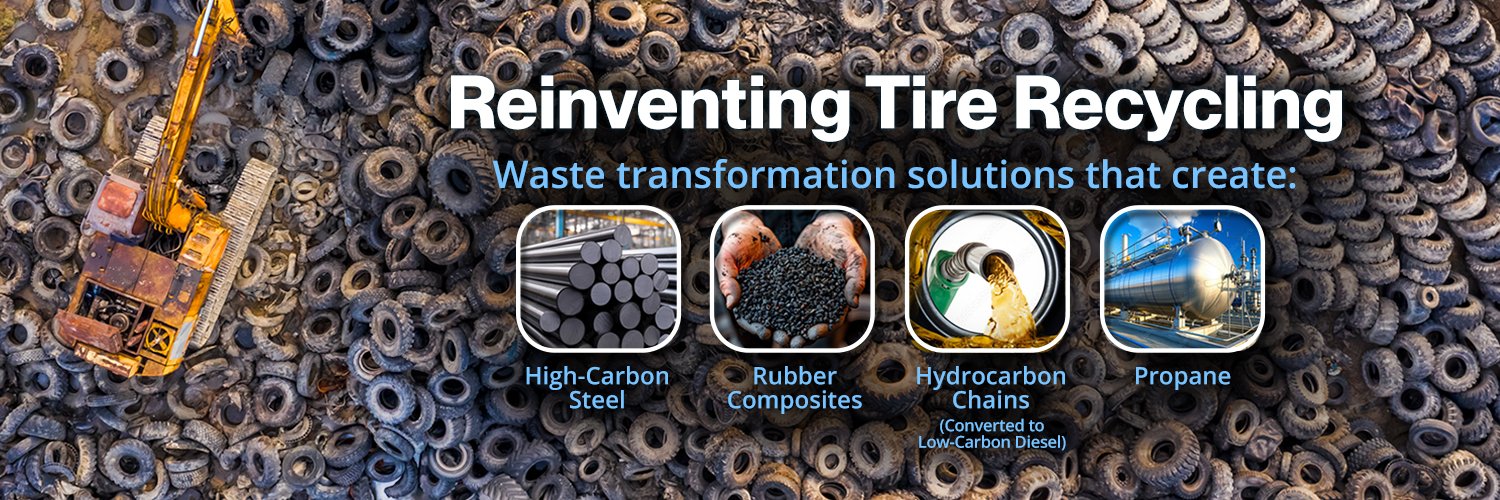
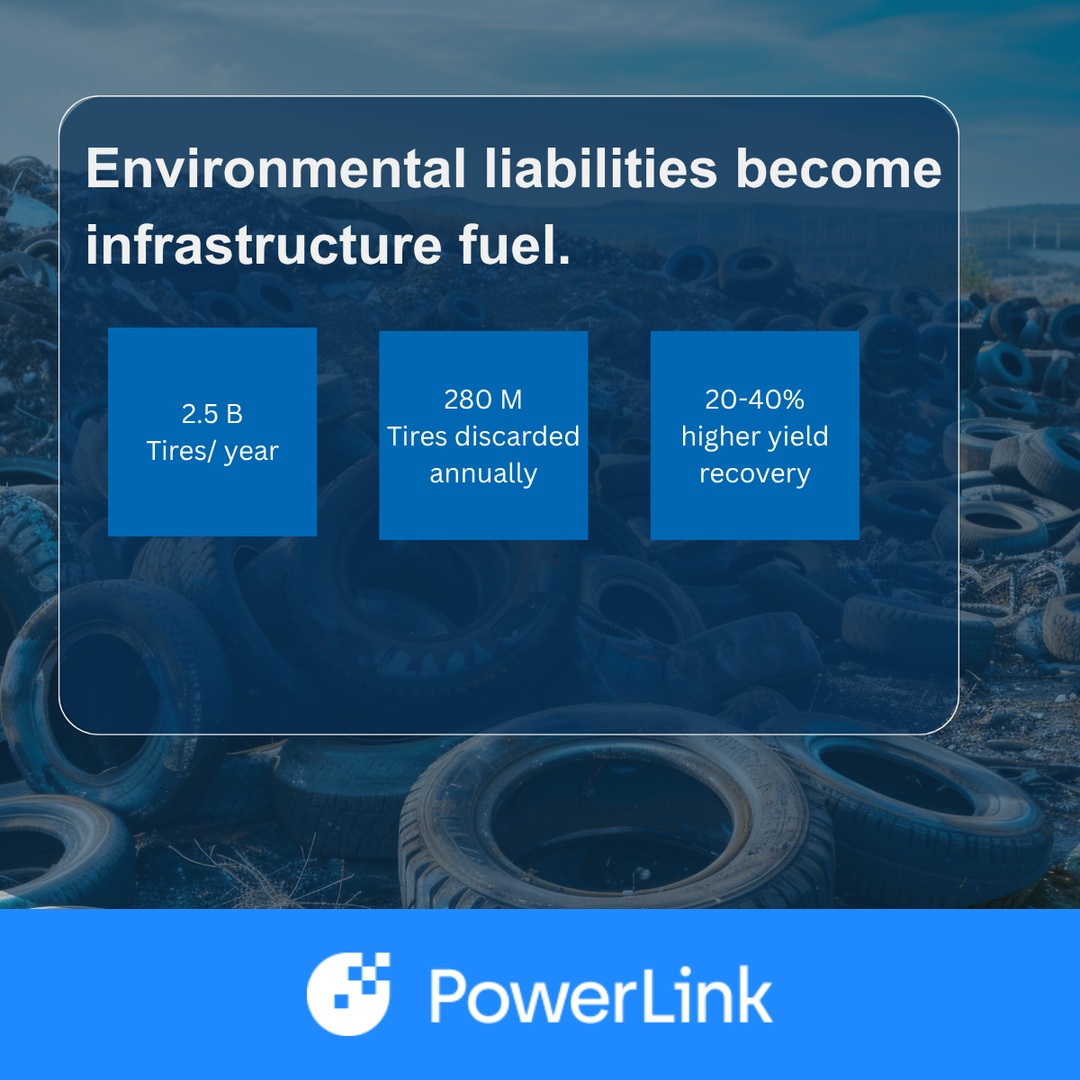
Over 280 million scrap tires are generated annually in the U.S., with global discarded volumes exceeding 2.5 billion.
We generate revenue from inputs others pay to dispose of turns zero-value waste dumps into local power assets.
Visit us at : https://t.co/C2nmv1cJXM
The first site proves the idea. The tenth proves the model.
Standardized equipment, trained operators, smarter procurement, better maintenance, and lessons carried from one deployment to the next. That’s how infrastructure becomes repeatable, and how repeatability becomes scale.
What do tires and stranded natural gas have in common? More than you’d think.
Both can hold significant value that existing infrastructure struggles to capture. That’s the opportunity PowerLink is pursuing: build the systems that put underutilized resources to productive use.
Somewhere, a perfectly good energy resource is sitting in the middle of nowhere.
Somewhere else, a data center is asking where it’s going to find all that electricity.
We think those two conversations should probably meet.
A great infrastructure idea eventually has to work on a random Tuesday afternoon.
Equipment has to perform. Operators need to know the system. Parts need to be available. Processes have to hold up.
The everyday details are what turn an ambitious idea into something dependable.
Energy has a last-mile problem too.
A resource can be abundant and still have limited value when there’s no practical connection to demand.
Generate power closer to the resource, pair it with a nearby customer, and that equation can begin to change.
We call it “the cloud,” but follow it far enough and you’ll find something very physical.
Land. Servers. Cooling. Transformers. And a whole lot of electricity.
The digital economy has an industrial foundation. That’s the layer PowerLink is focused on.
Every infrastructure deployment creates two valuable assets: the physical system and the experience gained building it.
Logistics, operations, suppliers, local conditions. Each project adds to the playbook and helps inform the next deployment.
Somewhere, there’s a natural gas well with plenty of energy and no practical pipeline connection.
Instead of asking how to move the gas, there’s another question worth asking: what can we power right where it sits?
What happens between the wellhead and the workload?
PowerLink’s stranded-gas model is designed to convert gas into electricity closer to the source, creating a shorter connection between underutilized energy resources and the demand they can serve.
Power has a time value.
For companies ready to deploy compute today, a megawatt available sooner can carry very different value than one years away.
Speed-to-power is becoming a key part of the infrastructure equation.
What makes natural gas “stranded”? Often, geography.
PowerLink’s approach: bring generation to the gas, convert it into electricity at the source, and pair that power with nearby demand.
Molecule to megawatt. https://t.co/WtRpDHG7zu
Energy creates opportunity before the first kilowatt reaches a customer.
Building, operating, and maintaining local generation creates economic activity of its own.
Then reliable power creates the foundation for everything that can follow.
In infrastructure, time has economic value.
Faster deployment means power can become productive sooner.
As electricity demand grows, the ability to move from available resource to operating generation in weeks or months becomes increasingly valuable.
What comes before the data center?
Land. Energy. Generation. Transformers. Cooling. Connectivity.
AI may live in the digital world, but scaling it starts with physical infrastructure.
Energy sovereignty is about more than electricity.
Locally generated power can support local jobs, industry, investment, and opportunity.
That’s what we’re working toward in Eswatini: energy infrastructure designed to help power a country’s next chapter.
Turns out “location, location, location” applies to energy too.
When a resource is stranded, sometimes the answer is bringing the infrastructure to it.
Generate power at the source. Put demand nearby. Shorten the journey from resource to useful energy.
Modularity is about more than portability. It makes infrastructure repeatable.
Each deployment creates knowledge for the next, while standardized systems can adapt to different resources and regions.
That’s how infrastructure becomes a platform.