𝟱/𝟱 Across thunderstorms, wind storms, and ice, the lesson held: the most likely forecast shows what to expect, and the higher-end scenarios show what to prepare for. What scenario to choose depends primarily on time-based operational constraints. #IceStorm#GridReliability
𝟭/𝟱 How far ahead can utilities plan for major storms? Our CIO, Dr. Jason Shafer, explored that question at the EEI TDM&MA conference, looking back at the 2026 storm season. Last up in our series: ice storms. 🧵
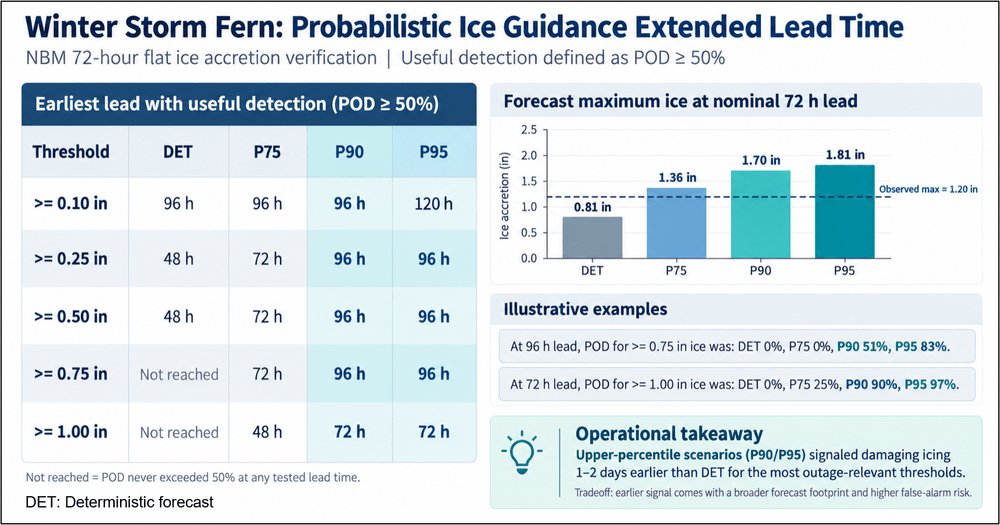
𝟰/𝟱 The most likely forecast consistently underestimated the ice from ensemble smearing. Higher-end scenarios captured the damaging totals days earlier, though they also overforecast ice in some areas that were spared the worst.
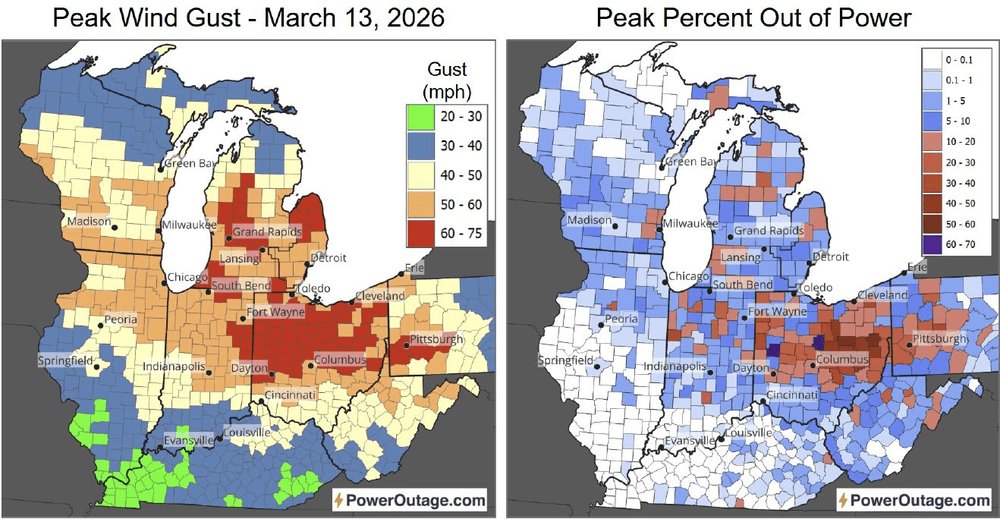
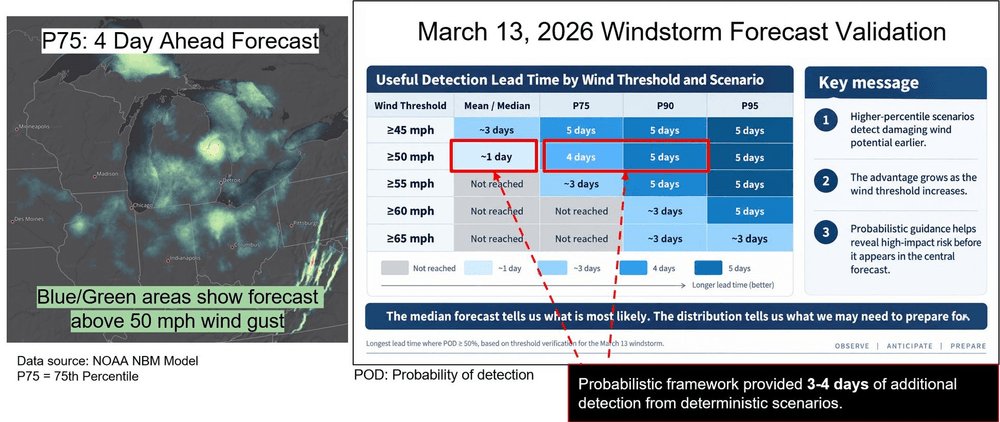
On March 13, the probabilistic framework added 3–4 days of lead time on damaging wind thresholds that might otherwise have gone unnoticed. Tracking how those signals change as the forecast evolves is critical to sizing the risk and making the best storm preparedness decision.
There are also improvements our field can make to develop predictions more focused on larger storm complexes than the singular supercell mindset, and we're helping with research by sharing our outage data to better characterize impacts.
How far ahead can we plan for storms?
Our CIO, Dr. 𝗝𝗮𝘀𝗼𝗻 𝗦𝗵𝗮𝗳𝗲𝗿, is presenting at the 𝗘𝗱𝗶𝘀𝗼𝗻 𝗘𝗹𝗲𝗰𝘁𝗿𝗶𝗰 𝗜𝗻𝘀𝘁𝗶𝘁𝘂𝘁𝗲 TDM&MA conference on the predictability of the 2026 storm season, by exploring three storm types.
✅ Takeaway
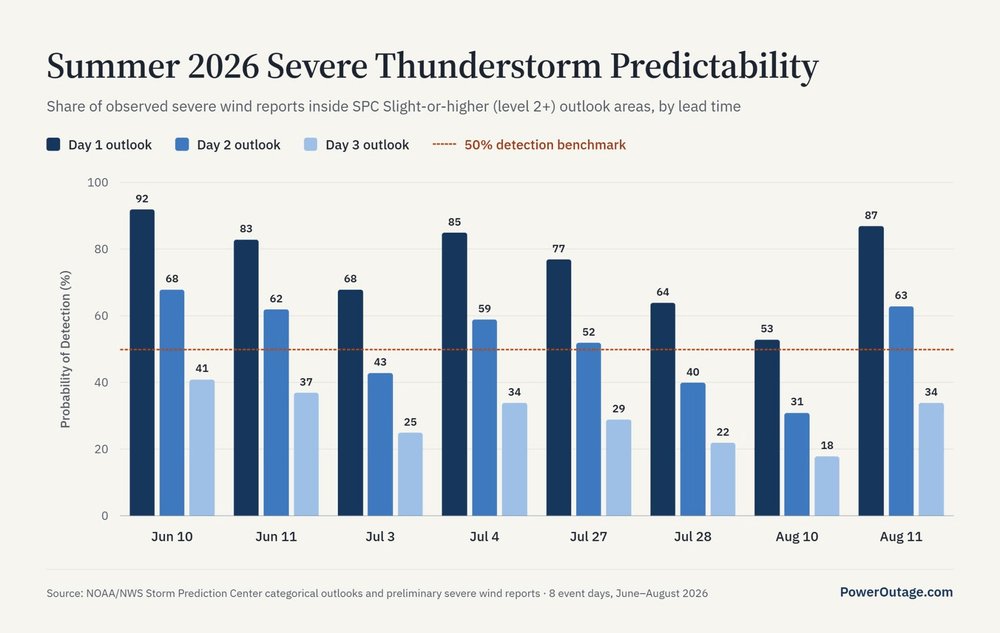
It's a best practice to maintain heightened situational awareness ahead of potentially active thunderstorm periods, even though this can lead to over-forecasting / potential false alarms. That's the cost of casting a wide net for a hazard that can organize quickly.