#HubbleClassic NGC 604 is a giant stellar nursery in the nearby Triangulum Galaxy (M33). It's almost 100 times bigger than the Orion Nebula in our own galaxy. It also hosts more than 200 hot, massive, young stars, versus four in the Orion Nebula: https://t.co/4nKe5CfmTV
#HubbleFriday This Hubble image shows the barred spiral galaxy NGC 4848 in great detail.
Near the center, the galaxy’s spiral arms contain hundreds of thousands of young stars, and Hubble also captured the wispy tails of the outer spiral arms: https://t.co/ccPV2XrBS9
#HubbleFriday Front and center in this Hubble image is the sparkling galaxy PGC 29388.
It's known as a dwarf elliptical galaxy, and has 100 million to a few billion stars. That's not many compared to the 250–400 billion stars in our Milky Way Galaxy: https://t.co/LgMzPMRWUN
#HubbleFriday This galaxy is on the move!
The barred spiral galaxy NGC 7513 is moving away from us at 972 miles per second! In comparison, Earth orbits the Sun at about 19 miles per second: https://t.co/hfvDwxhRD0
Millions of young, blue stars shine brightly in the feather-like arms of the spiral galaxy NGC 2775.
But at the galaxy’s center lies an unusually large galactic bulge, where almost no star formation occurs, as its gas was converted into stars long ago: https://t.co/w3CjO1RuUz
✨Right #now Chandra is gazing at globular cluster M12, also known as the Gumball Globular. More than 200,000 stars are packed into this spherical crowd of stars roughly 75 light years in diameter. Close living conditions make clusters like these home to many binary star systems.
Galaxy clusters are huge groups of hundreds or thousands of galaxies & vast reservoirs of hot gas embedded in massive clouds of dark matter. MACS J0416 is a pair of colliding galaxy clusters about 160 trillion times the mass of our Sun, roughly 4.3 billion light years from Earth.
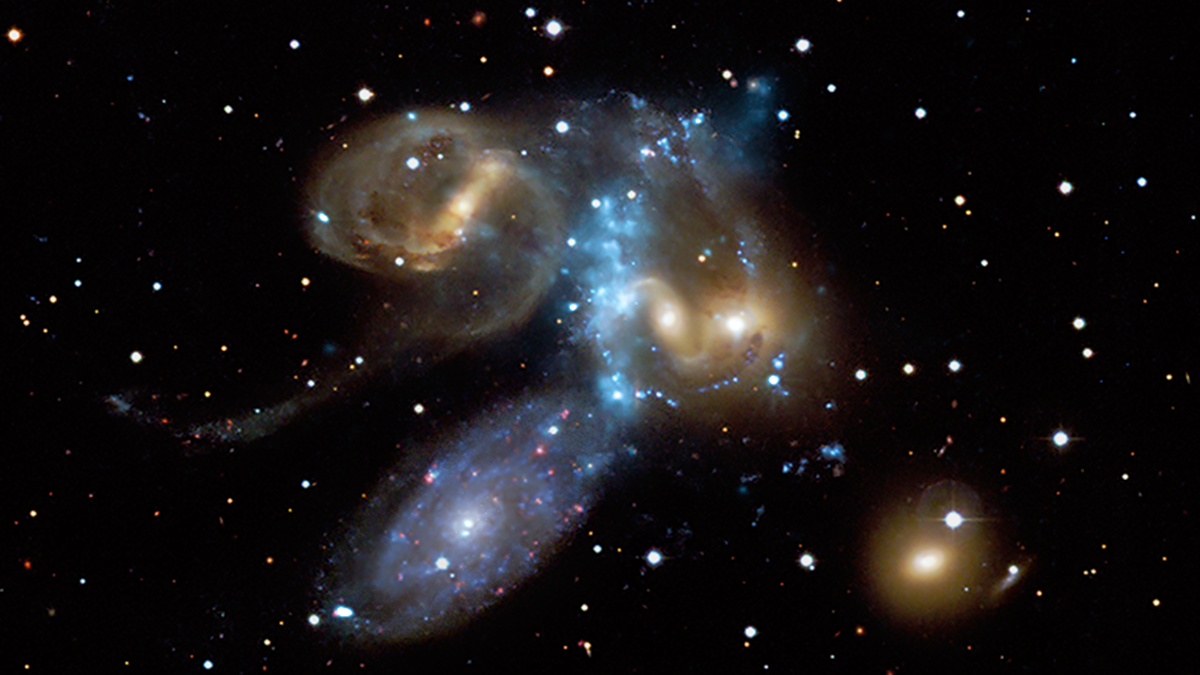
This group of galaxies is called Stephan's Quintet. 4 of the galaxies are about 280 million light years from Earth, however the bluish galaxy toward the bottom of the image is a foreground galaxy located just 40 million light years away from us. 🌀🌀🌀🌀 🌀🌎 #WorldEmojiDay
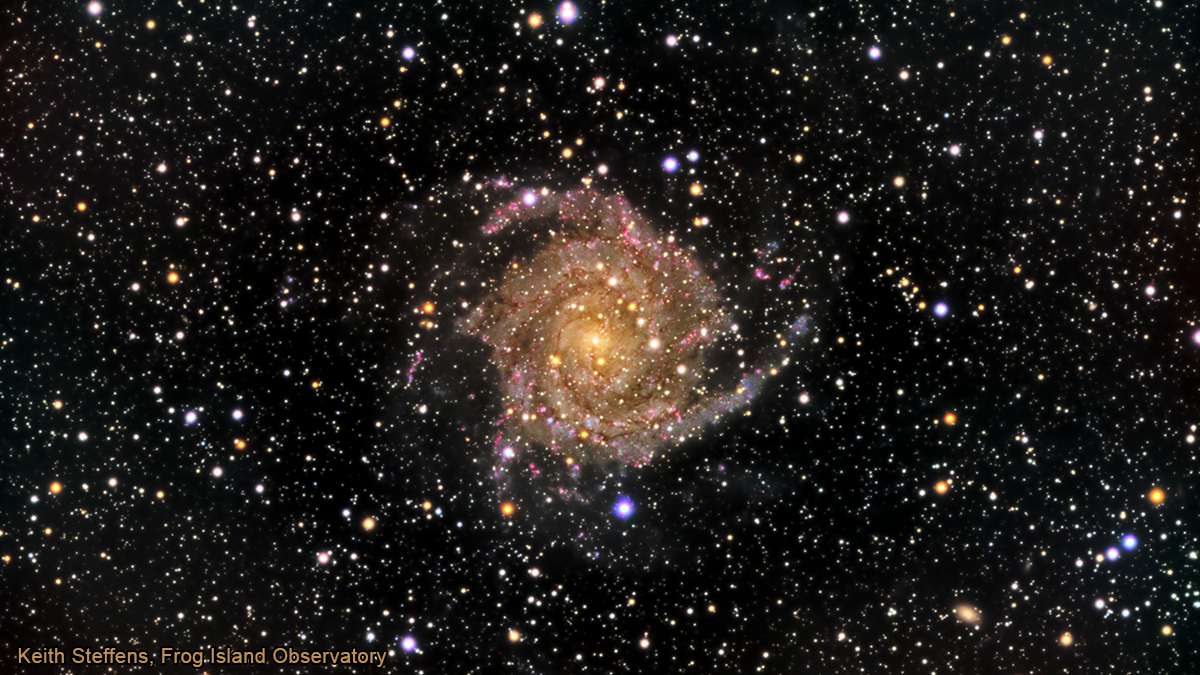
#Today Chandra is gazing at galaxy IC 342. This spiral is shrouded in gas & dust, earning it the nickname of the Hidden Galaxy. About 11 million light years away, IC 342 would be one of the brightest galaxies in our sky if it were not obscured by so much interstellar material.
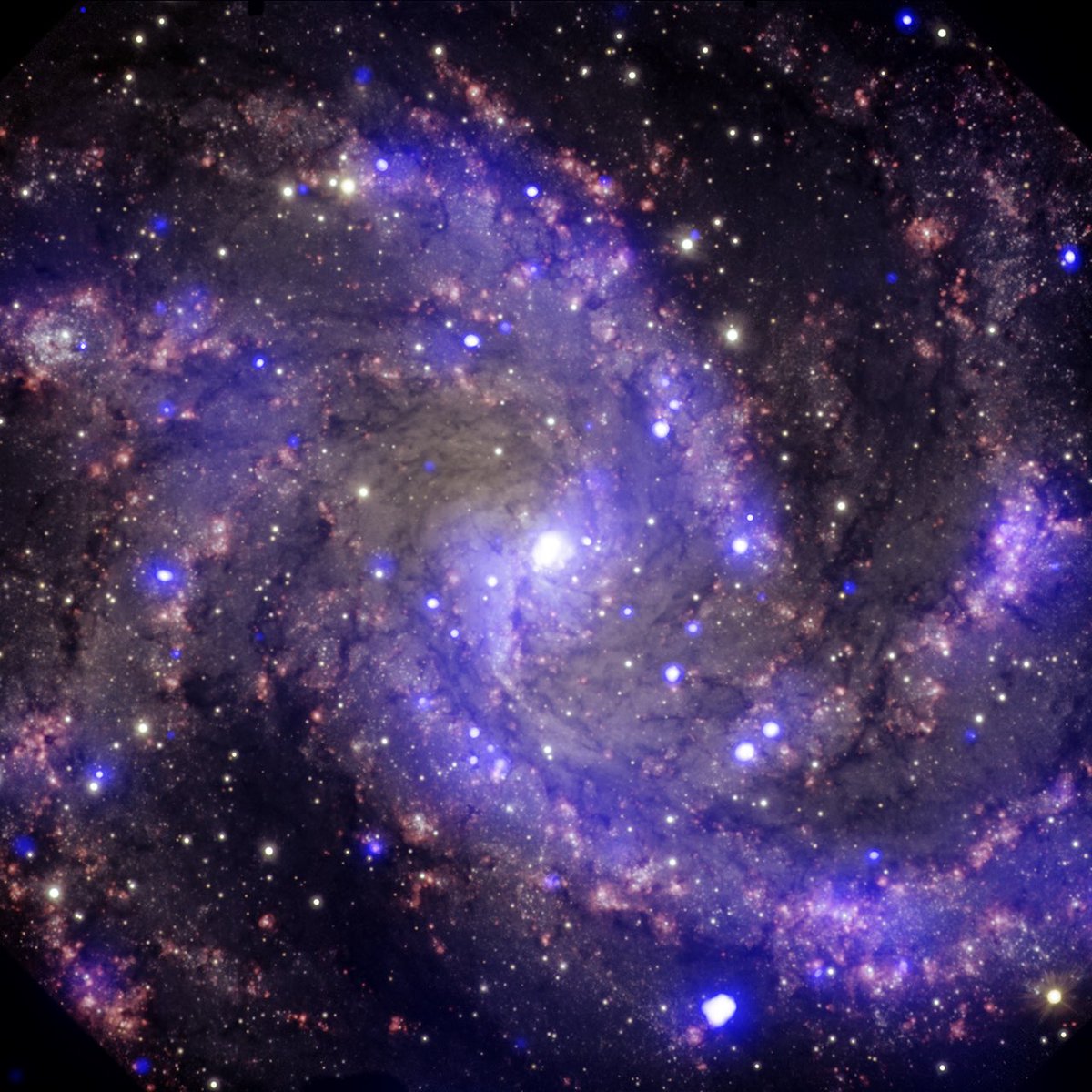
At least 10 supernova explosions have occurred in NGC 6946 since the early 20th century, earning it the nickname the #Fireworks Galaxy. Located about 22 million light years from Earth, this spectacular spiral galaxy is roughly 40,000 light years across. #4thOfJuly#4thofJuly2020
The Antennae galaxies are 2 colliding galaxies about 62 million light years from Earth. Spanning more than 60,000 light years, this multiwavelength image contains data from Chandra (X-ray: blue), #Hubble (optical: gold/brown), & #Spitzer (infrared: red). https://t.co/XxKUVN2eSJ
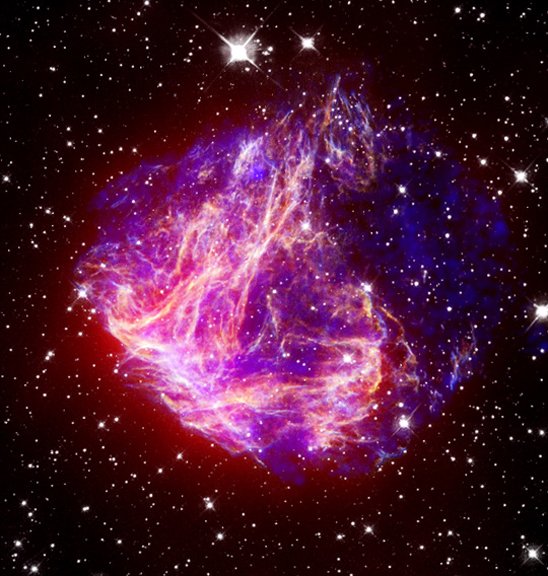
Roughly 75 light years across, supernova remnant N49 is located about 160,000 light years from Earth. The delicate filaments & knots seen throughout the remnant are debris from the stellar explosion at temperatures ranging from thousands to millions of degrees.
NGC 3576 is a region of glowing gas located in the Sagittarius arm of our Milky Way galaxy. Winds and intense radiation from massive stars embedded in the nebula are shredding the clouds from which the stars formed, creating many of the intriguing & complex shapes seen within.
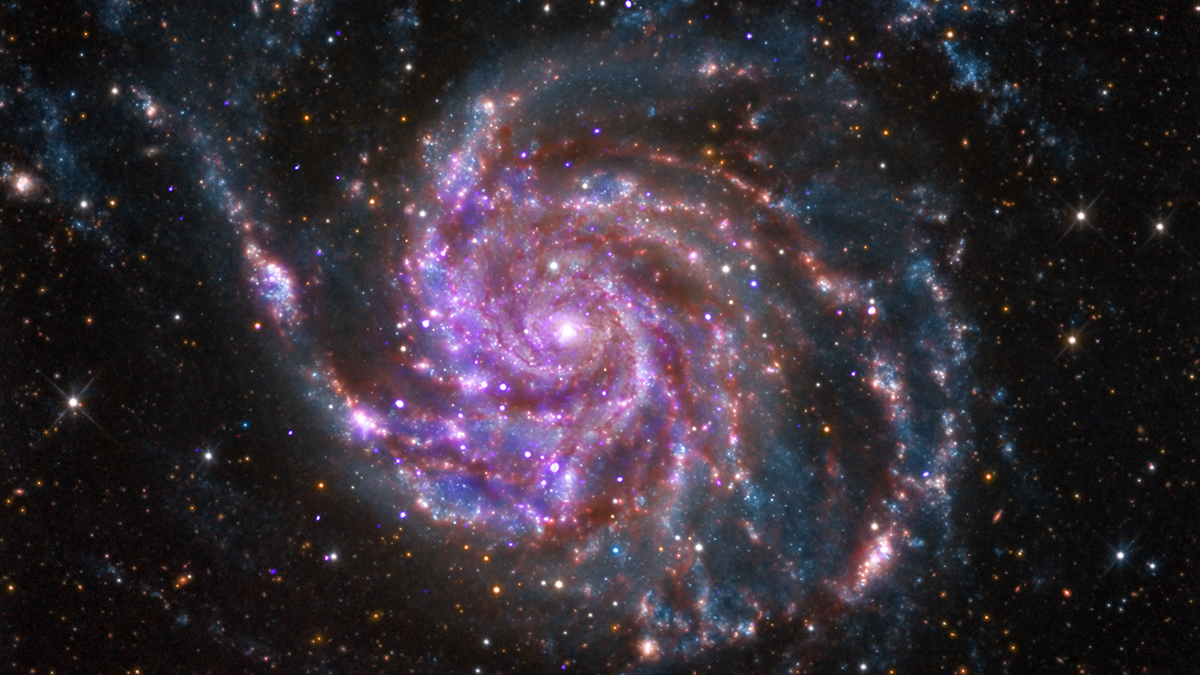
The Pinwheel Galaxy (M101) is about 70% larger than our Milky Way. X-rays reveal the hottest and most energetic areas are due to exploded stars, superheated gas, and material falling toward #BlackHoles. ~21 million light years from Earth, M101 contains more than 1 trillion stars.
#HubbleFriday Globular cluster NGC 6441 is a busy place to be.
About 13,000 light-years from the center of our Milky Way galaxy, this cluster is home to countless stars, along with a few pulsars and a planetary nebula, which form when stars die: https://t.co/2gyXD2iQiE
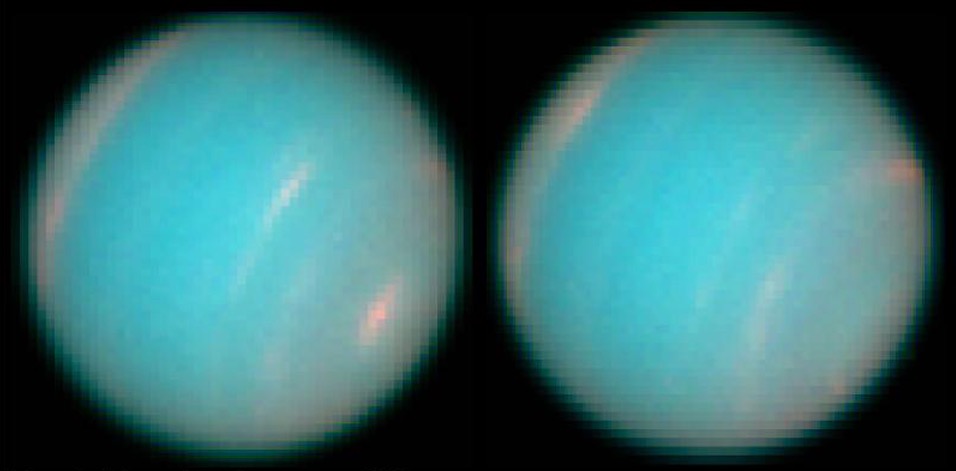
#HubbleClassic These pictures of Neptune, captured by Hubble 26 years ago, were the clearest views taken of the planet since Voyager 2's flyby in 1989. Hubble found bright clouds in Neptune's atmosphere, but the Great Dark Spot seen by Voyager 2 was gone: https://t.co/2HFOjKXrkn
The early days of our universe are still a mystery. ✨
Hubble used the light-bending power of a massive galaxy cluster to peer into the early universe, and found something surprising. The first stars and galaxies might've formed sooner than we thought: https://t.co/8kAAQ4qivp
#HubbleFriday The barred spiral galaxy NGC 2608 is one of many galaxies in this Hubble image.
Every faint point of light around NGC 2608 is another distant galaxy. The thousands of galaxies captured here demonstrate the vastness of our universe: https://t.co/sjKXGfDrik
This is gravitational lensing in action.
The light of a distant galaxy, seen as red dots near the image’s center, is bent by a galaxy cluster that is between it and Earth. The cluster’s massive gravity warps nearby space, which changes the light’s path: https://t.co/LxfPWxVx7Z
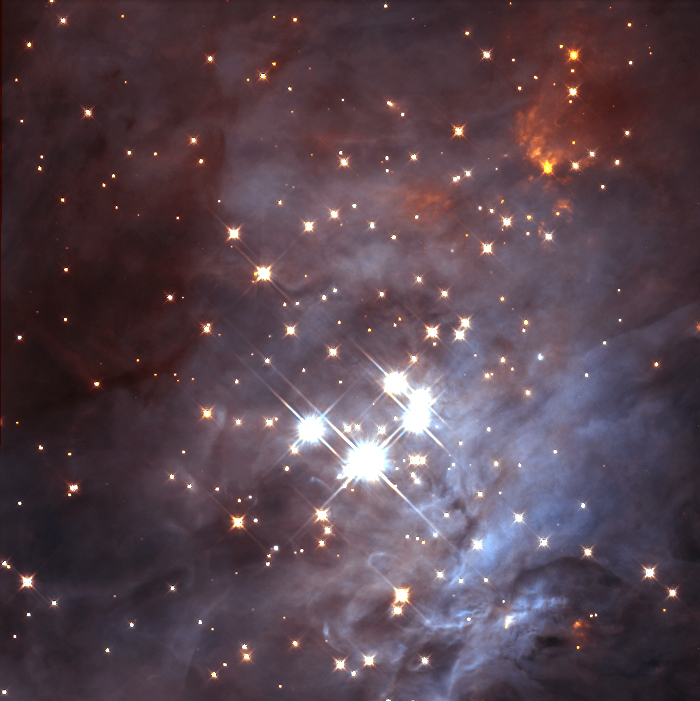
#HubbleClassic In the heart of the Orion Nebula lie four huge, bright stars, known as the Trapezium.
In the 1990s, Hubble viewed the Trapezium in both visible (left) and infrared light (right). Its infrared view revealed hundreds of fainter stars nearby: https://t.co/gmqkVudahn