@fbunational Never miss a chance to shill for Labour, eh?
Reform can't cut our pension. The current government, however, is overseeing a £102m funding shortfall that could axe 2,300 actual jobs.
Stop chasing ghosts and focus on the real-terms cuts and staffing crisis that are happening today.
@fbunational CRMP states ten stations 8 on call and 2 wt and on call. To my simple maths that's 12 engines potentially. And they could not staff a few more on call.
CRMP Is working well. Either that or the isle is treated like a secondary priority.
This is obscenely inappropriate so close to the incident. Whether it's the individual or the service that has ran with this, it's in very poor taste. You done your job and made a decision I'm sure 90% of firefighters and officers would have with or without MTA training. But why does that need publicising?
#ukfrs #gmfire #Manchester
@zarahsultana Aye but when you're against something , people will use that as an excuse to justify their means. Happens in all beliefs and ideologies unfortunately.
Exclusive first look 🎥
Happy to share the video from Exercise Kinverstan 7, latest #UKISAR deployment in Shropshire, bringing together all 14 UK Fire & Rescue Services, canine & medical teams, and international partners to tackle challenging, real-world rescue scenarios.
#UKISAR #Kinverstan7 #USAR #SearchAndRescue #RescueTraining
Protraction of incident and Conclusion
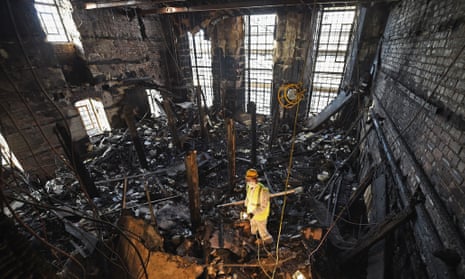
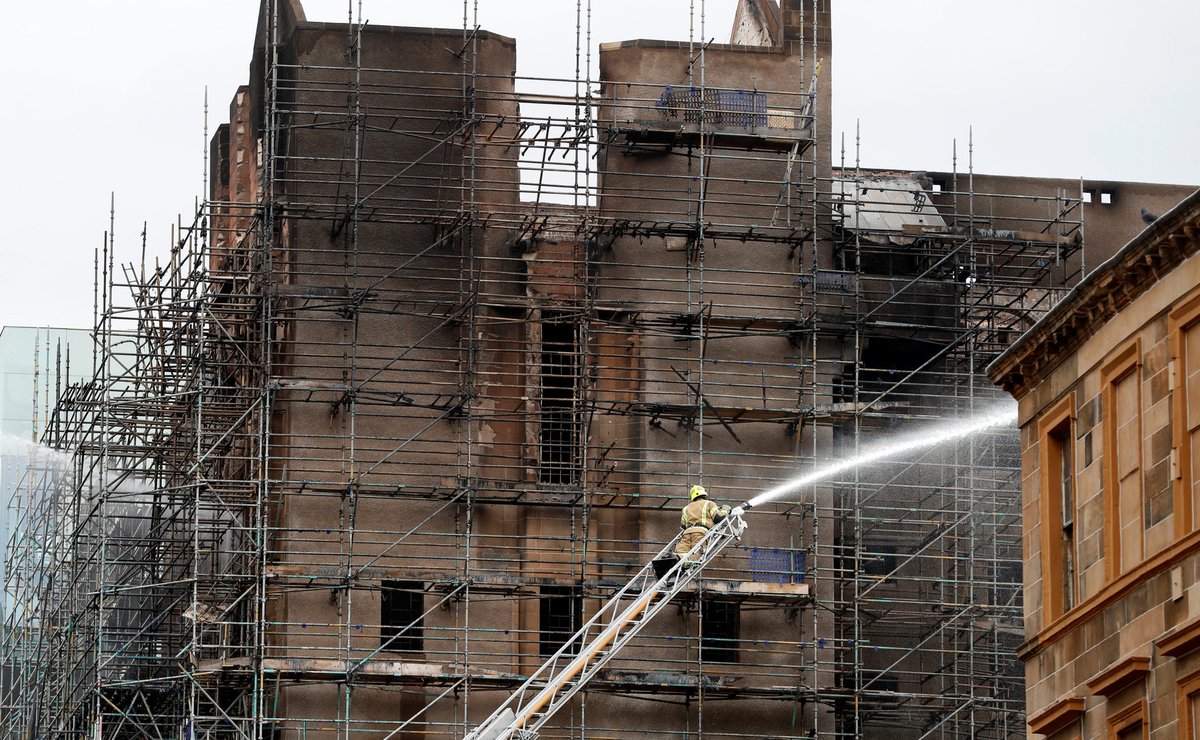
Despite the quick initial response (appliances arrived in 5 mins), the complexity of the void fire required a monumental effort. While largely under control on May 24th, appliances did not leave the incident until May 30th. The GSA fire serves as a crucial case study emphasizing the danger of hidden voids, obsolete structures, and the need for proactive containment strategies like fire breaks. (6/6) #casestudy #scottishfire #sfrs
Glasgow school of art fire case study.
The Cause
The 2014 Glasgow School of Art fire began in Studio 19 (basement) due to indirect ignition. An electrical spark from a projector ignited the highly flammable propellant gases from self-expanding foam, which students used for artistic effect. This highlights the lesson that seemingly innocuous art materials can pose a significant fire risk, especially near electrical sources. (1/6)
Critical Lessons Learned— Fire Breaks
Faced with unchecked vertical and lateral spread, a critical operational lesson was the reliance on creating fire breaks. Teams worked relentlessly to establish these breaks in the stairwell, floors, and roof space to divide the building in two and contain the fire to the west side.
Operational Challenges and Intensity
Firefighting efforts were arduous and time-consuming, particularly laying hose lines up the fully smoke-logged stairwell due to its design. The fire intensified when the timber, glass, and lead-lined roofs and windows failed, causing a dramatic inrush of oxygen that led to the collapse of the roof structure. Salvage efforts focused on high-importance items in the basement, as the renowned Mackintosh Library was quickly involved in the fire due to high fire loading(4/6).
The Fighting of Hidden Fire
SFRS crews initially achieved a successful knockdown of the fire in the basement (Studio 19). However, the fire was already spreading to other areas via the hidden voids. Responding crews faced challenges navigating heavy smoke logging, which reduced visibility to practically zero, masking the severe, well-developed fire confirmed only later on the top floor. Initial attendance was stretched fighting outbreaks simultaneously on various floors. (3/6)
The Structural Catastrophe—A Chimney Effect
The building's rapid, unchecked spread was a major contributory factor: an obsolete ventilation system created timber-lined service voids running the entire height of the building. This void system acted like a chimney, allowing flames, hot gases, and smoke to travel vertically and bypass containment. This structural weakness allowed fire to reach the top floor undetected almost immediately after the basement ignition (2/6).
Modern command structure in the UK features the Gold/Silver/Bronze framework, originally adopted from the Metropolitan Police after the Brixton riots to manage complex, multi-agency incidents. Beyond structure, effective command demands technical competence (seeing firefighting as an engineering task based on physics and chemistry) and a strong command presence, characterized by composure and the ability to build affinity with the crew.
(5/5)
Incident command
The UK Fire & Rescue Service (UKFRS) journeyed from an informal, experience-led decision-making style to a much more structured, risk-based framework for Incident Command (IC). This evolution wasn't seamless; it was an accumulation of hard lessons and systems refined through tragedy, driven by the understanding that IC is either done well or it's done poorly, a difference measured in lives saved or lost (1/5)
To satisfy the HSE without destroying the fire service's ability to act quickly, the concept of Dynamic Risk Assessment (DRA) was adopted. Commanders were required to declare a tactical mode (Offensive or Defensive) over the radio, which served as the time-stamped initial risk assessment. This led to the introduction of Default to Defensive: if an IC is unsure of crew safety after the first few seconds, they must declare defensive mode until a clearer, safer rationale for an incident plan is established. (4/5)
The move toward formalization in the 1990s was accelerated by scrutiny from the Health and Safety Executive (HSE) and pivotal, tragic incidents, including Gender Street and the Sun Valley Poultry Factory (1993), which resulted in firefighter fatalities. The HSE demanded that the UKFRS adhere to industry standards and perform formal risk assessments before committing personnel to a hazard zone. (3/5)
A pivotal influence on modern UK IC was Chief Alan Brunacini of the Phoenix Fire Department, whose work Fire Command (1980s edition) helped fill the training gaps in the British approach. Brunacini introduced concepts like span of control, sectorization, and Recognition Prime Decision Making (RPDM). RPDM relies on the commander’s ability to quickly retrieve images and experiences from a tray of past events to make rapid, intuitive tactical declarations (2/5)