“The Party told you to reject the evidence of your eyes and ears. It was their final, most essential command.”
— George Orwell, Nineteen Eighty-Four (Part One, Chapter 7)
Starship V4 will be ~70m long, which is roughly a 40% length increase and allows >60% more propellant load.
Engine count will be raised to 9, with 3 more Raptor-Vacuum engines added, and these will be higher thrust V4 engines.
The psychiatric profession has finally begun taking note of what happens when generations of women are raised on tumblr and tik tok:
“. . . self-diagnoses and desired psychiatric diagnoses… [are] increasing among
emerging adults . . . ADHD and ASD were most frequently identified as self-diagnosed or desired.
Patients presenting with such expectations were commonly described as female, highly educated, and strongly engaged in online activities [and] . . . explained such pursuits mainly in terms of relief from guilt, identity affirmation, and social recognition.
. . . online mental health cultures and the symbolic appeal of neurodivergence, underscoring how digital environments shape both the spread of self-diagnosis and the pursuit of professional confirmation.”
@ZELLKLUMPEN “The Party told you to reject the evidence of your eyes and ears. It was their final, most essential command.”
— George Orwell, Nineteen Eighty-Four (Part One, Chapter 7)
The year is 30,000 BC. You wake hungry and there is no breakfast, because there has never been breakfast. The children are still asleep by the fire. You get up and go out on an empty stomach, and by the second day without a kill your head is clearer and your eyes are sharper than when you were fed. You do not think of this as going without. It is how mornings are.
The year is 400 BC. You are ill, and the physician on Kos sits by the bed and tells you to stop eating. To feed a sick body, he says, is to feed the sickness. You find you did not want food anyway. The dog in the yard does the same when it is poorly. It lies down, turns its head from the bowl, and gets up when it is well.
The year is 1250. You eat twice a day, the first time near noon, and you fast on something like a third of the days in the year. It is hard by the fourth week of Lent and nobody pretends otherwise. But the whole village is doing it with you, and when Easter comes the roast tastes like nothing you will be able to describe to your grandchildren. Eating on waking is for infants and invalids. The word for the midday meal means the breaking of a fast.
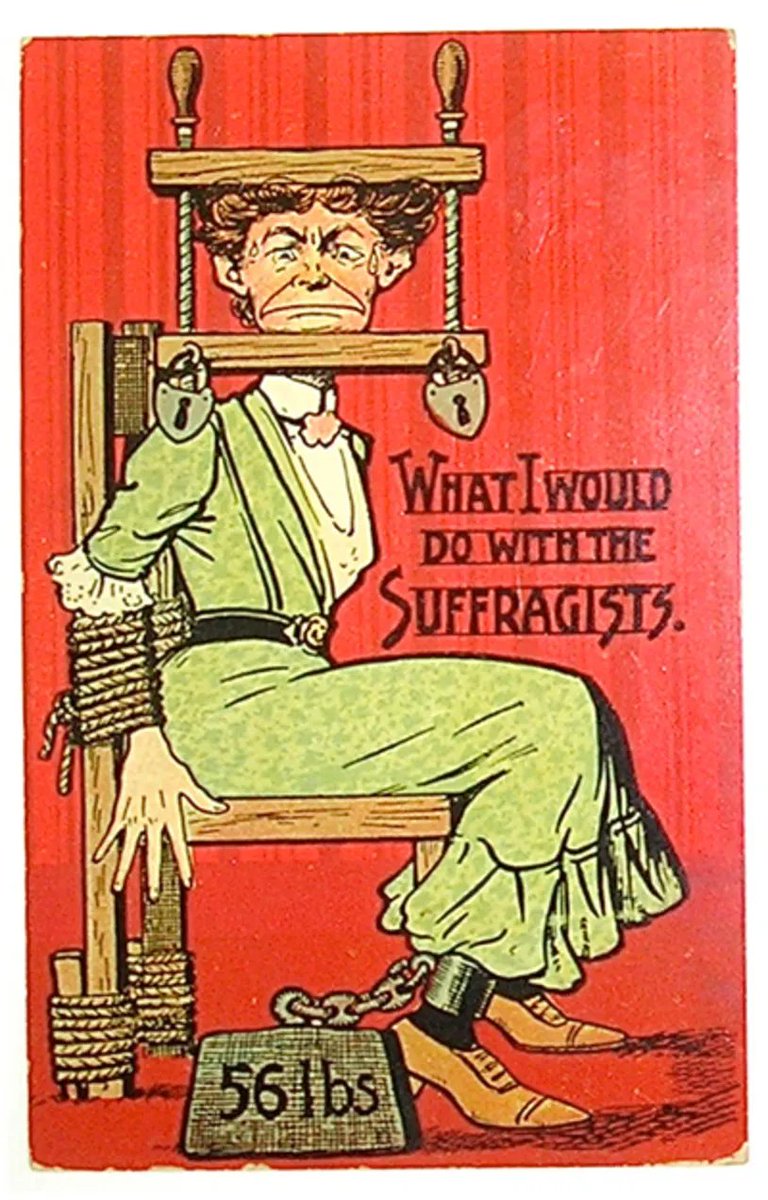
The year is 1909. You are a suffragette in Holloway, and they have taken your clothes, your name and your letters. You stop eating. It is the one thing in the cell that is still yours. After 91 hours they let you out rather than have you die on their hands. Within months they are holding women down and forcing tubes into them, because an empire has found out it is frightened of a person who will not eat.
The year is 1921. Your child has seizures, sometimes thirty in a day, and you have stopped sleeping. A doctor in New York puts children like yours on a fast and the fits cease. You sit by the bed through the first quiet night you have had in two years. The Mayo Clinic works out how to hold the body in the same state with food and calls it the ketogenic diet. Fasting, this year, is a hospital treatment.
The year is 1944. You are seven and you are not hungry, and your mother stands over you until the bowl is empty, because a voice on the wireless has told her that breakfast is the most important meal of the day. The voice was paid for by the company that made what is in the bowl. She does not know that. She loves you, so she watches you finish it.
The year is 1985. You are told to eat little and often, to keep your metabolism burning and your blood sugar steady. You carry something in your bag in case. You have not gone five hours without food in your adult life, and when you try, the feeling frightens you, because you have been taught it is the start of something going wrong. You have never been heavier, and you assume the fault is yours.
The year is 2016. A Japanese biologist is given the Nobel prize for showing what a cell does when it is not being fed. It takes itself apart and rebuilds from the good pieces. The repair only runs when the food stops.
The year is 2026. You mention that you do not eat until midday, and somebody asks, kindly, whether you have spoken to anyone about that. The school runs a breakfast club with a cereal logo on the banner. And the best-selling medicine on earth is an injection that makes you forget to eat.
You did it before the hunt, through the fever, in the cell and in front of God. It sharpened you and it mended you. It was the one protest nobody could take off you. It was free, and you never needed anyone's leave.
It was taken from you at the breakfast table, by somebody who loved you, on the advice of somebody who was selling something.
This year they are selling it back. Once a week, in a pen, for life.
One of the reasons I don’t like socialism is public bathrooms.
A public bathroom is about as basic a shared resource as you can get. Everyone gets to use it, and everyone is expected to show a little consideration for the next person. The rules aren’t particularly complicated.
And yet, a shocking number of adults can’t even manage to throw their paper towels in the trash. Some will pee all over a toilet seat and leave it for the next person. And the next person, who didn’t make the mess, certainly isn’t going to clean it up either.
Now imagine trusting these same people to collectively manage an entire economy.
We can’t even get everyone to agree that cleaning up their own pee is a personal responsibility, but somehow we’re supposed to believe everyone will become hardworking, responsible, and considerate when we’re sharing the fruits of each other’s labor.
Now, compare your average public restroom to a Buc-ee’s bathroom.
Buc-ee’s figured something out. Clean bathrooms attract customers. Customers spend money. So the company has a financial incentive to keep those bathrooms spotless. They hire people to maintain them, hold employees accountable, and compete for your business.
And people will literally plan their road trips around stopping there.
That’s capitalism. Someone recognized a problem, found a way to solve it, and made money because people valued the result.
Of course, not everyone contributes equally to society. Some people work harder, make better decisions, and take more responsibility. Others seem perfectly content making life more difficult for everyone around them.
I believe people should have the freedom to live however they choose. I also believe in helping people who genuinely need it.
But I have a hard time accepting an economic philosophy that expects me to trust everyone to act in the collective interest when some people can’t be bothered to clean up after themselves.
Buc-ee’s figured out how to get people to willingly pay for a better experience.
Socialism wants me to believe the people leaving paper towels on the floor will suddenly become responsible stewards of everyone else’s resources.
I’m going with the beaver.
@DoNoHarm79 “The Party told you to reject the evidence of your eyes and ears. It was their final, most essential command.”
— George Orwell, Nineteen Eighty-Four (Part One, Chapter 7)
@approject@PaulaYScanlan “The Party told you to reject the evidence of your eyes and ears. It was their final, most essential command.”
— George Orwell, Nineteen Eighty-Four (Part One, Chapter 7)
@_CryMiaRiver “The Party told you to reject the evidence of your eyes and ears. It was their final, most essential command.”
— George Orwell, Nineteen Eighty-Four (Part One, Chapter 7)
What we’re experiencing is the product of a society that doesn’t have the intellectual awareness to carve out human life as more valuable than profits. Which leads to for-profit healthcare and for-profit wars.
Our current version of capitalism prioritizes profits above anything else, and therefore prioritizes men as being better (on average) at generating profits than women.
Women just do the worthless tasks of nursing and teaching and caretaking and mothering, none of which really generate profits, at least not in the short term.
But they do prevent a society of narcissists. And it really does take damn near every woman on the planet devoting their lives, across generations, to these “worthless” tasks in order for us to live in a society of human beings who aren’t narcissists.
Capitalism will devalue women and women’s work, and commodify human life and human suffering ( for-profit healthcare and for-profit wars) if you don’t carve out human life as being more valuable than profits.
The roadmap to a healthy society includes a foundation of honesty and reverence of motherhood/creator/creation/nature/gaia/life.
@haveaconcern “The Party told you to reject the evidence of your eyes and ears. It was their final, most essential command.”
— George Orwell, Nineteen Eighty-Four (Part One, Chapter 7)
@wesyang “The Party told you to reject the evidence of your eyes and ears. It was their final, most essential command.”
— George Orwell, Nineteen Eighty-Four (Part One, Chapter 7)