I urge every true Sanatani to register urself, ur family members, and invite fellow Sanatanis to join this movement.
Let us stand with Annamalai.
#IAmWithAnnamalaiJi
A new saffron chapter is unfolding in Tamil Nadu politics. Even after leaving the BJP, he remains a committed Saffronist, dedicated to the ideals of Sanatana Dharma.
For me, that alone is enough reason to support Annamalai Ji.
@annamalai_k 🙏🏻🚩💪🏻
🚩Tamil Nadu is witnessing the rise of a new movement🚩
Join : 📍https://t.co/EMG7QutkYS
A century as far as Ramsar sites are concerned!
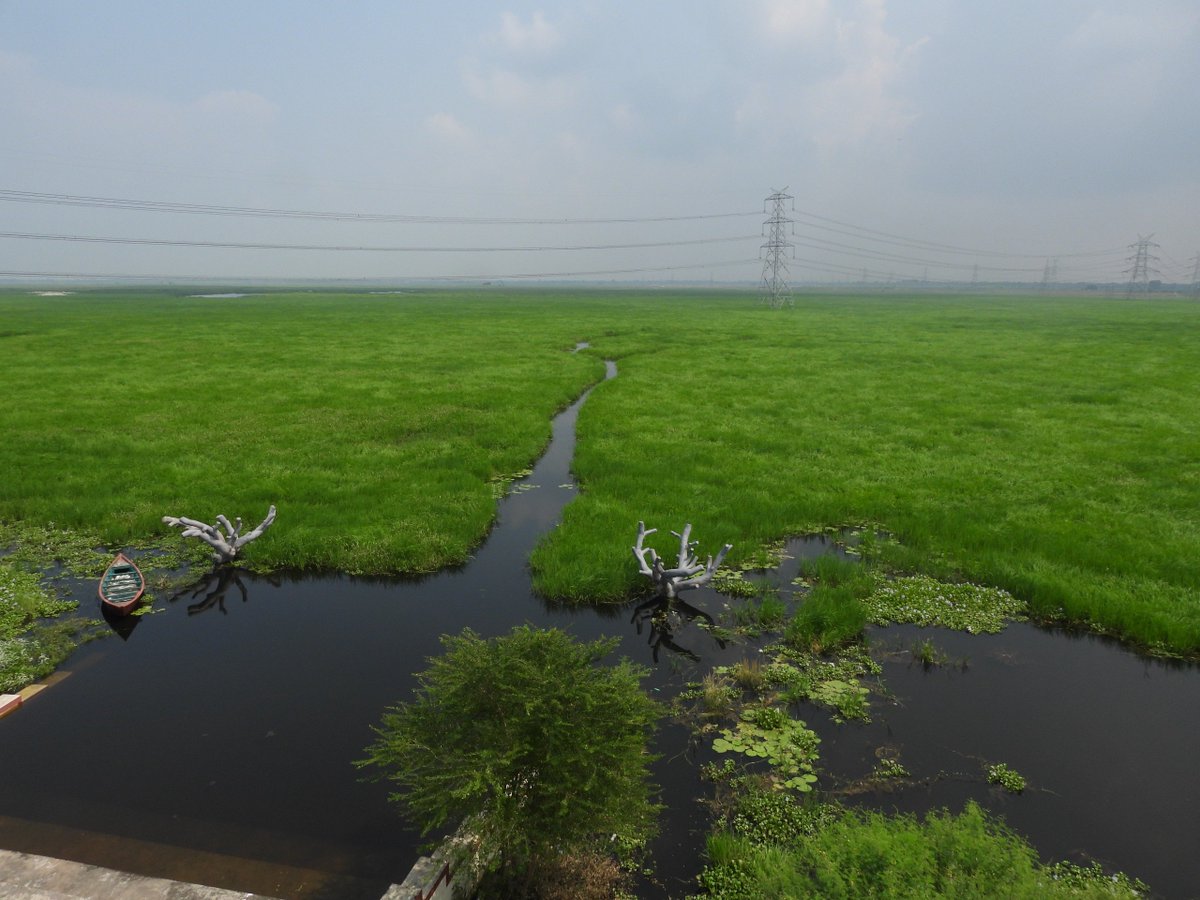
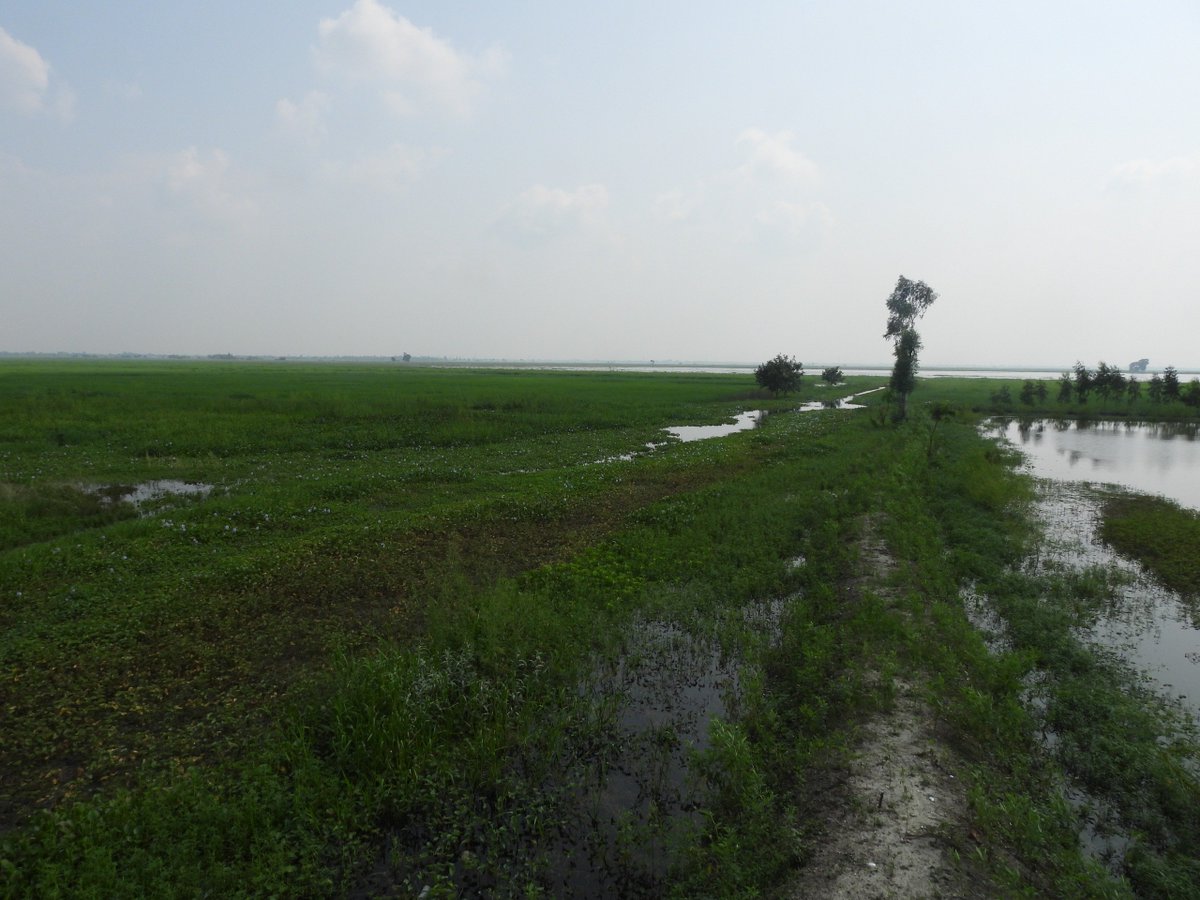
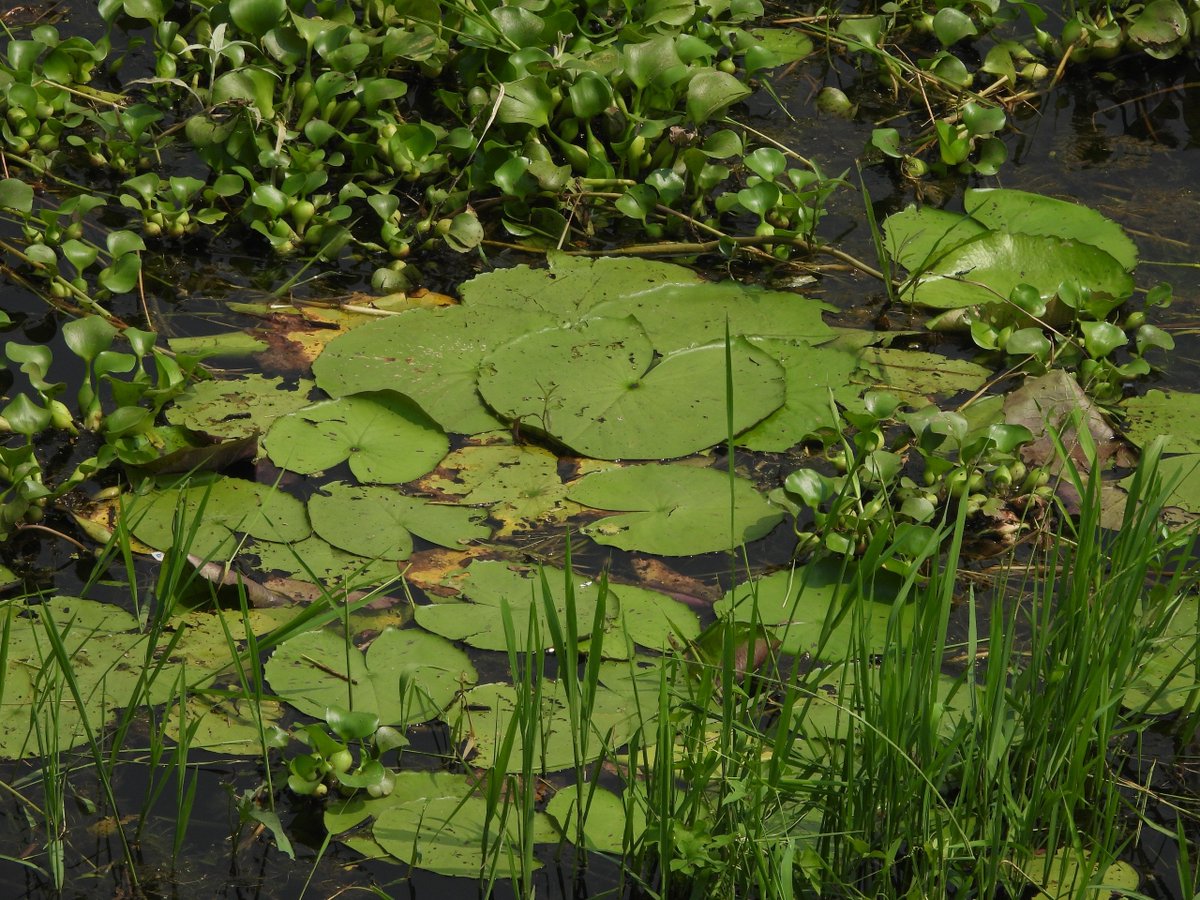
Glad that the Jai Prakash Narayan Bird Sanctuary (Surha Tal) in Ballia, Uttar Pradesh has been designated as India’s 100th Ramsar site. This wetland is rich in avifaunal biodiversity, attracting several migratory and resident birds.
India’s unwavering commitment to protecting our natural surroundings and wetlands in particular is clearly reflected in this feat.
Over the years, efforts to conserve and rejuvenate wetlands have been strengthened through greater community participation, science, innovation and awareness initiatives. These endeavours are helping preserve biodiversity, secure ecological balance and create a greener future for coming generations.
Born on this day, Bob Willis is forever remembered for his iconic spell at Headingley in 1981.
He took 325 Test wickets in 90 Tests, captained England in 18 of them, and remarkably played much of his career through chronic knee pain.
After retirement, he became a respected broadcaster before passing away in 2019 at the age of 70.
In the North, you’ll find Kashi and Kedarnath.
In the South, Srisailam.
In the East, Puri.
In the West, Somnath.
Across the country, you’ll find the hands of Maa Ahilyabai, quietly rebuilding, preserving, and shaping the identity of Bharat - The Hindu Rashtra
#AhilyabaiHolkar
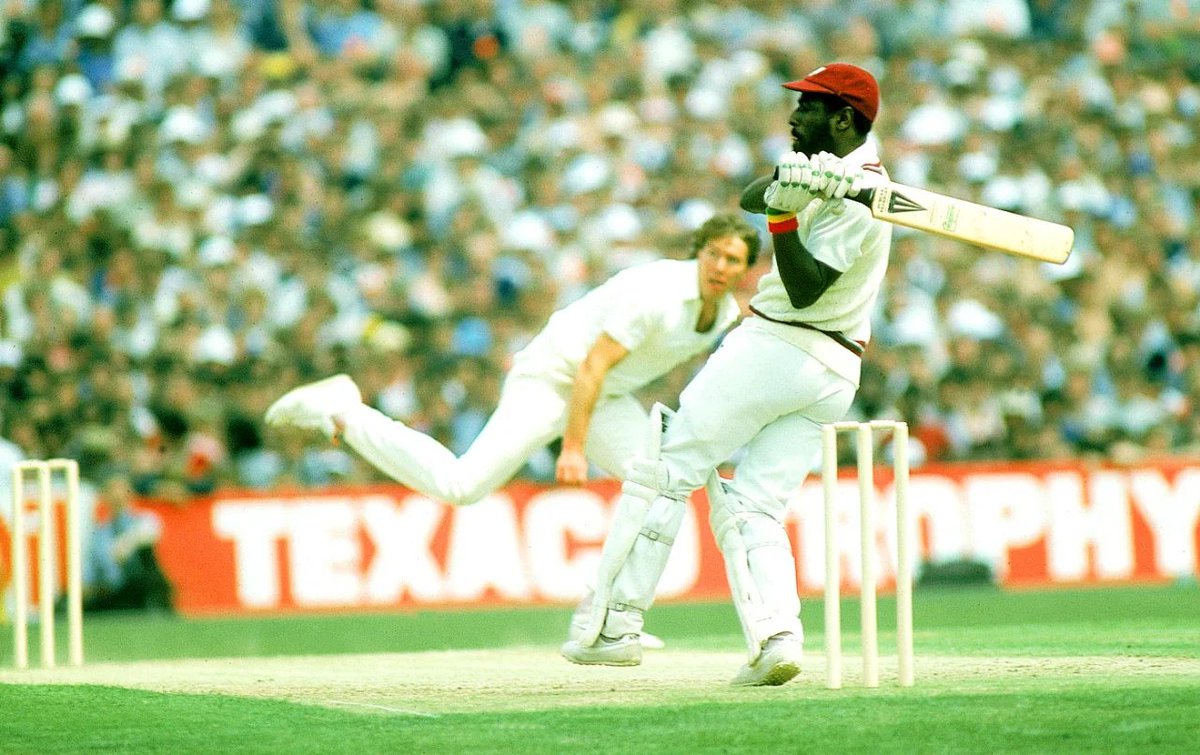
On this day 42 years ago, Viv Richards walked out at Old Trafford in 1984 with pterygium, an eye disease that made the cricket ball look like a smudged coin. Doctors had already cut into his eyes. He batted without a helmet because he thought helmets were for people who feared things & Richards feared nothing except maybe being ordinary.
West Indies were collapsing at 102 for 7. Haynes run out fot 1. Greenidge caught at 9. Gomes bowled on 4. Lloyd gone for 4. Dujon out for a duck.. Richards was on 70 something when lunch break arrived. Not a single dismissed batter in top 7 had reached double figures. He walked into dressing room & told his team that pitch was excellent. Problem was them. Then he turned to Eldine Baptiste & said, just stay. 29overs left. just hang around.
Baptiste made 26 & left. Joel Garner made 3 & left. At 166 for 9, Michael Holding walked out. Same Holding who had bruised Englishmen at this very ground 8 years ago with raw pace. Now he was a shield. Richards took 54 of the last 81 balls & scored 93 runs alone. Holding faced 27 & made 12*. They added 106 runs for 10th wicket. Still the highest in ODI history. Richards finished on 189* from 170 balls. He had made 69.48% of his team's runs.
England were chasing 273. They made 168. Same total West Indies had when Holding joined Richards. Richards also took 2 wickets because apparently one discipline was not enough.
Numbers say it was the greatest ODI innings ever. Wisden put it at top og their 100 greatest innings. But the real story is a man with damaged eyes playing like he could see the future. A man who had said no to blank cheque offers from rebel tours of apartheid South Africa twice, who had been suspended as a teenager after a riot, who learned the game in a bar owner's borrowed whites.
He made 189 runs while his teammates made excuses. And when it was done, he probably just put his bat in kit bag & asked what was for dinner.
Ever wondered how streams continue to flow, rivers keep receiving water, and wildlife survives even through the harshest summer months in landscapes where forests and wild animals depend on a steady supply of water ! The answer often lies in "Nature’s Sponge' the montane grasslands. Most people judge a landscape by the number of trees it has. But nature does not work that way. A forest is not healthier than a grassland simply because it has more trees. Every ecosystem has its own unique role. The montane grasslands of the Western Ghats are among nature’s greatest water engineers. Often called the 'Water Towers' of the landscape, these ancient grasslands capture mist, absorb rainfall like a sponge, and store vast quantities of water beneath the ground. They then release it slowly through the year, feeding streams, rivers and springs long after the monsoon has passed. This hidden natural reservoir sustains forests, supports unique wildlife like Nilgiri Tahr, replenishes groundwater and becomes a lifeline for people, agriculture and entire ecosystems during the dry season. The lesson is therefore simple, it is not about planting trees everywhere. It is about protecting every unique ecosystem #WorldEnvironmentDay 5th June 2025 #grasslands #climateaction #NowForClimate video @supriyasahuias
Breaking news!
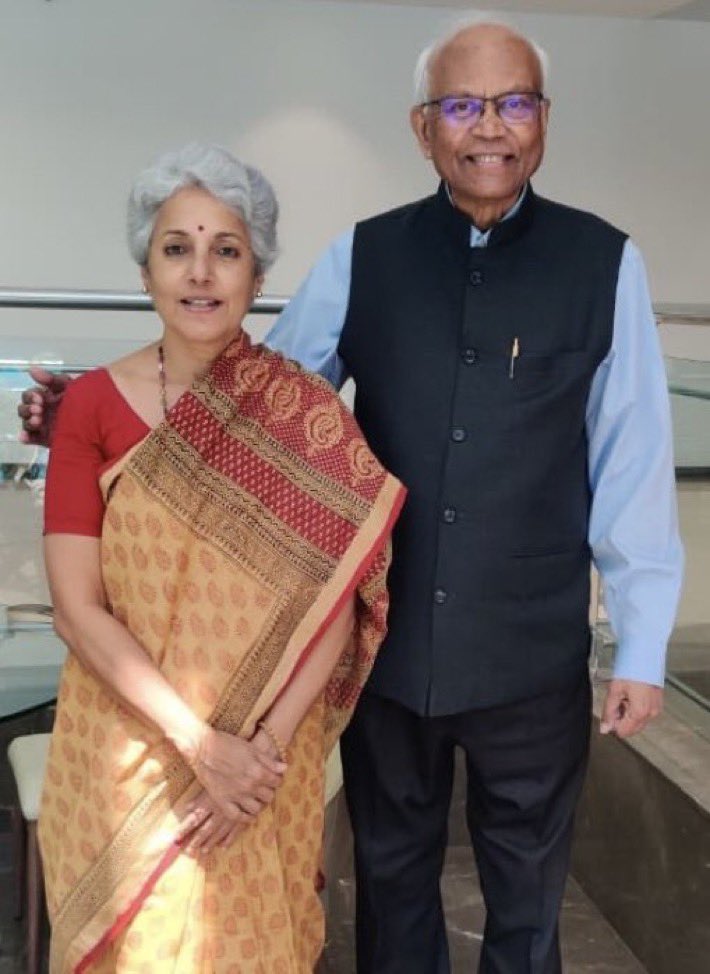
Dr Soumya Swaminathan @doctorsoumya has been elected as FRS, Fellow of Royal Society, one of the highest global hours that a scientist can receive.
@royalsociety
With her father Bharat Ratna Prof Swaminathan also being elected as FRS, this is the first daughter-father FRS duo from India.
Also she is the second Indian woman scientist being elected in 365 years history of Royal Society, the first being Prof Gagandeep Kang.
Very proud moment for Indian Science & indeed for us Indians.
Heartiest congratulations dear Soumya!
@PMOIndia@DrJitendraSingh@PrinSciAdvOff@CSIR_IND@ICMRDELHI@IndiaDST@DBTIndia@PuneIntCentre
Finally, the long wait seems to end here. Monsoon 2026 has officially started its journey and arrived in the Andaman and Nicobar Islands, parts of the South Bay of Bengal, and the South Arabian Sea. It may reach Kerala by the last week of May.
Image courtesy IMD .
1987. A room in New Delhi is thick with the smell of old files & cold tea. The United States has just delivered a stinging slap to the face of the Indian Republic. They have officially refused to sell India the 'Cray X-MP' Supercomputer, the most powerful machine on Earth, claiming that India would use it for nuclear weapons.
The American officials mockingly suggest that India does not even have the electricity to keep such a machine running. In the middle of this national humiliation, a young, soft-spoken engineer named Vijay Bhatkar is asked by then Prime Minister Rajiv Gandhi: "Can we build our own?" Bhatkar does not hesitate. He looks at the No of the West & says: "We will not just build it; we will build it faster than you can ship it."
The Americans did not just stop at refusing the sale; they actively lobbied other nations to ensure India remained digitally blind. They believed that w/o their Logic Gates, India would remain a 3rd world backwater.
Bhatkar realized he could not replicate the Single-Processor behemoth of the Cray. Instead, he turned to Parallel Processing. He decided to stitch together 1000s of low-cost, off-the-shelf microprocessors. It was like building a giant's brain out of the neurons of ants.
In 1991, while the West was still celebrating its monopoly, Bhatkar unveiled the PARAM 8000. It was not just a computer; it was a Gigaflop monster.
To prove the PARAM was real, Bhatkar ran a standard global benchmark test. The results were sent to an international conference in Zurich. The PARAM 8000 was ranked as the 2nd most powerful supercomputer in the world, behind only the American machines. But there was a twist: the PARAM cost a fraction of the Cray, performed better in tropical heat, & was built in just 3 years.
When the PARAM 8000 was 1st turned on, the team did not have a high-tech cooling system like the Americans. They used industrial-grade desert coolers & adjusted the airflow manually. It was the ultimate Jugaad that defeated the most sophisticated tech embargo in history.
A major US newspaper ran a story with the headline: "Denied supercomputer, Angry India does it!" The ghost of the Native Engineer had officially entered the silicon temple. Vijay Bhatkar’s history is the story of how India became the IT Capital of the world.
Bhatkar founded the Centre for Development of Advanced Computing (C-DAC). He did not just build a machine; he built an ecosystem. Every software engineer in India today stands on the shoulders of the man who proved we did not need the West's permission to compute. Bhatkar was the 1 who realized that if computers only spoke English, 90% of India would be left behind. He led the development of GIST (Graphics & Intelligence Based Script Technology), allowing computers to work in Indian languages. He gave the Machine a local tongue.
Today, Bhatkar is a Padma Bhushan awardee, but he lives a life of deep spirituality & simplicity. He vanished from the corporate headlines to become a philosopher of the digital age.
The West thought they could freeze India’s future by withholding a single machine. They forgot that the Indian mind does not need a 'Cray' to think; it only needs a 'No' to ignite. Forget building a supercomputer; Bhatkar built a mirror, & for the 1st time, the West had to look into it & see that the primitive colony had become the master of the code.