Grok foundation model V9-Medium (1.5T) has finished training. Evals look good. A lot of Cursor data was added in supplementary training and there is more to come.
Fine-tuning is underway and reinforcement learning begins in a few days. 2 to 3 weeks to public release.
This will be a major improvement over the 0.5T v8-small that currently serves all Grok production traffic, especially for difficult coding tasks.
Barbara Liskov (Turing Award Winner): "First of all, there were people writing programs in assembler. In assembler you have to use GOTOs. And also compilers didn't do all the kinds of optimizations that they do today.
So there was a concern if you didn't have GOTOs, maybe your program wouldn't be efficient enough.
And then there were people who used GOTOs and wrote really good code, and they were offended that Dijkstra was saying your code is bad.
And Dijkstra was not the most diplomatic person, so he didn't write it in a nice way. You can imagine writing that paper more nicely.
But clearly Dijkstra won the day because no GOTO's."
Introducing SubQ - a major breakthrough in LLM intelligence.
It is the first model built on a fully sub-quadratic sparse-attention architecture (SSA),
And the first frontier model with a 12 million token context window which is:
- 52x faster than FlashAttention at 1MM tokens
- Less than 5% the cost of Opus
Transformer-based LLMs waste compute by processing every possible relationship between words (standard attention).
Only a small fraction actually matter.
@subquadratic finds and focuses only on the ones that do.
That's nearly 1,000x less compute and a new way for LLMs to scale.
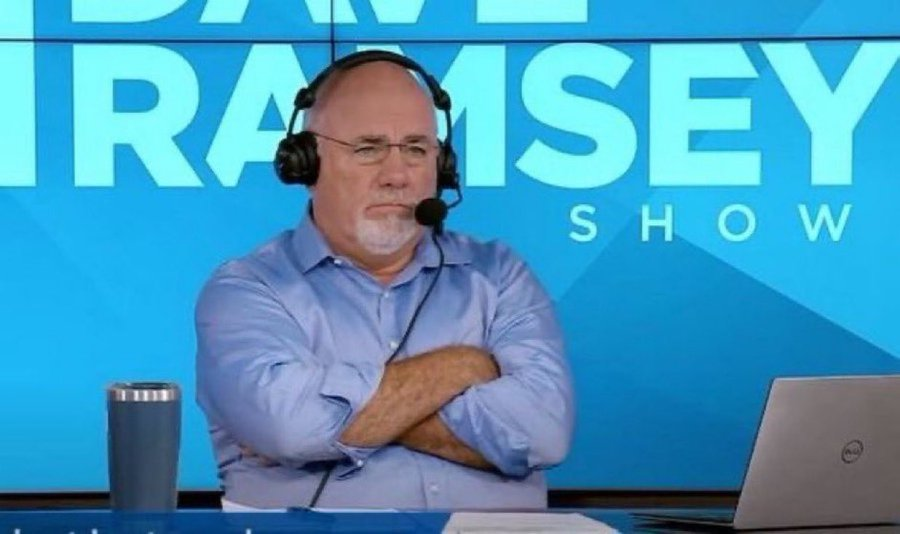
"so you staked your ETH on the Ethereum blockchain to earn yield?"
"yes, Dave"
"except you didn't want your capital to be locked up so you actually staked it with a liquid staking protocol called Lido?"
"that's correct, Dave"
"and Lido gave you a liquid staking receipt token called stETH in return?"
"yes, Dave"
"and then you didn't think that was enough, so you juiced the yield even further by depositing your stETH receipt tokens into a restaking protocol called Eigenlayer?"
"you are correct, Dave"
"and now you didn't want to lock up your capital, so you actually restaked with a liquid restaking protocol called KelpDAO who provided you with a liquid restaking receipt token called rsETH?"
"you got it, Dave"
"and then that was surely not enough juice, so you then deposited your rsETH tokens into a lending protocol called AAVE so that you could open a leveraged looping position that borrows ETH against the rsETH collateral and restakes the ETH into rsETH which is then deposited as collateral, except it turns out rsETH used a cross-chain bridge called LayerZero whose security is held together by a 1/1 toothpick, which was obviously hacked by north koreans causing rsETH to become undercollateralized and now these looping positions are stuck and unprofitable, and everyone is pointing fingers at each other, and also DeFi is a very serious industry"
"you are 100% correct, dave"
jfc.
Mark Cuban on the next job wave.
Customized AI integration for small to mid-sized companies.
"Software is dead because everything's gonna be customized to your unique utilization. Who's gonna do it for them... And there are 33 mn companies in the US."
If you’re looking for a paid summer internship in vulnerability research or exploit development (iOS, Android or network appliance), reach out: careers@IRISC2[.]com
Explain your background and areas of interest
Can be fully remote or hybrid (McLean, VA)
You’ll learn a lot
Set up my OpenClaw to report people to the IRS for tax fraud.
I get 30% of all proceeds collected by the IRS for my report, here’s what it does:
- Scrapes social media for anyone ‘joking’ about not paying taxes on crypto, gambling, reselling, or cash transactions
- Takes screenshot and records all account information
- Automatically fills IRS Form 211, Application for Award for Original Information
- Files and monitors email for requests for more info & payouts.
I expected to collect over $500,000 this year… and pay taxes on every cent made.
when spacex was getting started, the first and last men to walk on the moon testified before congress against it.
gene cernan told congress commercial space companies "do not yet know what they don't know."
he said the boeings and lockheed martins were "the folks who have been working on everything we've done for the last 50 years. they know how it can be done."
neil armstrong said he was "not confident" the newcomers could achieve their goals.
together with jim lovell they warned it would put america on "a long downward slide to mediocrity."
spacex now launches more rockets than every country on earth combined.
the experts will always tell you it can't be done. build it anyway!
The last stronghold of coding has just been conquered by AI.
In the most recent three Codeforces live competitions, i.e., Round 1087, Round 1088, and Round 1089, GrandCode, our agentic AI system, ranked first in all of them, beating all human participants, including legendary grandmasters.
GrandCode is a multi-agent reinforcement learning system designed for competitive programming. It orchestrates a variety of agentic modules (hypothesis proposal, solver, test generator, summarization, etc) and jointly improves them through post-training and online test-time RL. GrandCode is developed based on Qwen. Huge respect to the Qwen @Alibaba_Qwen team for their contributions to the community.
It is hard to imagine how quickly AI has advanced in just one year:
1st — GrandCode (March 2026)
8th — Gemini 3.1 Pro (February 2026)
175th — OpenAI o3 (April 2025)
We can’t wait to see what happens over the next year.
Introducing Cline Kanban: A standalone app for CLI-agnostic multi-agent orchestration. Claude and Codex compatible.
npm i -g cline
Tasks run in worktrees, click to review diffs, & link cards together to create dependency chains that complete large amounts of work autonomously.